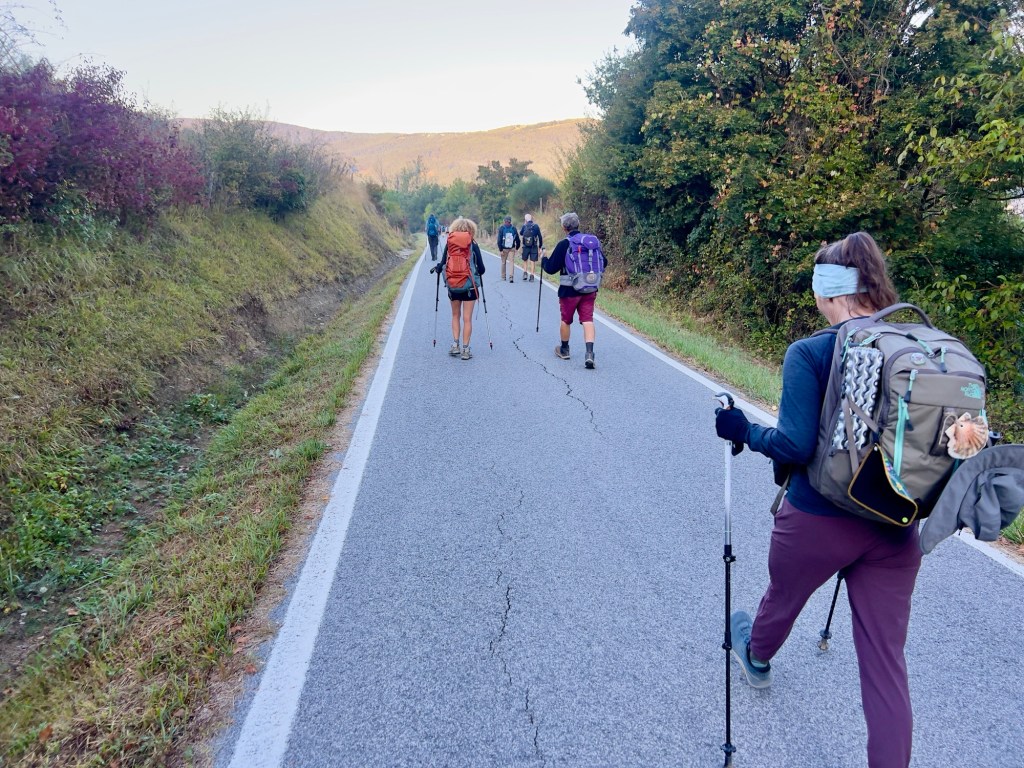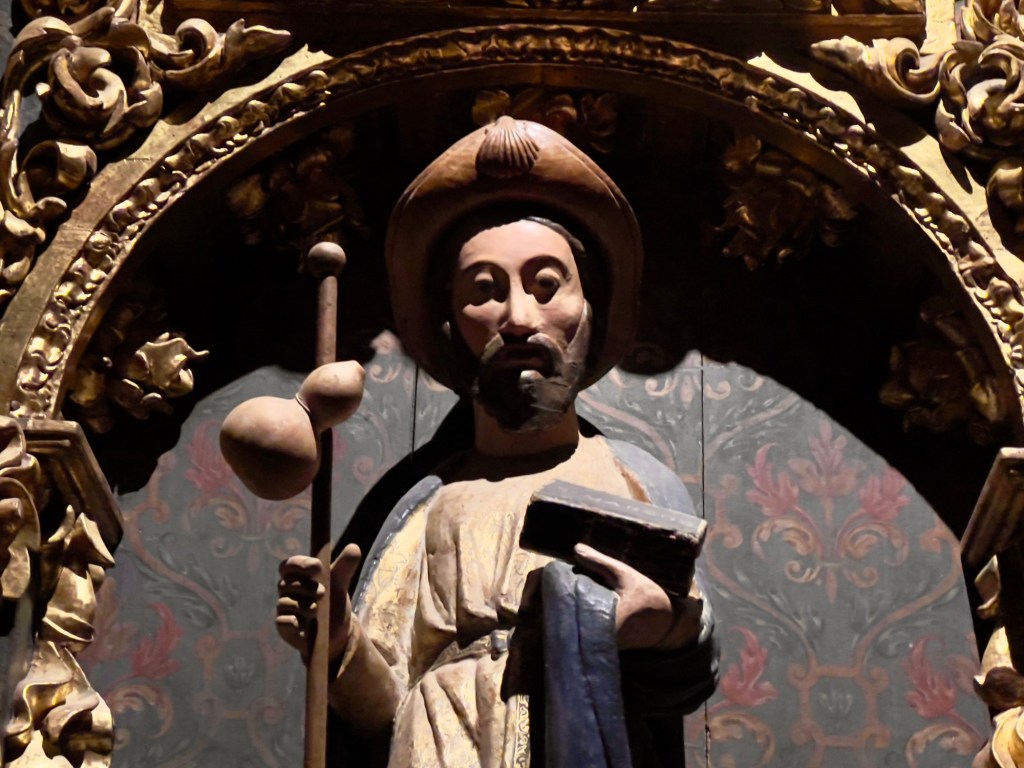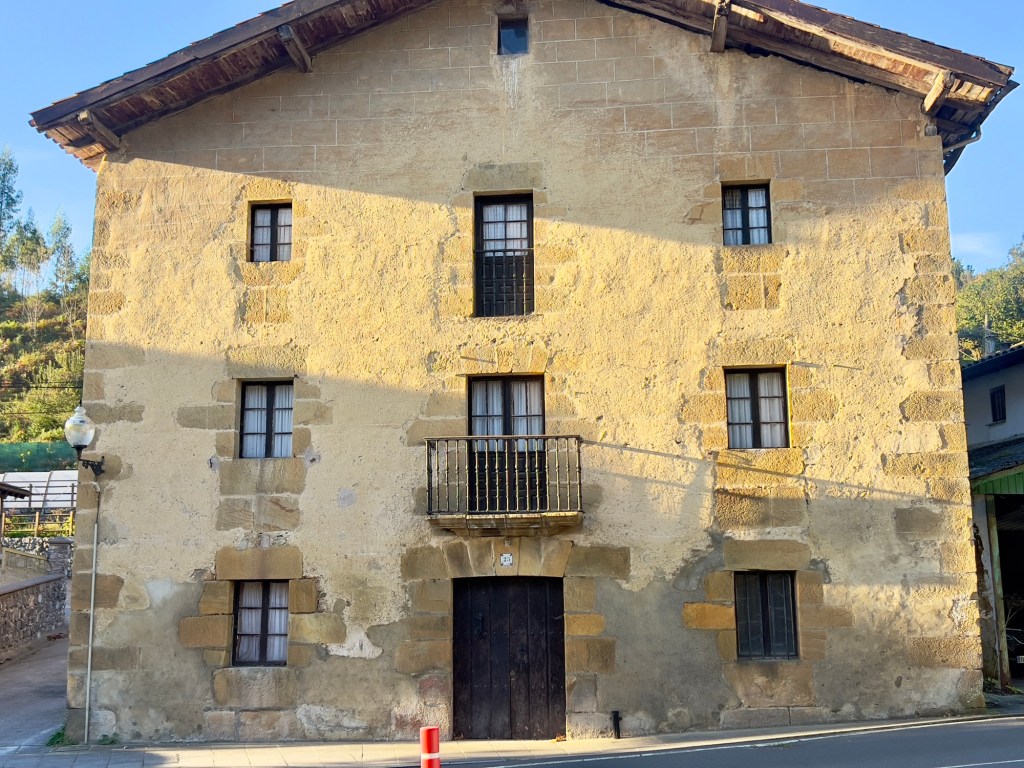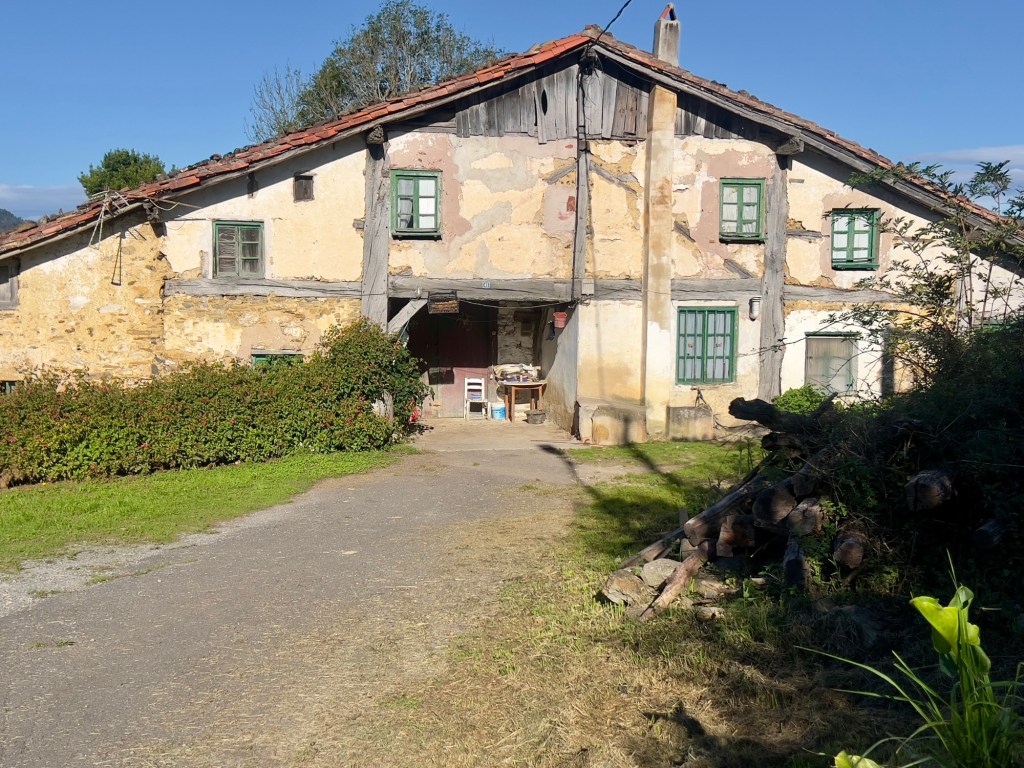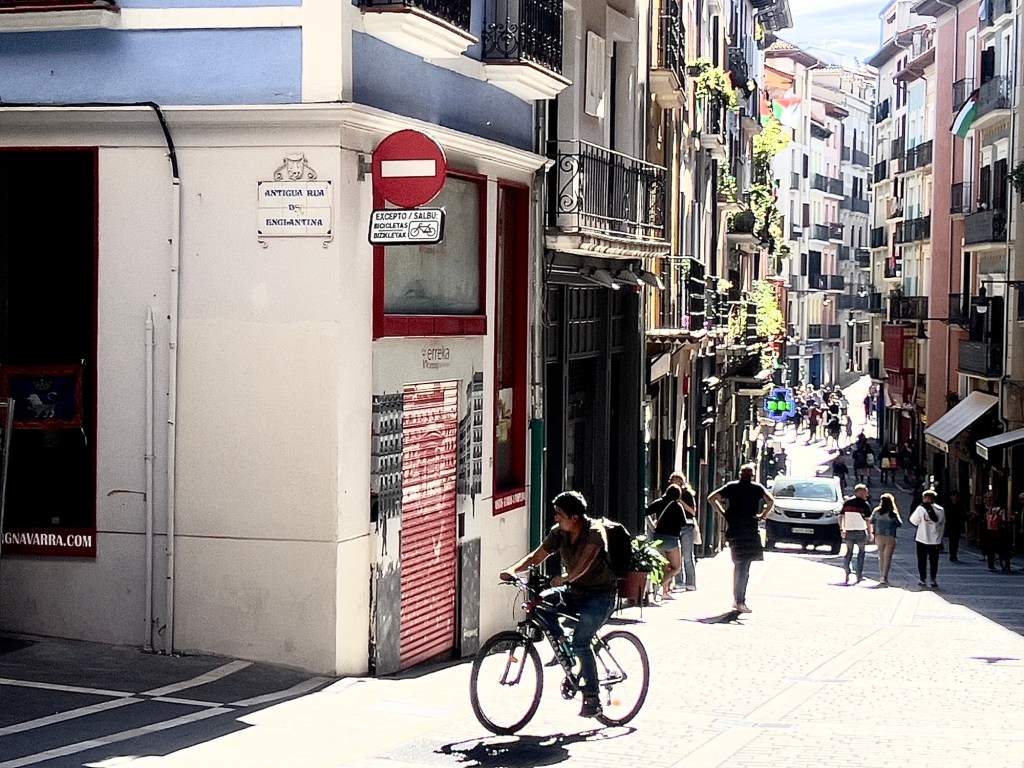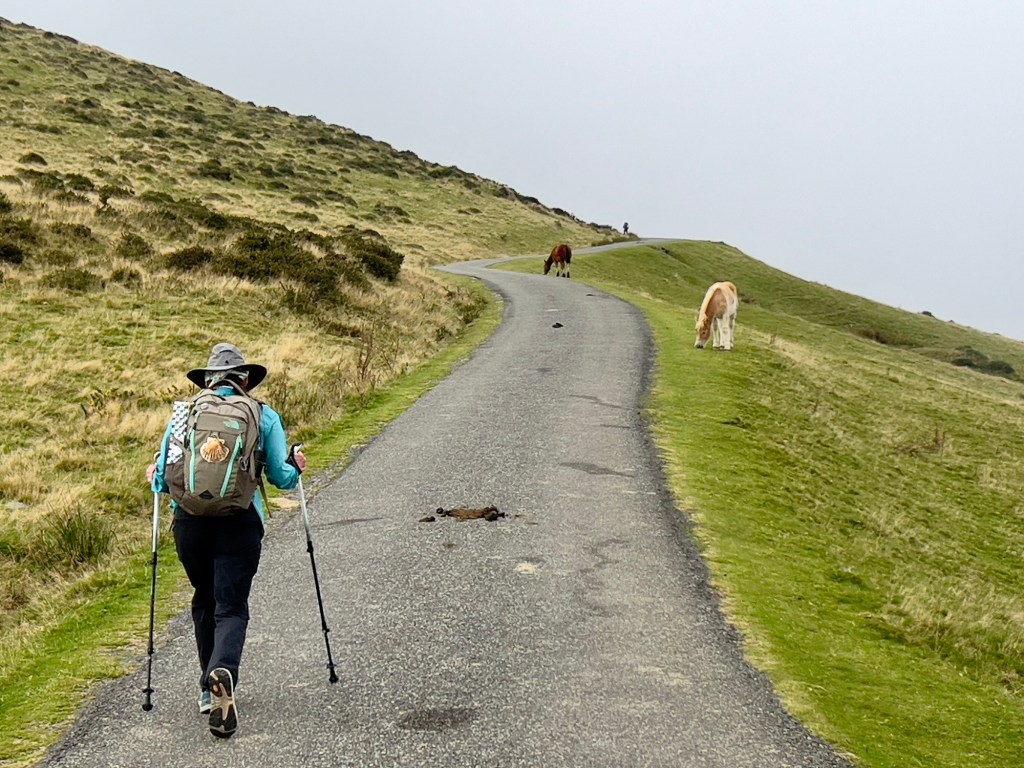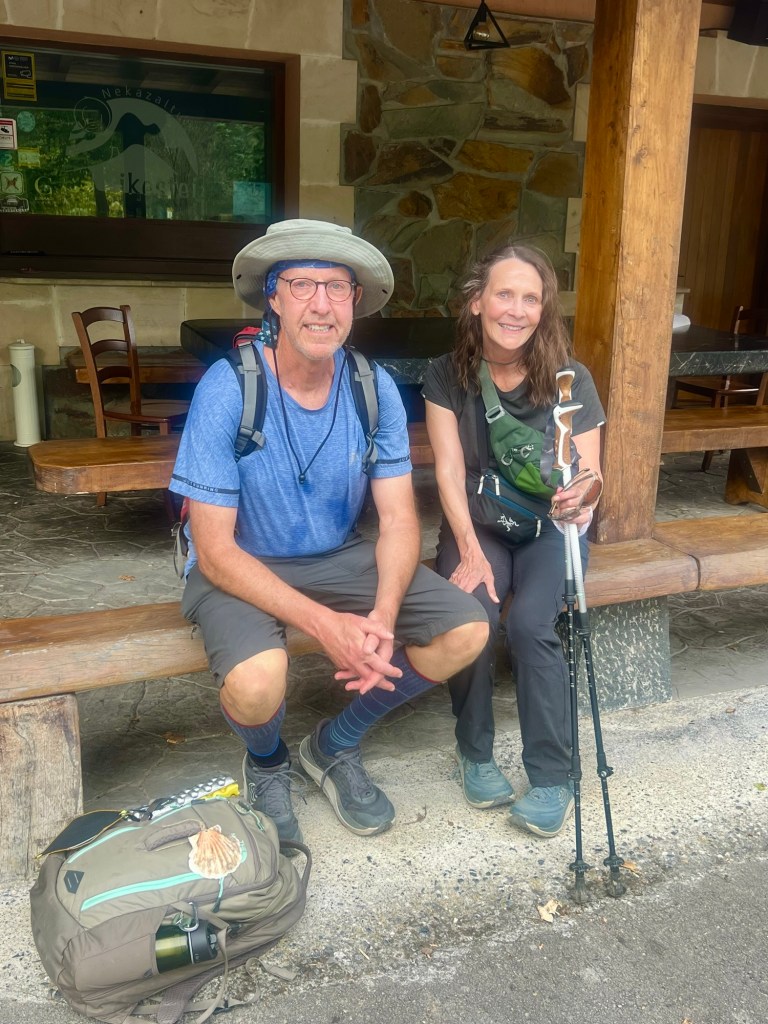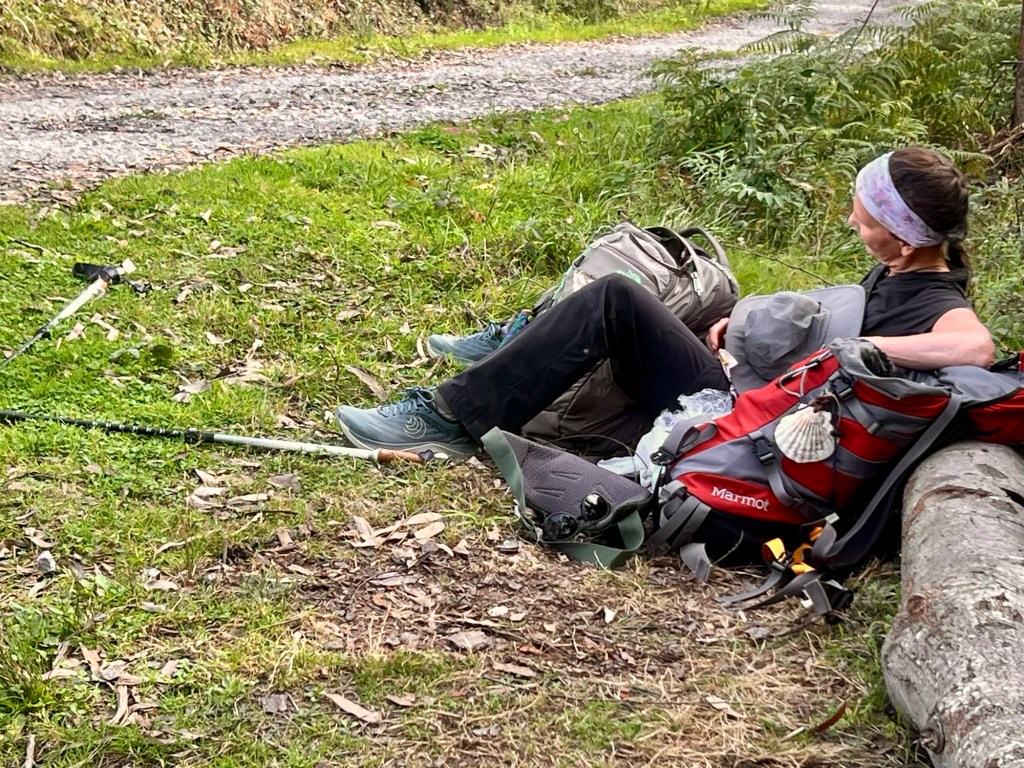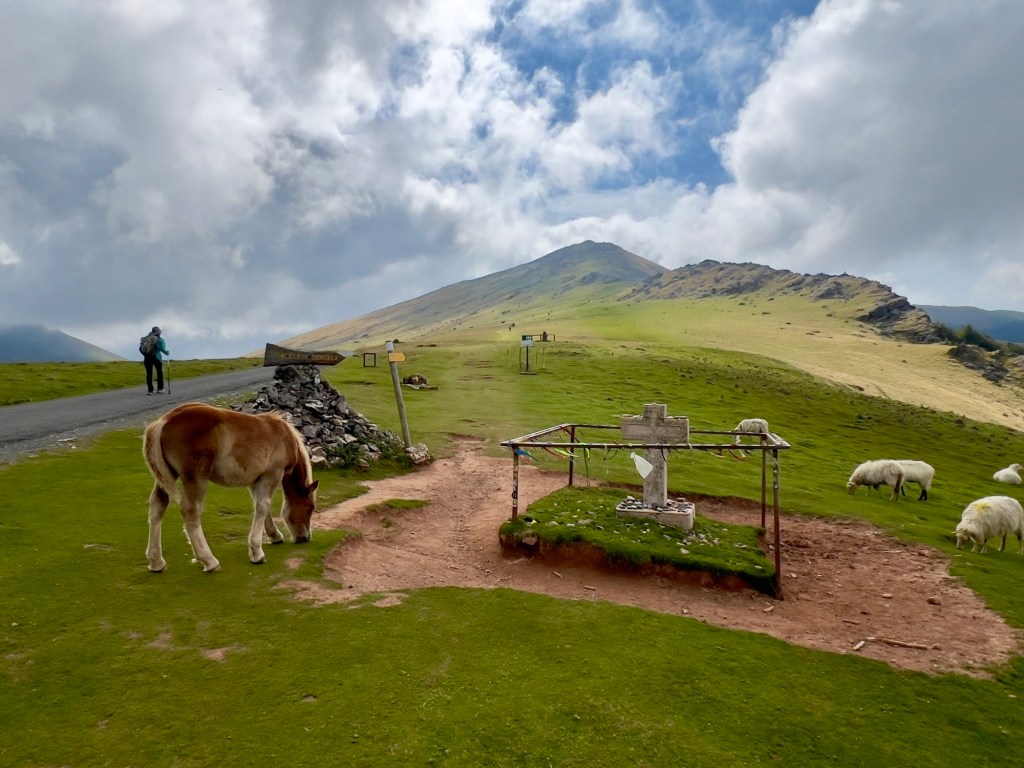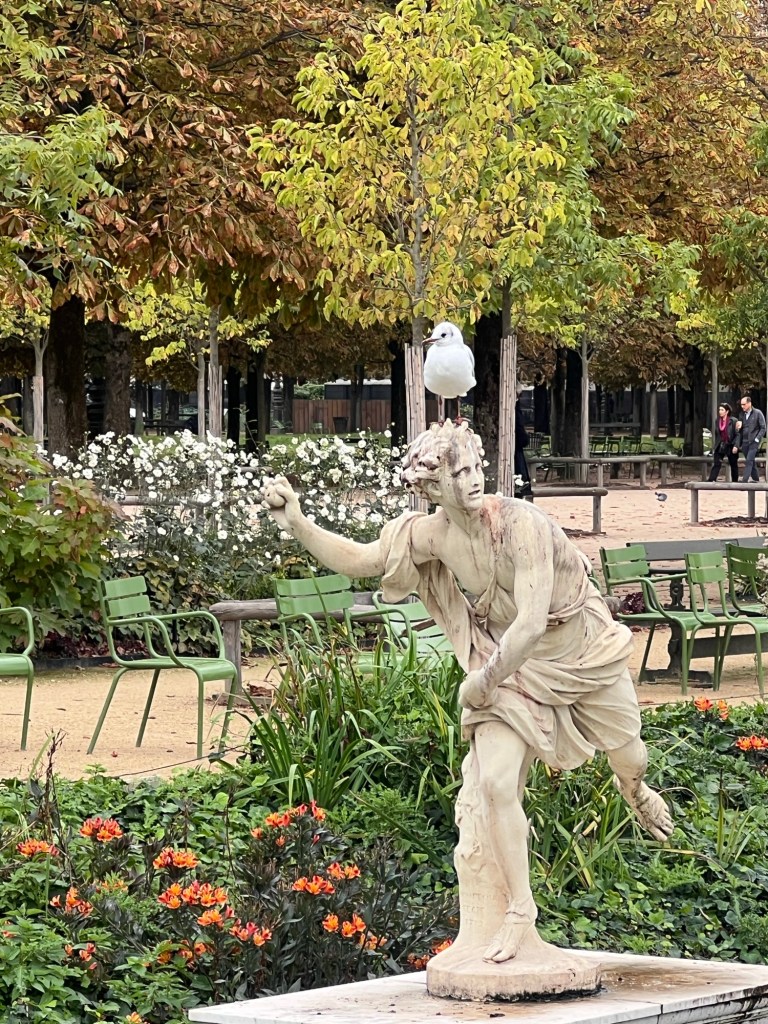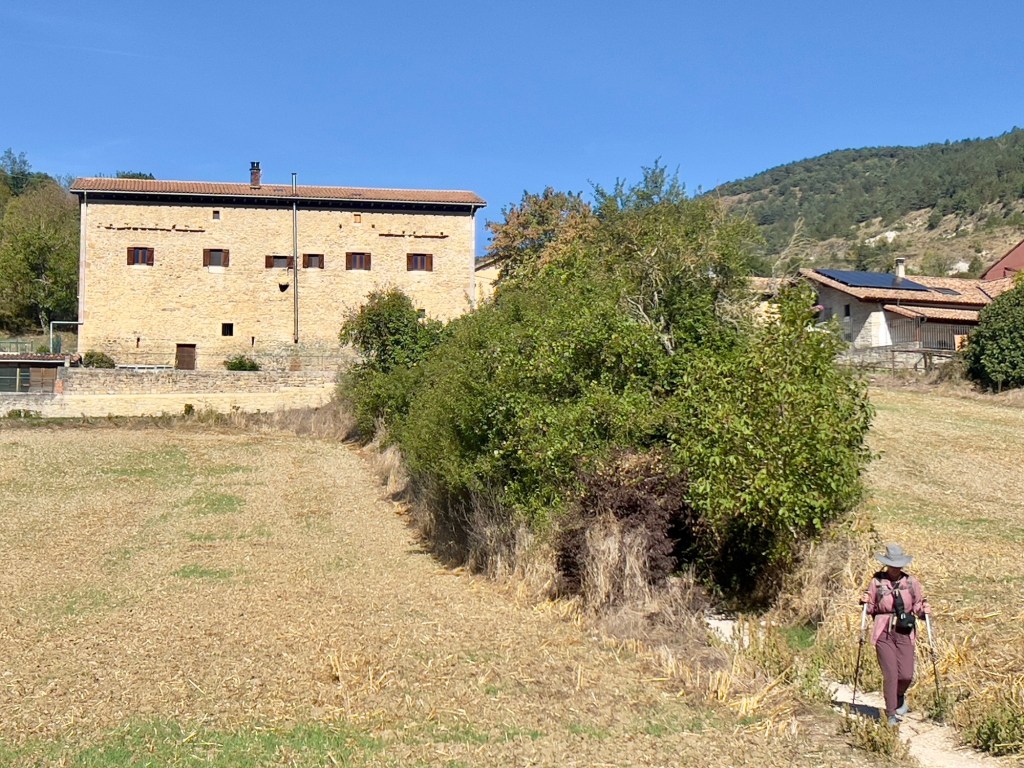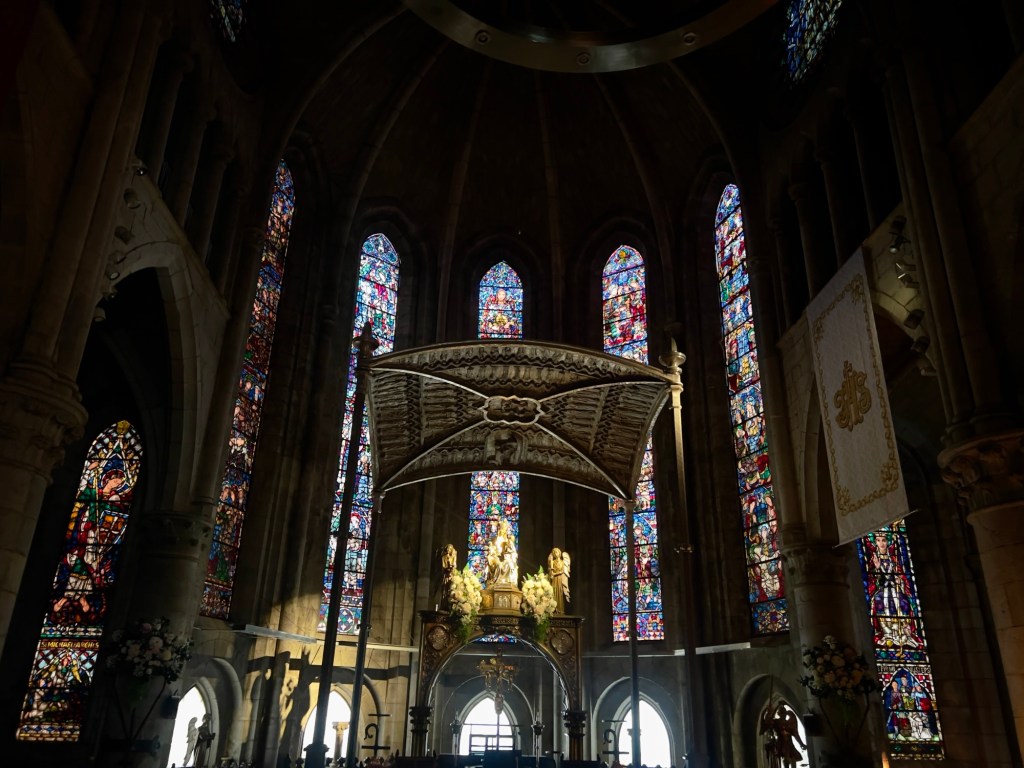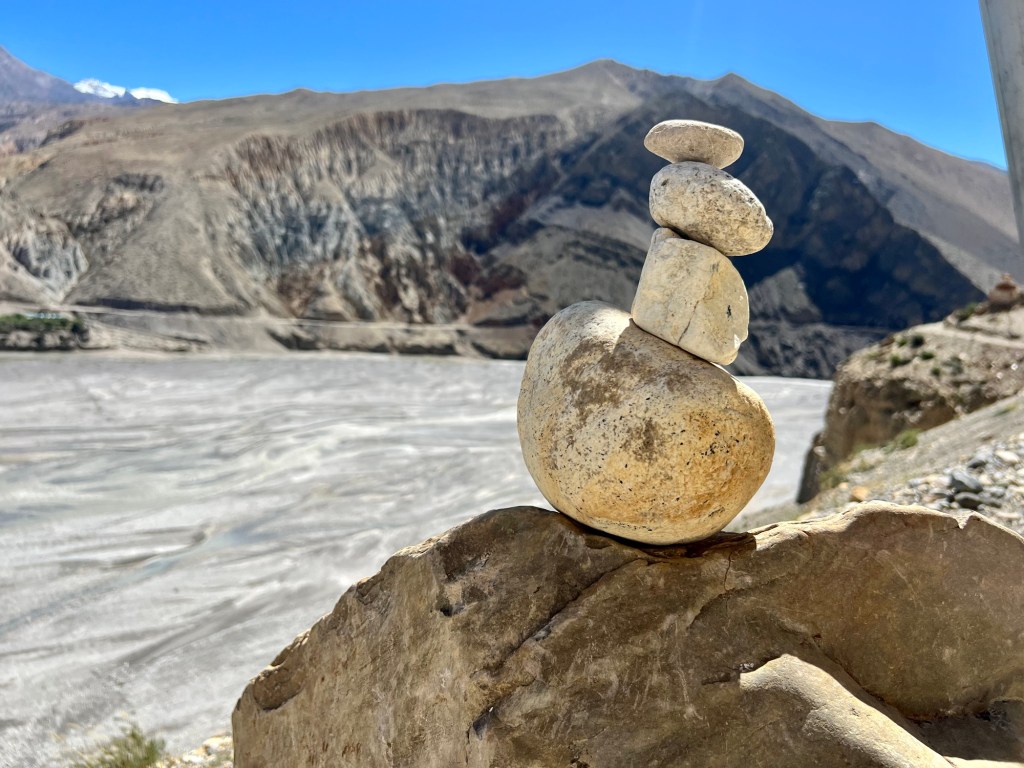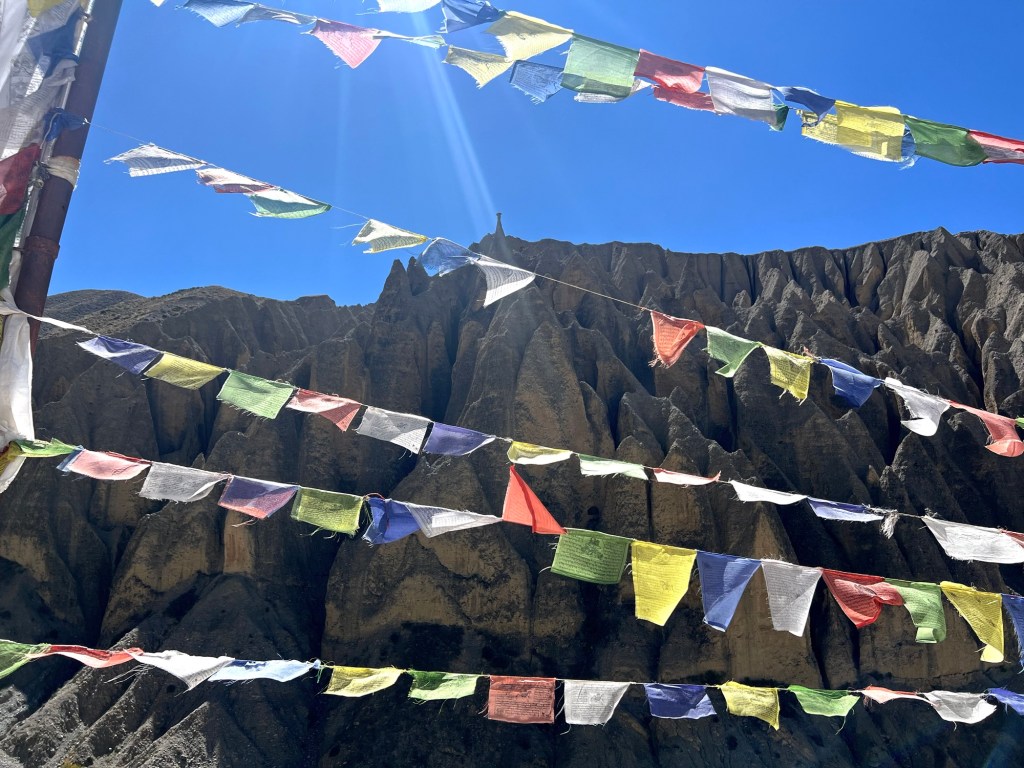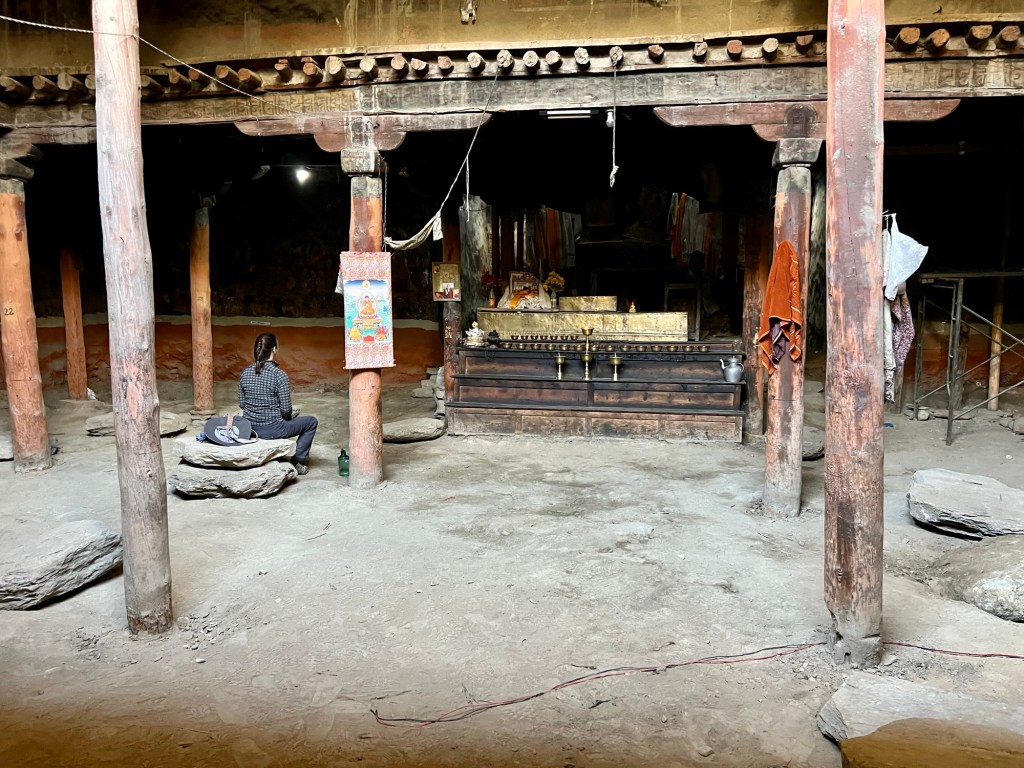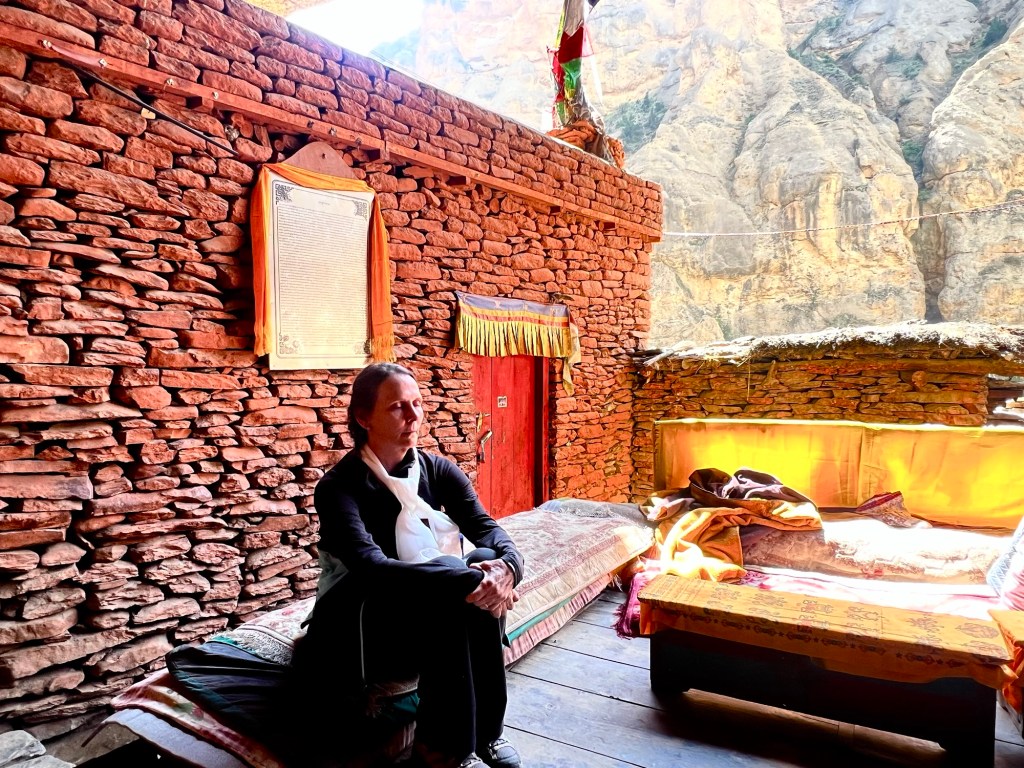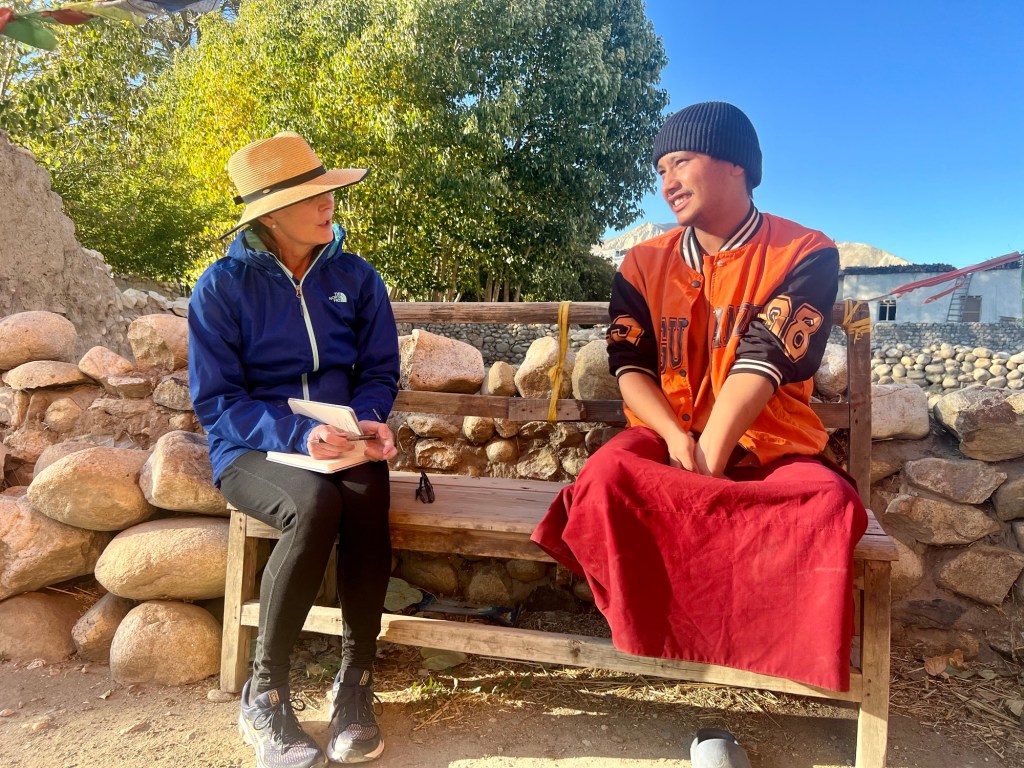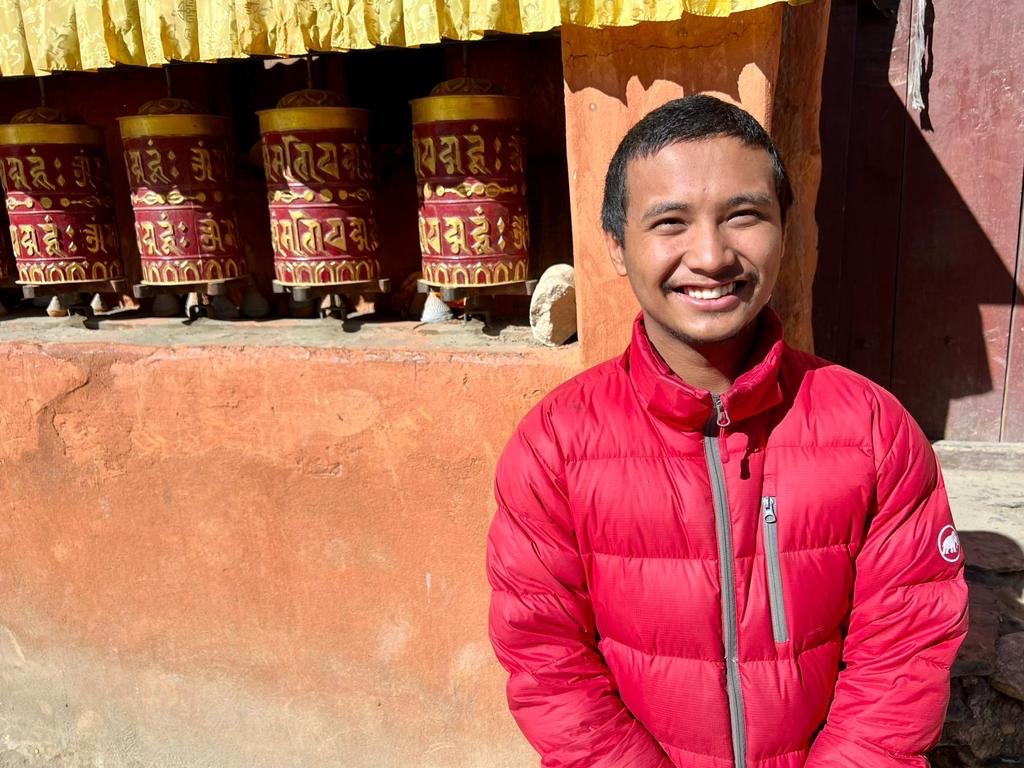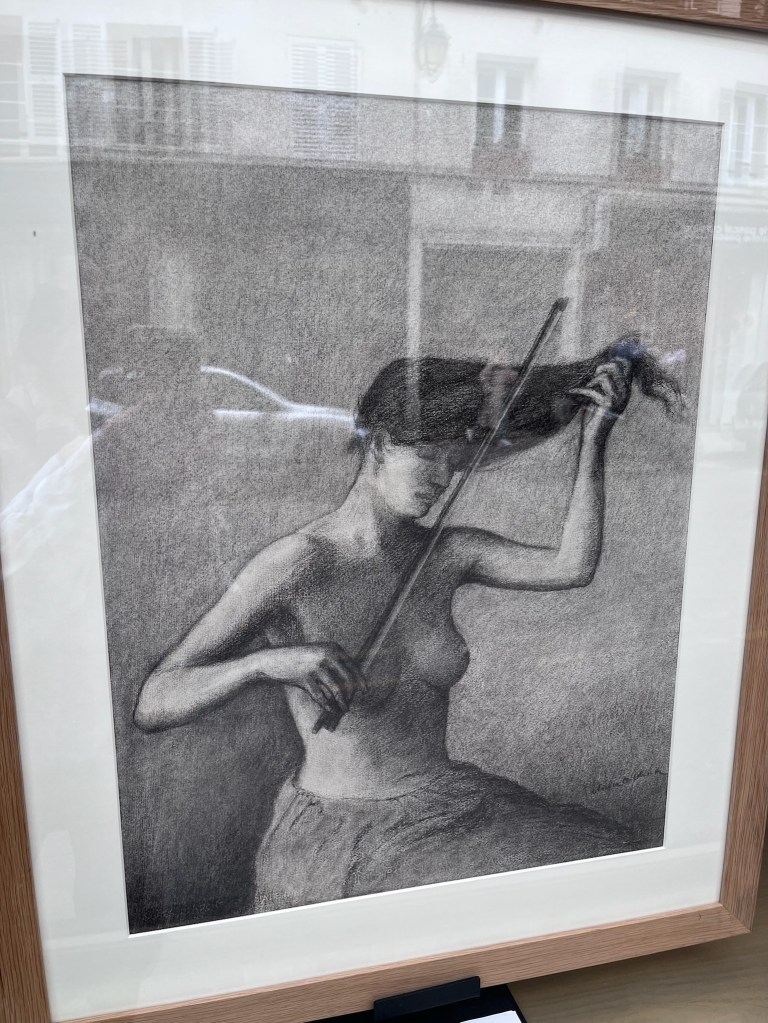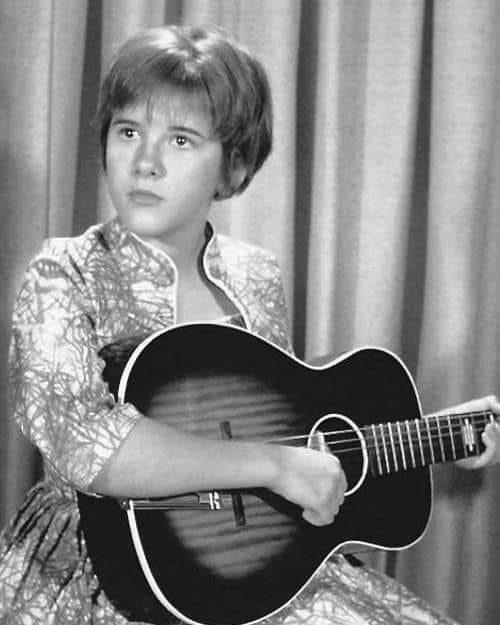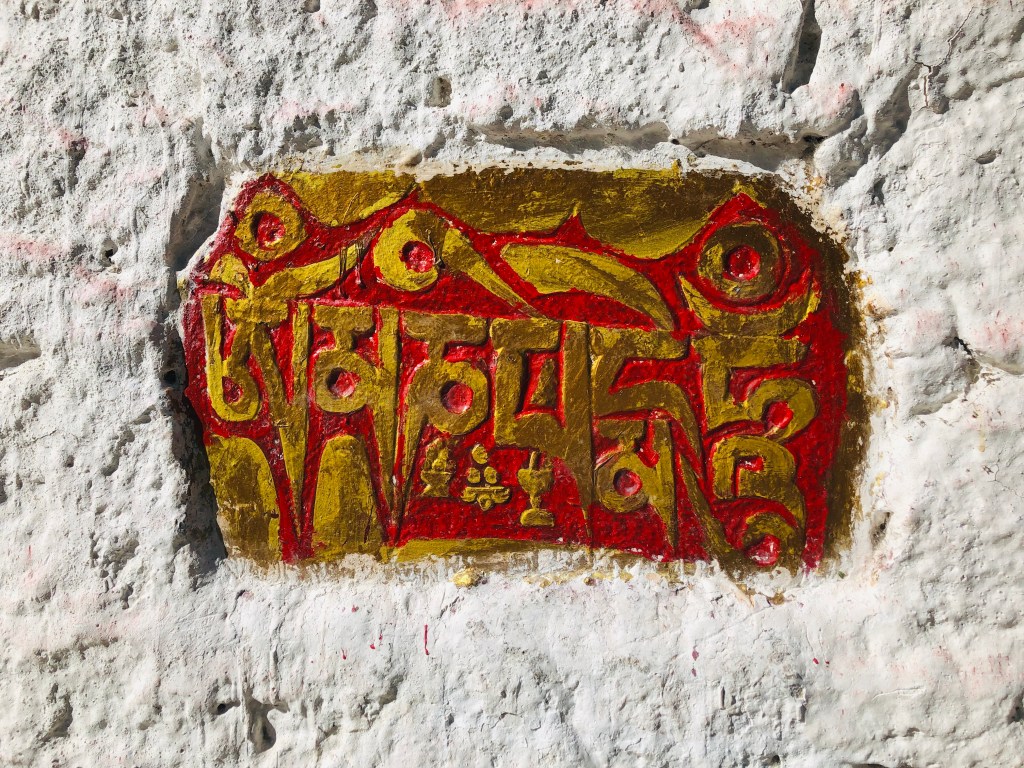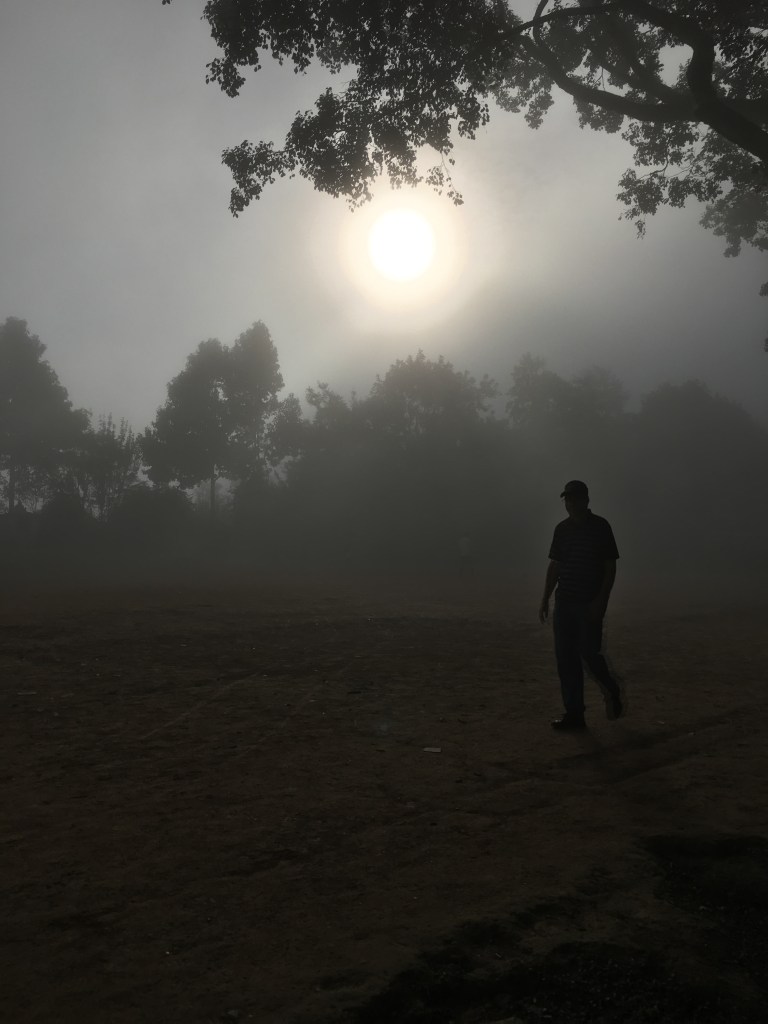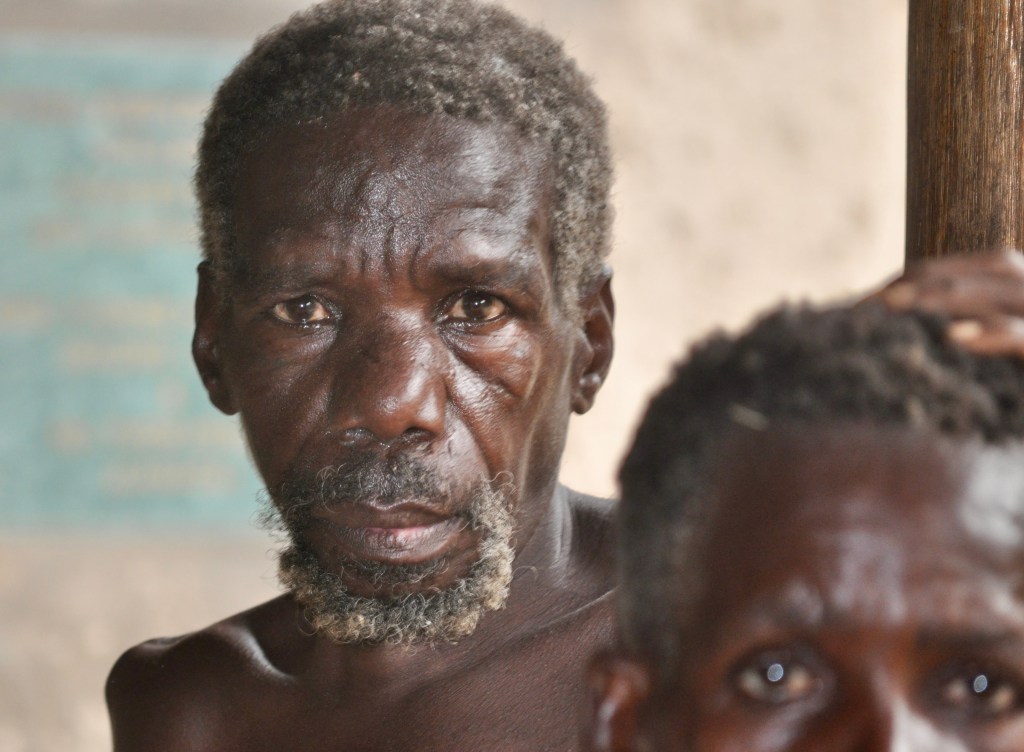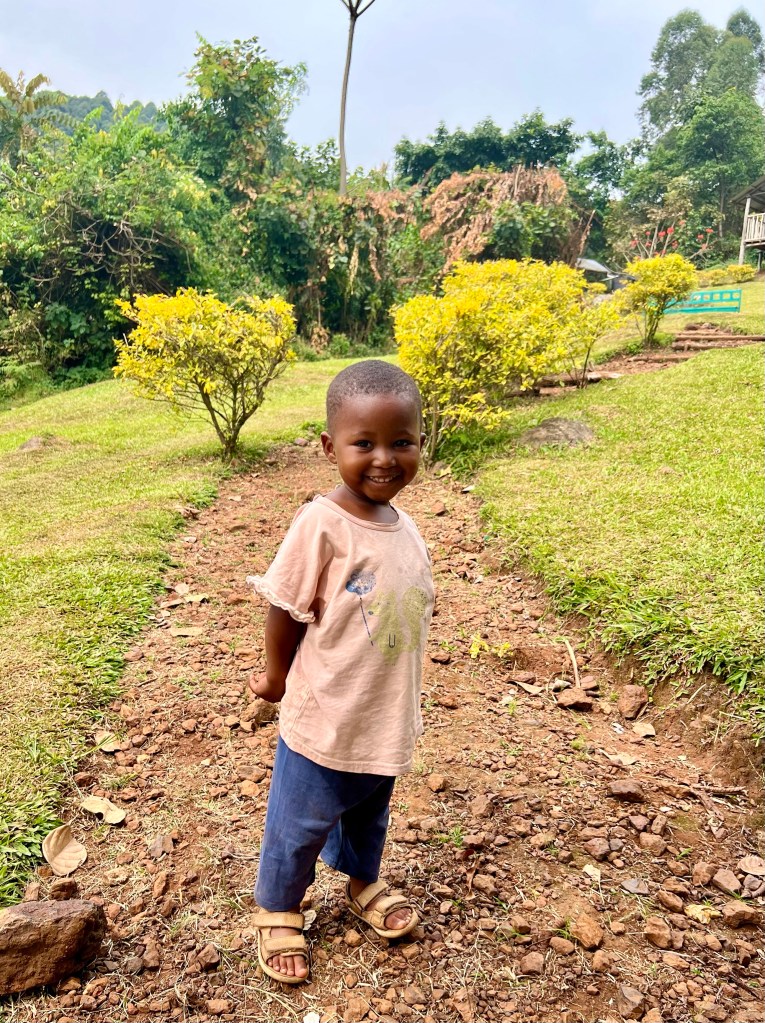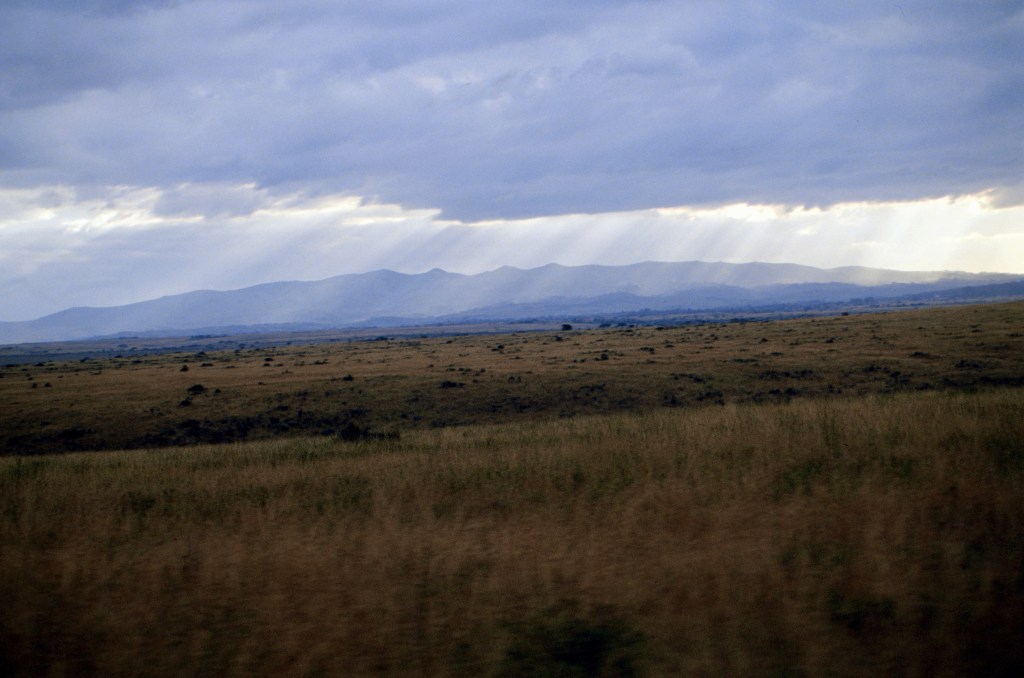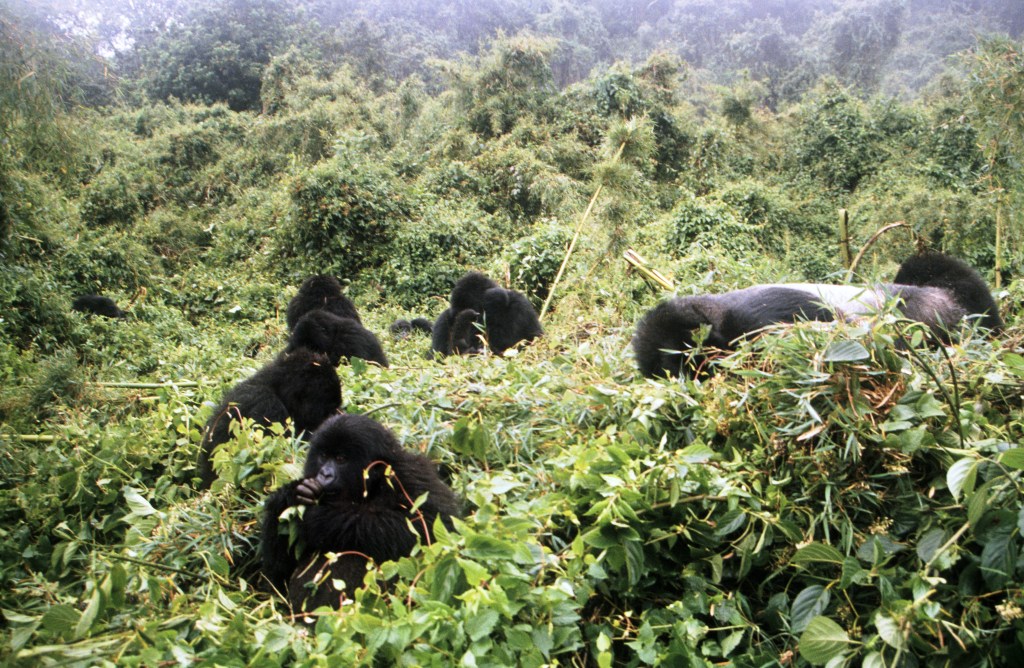
It Is Solved by Walking. Camino de Santiago. Autumn 2025


Everyone knows the first rule of Fight Club. As it turns out,  there is a similar first rule of the Camino de Santiago.

  It is this: Pilgrims don’t ask other pilgrims the reason they are walking. 

    Some of the reasons we do things are private, and some things we do without a conscious reason. Nothing wrong with that. The unexamined life may not be worth living, but an over-examined life can be tiresome.      

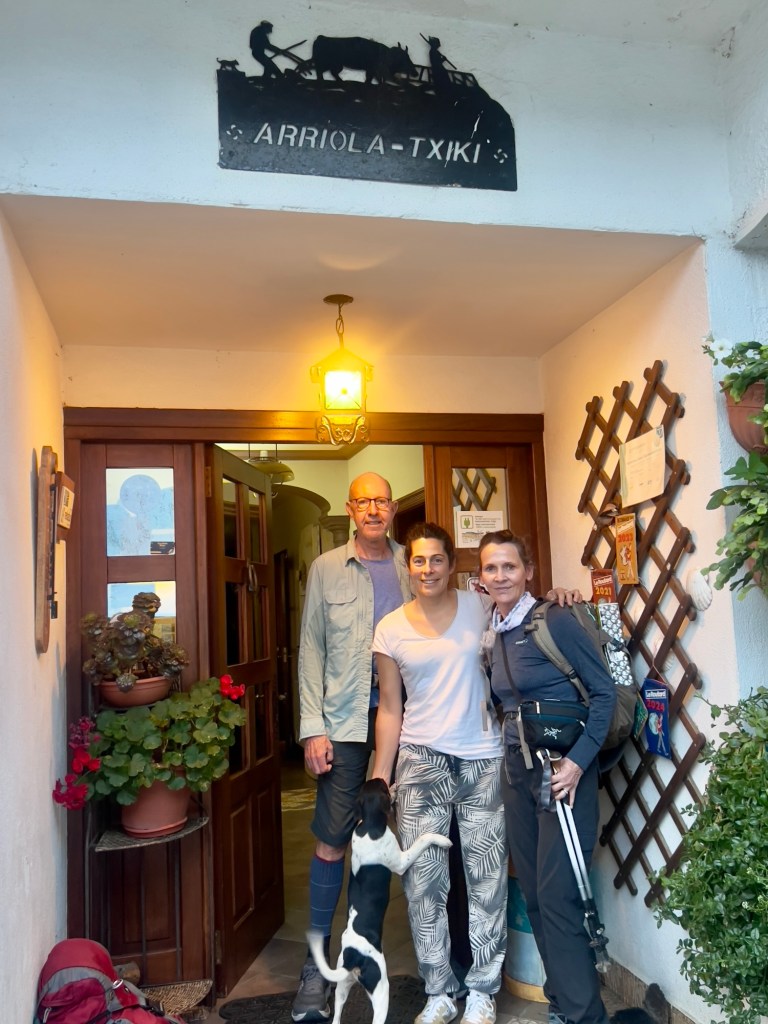
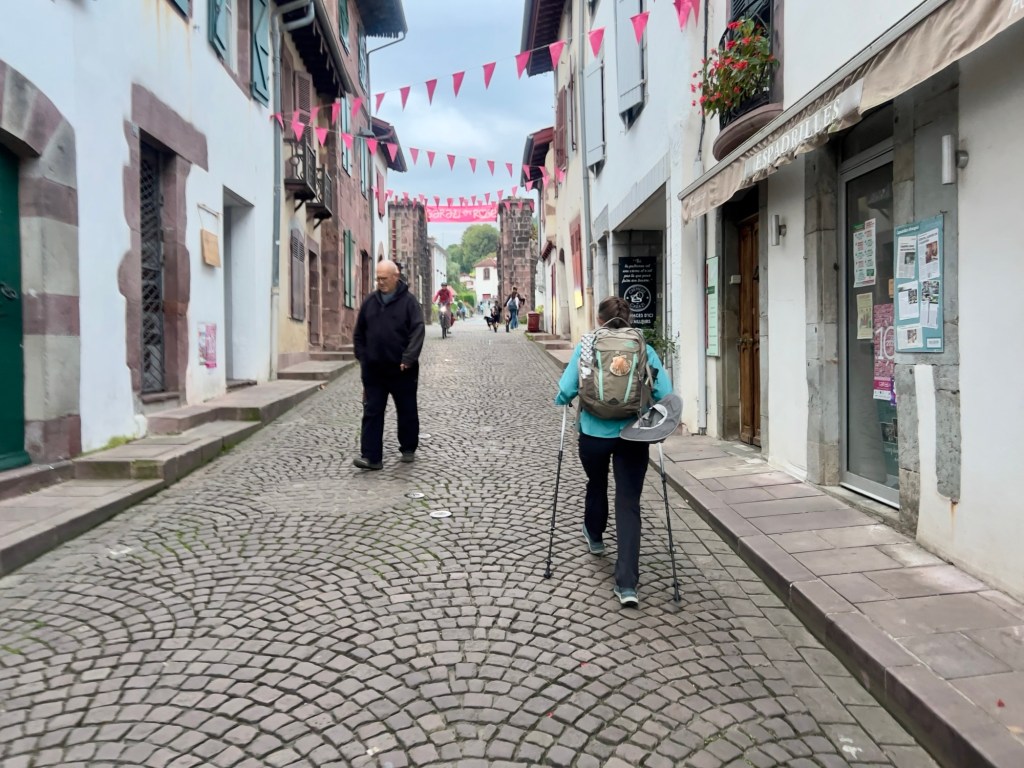
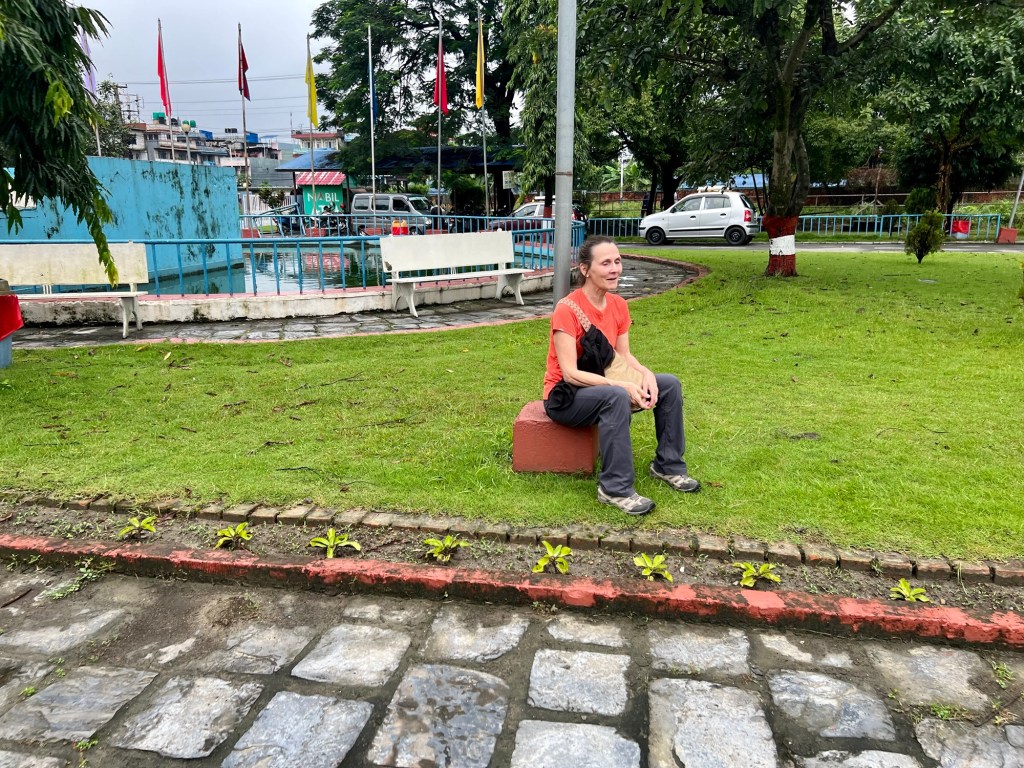
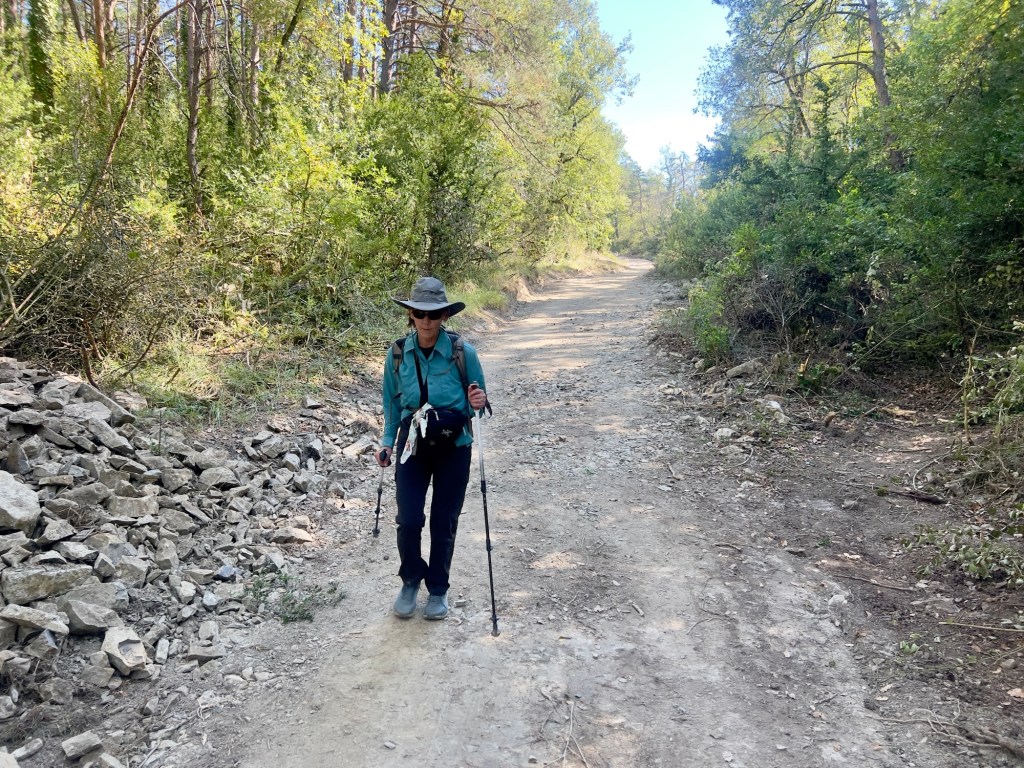
     Caroline and I walked the Way of Saint James together, she for her reasons and me for mine, but it’s not something we needed to talk about. 
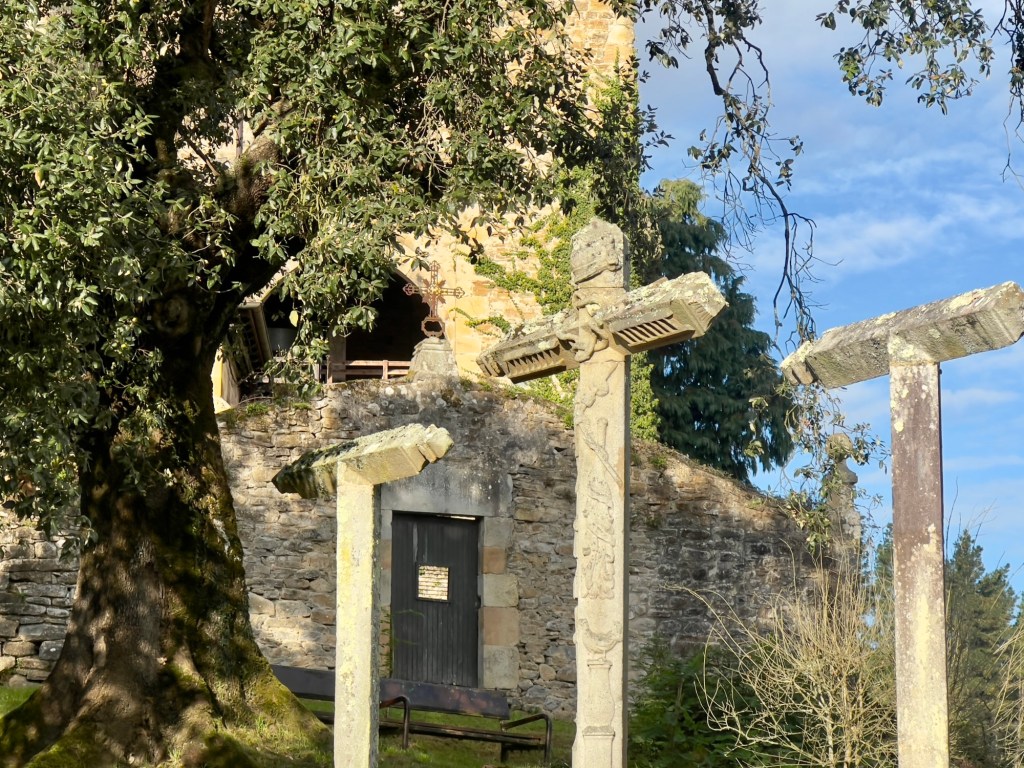
    For many pilgrims, the Camino is a spiritual quest, or they hope for it to be. Even that reason doesn’t say very much or tell the real story. An individual’s spiritual journey is as unique as their fingerprints.  I watched a movie where one character said, “I’m not a religious man,” and his friend said, “Religion has nothing to do with it.”

I think it’s that way for most people walking the Camino. The motivation to walk runs deep, but religion is not the biggest part of it. And I think that a true spiritual journey is something you take with a part of you other than your feet. 
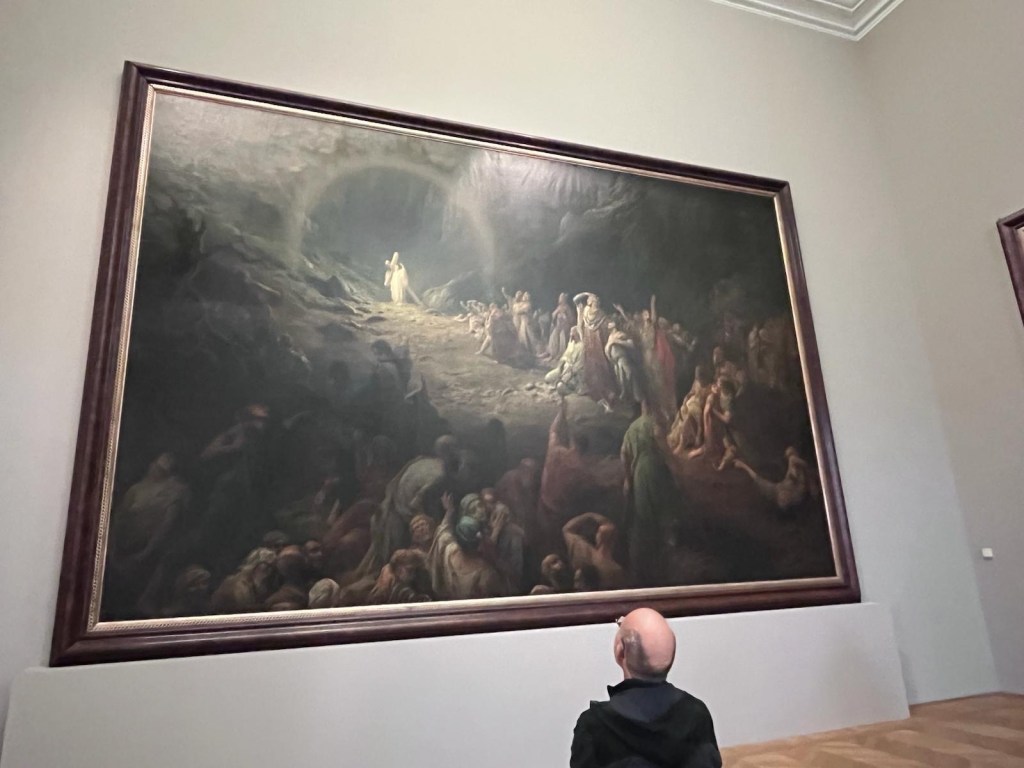


I do know how it started for me. It started with a book. 

     Like the music we listen to and  movies we watch when we are young, the books we read in our youth are formative to who we become. Song lyrics, poems, and stories give voice to what we feel but don’t know how to say.  We read a book and want to be in it or bring a part of into ourselves. The creations and characters we encounter over the years form a personal cannon, and we become the curator of our life.
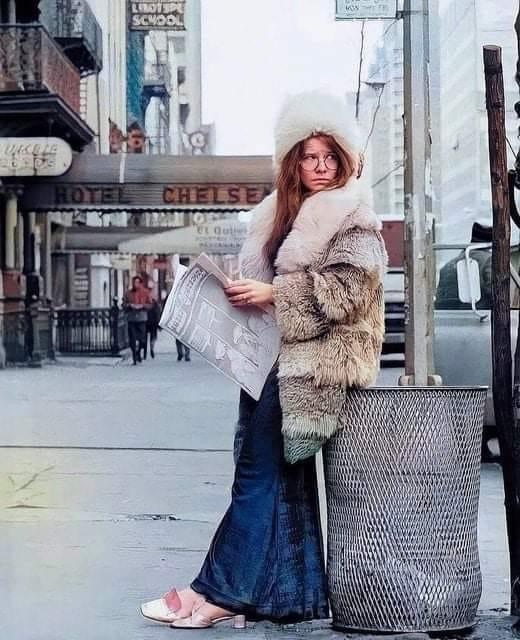
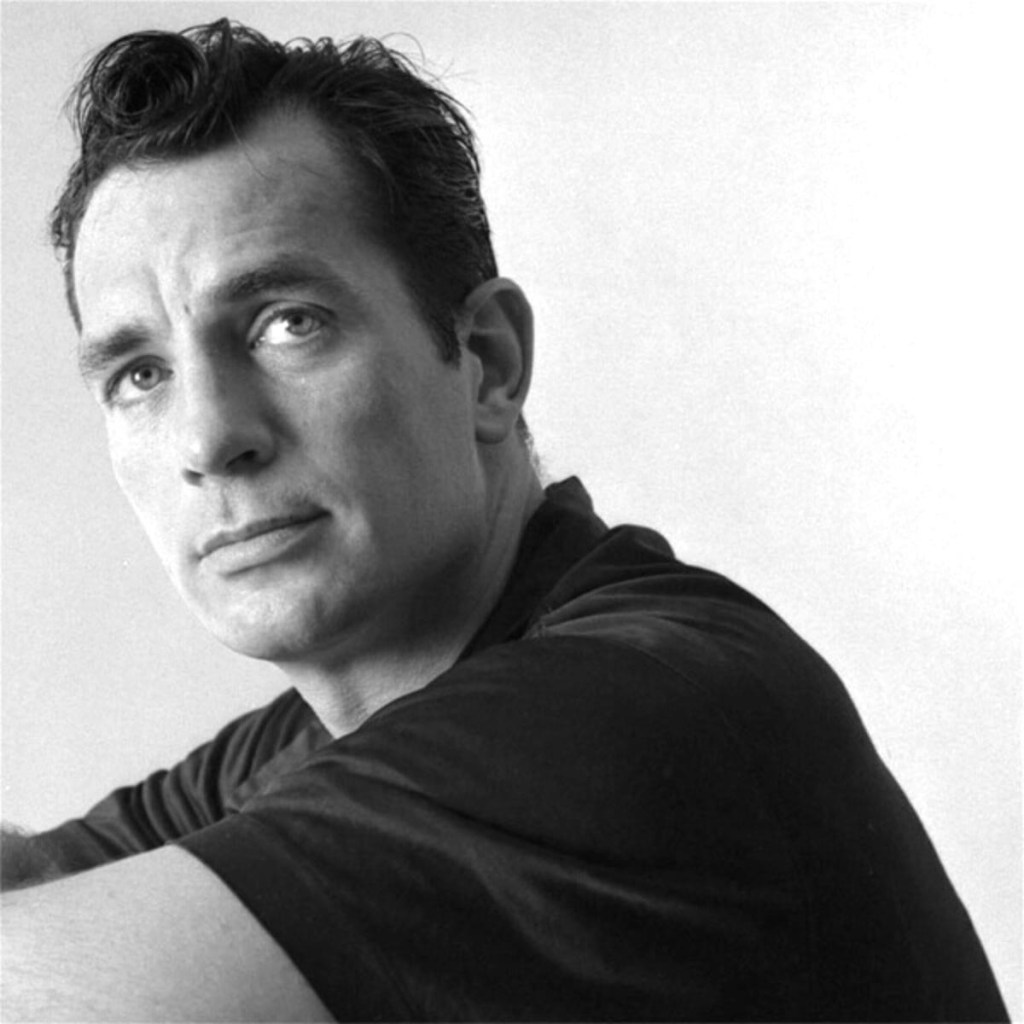
Environmentalists and certain types of nonconformists carry with them a copy of Walden as if it is their Bible, J.R.R. Tolkien has left his indelible mark on untold numbers who would say that after reading Lord of the Rings they were never the same, and just the thought of Ol’ Yeller brings a tear to the eye of every dog lover. 

On the other hand, some of the songs and the books that come to us early in life don’t hold up as we grow older. I loved Zen and the Art of Motorcycle Maintenance the first two times I read it, and I credit that book with opening new worlds to me, but I read it again a few years ago and didn’t feel the same magic.  I read Ayn Rand’s Atlas Shrugged when I was college age –the same stage of life that most people read her–and thought she was really onto something. Now I think, not so much. 
    The Pilgrimage, by Paulo Coelho is another book from my personal canon.  Coelho is a well known author now, but he wasn’t back when I read his first and most popular book, The Alchemist. I liked that one, so I read his second book about a man on a spiritual quest on the medieval pilgrimage route across northern Spain.  Spiritual, yes, but in the broadest sense. The book is more about finding himself than finding God. 
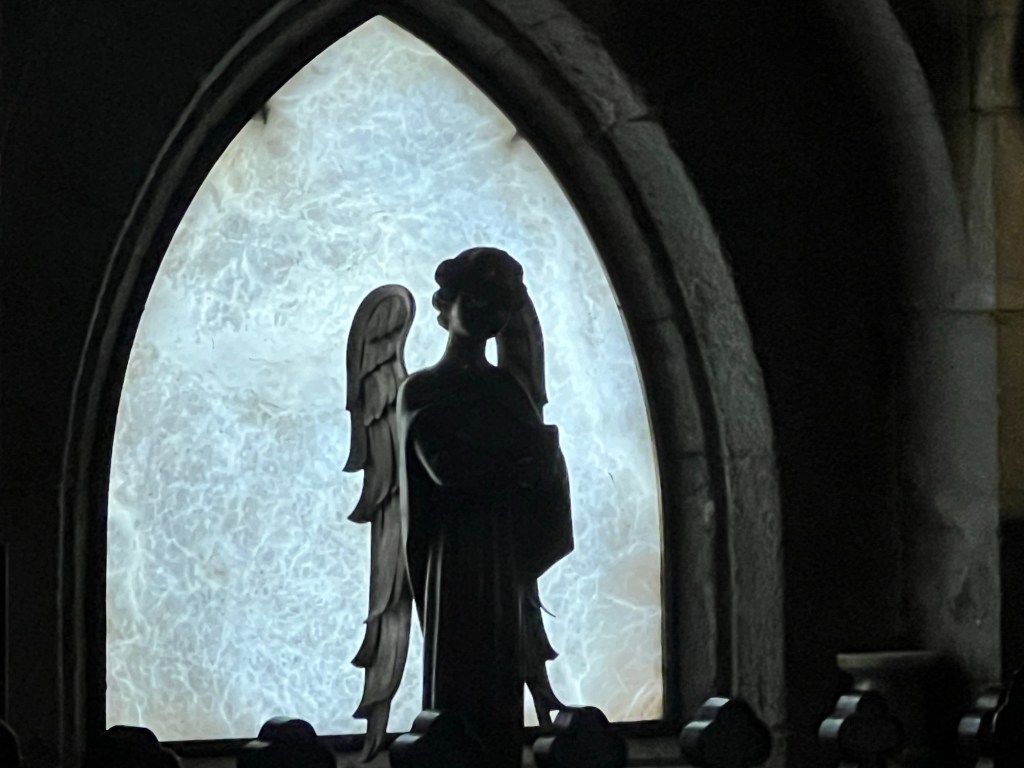
    Before reading that book, I had never heard of the Camino de Santiago de Compostela and I had never entertained the notion of going on a quest. Yet I’ve always liked to travel, and they say that when telling a story, any journey represents a quest; every journeyer, whether they know it our not, is really on a quest, and the objective is not what they think they are seeking.  What the hero is actually seeking is not a holy grail or a pot of gold. The prize and true destination is self -knowledge. 
Which was a something I needed a lot more of back when I first read The Pilgrimage: self-knowledge.  I was not even self-aware enough to know I was not self-aware. But I must have known something was missing, because the book drew me in and has been in the back of my mind ever since.

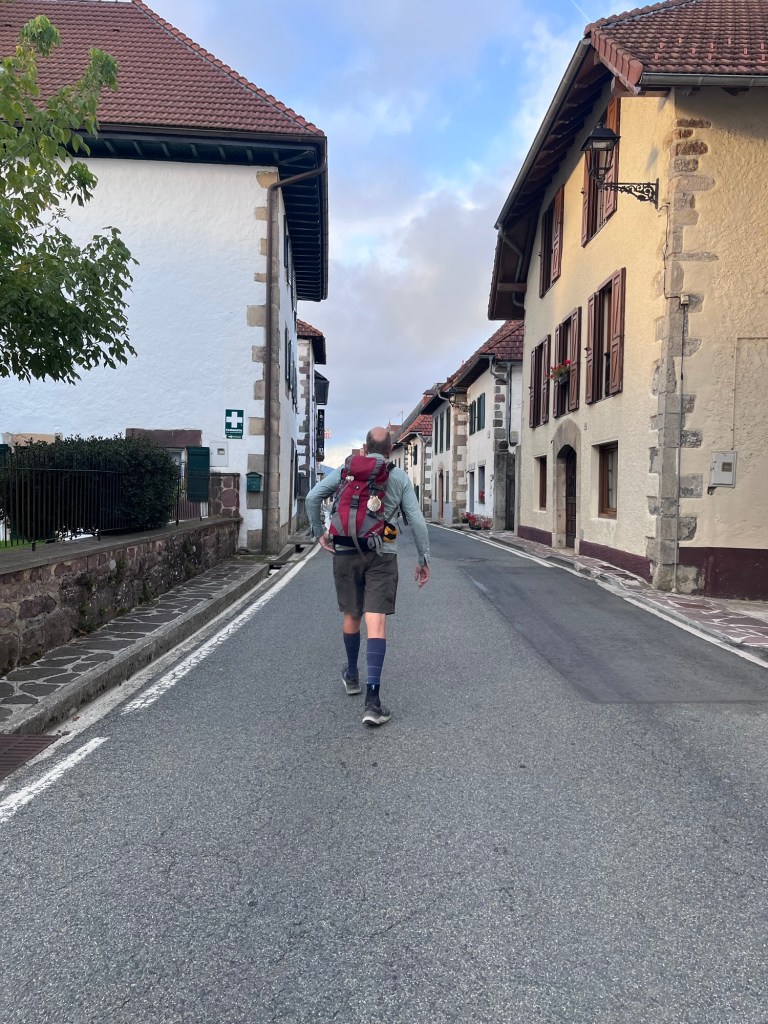
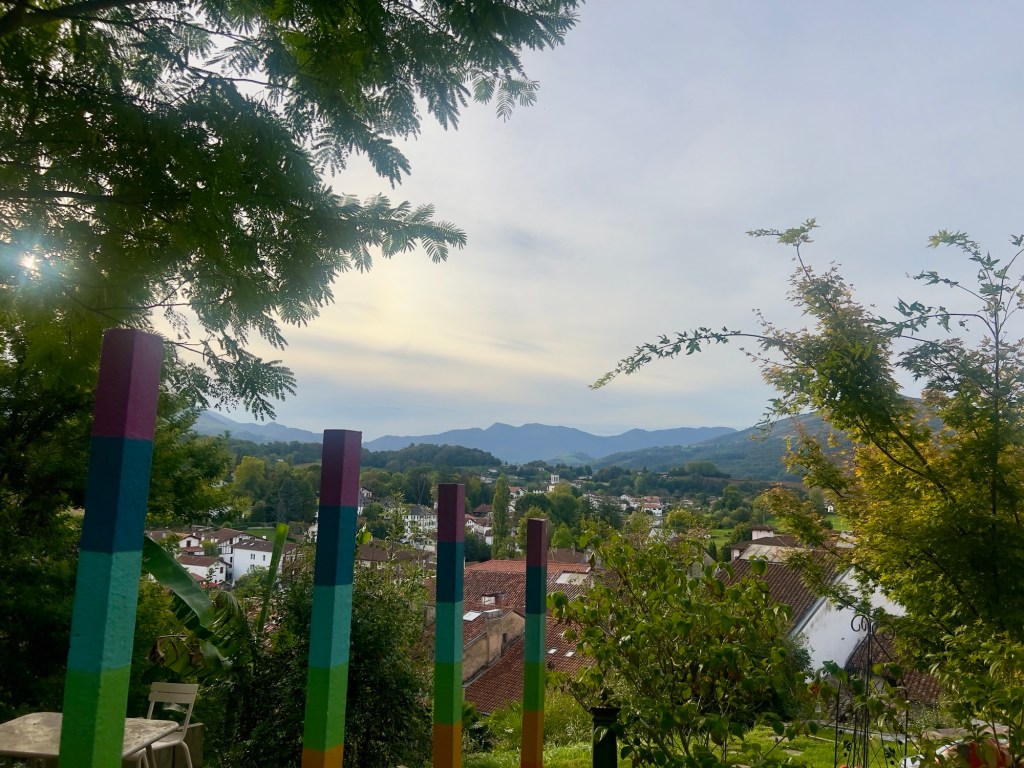
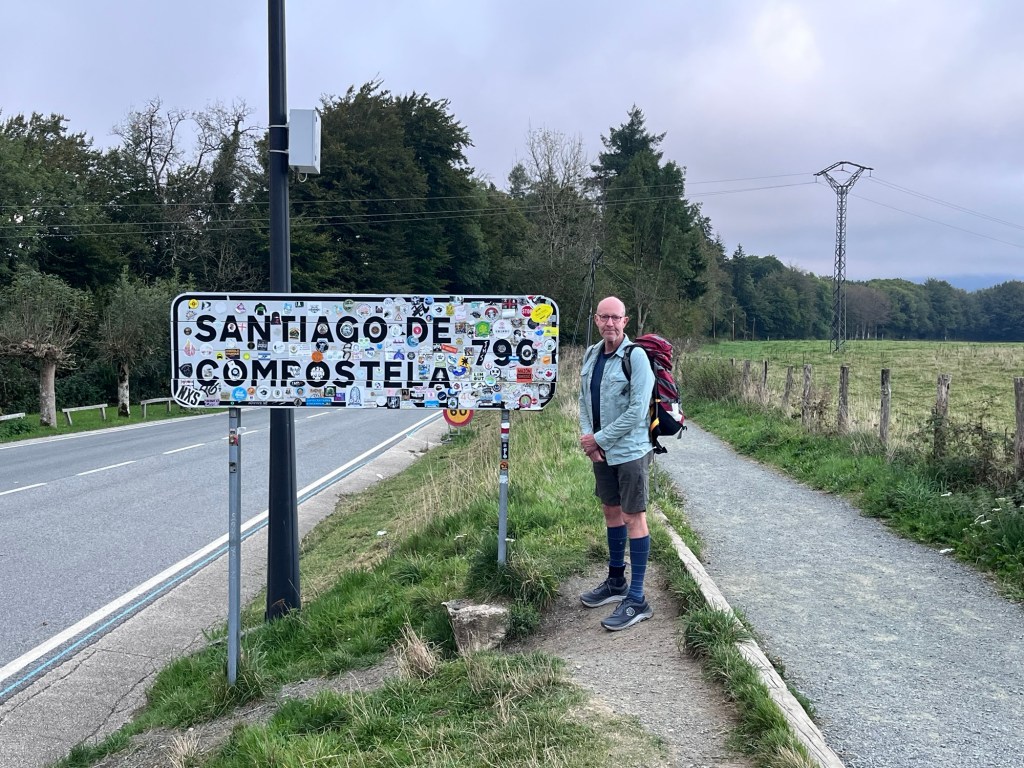
    So that’s how I found myself walking across northern Spain.


The story of the Camino de Santiago de Compostela is a tale told from equal parts history and legend. 
    James and his brother John, sons of Zebedee, were fisherman on the Sea of Galilee and two of the first to follow Jesus.  Just before the crucifixion, Jesus told all his apostles to scatter across the known world and spread the word. Peter ended up in Rome, Thomas in India, and John the Evangelist in Asia Minor. James washed ashore on the Iberian Peninsula. He wandered through Galicia, in what is now northwest Spain, but eventually returned to the Holy Land where he was beheaded by Herod Agrippa, the first of the apostles to be martyred.

    Friends slipped his body out of Jerusalem and put it on a ship made of stone with no sails or sailors. The boat was miraculously guided by angels across the Mediterranean, through the Straits of Gibraltar, to the Iberian Coast. Some of James’ disciples back in Galicia, who were somehow alerted of his arrival, took his body off the boat and placed it in a small tomb on a mountainside.     

There is no further word of Saint James for eight hundred years, and during that time the area was slowly Christianized. 

In 813 a Christian shepherd, a hermit named Pelagius, saw lights shining from a cave. He went there and dug until he found bones and a parchment, which he took to the local bishop who authenticated the bones as those of James and two of his disciples. One version of the legend is that Pelagius and the bishop were led to the location by a star, hence the name Compostela, (Latin: Campus Stellae, “Field of the Star.”)

     When the Spanish king learned of the discovery, he had a small chapel built to mark the spot and hold the relics, and, as more people came to visit, the town around the hill grew in size.  
     The pilgrimage that started as a trickle would swell and the city of Santiago de Compostela grew to accommodate the numbers. A larger cathedral was commissioned to replace the chapel, and in 1075 ground was broken on the Romanesque and Baroque masterpiece that now serves as the final destination for the multitudes who walk the Camino. 
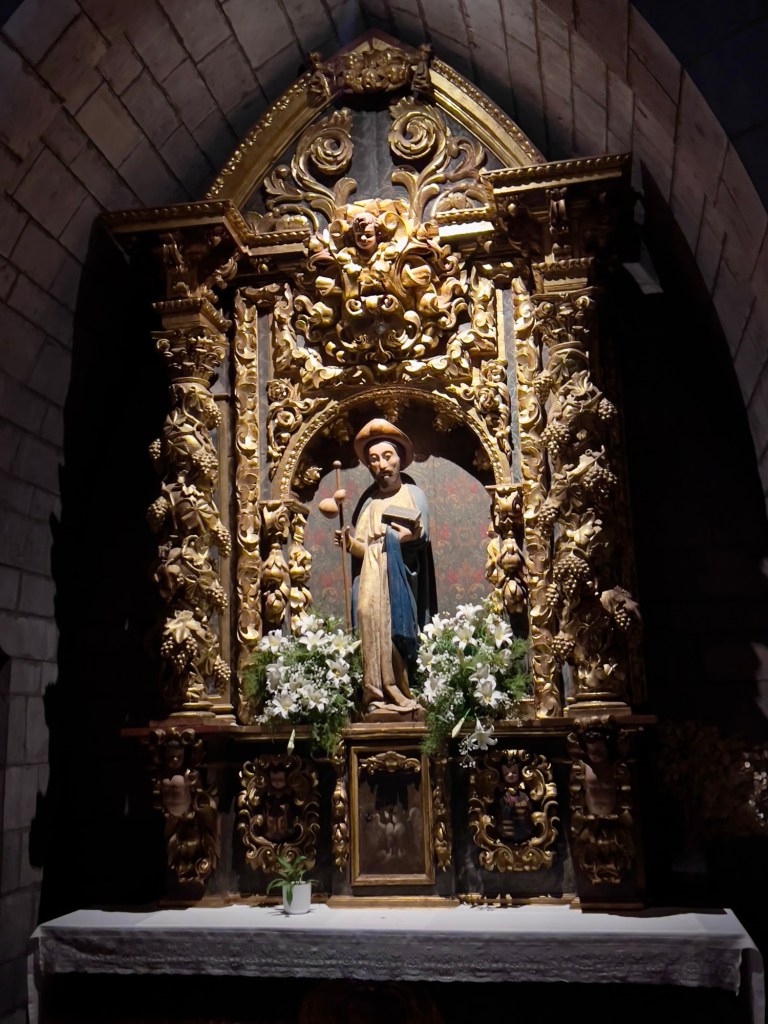

      Saint James –Sanctus Iacobus (Latin), Sant Iago (Old Spanish), Santiago (Modern Spanish)-became the patron of Spain. In medieval times, the Way of Saint James was traveled as a way to salvation or to pay a penance, and throughout the Middle Ages more and more people took part. The numbers dropped during the Renaissance and Enlightenment, but the line of pilgrims has remained unbroken for centuries, and there has been a modern resurgence in the Camino as a source of cultural exchange and understanding among people.

For many, the Camino remains a sacred journey, symbolizing a profound act of devotion while enduring physical trials, with the hope of divine grace. For everyone it is a means to be a part of something greater than themselves.  We were following in the footsteps of people from ages ago and walking in the shadow of kindred spirits from all over the globe. 
     A journey’s beginning is wherever you start from, so a pilgrimage actually starts at the individual pilgrim’s front door. That means there are as many Caminos as there are pilgrims. And yet, because the journey has always been long and perilous and there is safety in numbers, people began to walk together. A pilgrimage community was created and routes were established with designated  starting points, where people gathered from all points to start the walk across Spain. 


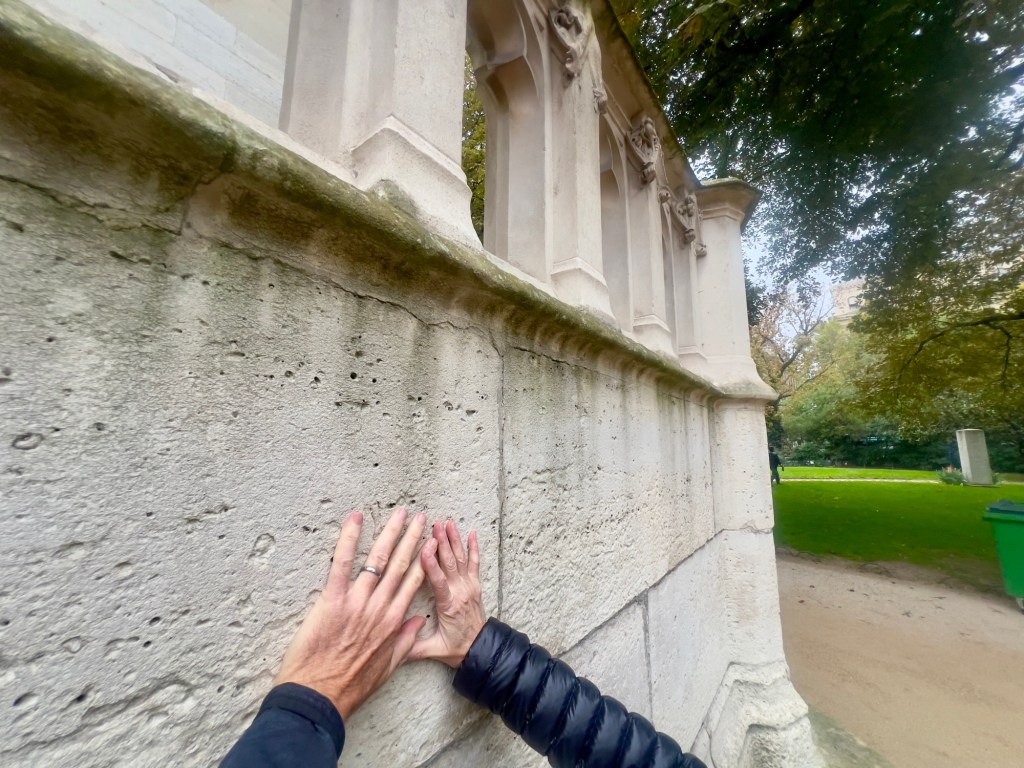
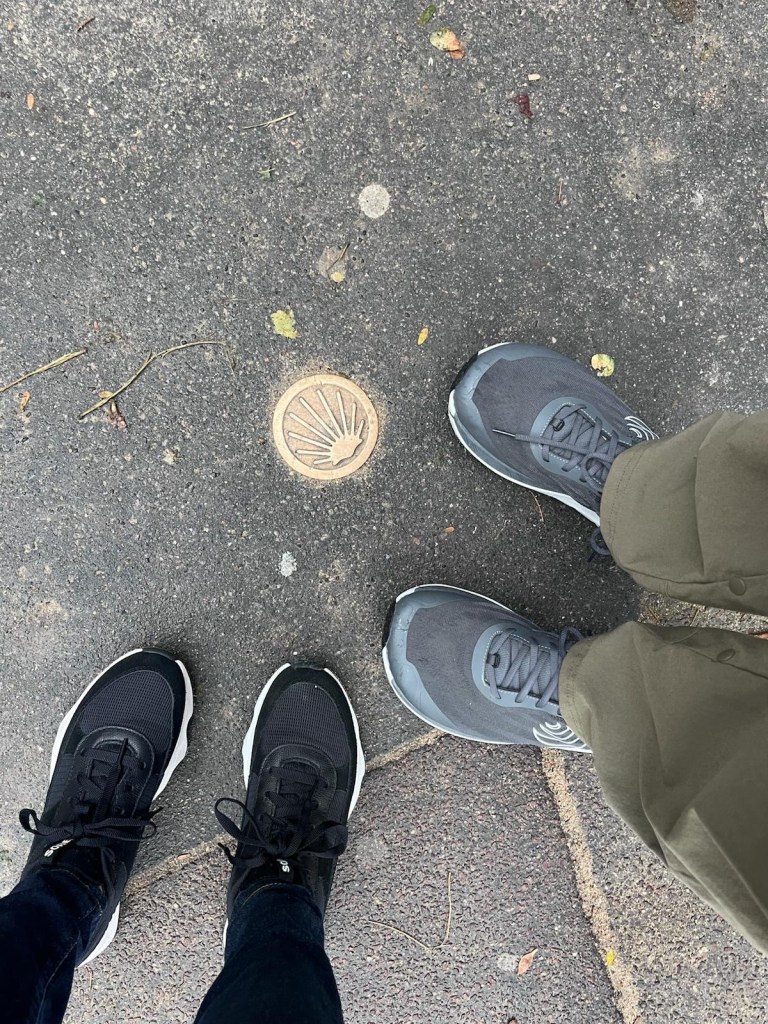
In the center of Paris, mere steps from the River Seine, there stands the tower remnant of a former church that was demolished during the French Revolution. Tour St Jacques is one of the traditional starting points of the Camino (French: Chemin de Compostelle), and it is where Caroline and I  began ours. It is where we saw our first scallop shell. 

  From the earliest days of the Santiago Pilgrimage, its symbol has been the scallop shell.  James was a fisherman, of course, and shells have always been found along the shore of Galicia. And there are legends about James encountering a mystical horse (some say a knight) who,  emerging from the sea, was covered with shells.
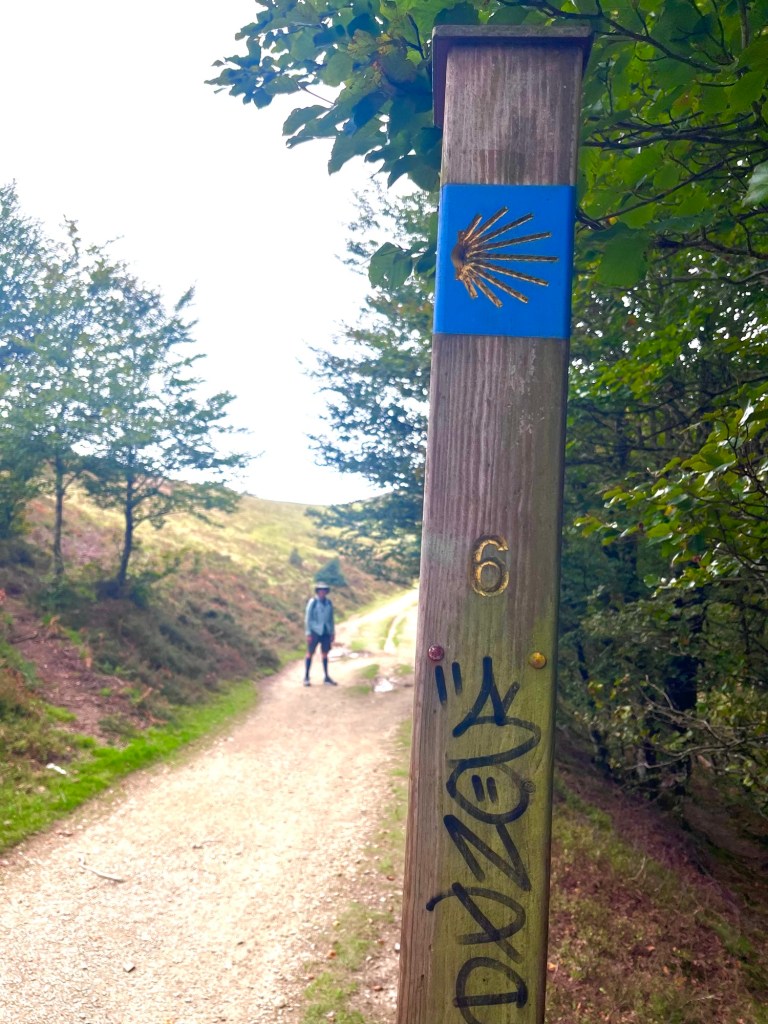
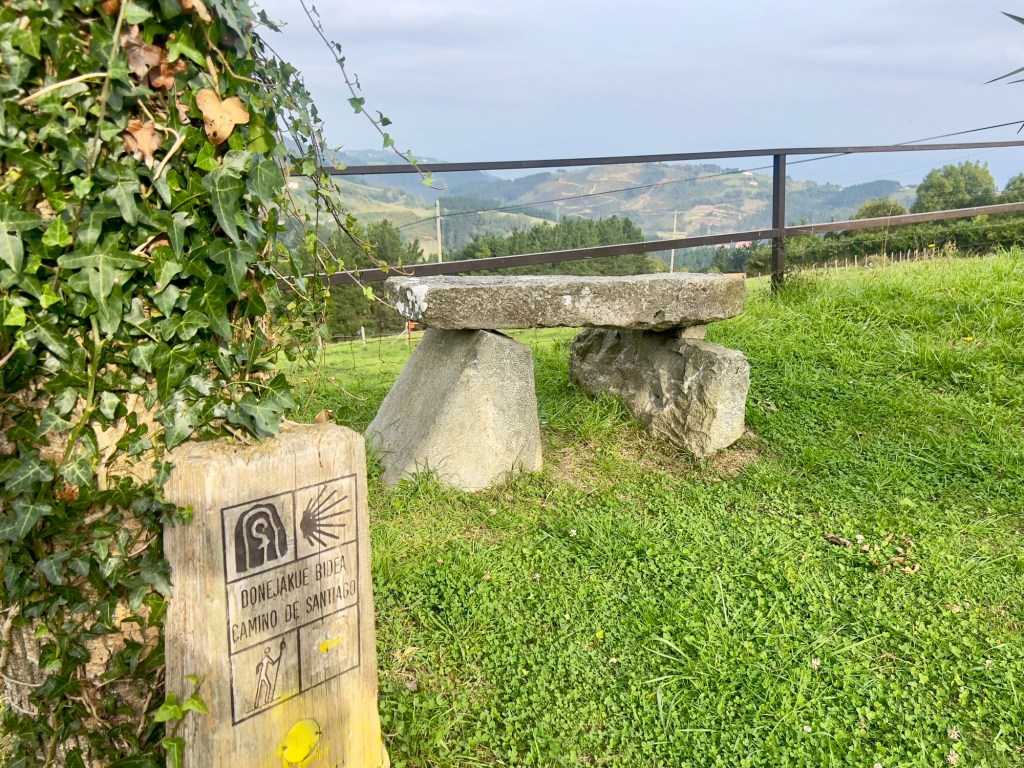
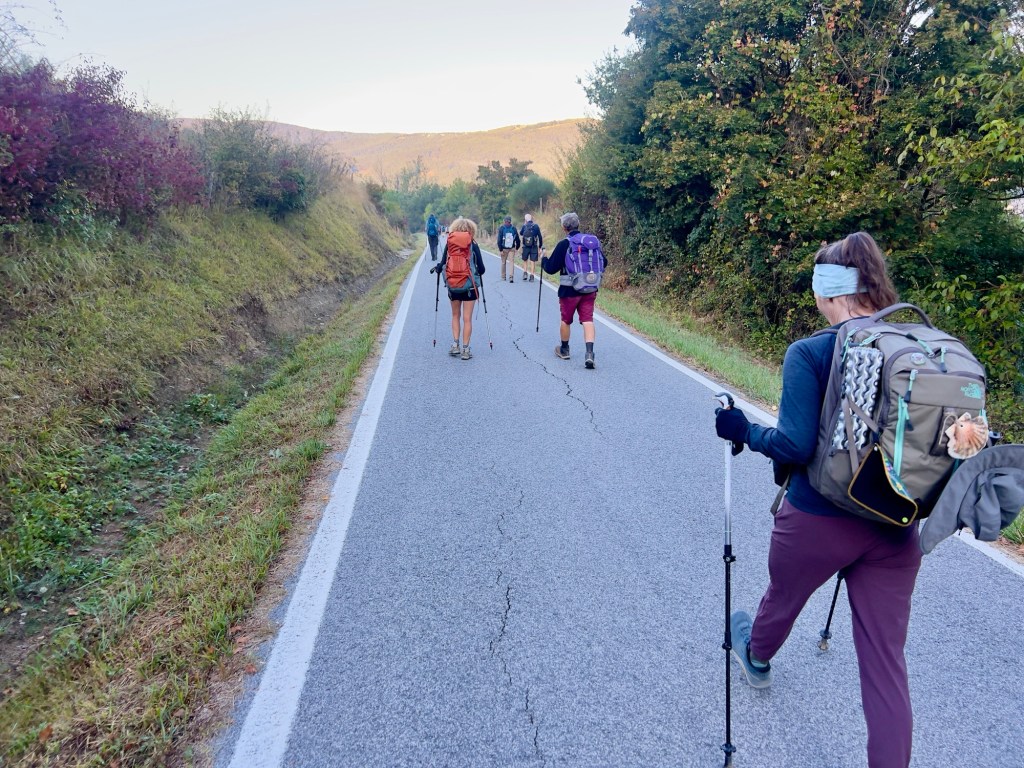
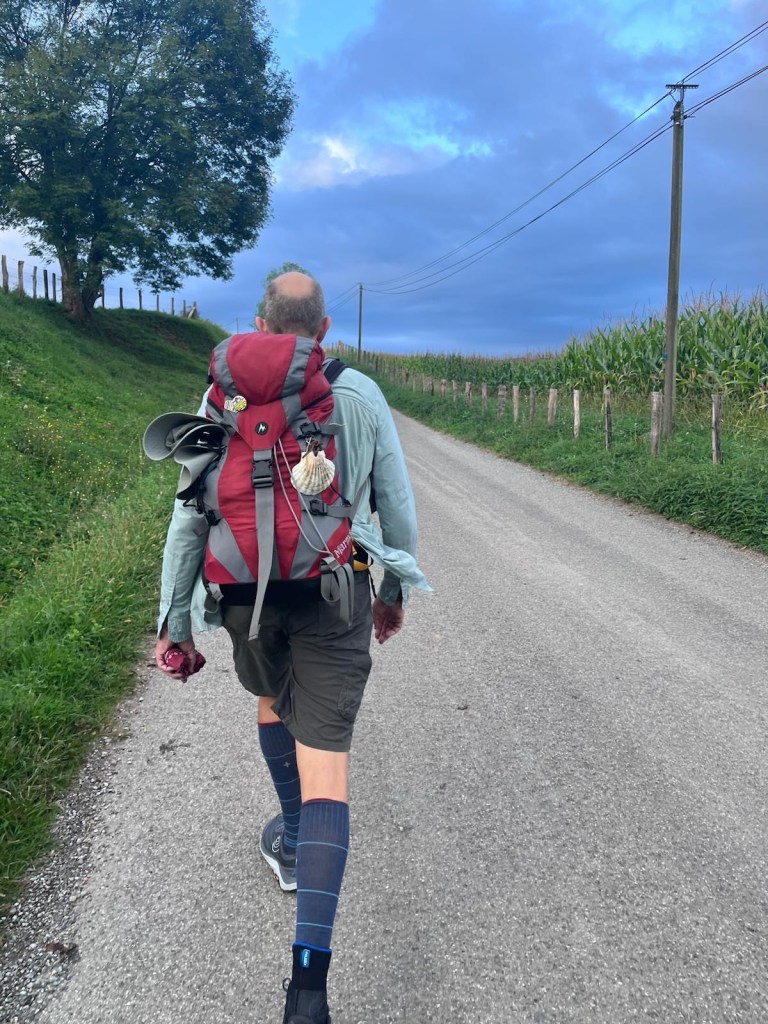
      As keys make us think of Saint Peter, so the scallop shell signals Saint James. When you walk the Camino, you see the shell everywhere: on trail markers, clothing, street signs, and the placards of the hostels where pilgrims sleep.  A scallop shell hanging on the back of your rucksack identifies you as a member of the special fraternity of pilgrims to Santiago. Wherever you are from, and for whatever reasons motivate you to walk west, you are entitled to wear the the shell as the universal insignia of the Santiago Pilgrim.
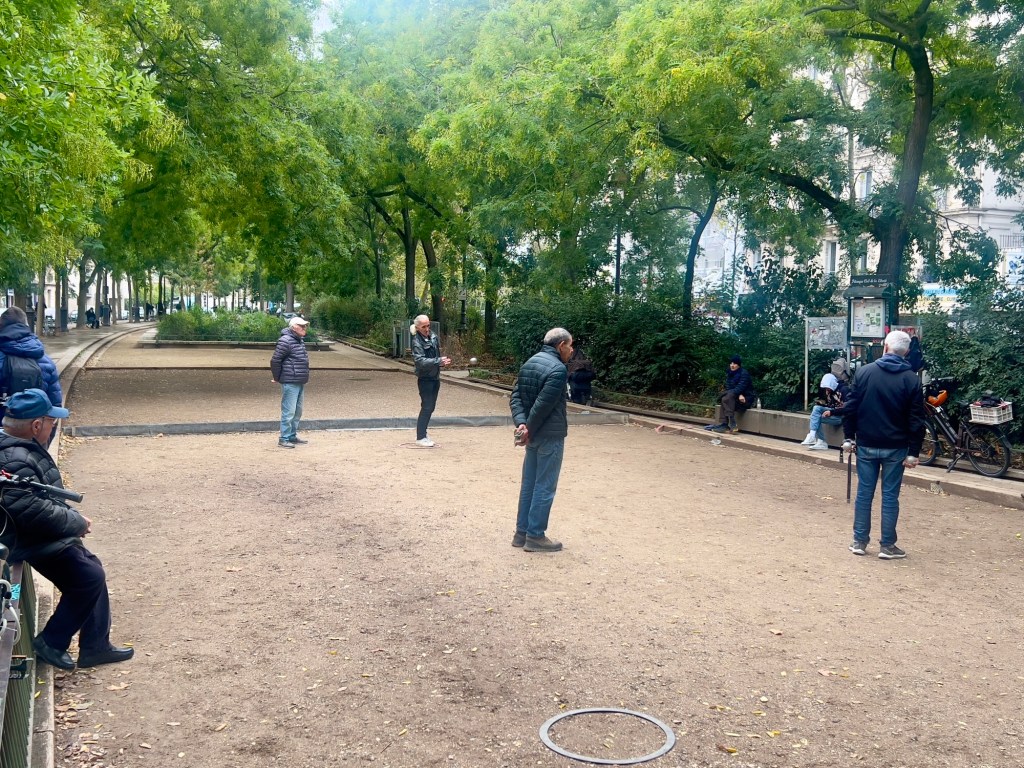
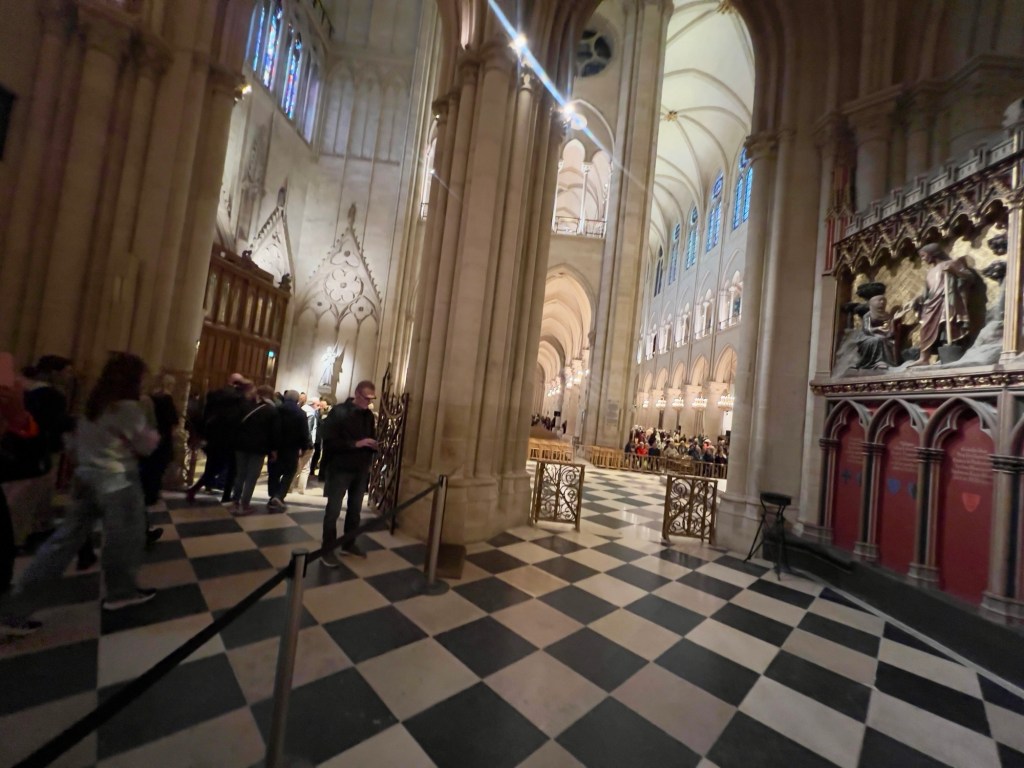
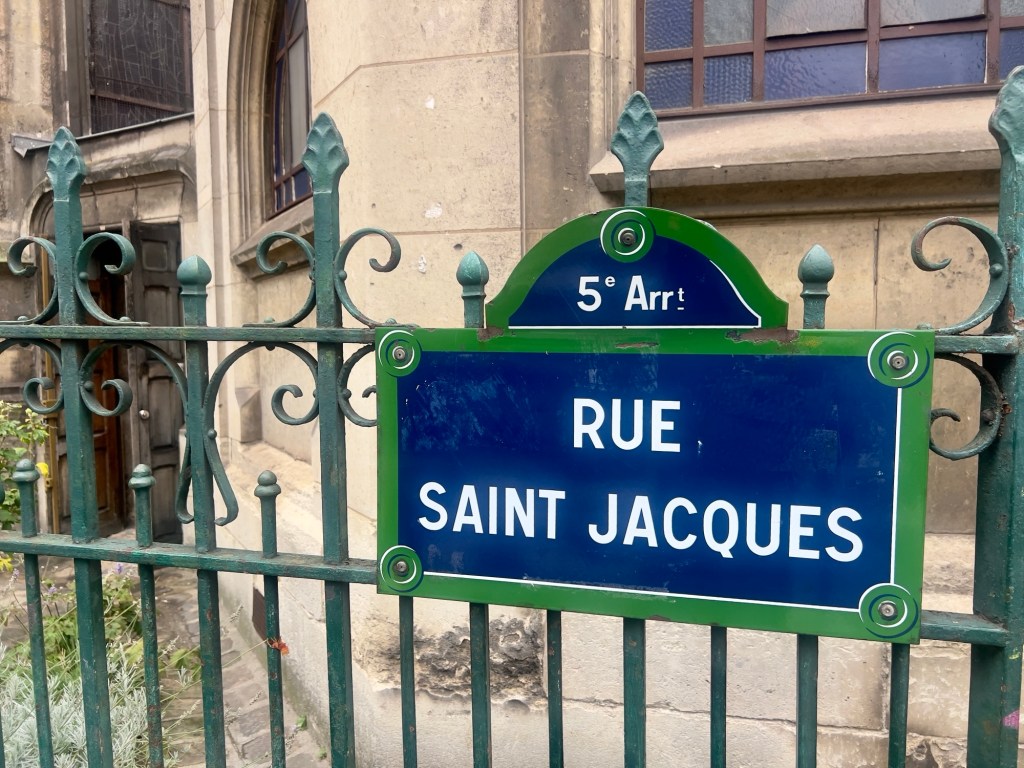
   Rue Saint Jacques leads away from Tour Saint Jacques. Caroline and I followed it south, past the Sorbonne and Pantheon, before we circled back to visit the unveiling of post-fire Notre Dame Cathedral. 
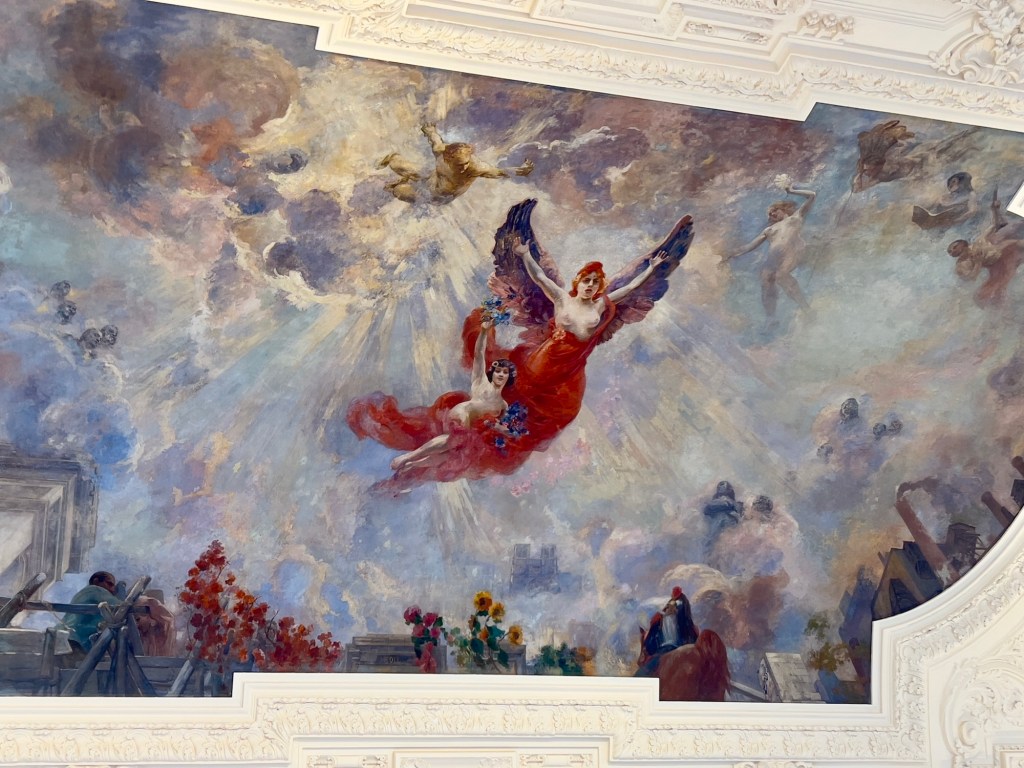
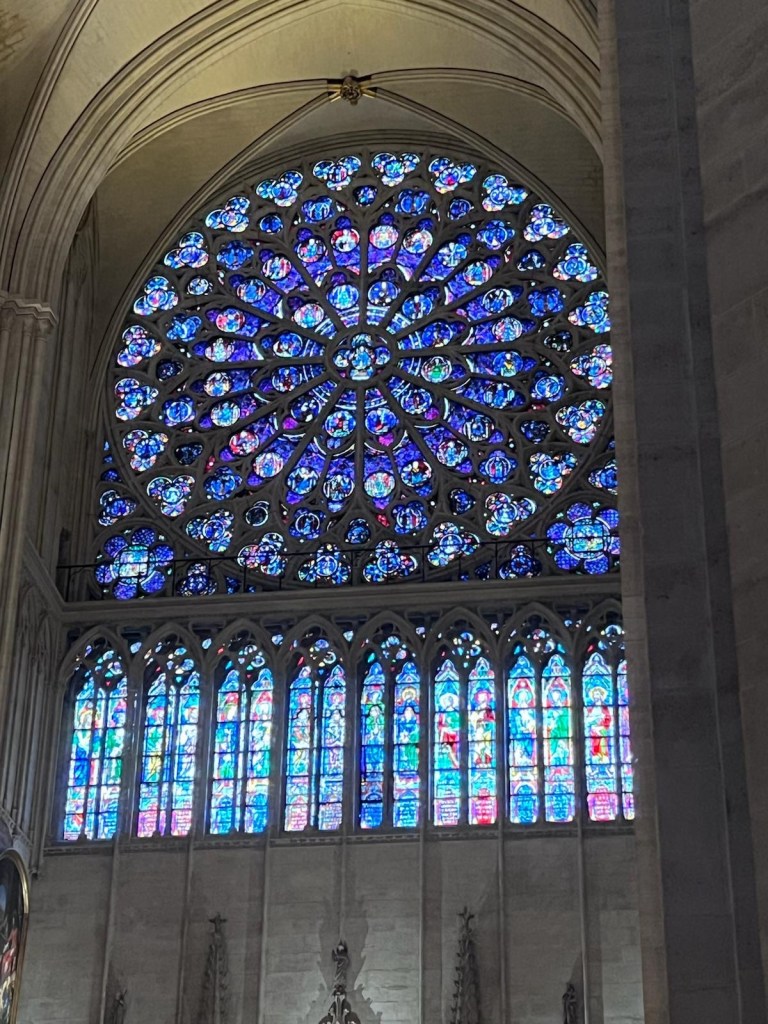
    It’s an aside from my story here about the Camino, but I want to report that Notre Dame is back. It is a wondrous site. Anyone who stood inside its nave before the fire and returns now is awestruck, they have done a magnificent job of putting it back together. It’s the same place as before, but now wearing bright and beautiful garments, like Cinderella before and after the fairy godmother. The  cathedral was brimming with people, but I didn’t mind the crowds because every person looked so happy, smiles on their faces as they gazed upwards. 

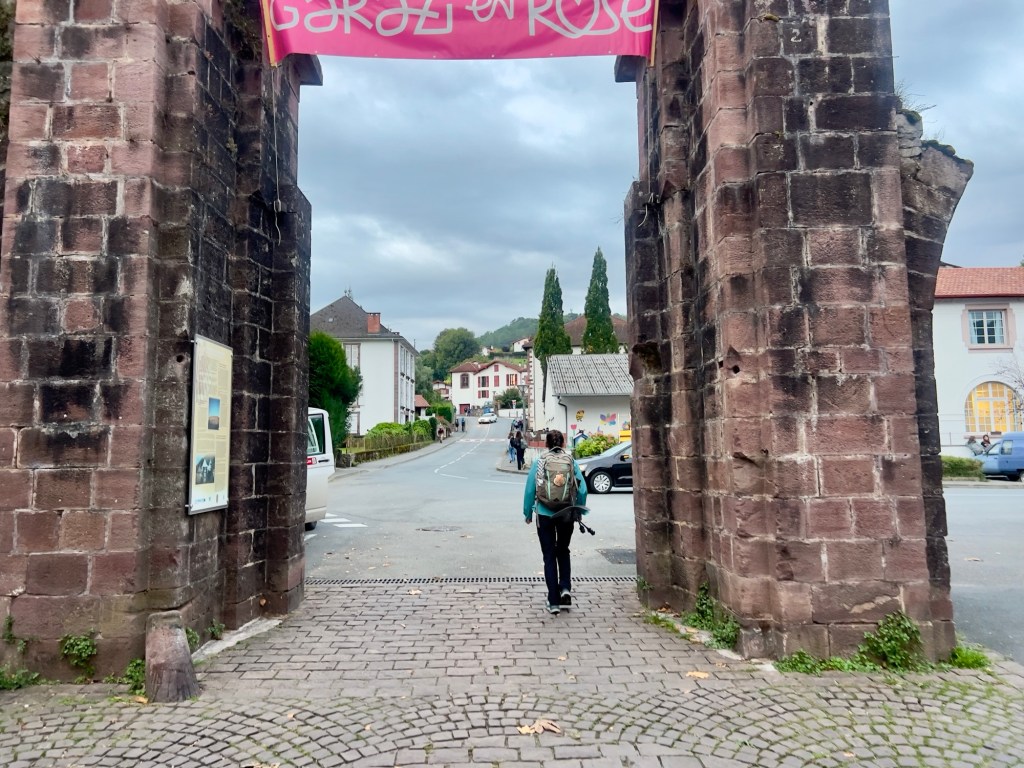
    We didn’t walk the rest of the way through France but rode the train to the starting point of Camino Frances in the town of Saint Jean-Pied-de-Port, which lies just before an arduous mountain crossing to the village of Roncesvalles in Spain. 
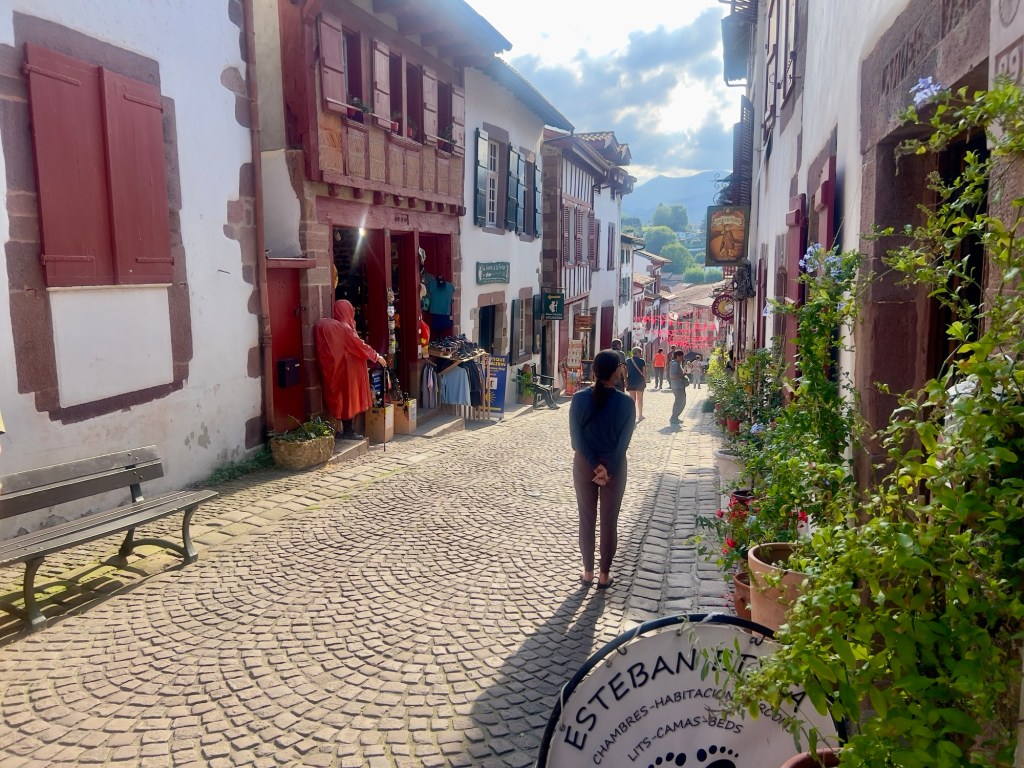
Saint Pied de Port
Gate leading toward Spain

The most populous route is Camino Frances, which starts on the French side of the Pyrenees mountain range and then traverses across northern Spain. We followed the Frances to Pamplona and then moved to Camino Norte, along the coast of the Bay of Biscayne. There also are two Portuguese routes that approach Santiago from the south and other less traveled routes in Spain. The pilgrimage routes are like tributaries of a great stream headed towards Santiago. A map of them resembles the lines of the scallop shell resting on its side.     
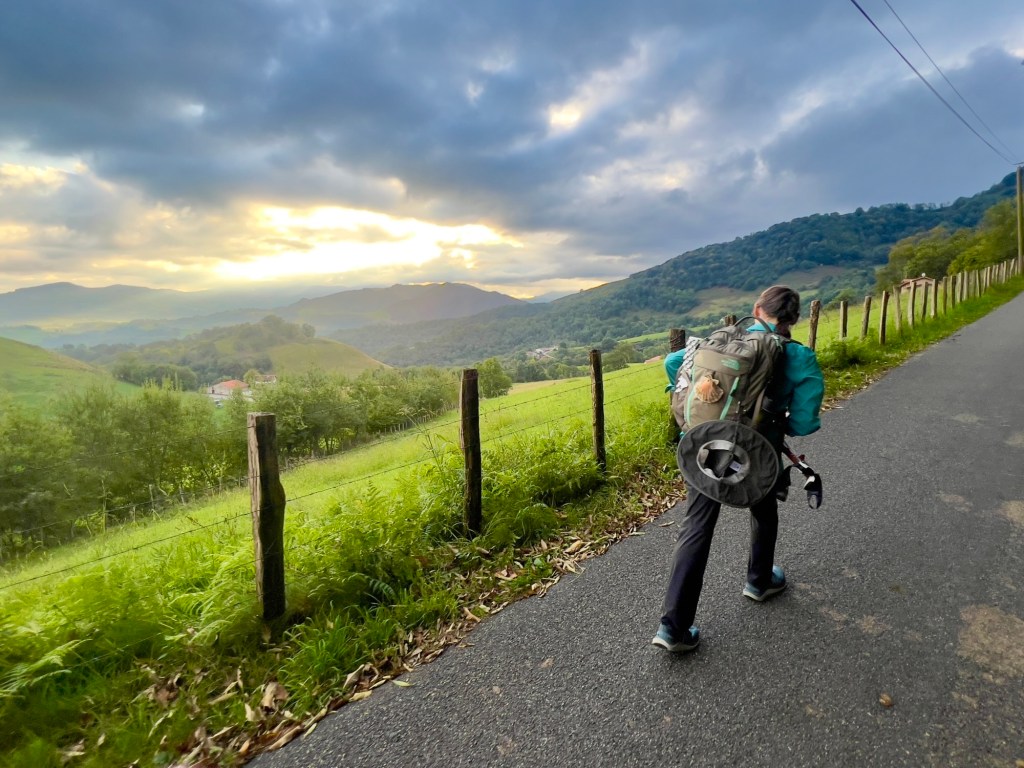

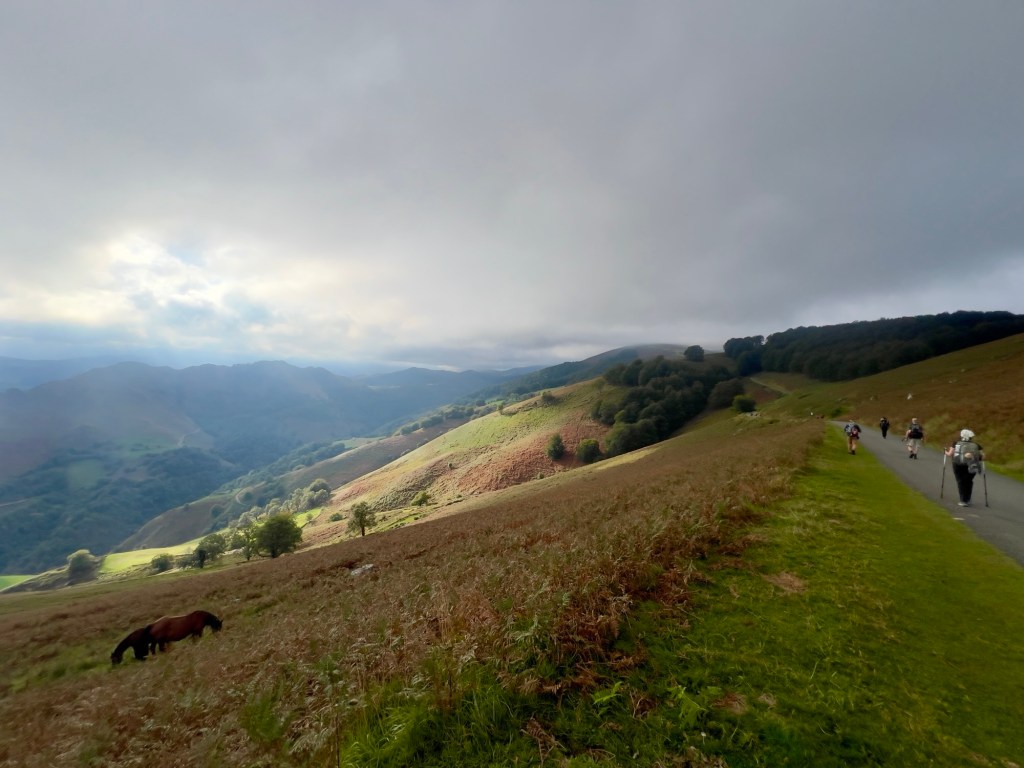
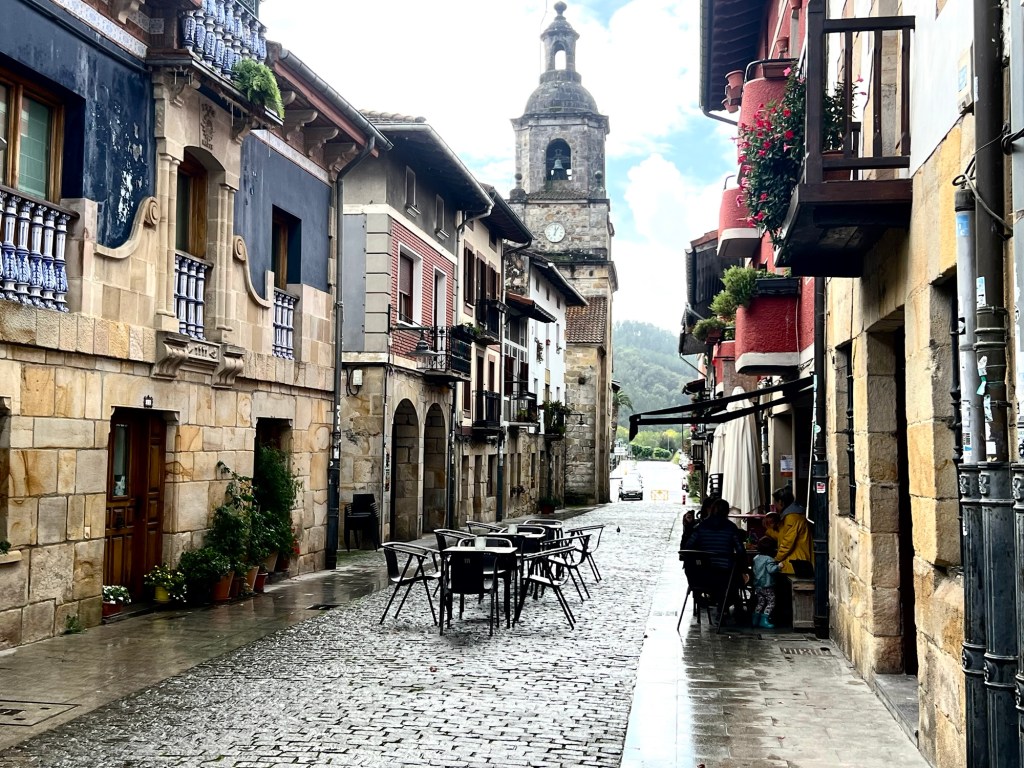
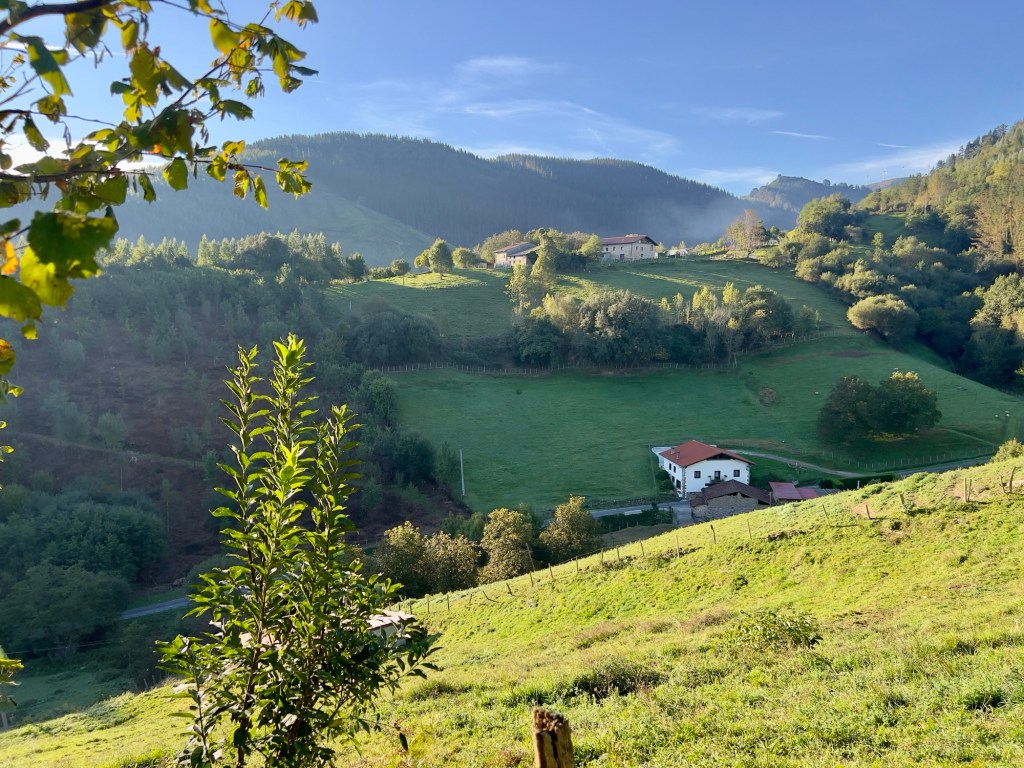
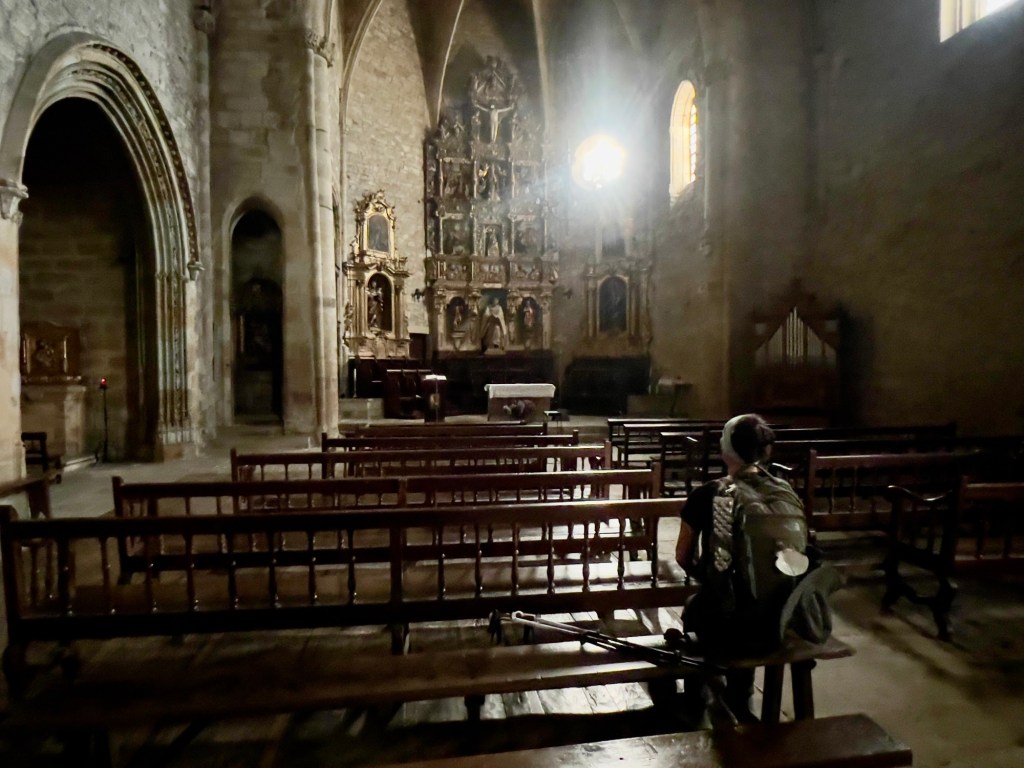
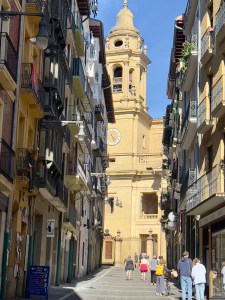
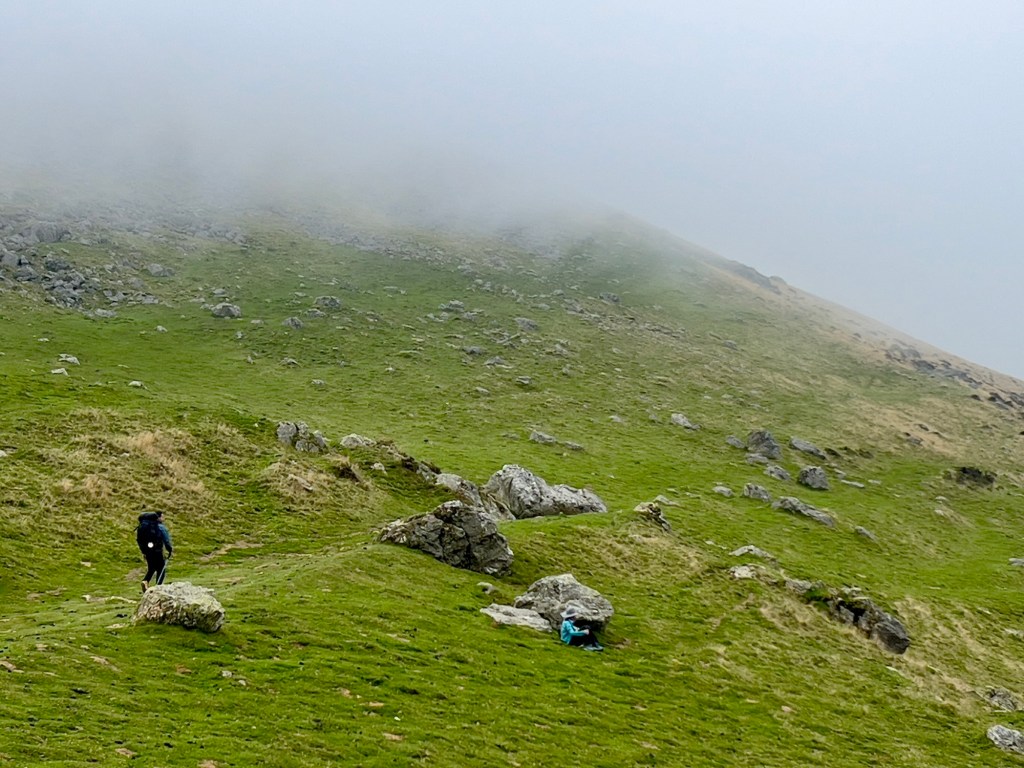
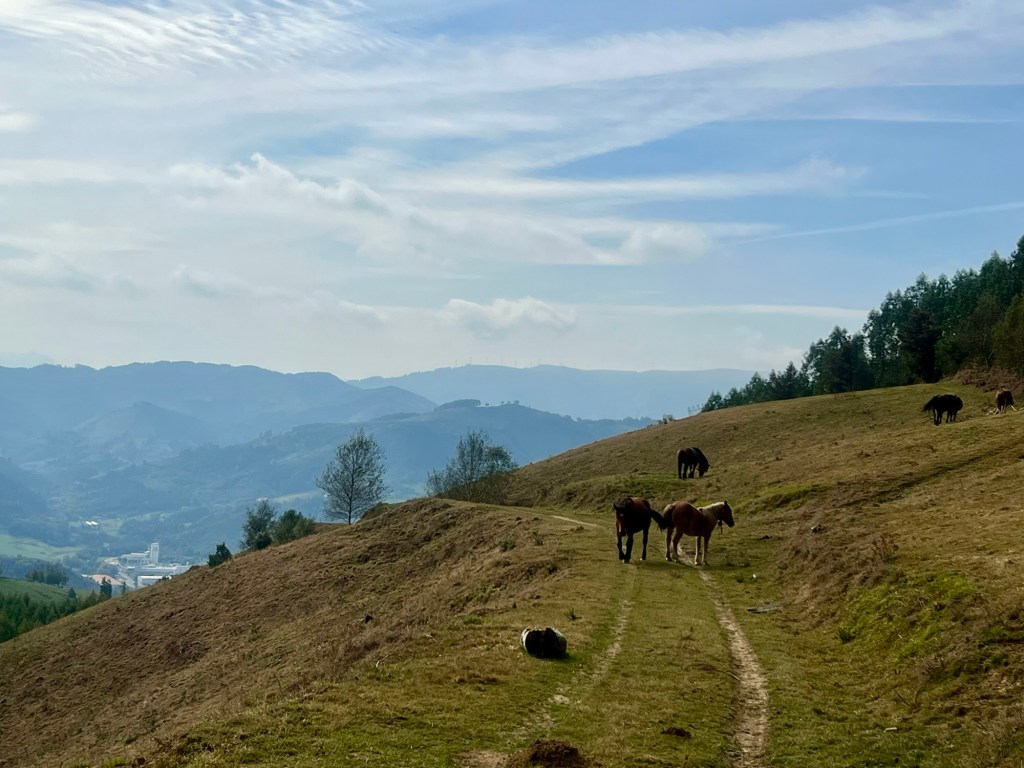
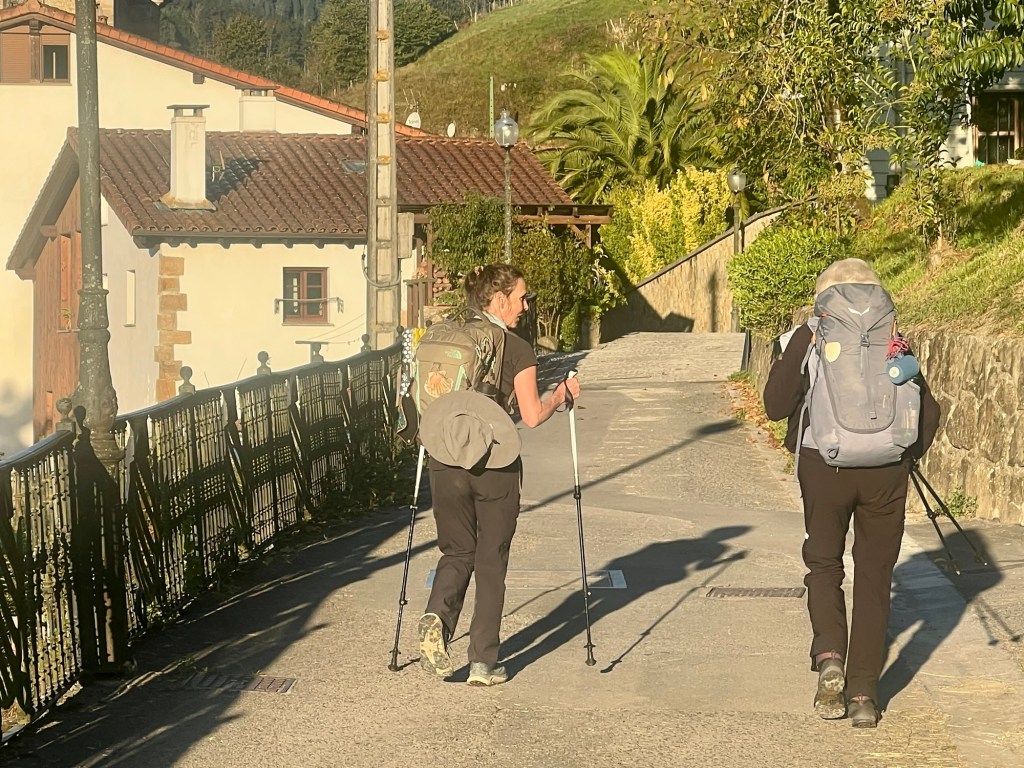
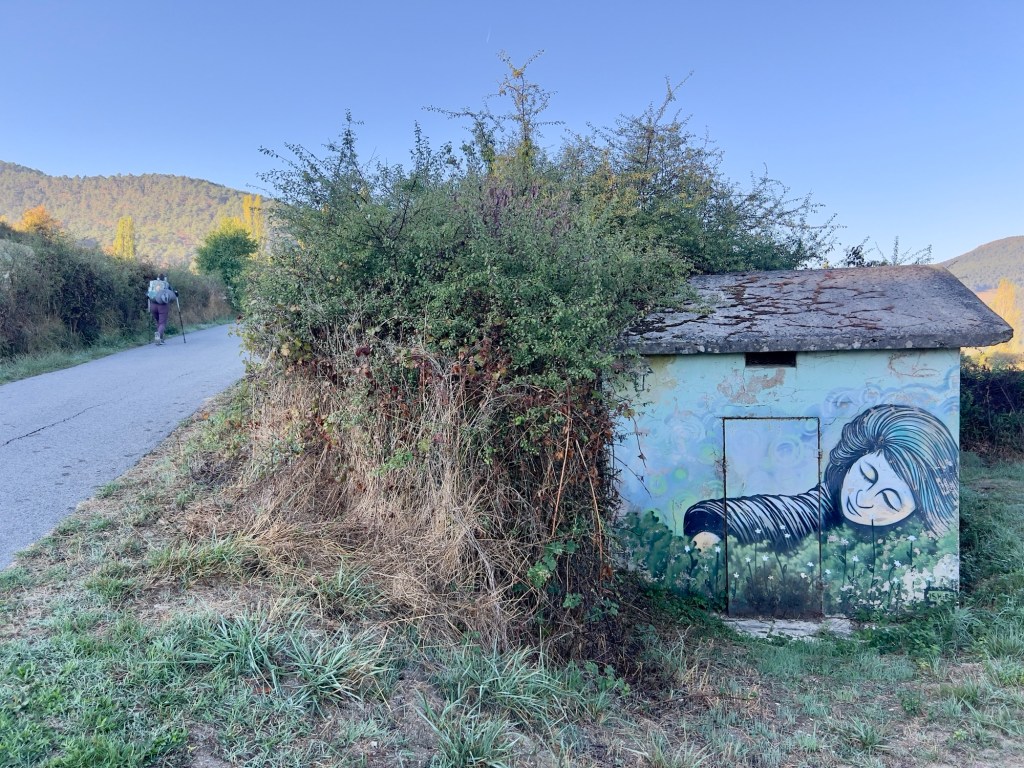
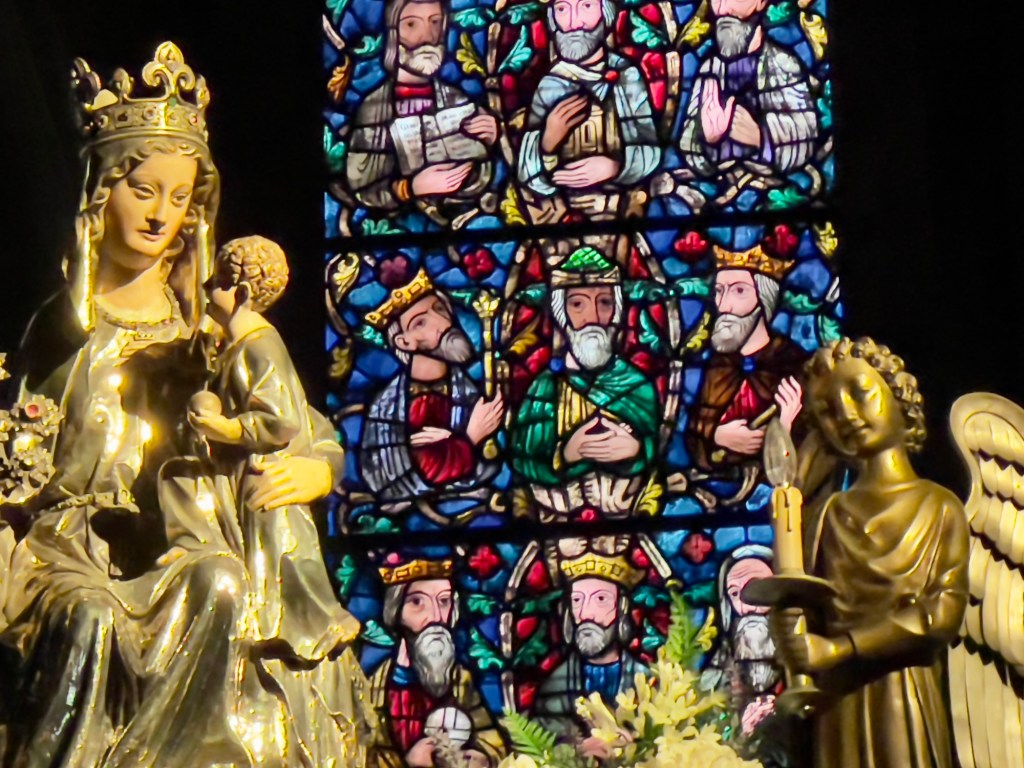
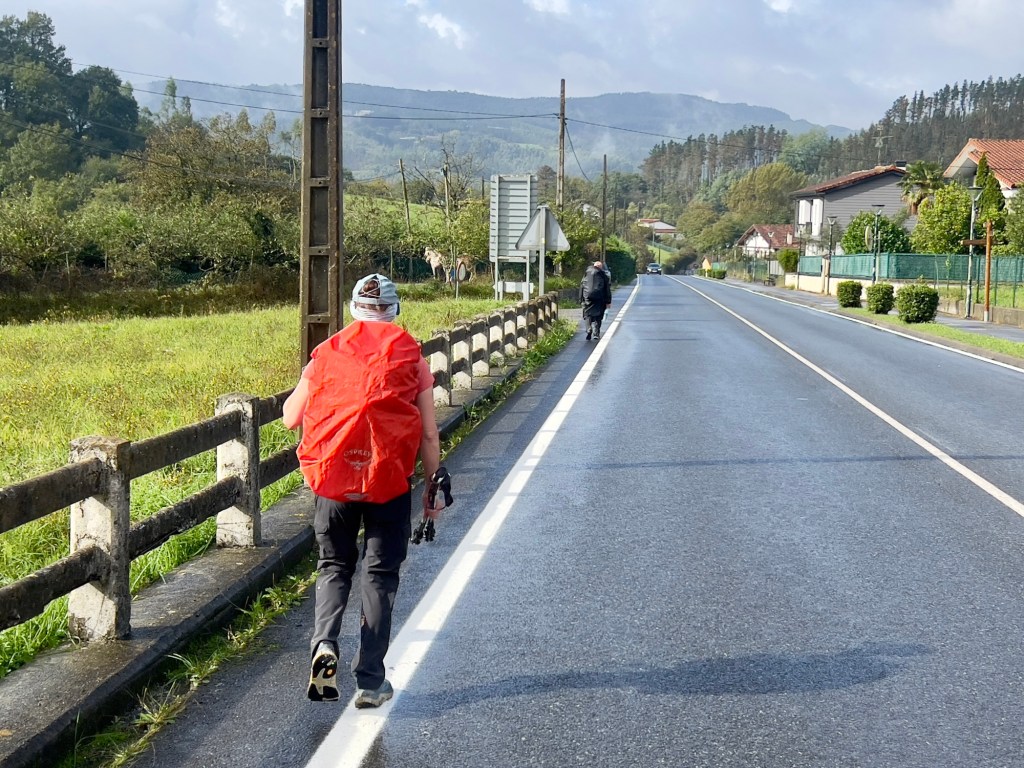
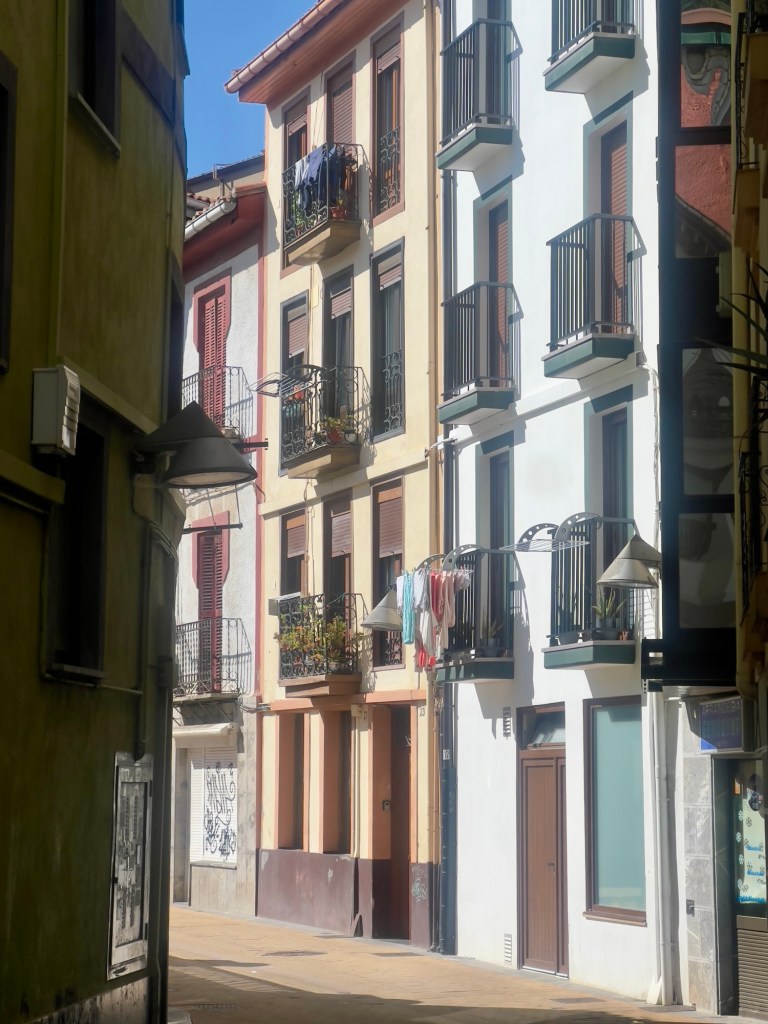
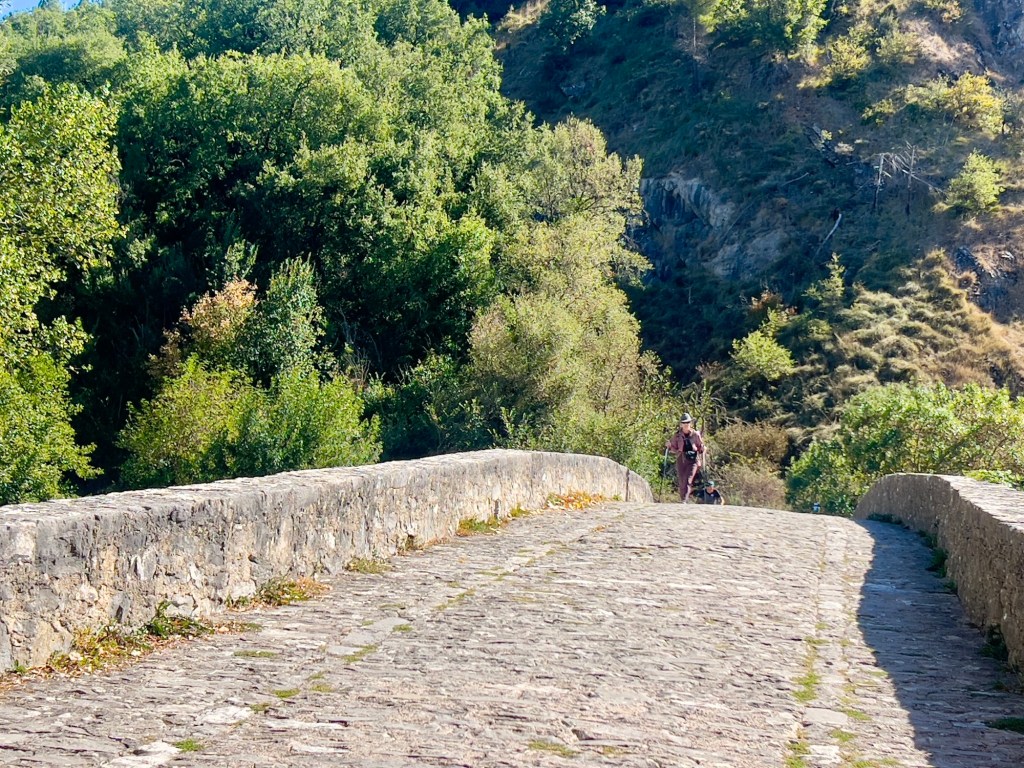
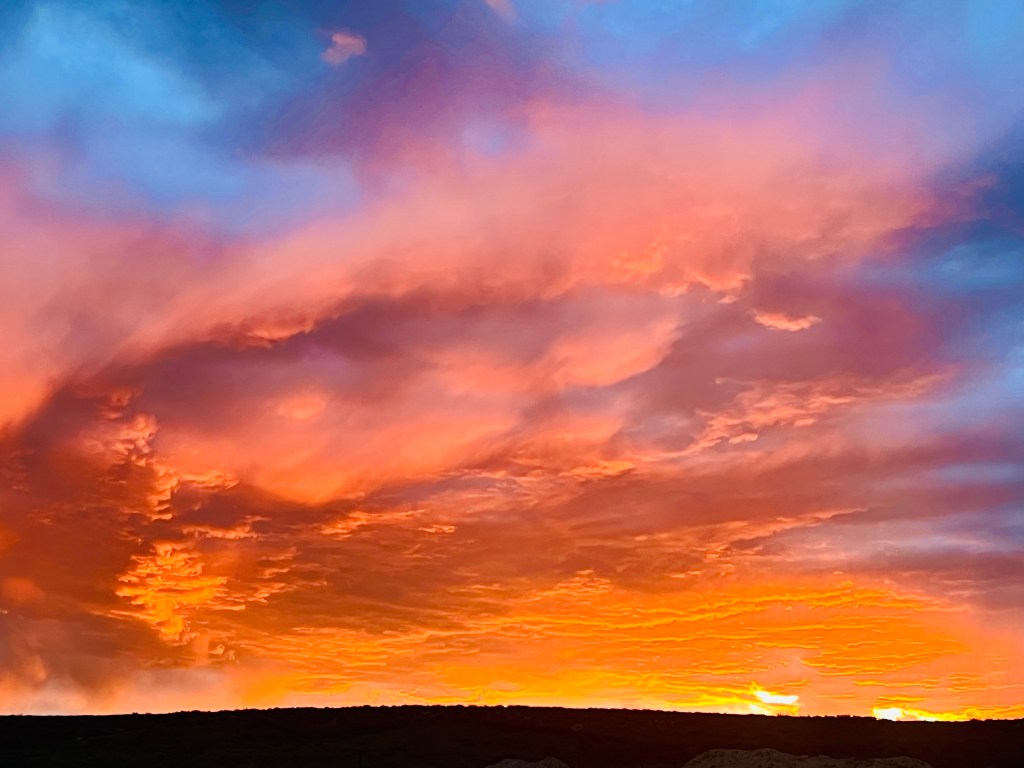
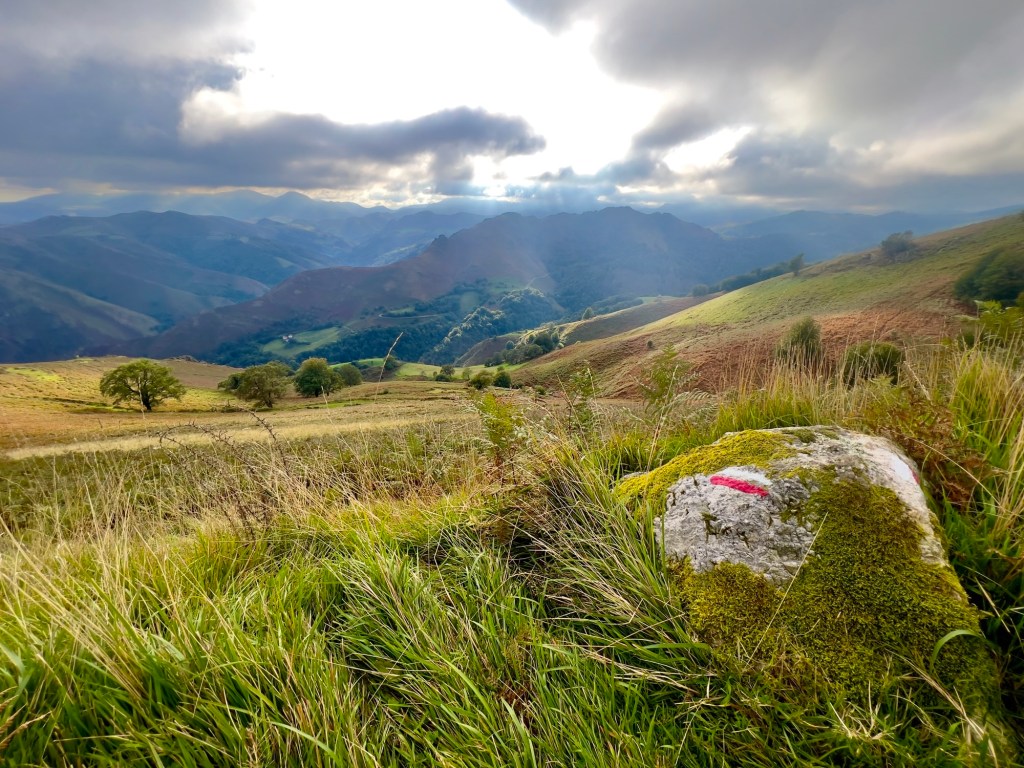
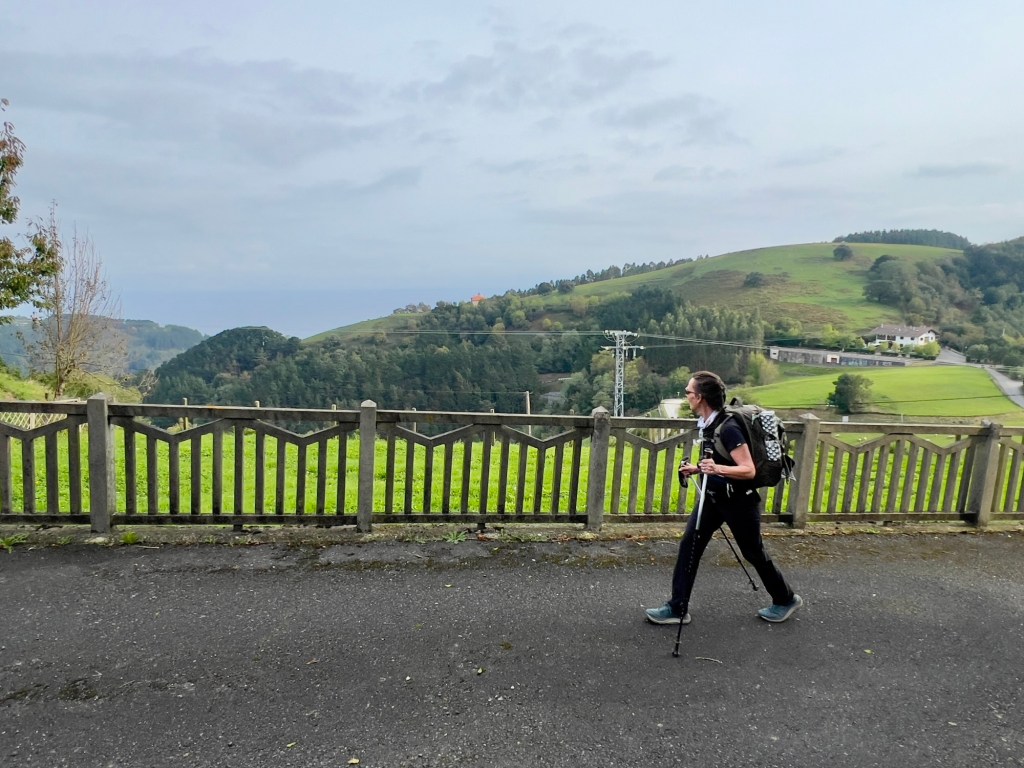
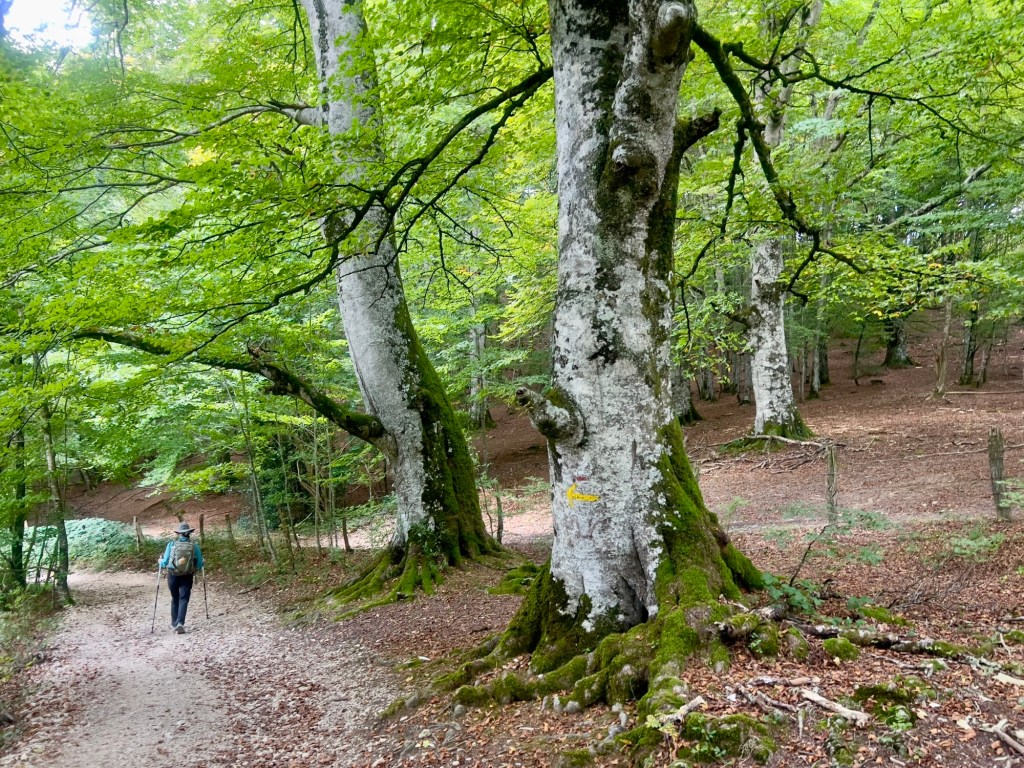
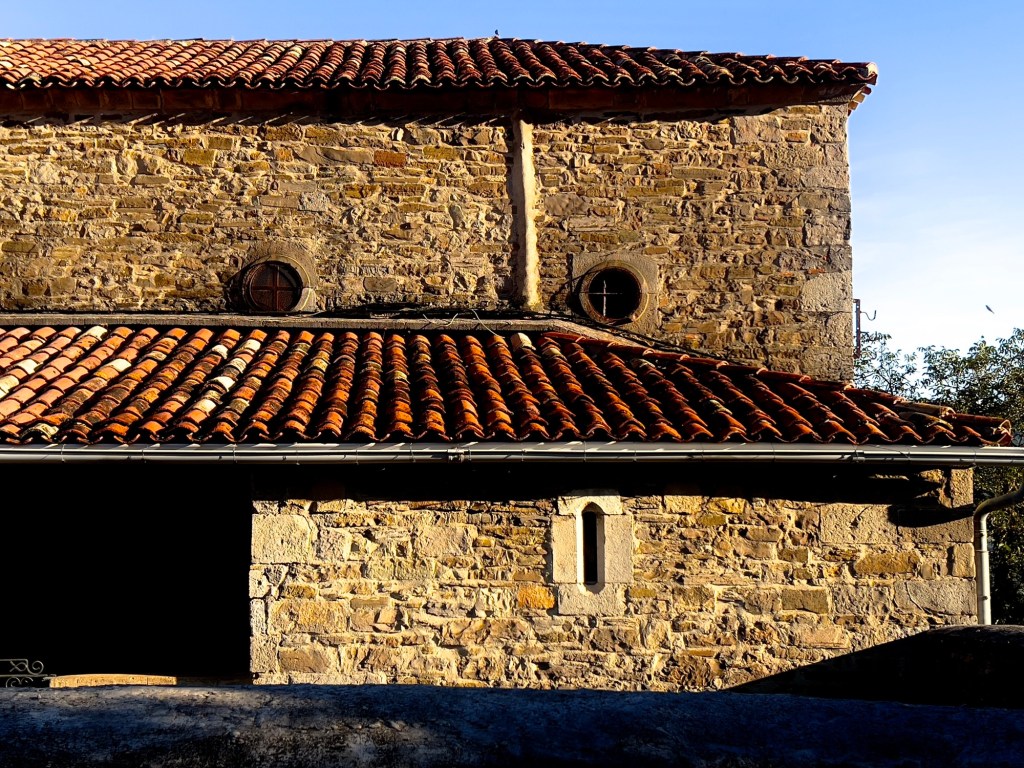
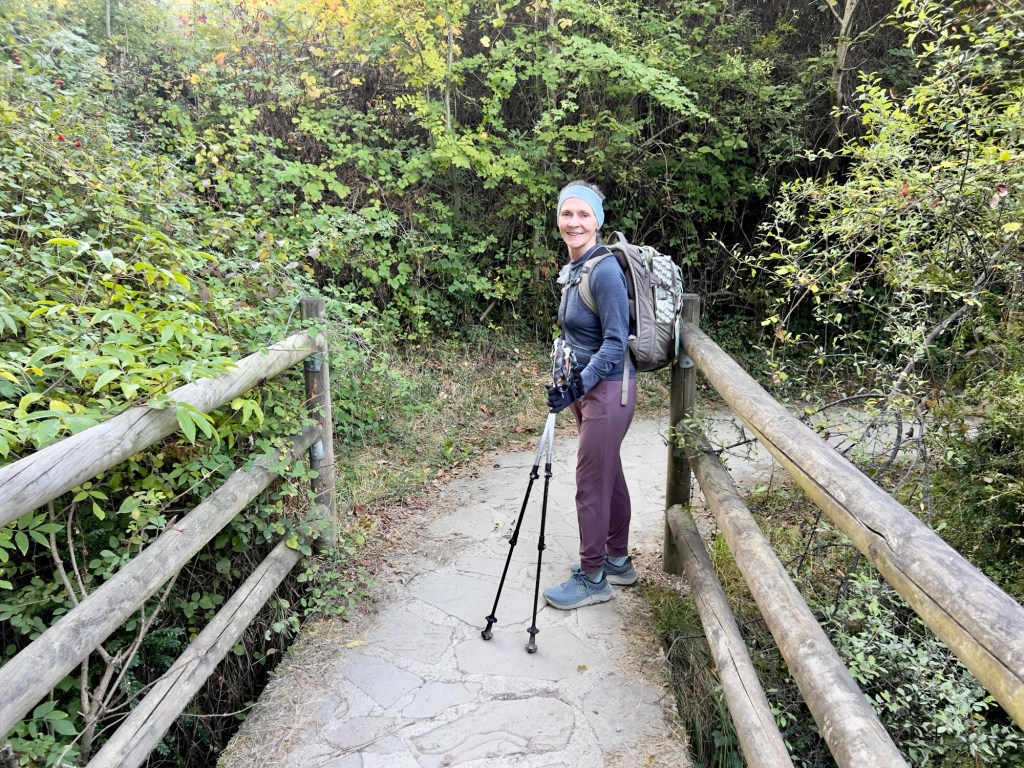
   Pilgrims traverse diverse landscapes and historic villages. They step into silvery sunrises and stain glass chapels in faded afternoon light. We walked down bustling urban sidewalks and through cobbled village squares, over treeless, wind-swept mountain passes and into misty, Brontë-ish moors, through verdant forests and glens cleaved by babbling brooks, following shadowed footpaths so picturesque they could have been leading us to the Shire. 
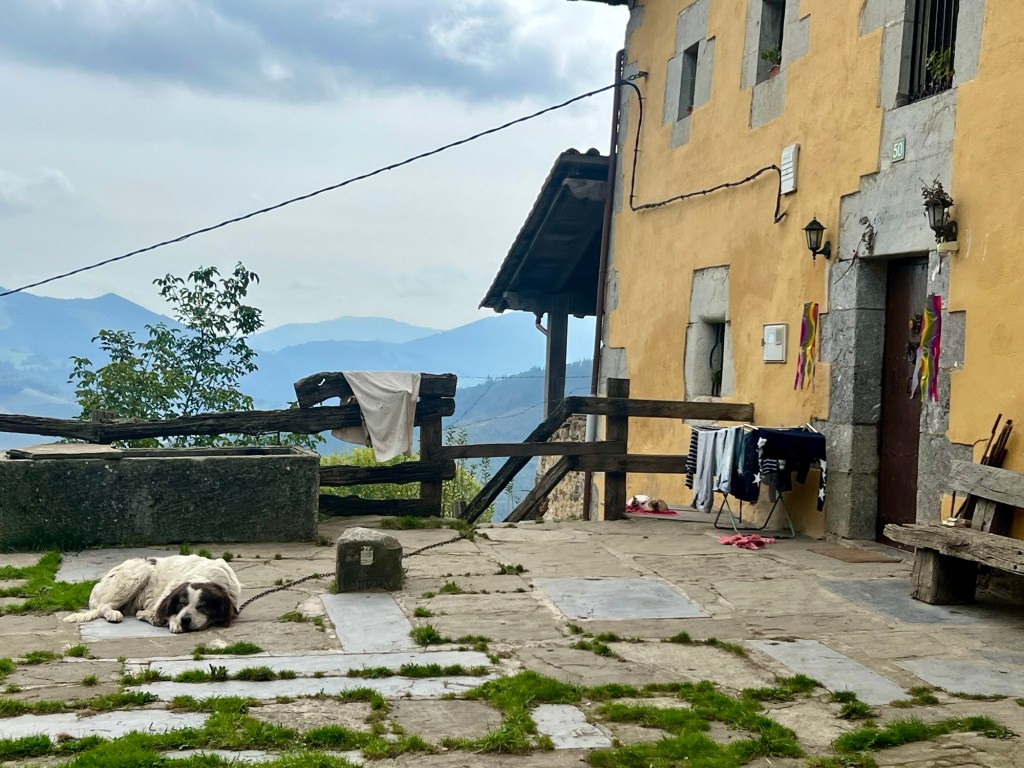
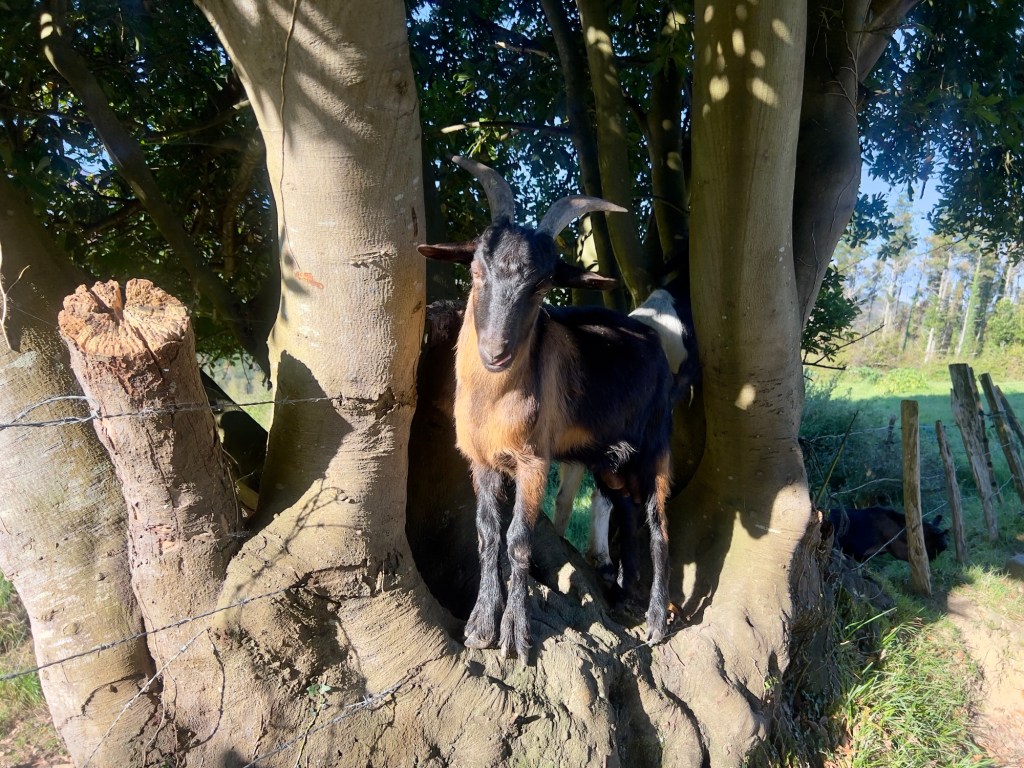
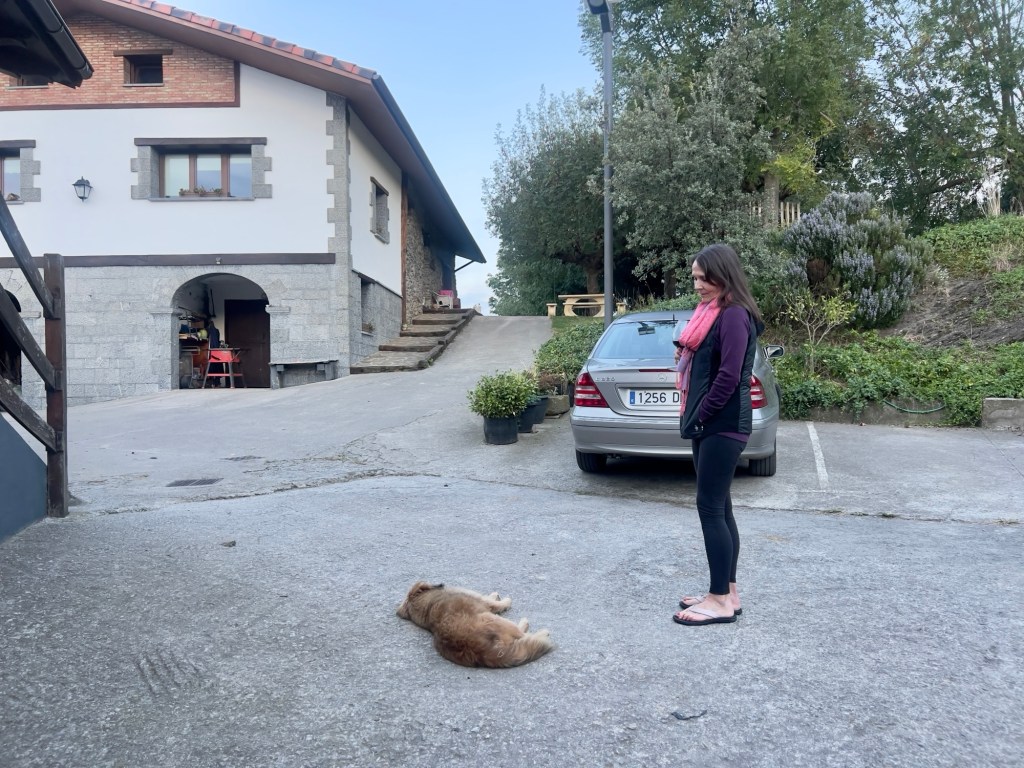
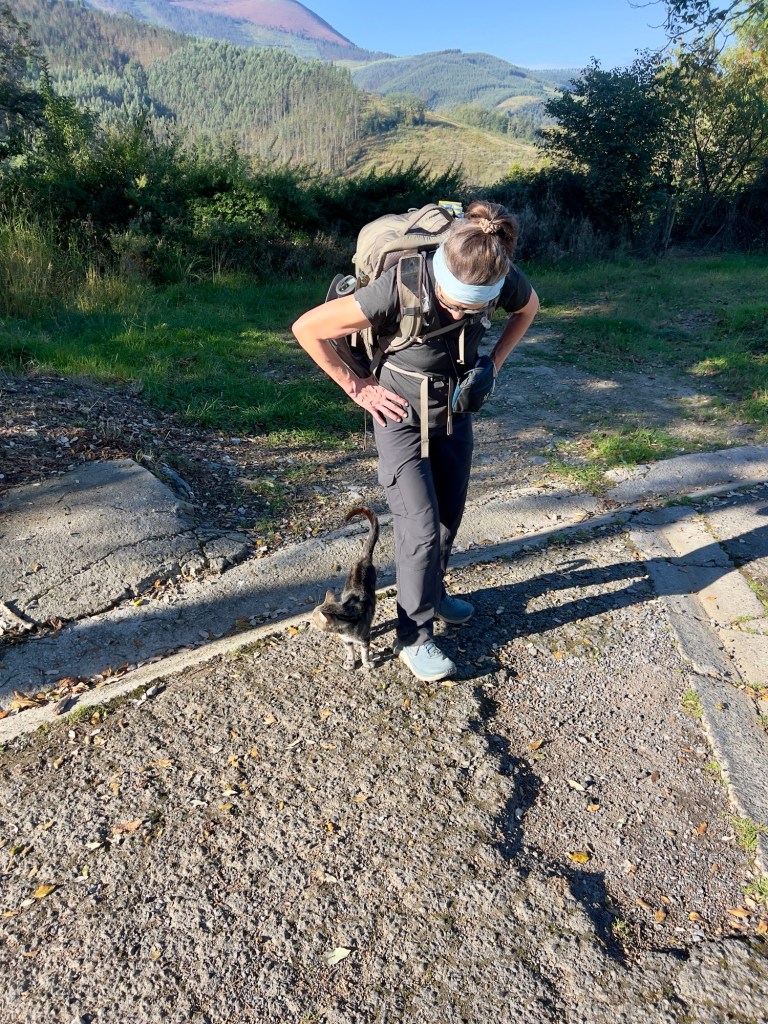
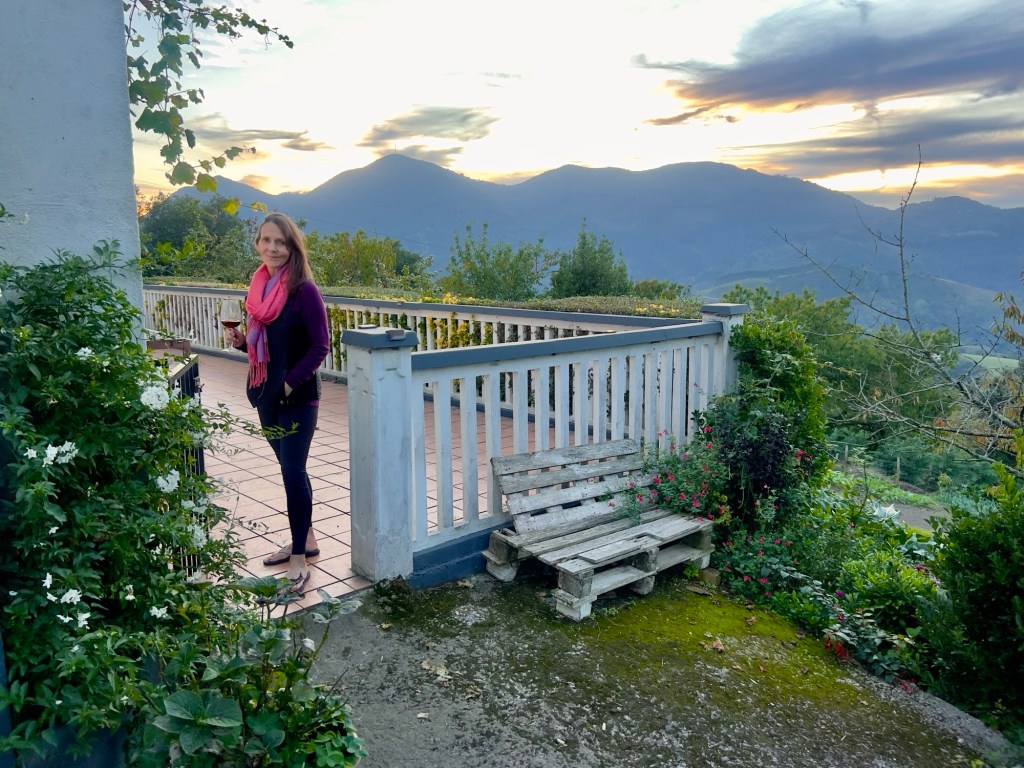
    We encountered animals enough to populate a petting zoo. There were cows with long eyelashes who stared as we walked by and donkeys who paid us no mind at all, waddling ducks and gaggles of geese, draft horses making muddy footprints the size of dinner plates, dogs both friendly and menacing, and farm cats asking for handouts as we picnicked. 

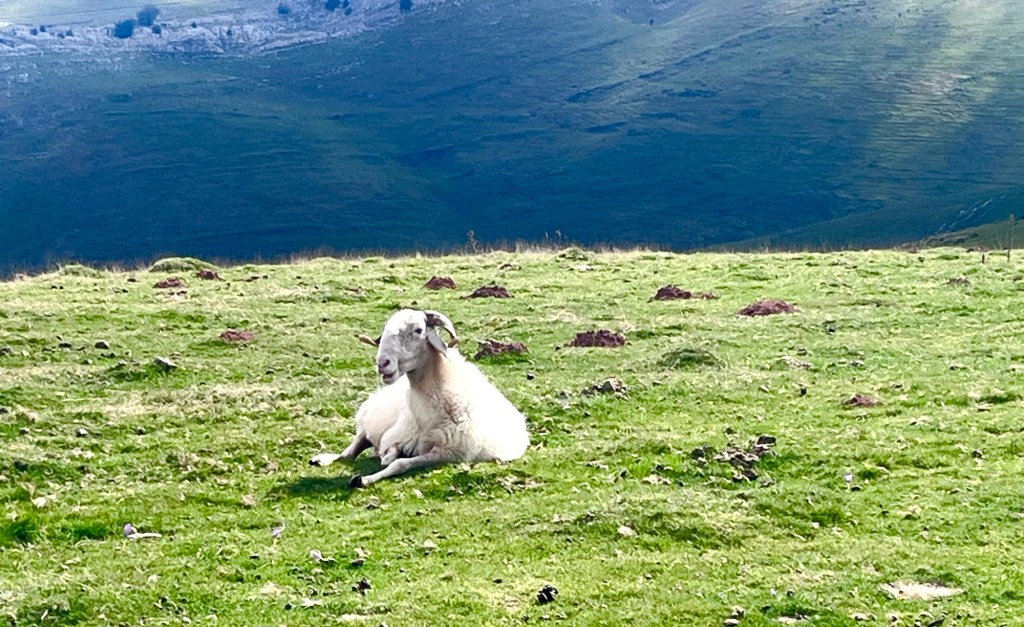
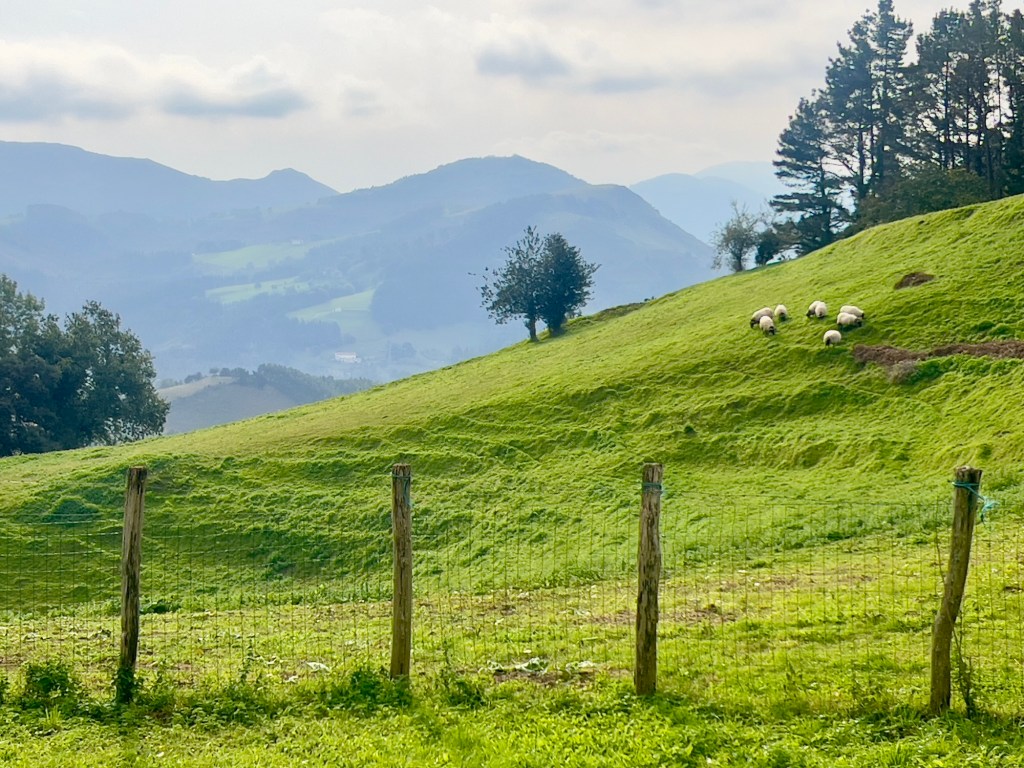
     This was Basque Country, so we were never far from a flock of sheep, and a memory welled up in me. I used to think it would be a fine thing to be a shepherd. It’s possible that I would have changed my mind if I had ever actually been one (it might be harder than it looks), but shepherd was one answer to the question we ask ourselves after a certain age- what might I have done with my life if not this; what choice of vocation, if not the one I am in now?

Shepherd was at the top of my list until I went to a sound-therapy session in Bali and learned there is such a thing as a Gong Master. I thought that sounded even better. 
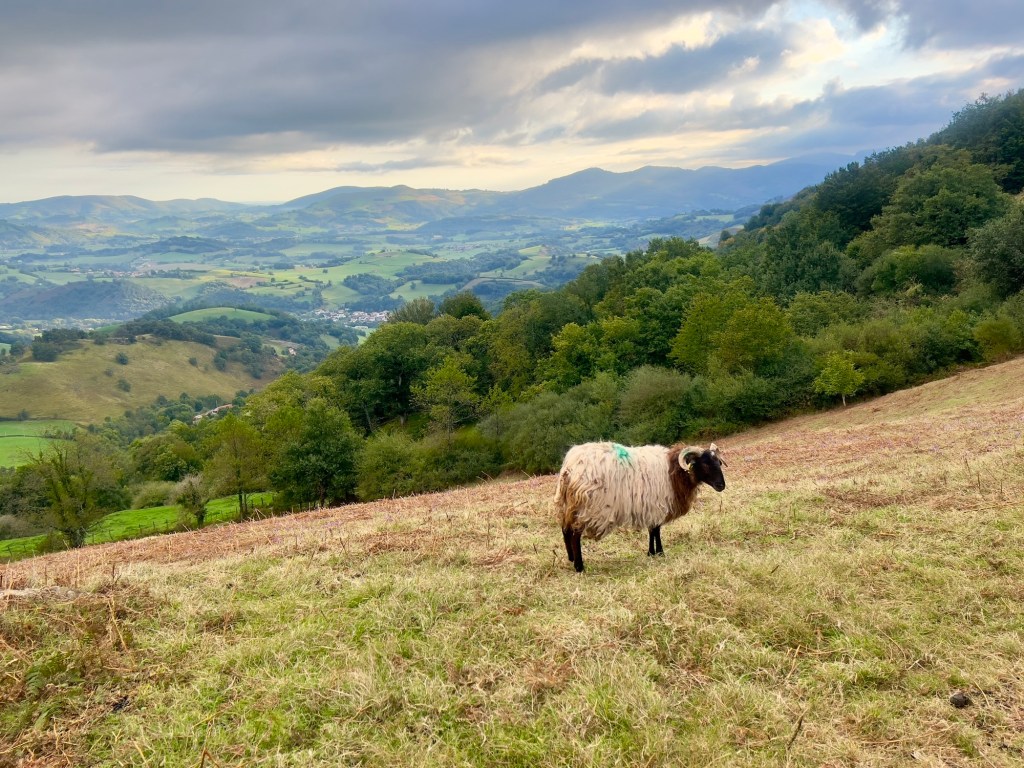
     I drifted back to the idea of shepherd late one afternoon as we wound our way over a high pass in the Pyrenees.  As the weather and sun painted the horizon, I watched sheep traverse the western gradient of a gently beveled hill. I saw their shadows lengthen in the slanted light and  heard the tinkle and clang of the bells around their necks. It sounded like a wandering wind chime. I imagined myself there, like a character in a Thomas Hardy novel, trailing behind my flock as my loyal dog darted back and forth, guiding the sheep over the next ridge. I think I would have liked that. 
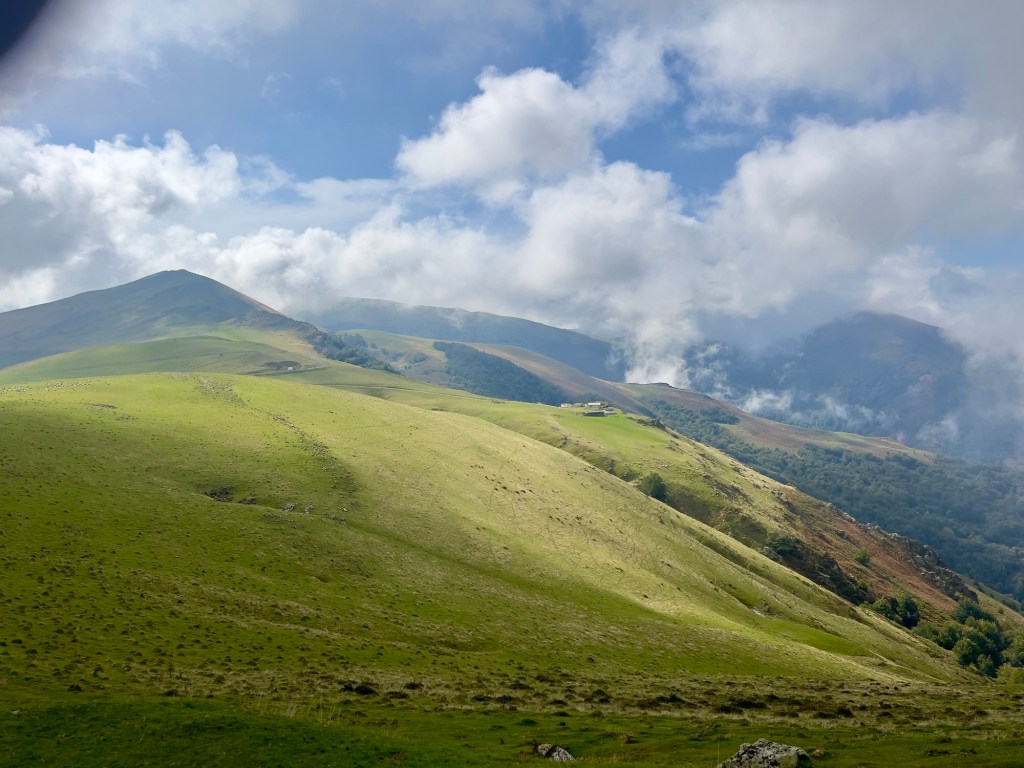
    The bucolic scenery was  appealing, but even when we had fully given ourselves over to the landscape, it was the people we shared it with that made our trek a pilgrimage. The most famous story about a  pilgrimage–the one on the road  to Canterbury–is really a story collection about a community, not one person, and it is the same on the road to Santiago. Humans have always been up for a pilgrimage, whether to Compostela or Cooperstown, and every pilgrim has their story. 

     We walked with people from Austria to Australia, and from the entire range of ages and ethnicities. For some, it was their first time, while others had returned to the Camino many times.  We spent an hour climbing up a steep hill alongside a young couple from Canada. Caroline and I opened the conversation by apologizing to them on behalf of our country. They smiled and replied that while governments and politicians can sometimes be a problem, they love the US and Americans. 

    Our pattern was that we would fall in with someone, become fast friends, then part ways. That is the way of the Camino–connections are made, but you don’t expect to keep them. We smiled at the thought of how many times we said a heartfelt farewell,  only to meet up again somewhere down the trail with the  people we just said goodbye to. 
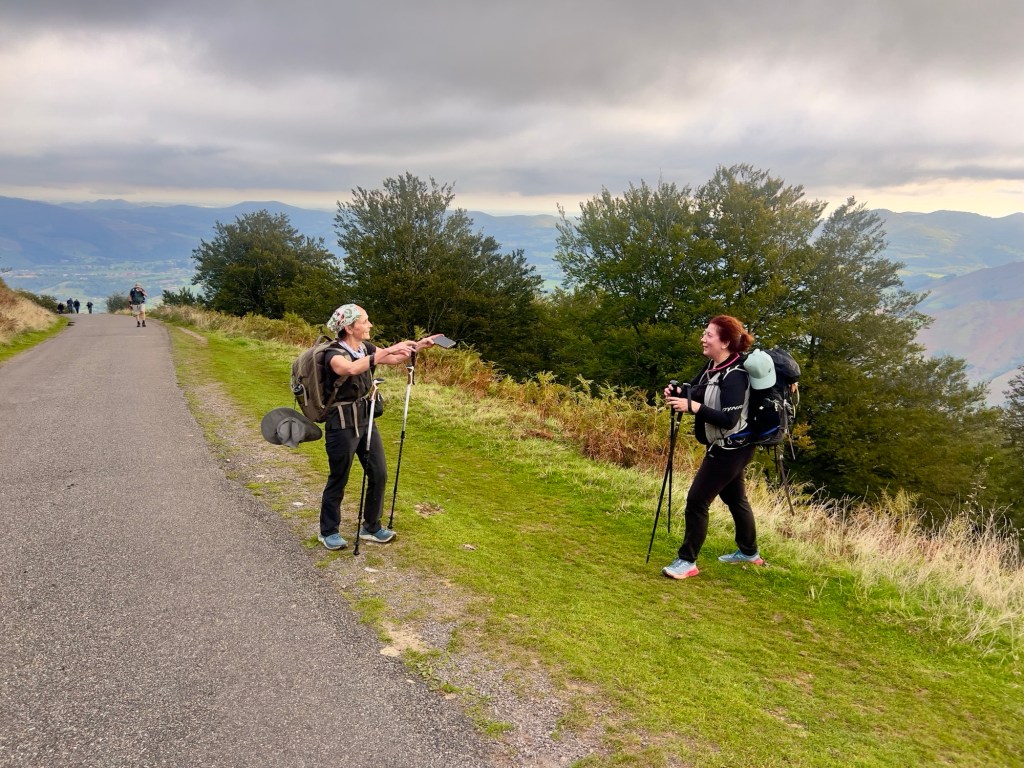


Out of all the pilgrims we walked beside, the one we will hold onto is Abe Sanoja. 
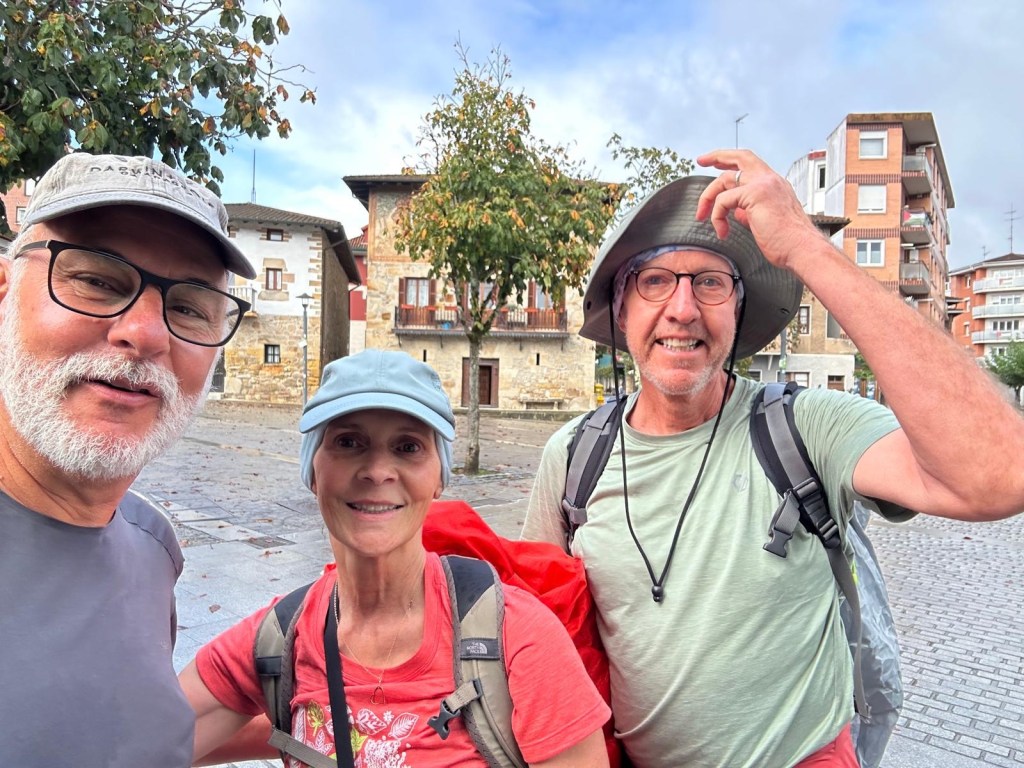
Abe was an executive at Hewlett Packard until he left that company to create a different one, and then he sold that one a few years ago. He was a successful businessman but left it all behind because he wanted something different for the next part of his life.

     On the Camino, Abe did not inspire visions of an ambitious executive. He was more like one of the faerie folk–Puckish like a tall leprechaun. He had the required beard, impish grin, and twinkle in his eye, a Will-O-The Wisp in all but the little green tights.  Hand him a pipe and he could blow smoke rings. Caroline said he was the Camino “sprite” in the way he would materialize out of thin air and then disappear again, and I agreed that magic and serendipity seemed to follow him like a shadow.

     We ate dinner with Abe early on the route. We enjoyed each others company but, as it goes, we said our goodbyes in the morning and went our own way. 
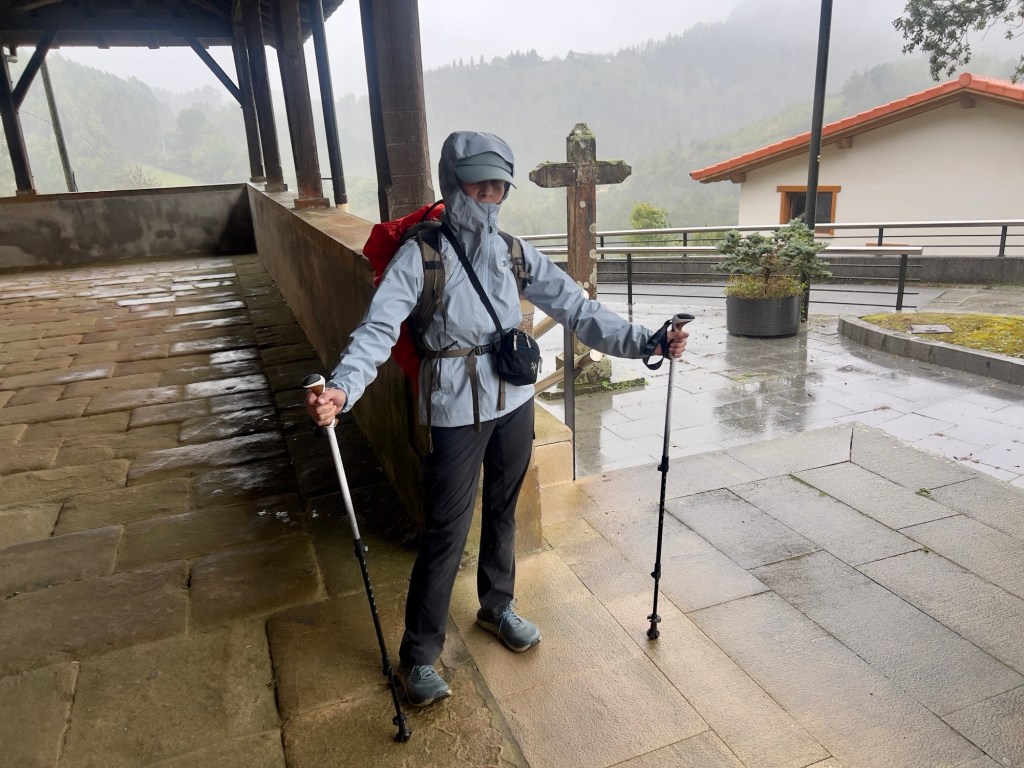
   The next day, Caroline and I entered a small village square after walking all morning in the rain. We were wet and tired, and as we climbed the steps toward the only cafe that was open, there sat Abe under an umbrella with two chairs waiting for us, a plate full of Spanish olives on the table,  coffee and empanadas on the way.

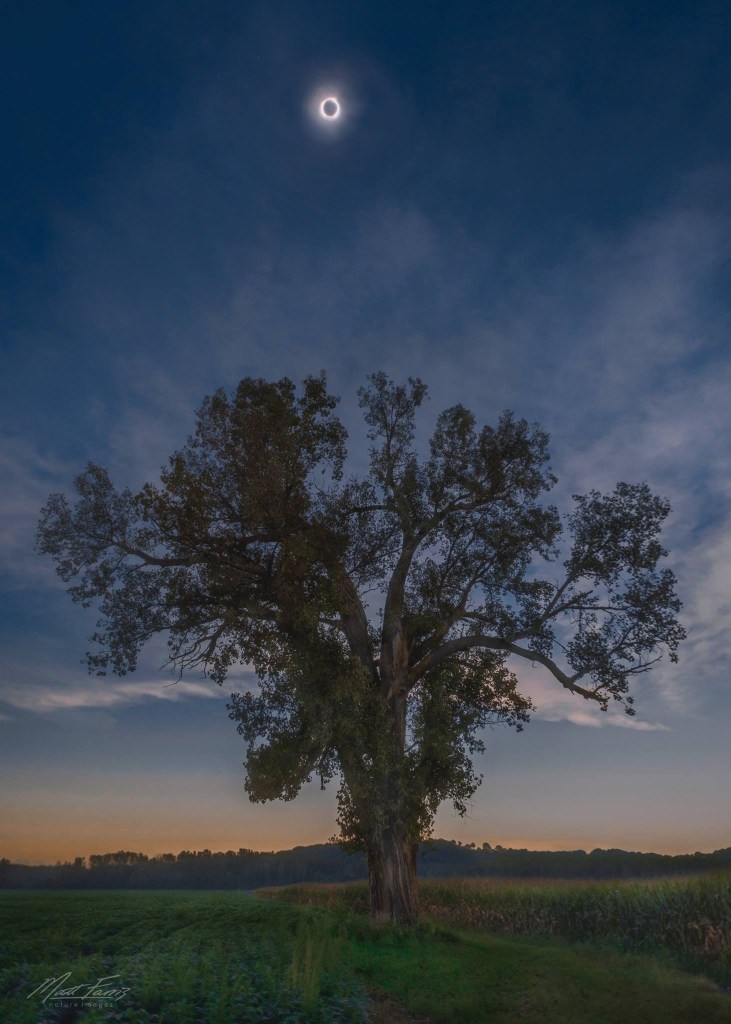
   Abe is blind in one eye because when he was a boy he couldn’t resist looking directly at a solar eclipse. He has compensated by honing his powers of observation, and now he can easily identify people by their walk, even from afar. He spotted Caroline approaching well before we saw him.
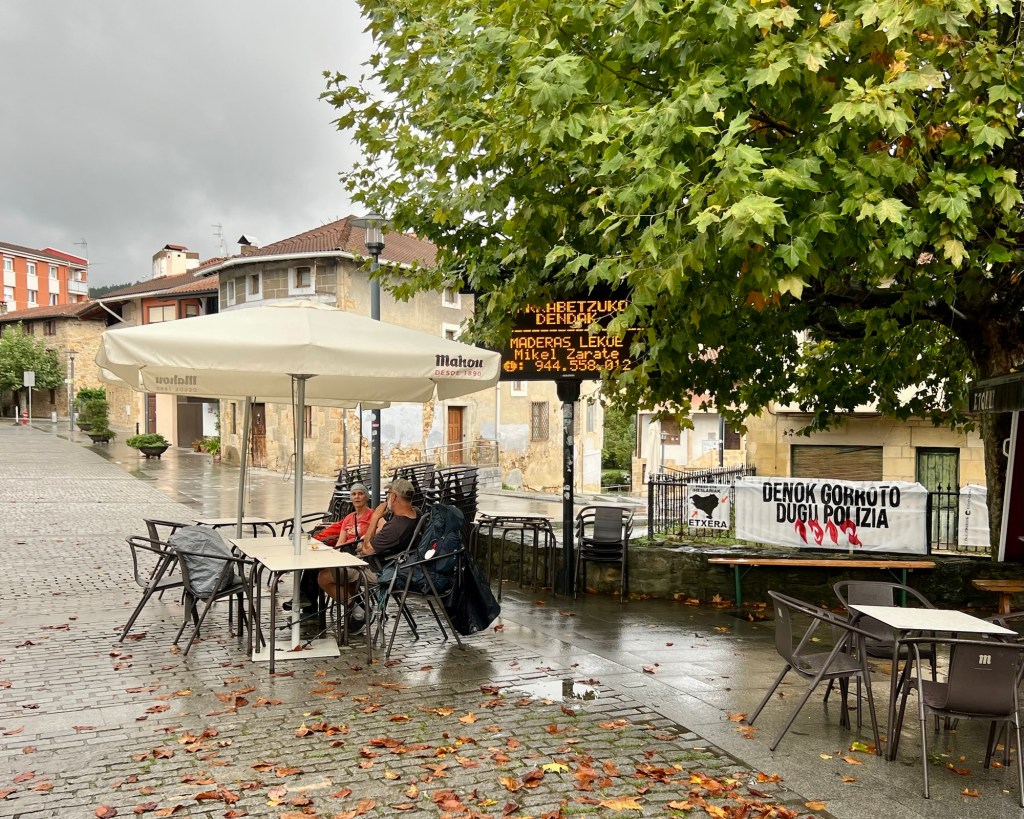
    Abe is now a full time pilgrim. He treks all over the world but mostly on Caminos. We were with him in October and he had not been home since February. I don’t know if he could put a number to the distance he has walked, but it would be enormous, like if Forrest Gump kept count of his steps. Abe is indomitable, endlessly curious and eager to see the territory ahead, whatever is waiting for him. I wondered if he was born too late and would have been happier in the Age of Exploration alongside some arctic explorer or standing at the helm  of a majestic tall ship. 

     I tried to imagine other enchanted beings Abe might personify. He imparts mirth but also wisdom, so maybe a wizard. Or a magi, since he travels a lot. Or some character that embodies the idealism and thirst for adventure that is embodied by the Camino. He’s in Spain, so I’ll go with the Man of La Mancha, dreaming the impossible dream. 
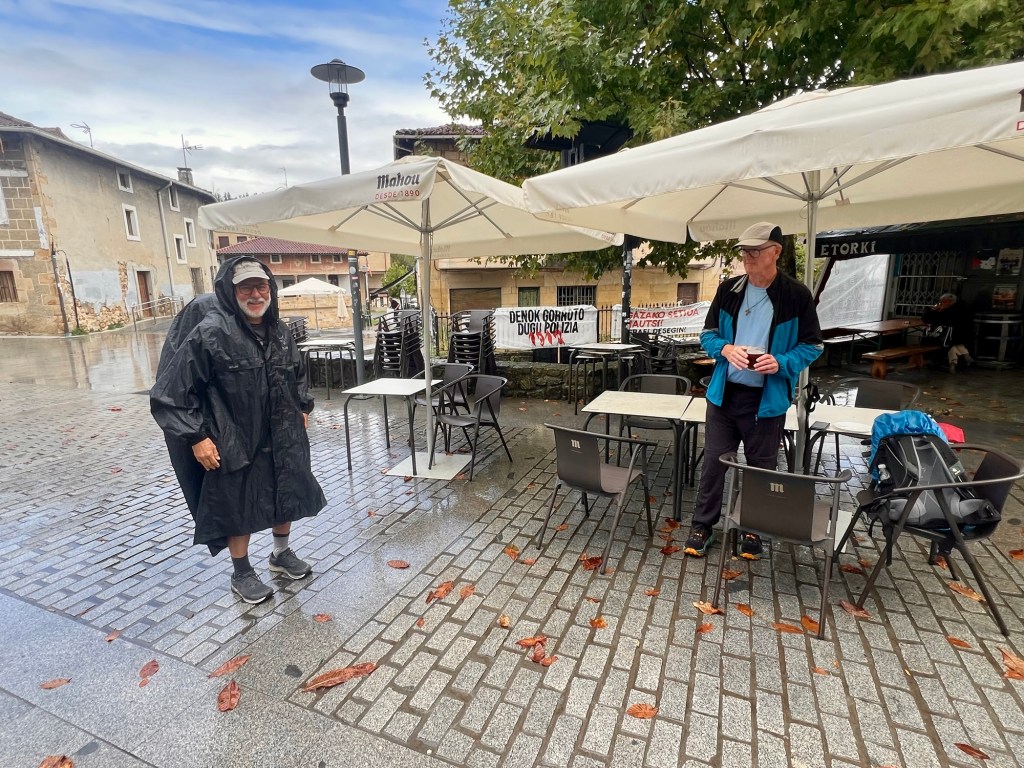
     With his powers of observation and more time walking Caminos than anyone, Abe attests that the journey itself is the teacher and that walking the Camino instills patience, humility, generosity, perseverance and courage–instills it, but also reveals it; because you need those qualities to even get started. He declares that when amidst the serenity of wind, ocean, and sky, you learn to walk humbly, listen before deciding, respect and protect the freedom of others (even if you disagree with them), and see life as it really is, without noise or excuses.  Every step matters, and if the path is wrong, you stop, reflect, and change direction. Sometimes, being lost is the first step in finding yourself. 
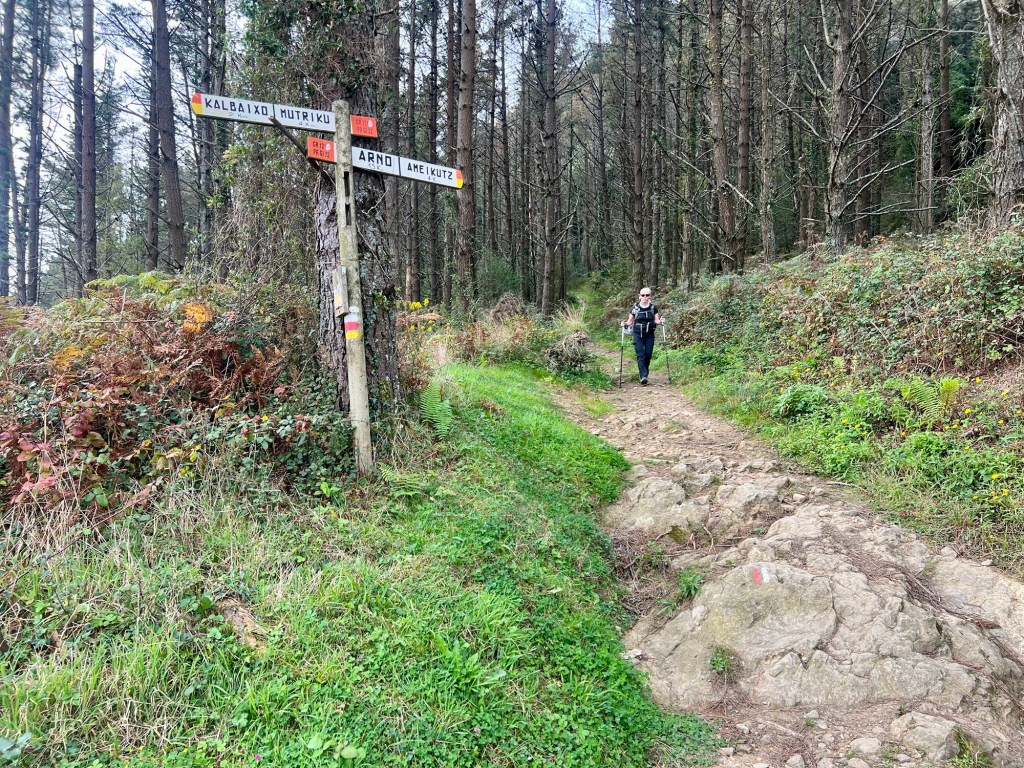
 Step by step (paso a paso) is Abe’s first principle. It’s the way to get anything done. Just take the next step.

    And therein lies another rule of the Camino. Don’t complain. It is a rule both unwritten and unconscious, yet it is innate in all pilgrims. They just don’t. 

  Caroline and I never heard a complaint from others and we learned to swallow our own. If we said something to Abe about a particularly difficult stage, his response was always a shrug while saying, “Juat keep going.” 

    Not to say we didn’t come close to complaining at times. Like when Caroline and I were limping though the remains of a day that proved to be harder and longer than I had predicted. To Caroline I said,  “It’s always farther than you think.” And she replied, “Don’t EVER make me look at another map!”  

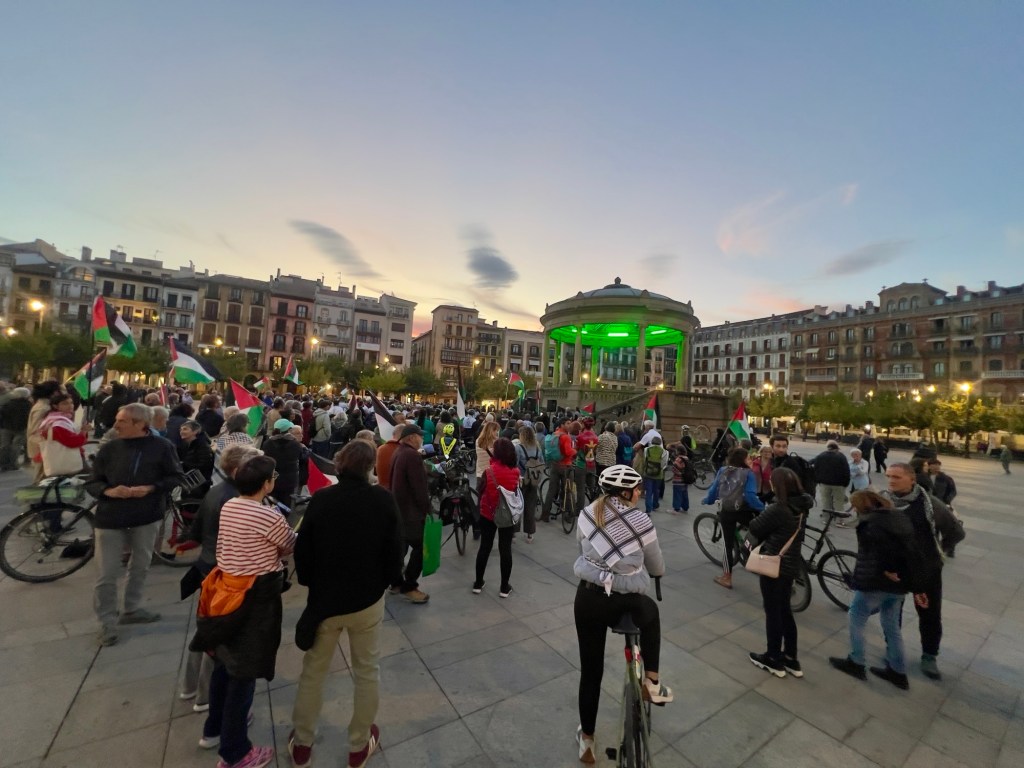
   In the central square of Pamplona we stood in a protest rally that followed a long march through the city. We listened to an impassioned speech from a young woman who exclaimed to the marchers, “I know you have had a very long day today!” To which Caroline muttered, “You haven’t had as long of a day as I have.”
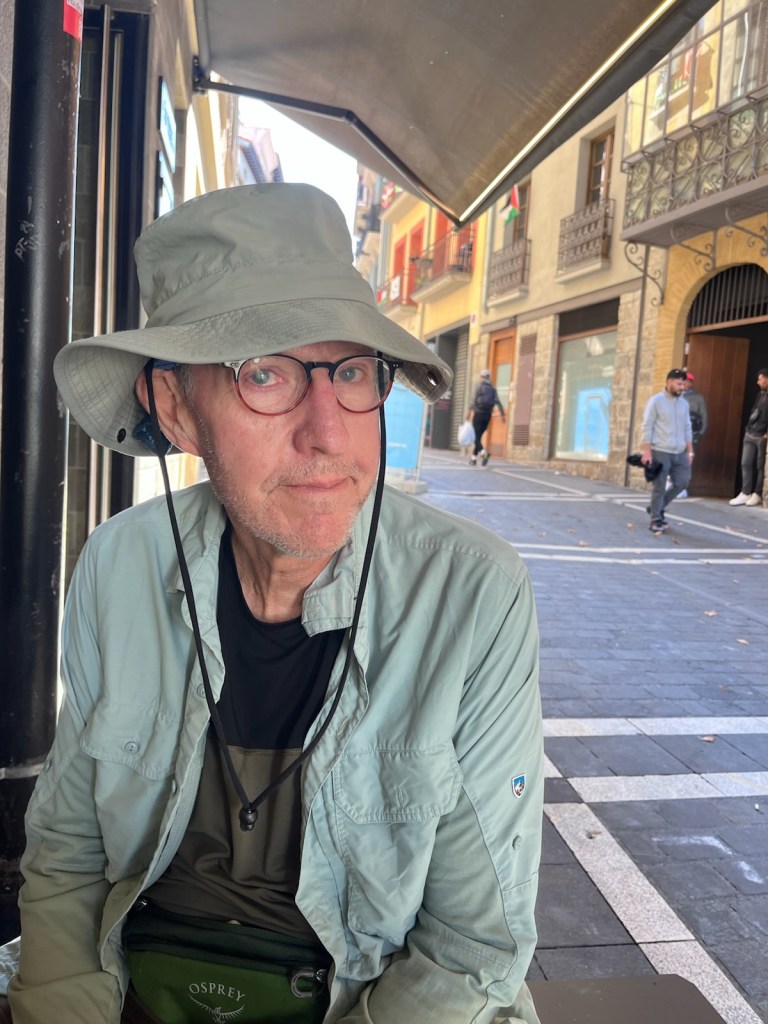
Pamplona

   The overarching rule of the Camino might be that you don’t criticize how other pilgrims walk their Camino.
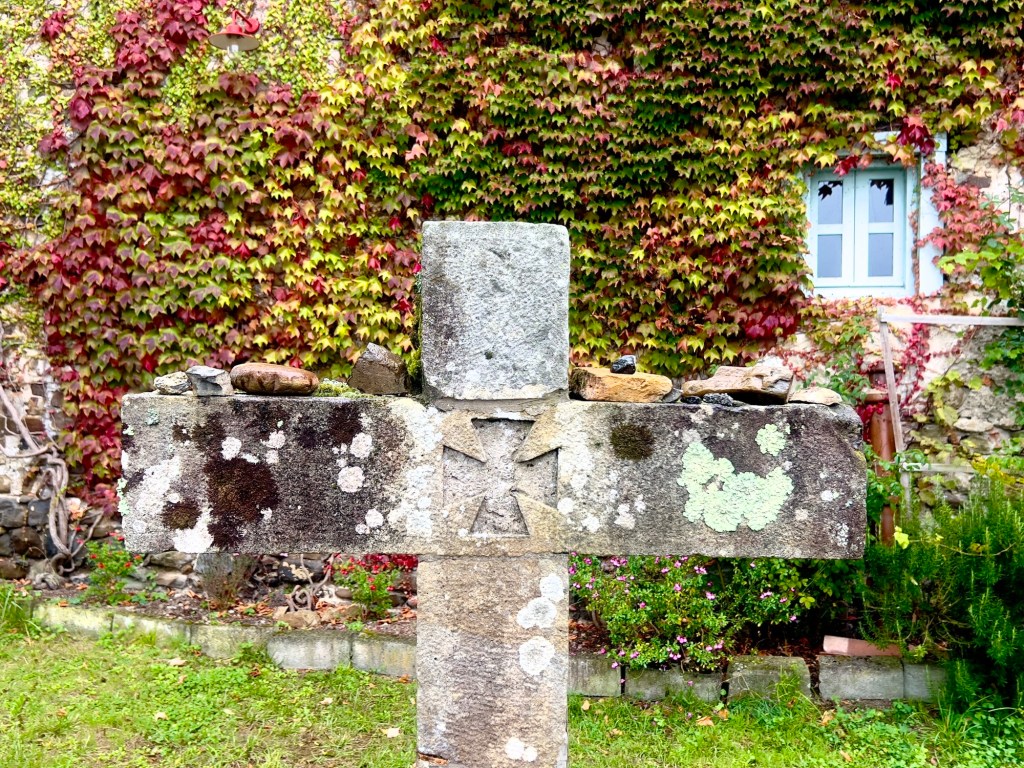
For some it is a solitary,  deeply contemplative event, and you respect their desire for space and quiet. For others it’s an entirely social affair. They travel in groups and don’t stop talking. For some, it’s all about collecting their Credential (certificate of completion) at the end, and there are others, like Abe, who don’t care at all about the paperwork. Some break it up into half stages, and others (Abe, again) add on extra miles. But there is no right or wrong way to do a pilgrimage. About the walking to Santiago, pilgrims don’t ask why, and they don’t judge how. 

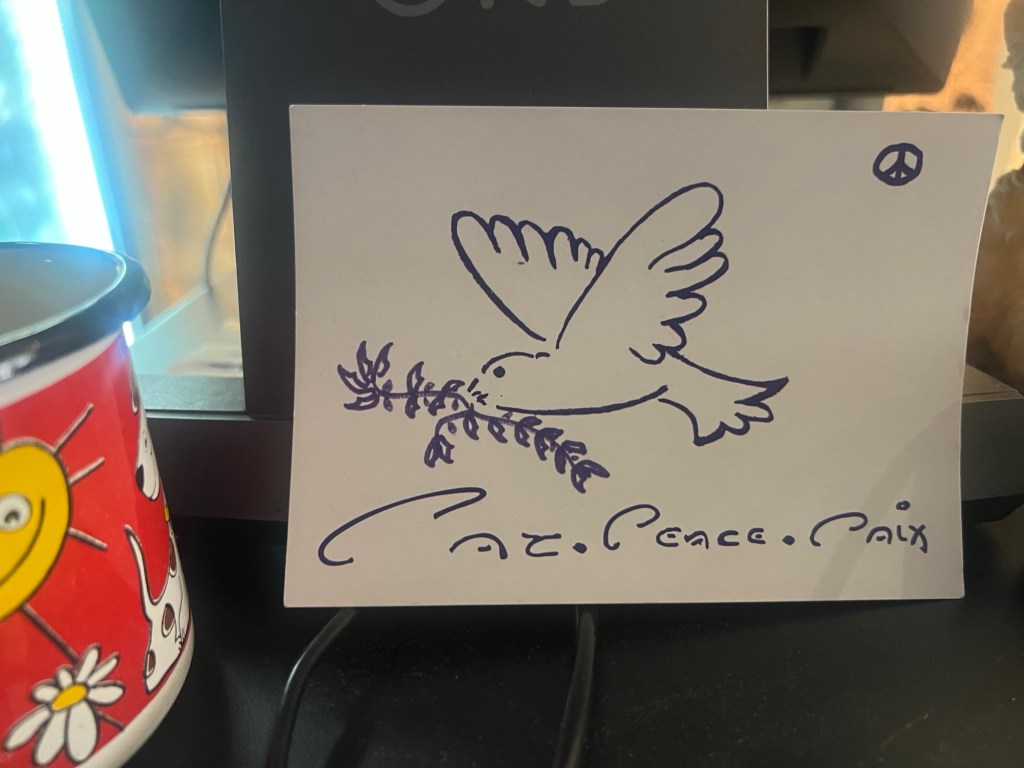
   Dogmas should be held lightly and rules approached with caution. Everyone shares water, stories, and advice, and it’s best to get along. It’s a peaceable kingdom. A place where you recalibrate what matters and what makes a good day. You reside within a mingling of solitude and community, to the wider world simultaneously separate and connected–the way an island must feel about water. 

 Many pilgrims reach Santiago and wonder what happened to the spiritual epiphany they were expecting.  I don’t think walking the Camino works that way. 
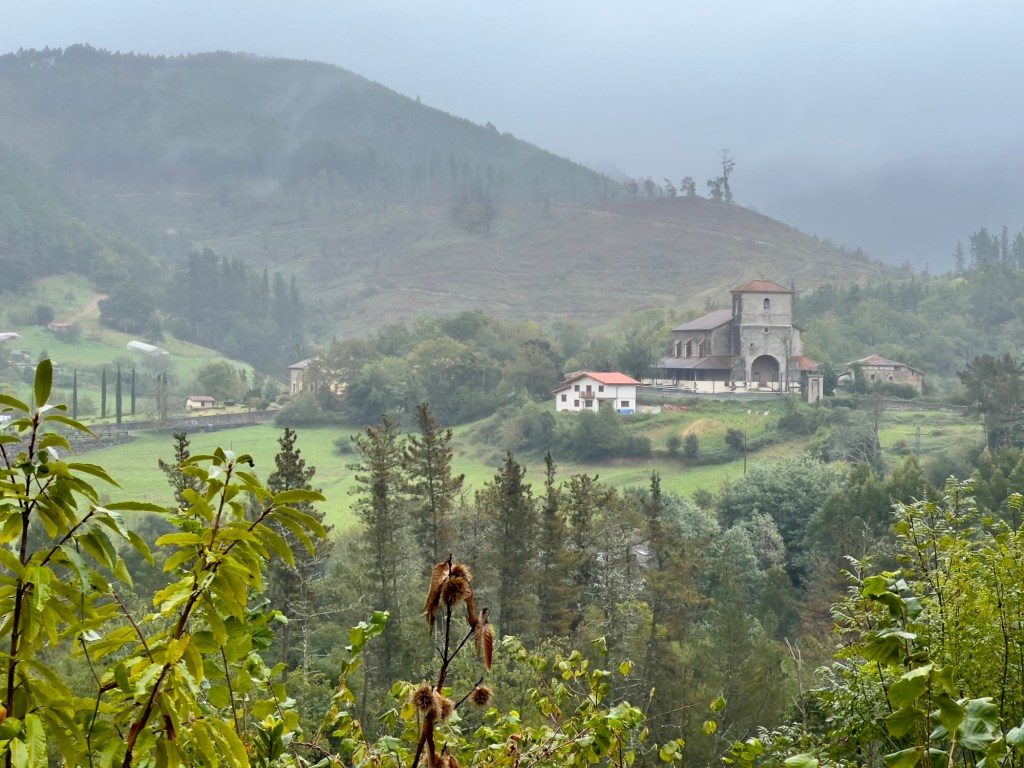
     “It is solved by walking” is a proverb attributed to St Augustine (or some claim the Greeks before  him). And Hippocrates famously prescribed, “If you are in a bad mood, go for a walk. If you are still in a bad mood, go for another walk.”  

    Joseph Campbell, the acknowledged authority on how humankind has searched for meaning though mythology and religion, in the end said, “I don’t think people are searching for the meaning of life as much as they are the experience of being alive.”

    For me, I think it is something like that. I didn’t go in expecting an epiphany. I did have the experience of feeling alive. 

     The Camino is a physical challenge, an exercise in introspection, and a crucible of companionship and connection.      I think the best lessons of the Camino speak gently and gradually, similar to any enduring life lessons. 
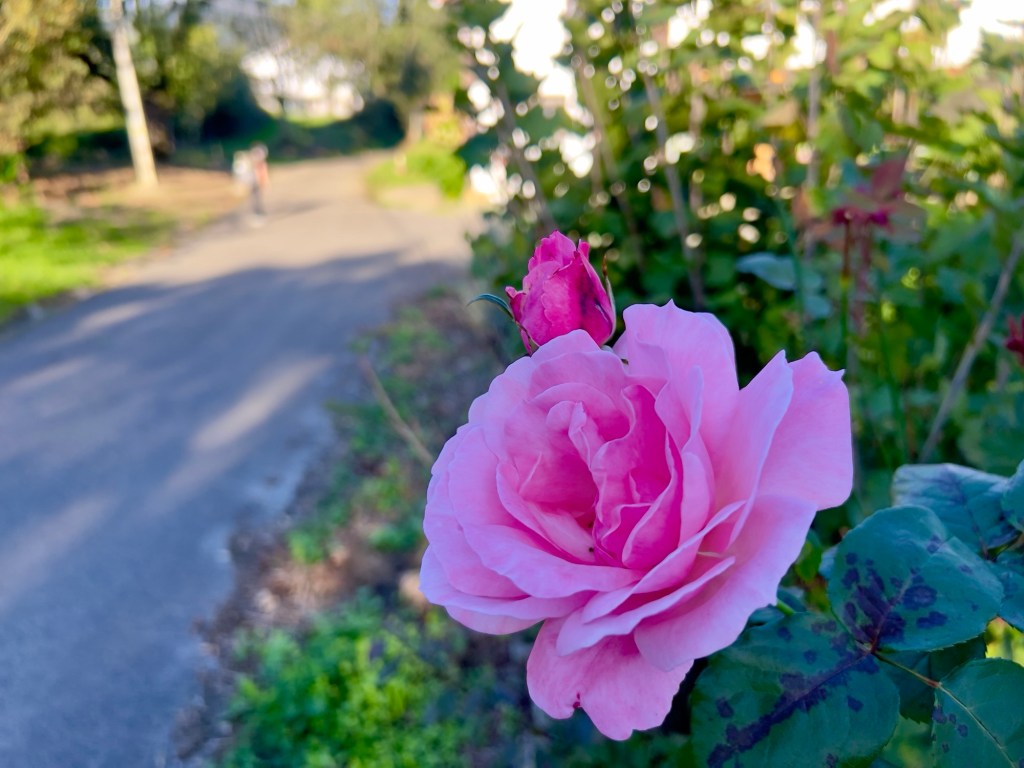
Here are some lessons from the Camino that apply just as well to life outside of it: 

  • Don’t complain. Just keep going. 
  • Keep a positive attitude. Believe  that the world tries to land right side up. 
  •  If something doesn’t take hard work to get, it’s probably not worth having 
  • The world does not stop for me. It goes on with or without me
  • Curiosity will be rewarded
  • Don’t criticize or judge the way others do their Camino walk or their walk of life. None of us know the truth of the other’s journey. 
  • Your goodbyes should be written in water. Chances are, you will see each other again.
  • Notice magic and serendipity when it happens. That’s what can make a walk a pilgrimage, your story a quest for self discovery, and your life a hero’s journey. 

What is my reason to walk the Camino de Santiago? 

    I can offer this last item about Abe–he invited Caroline and me to come stay at his house in Seattle. 

   Nice of him, but when he said that my first thought was–Really? You barely know me.

    But he knew me enough.

    For me, that he could think that and say it is reason enough to want to be a pilgrim. 
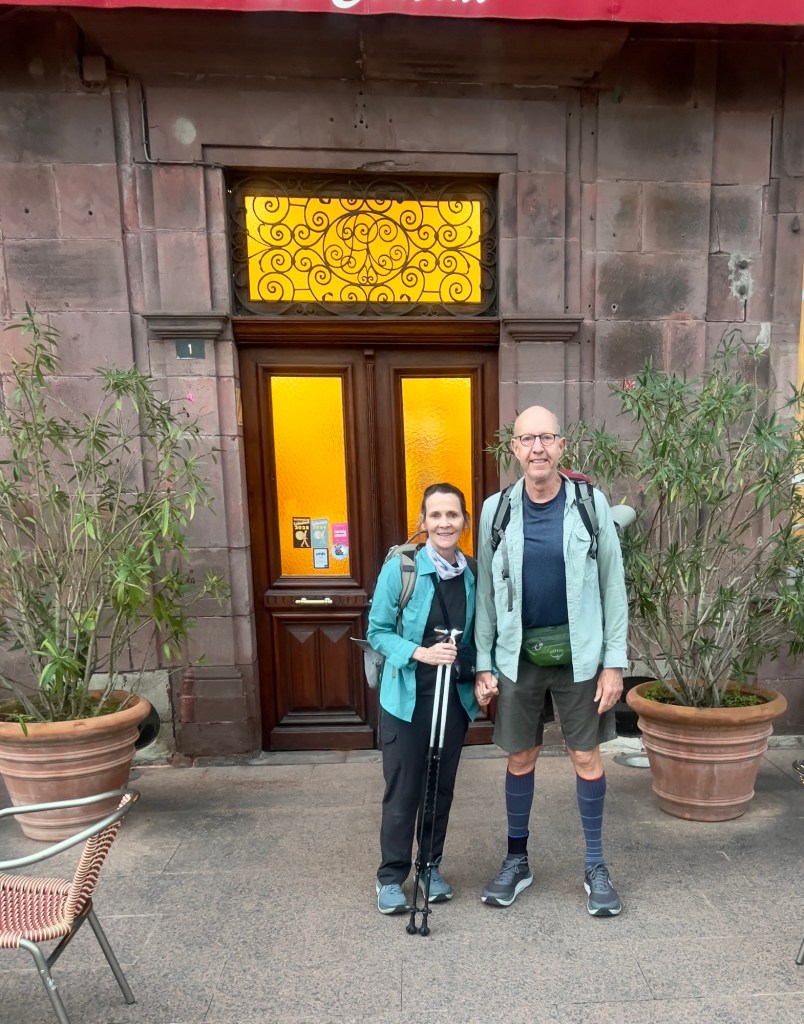
The Forbidden Kingdom of Lo.October 2023.Dispatch

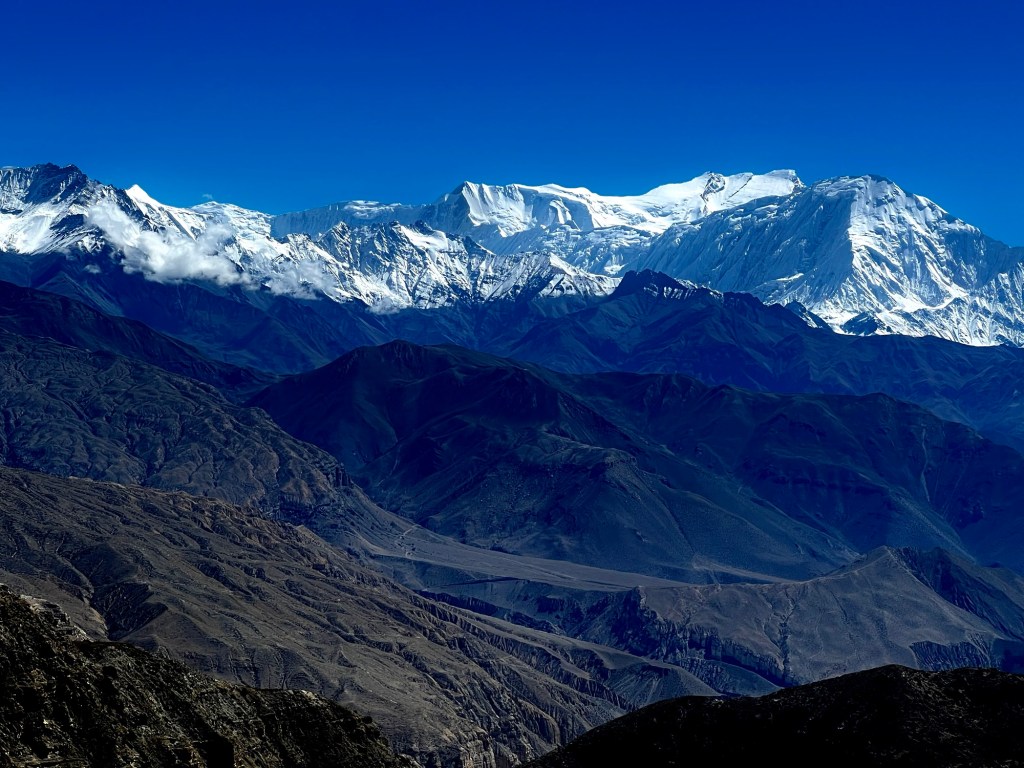
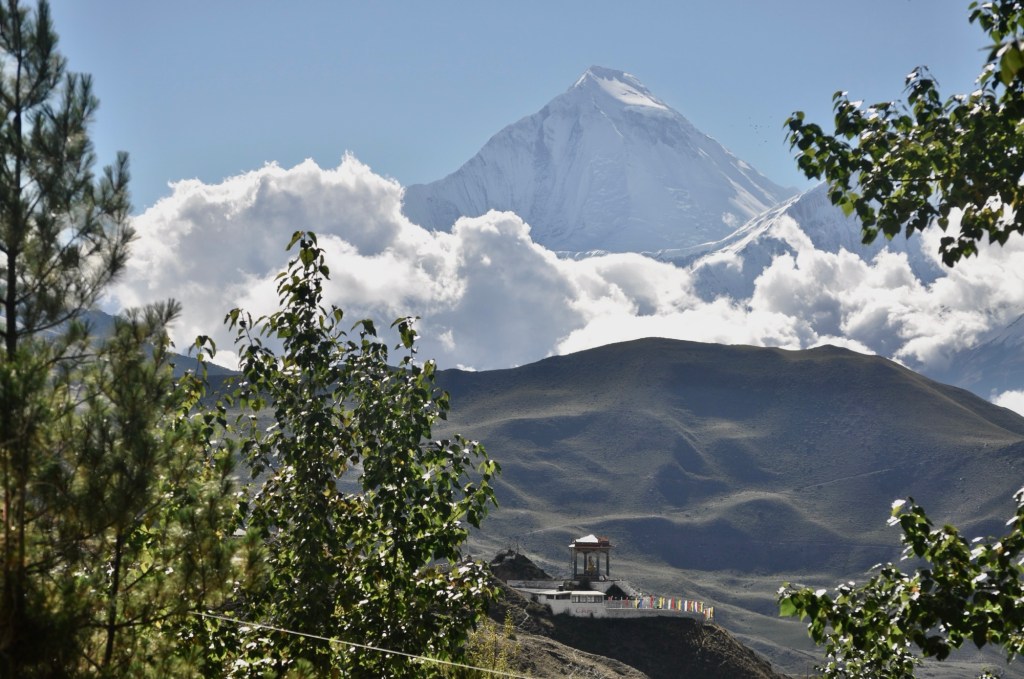
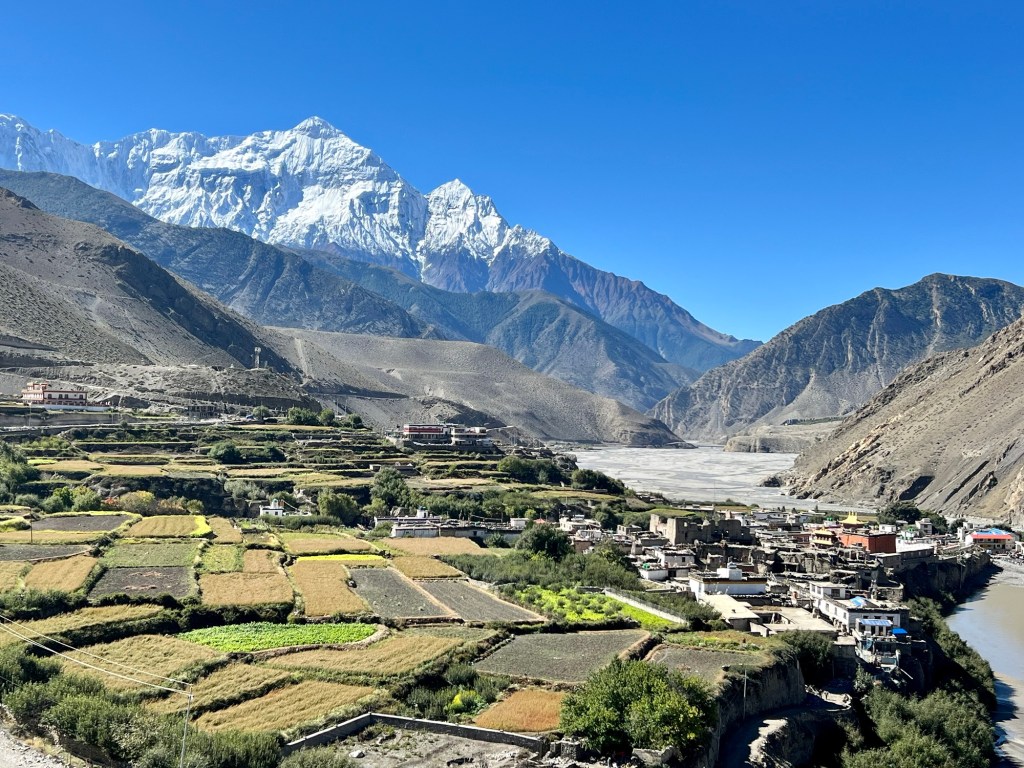
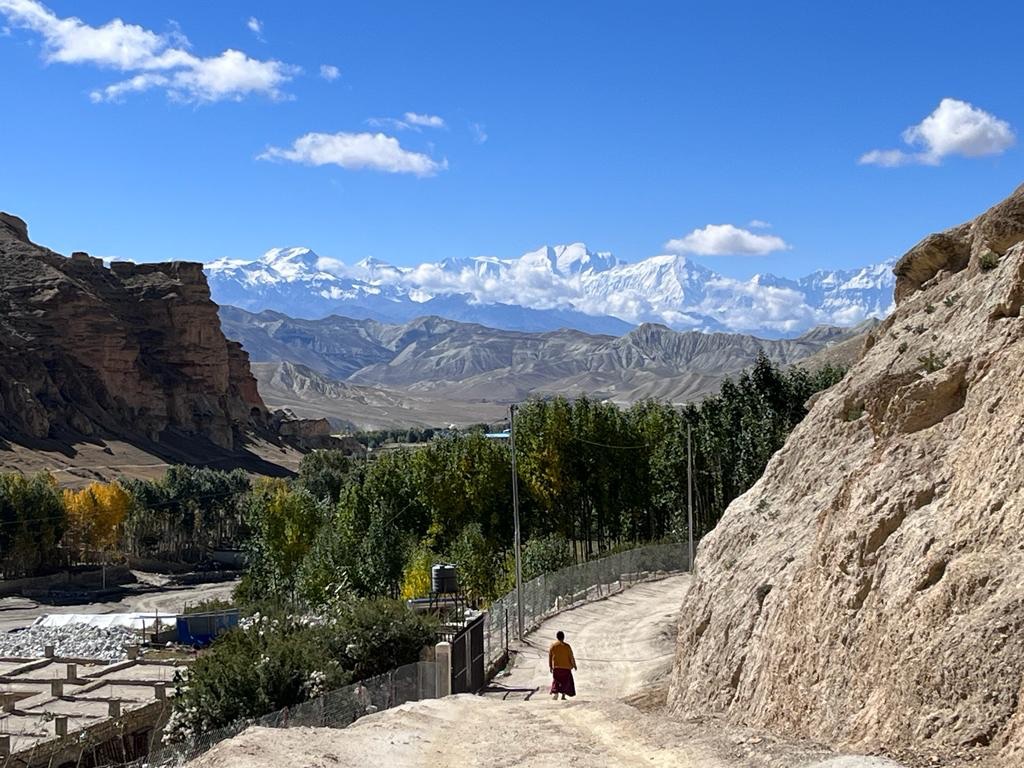
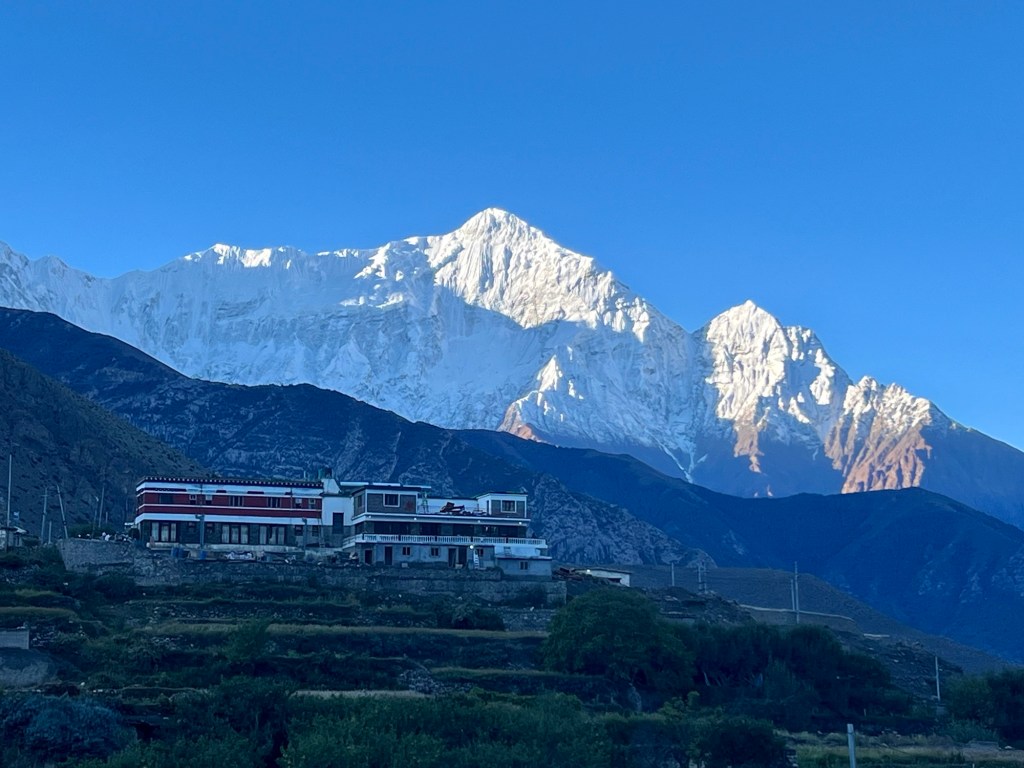
The Kali Gandaki River valley is the deepest gorge on earth if measured from the tops of Mounts Dhaulagiri and Annapurna—which they do. It’s a long way down to the river from the summits of those peaks, both among the top ten highest on earth. Their snow-capped upper reaches are so white and billowy they look more like clouds than mountains. Far below the river runs grey/black from all the clay sediment it carries. I recall the pale waters of the Khumbu district below Mt Everest. The river there is named Dhud Khosi, or “Milk River.” The  Kali Gandaki is named after the Hindu goddess Kali and looks more like chocolate milk. 

    Each Hindu god has a female counterpart—his shakti or consort—who activates his spiritual power and influence. It is the shakti’s female aspect that undergirds the active force; without her, the male deities would be powerless. Kali is one of the shaktis of the Hindu god Shiva, the god of destruction. She is the scary one, with gritted teeth and skulls hanging around her neck. Her skin is dark, like the local waters, so the name of the river stuck. 

Kali Gandaki
Kali Gandaki
Annapurna 1
Dhaulagiri

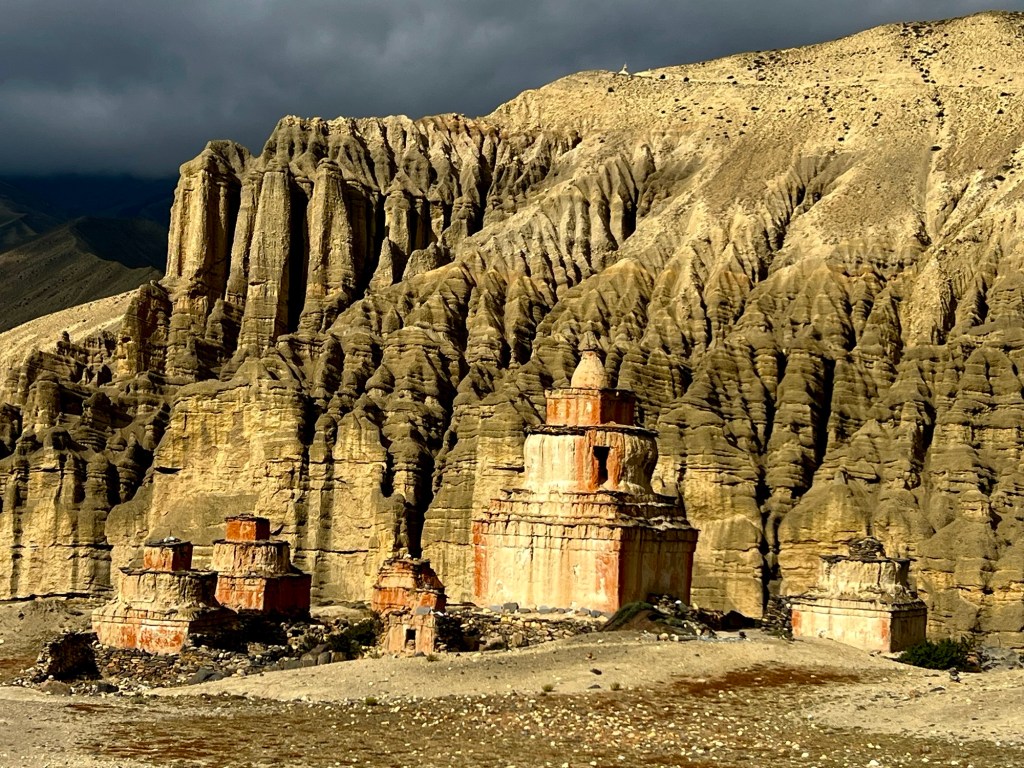
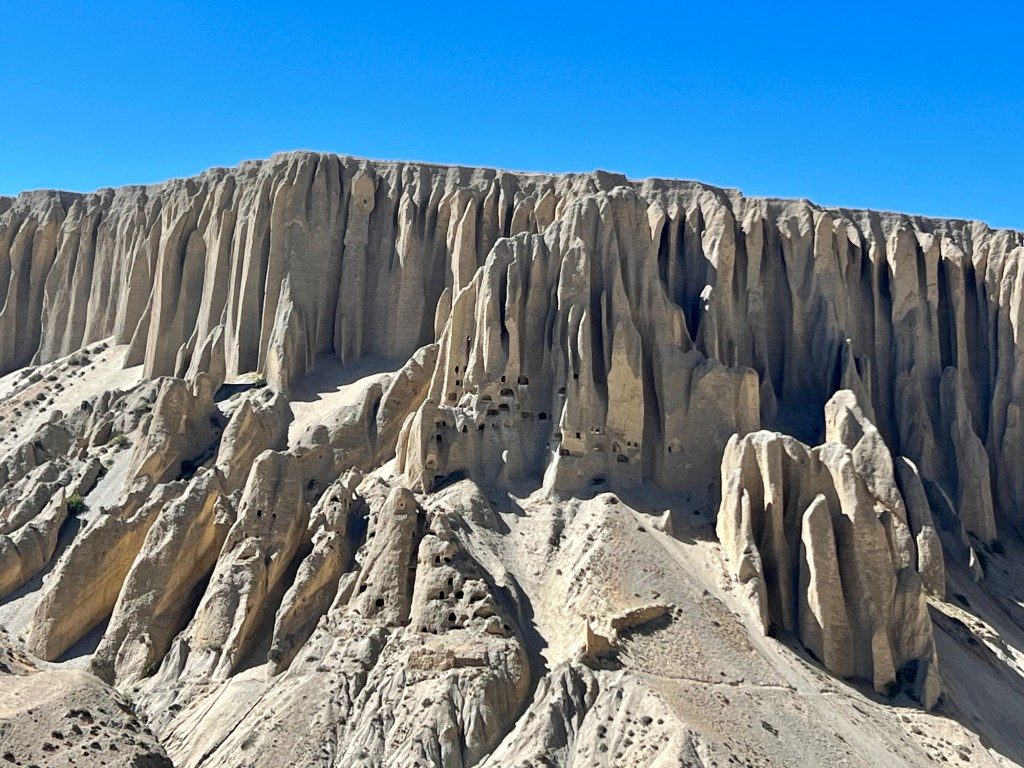
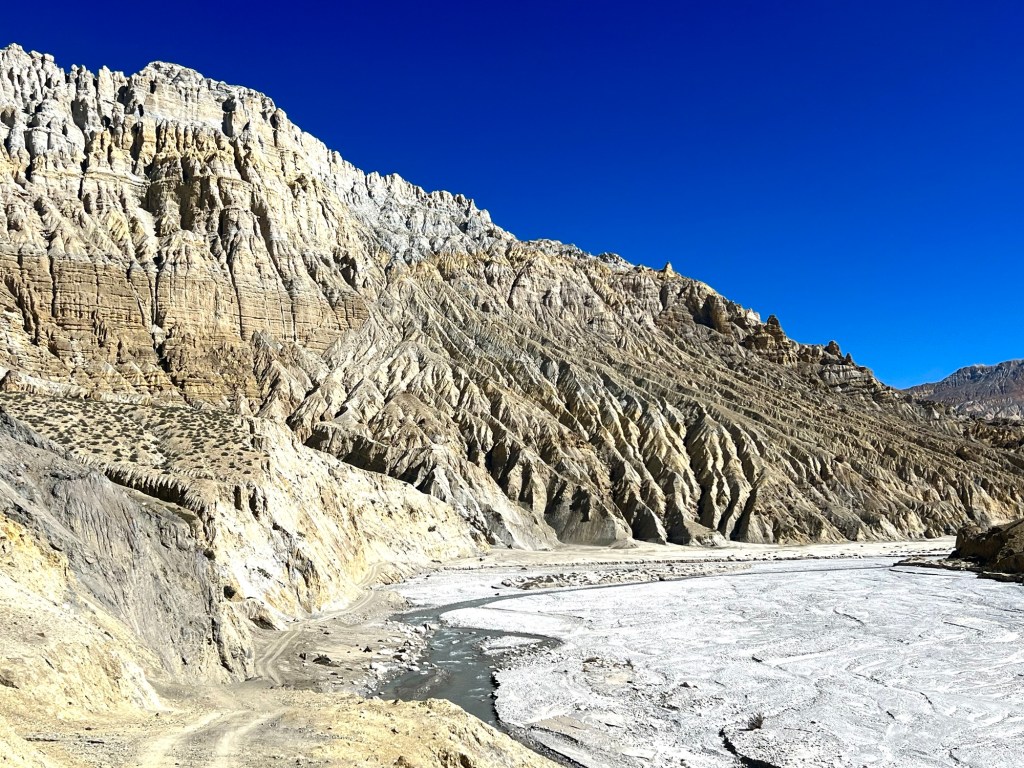
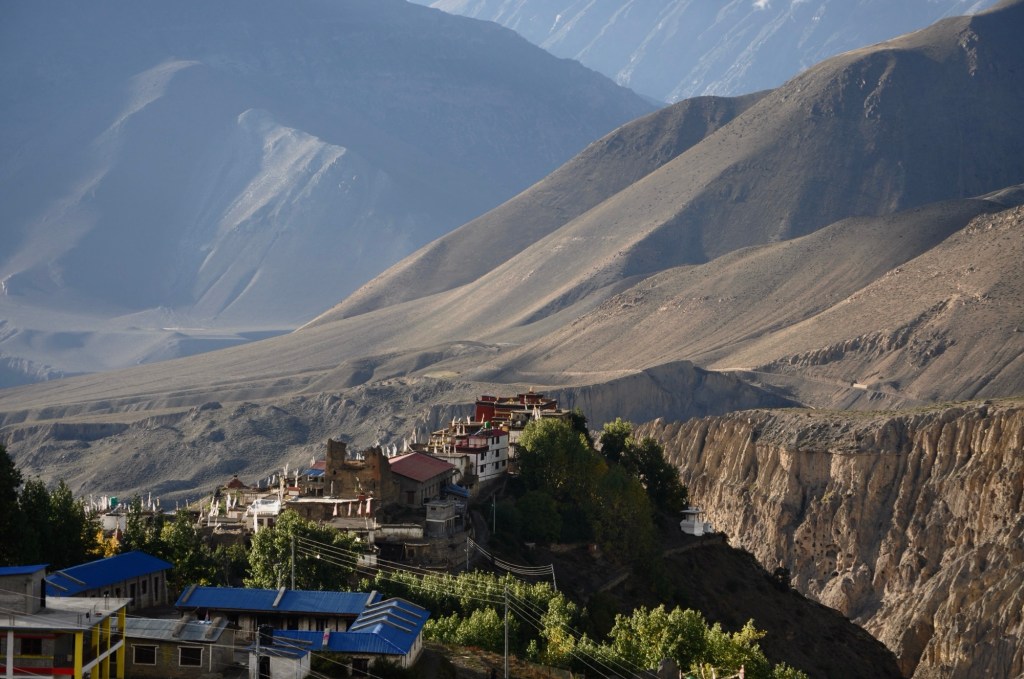
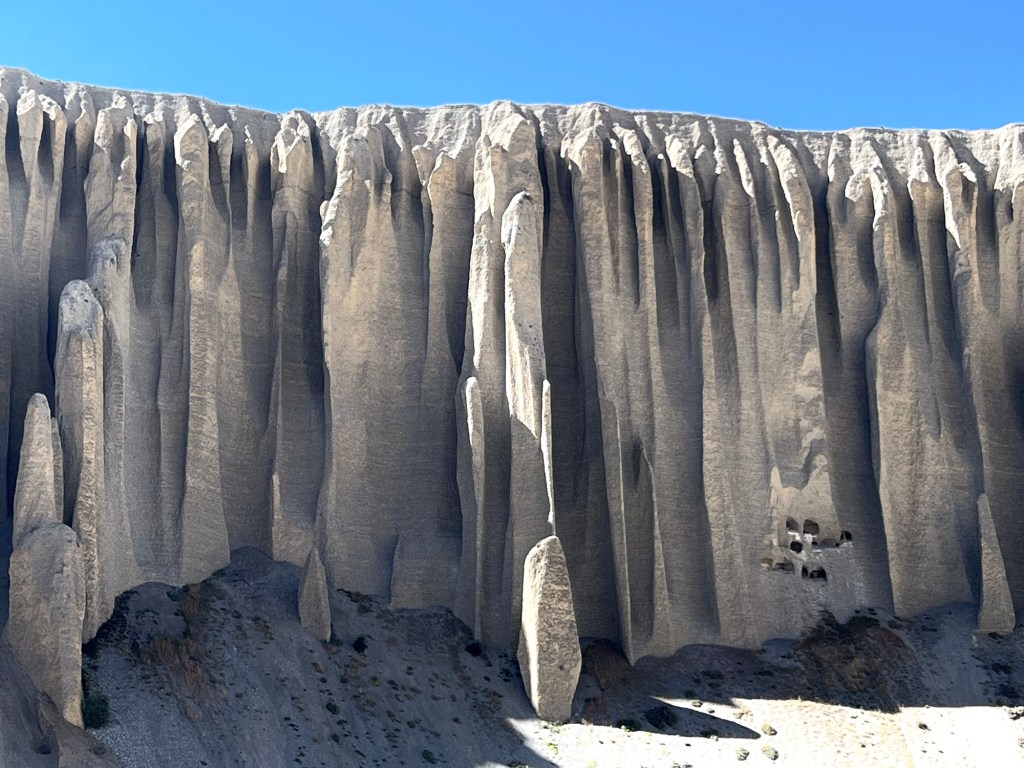
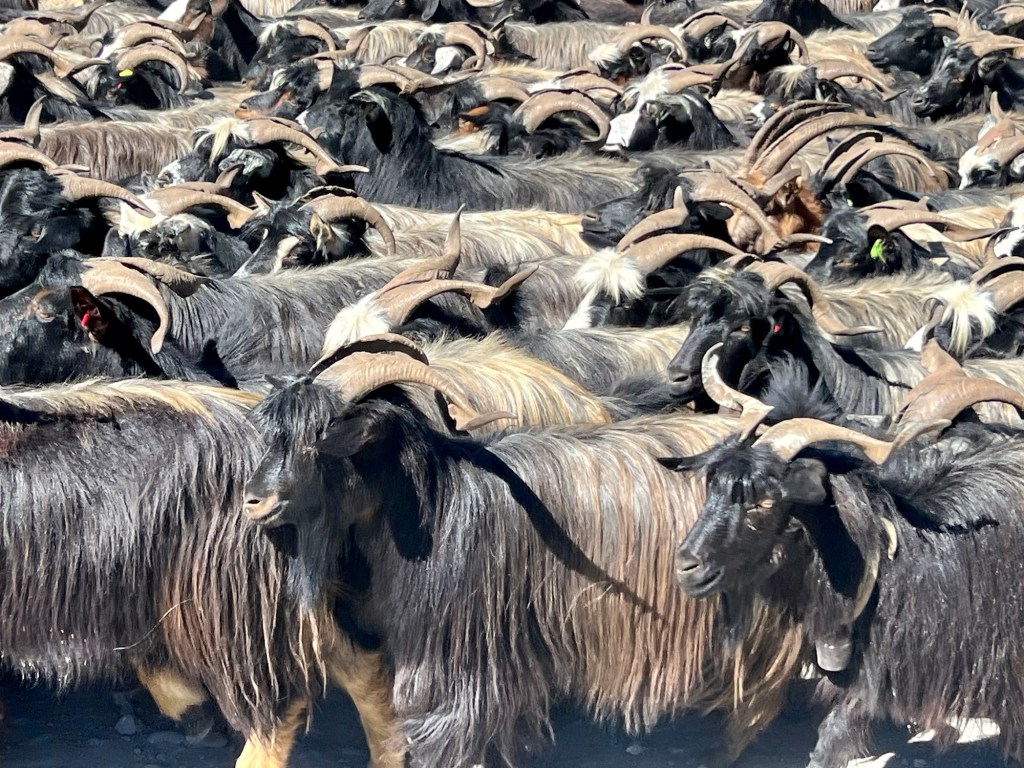
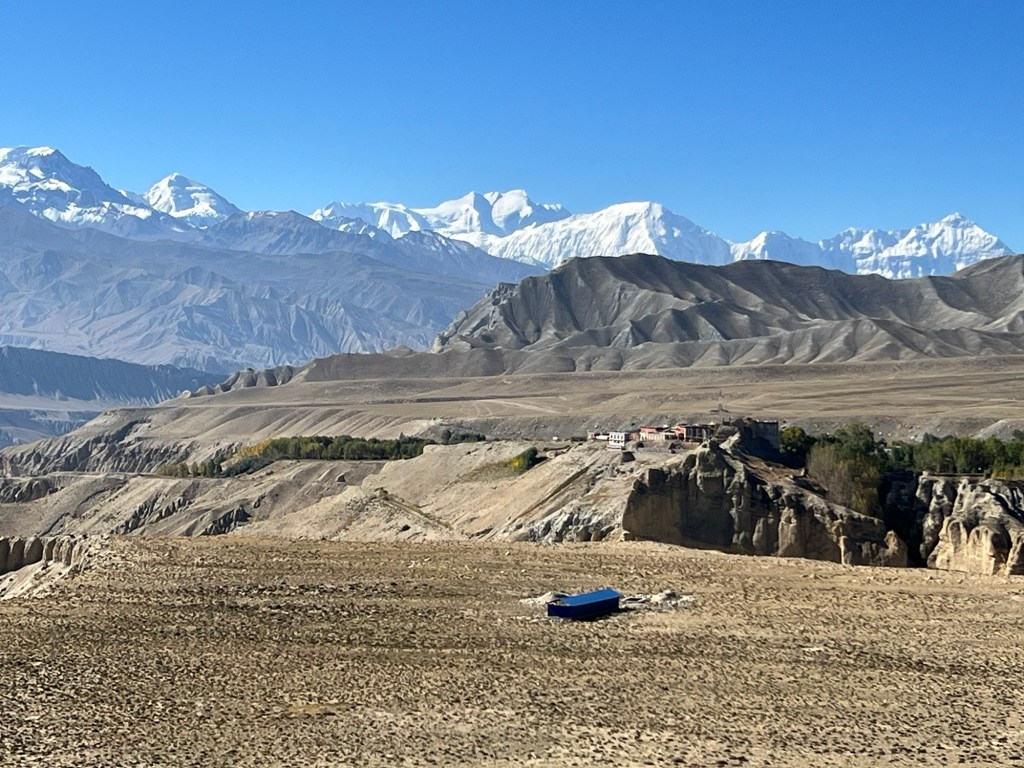
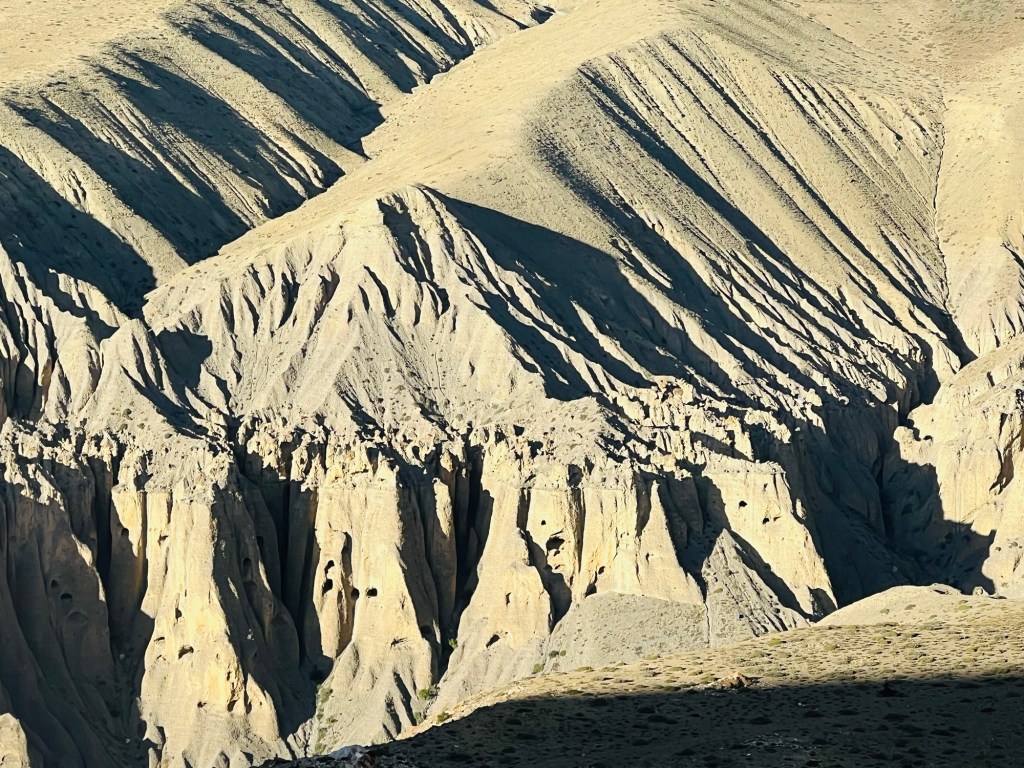
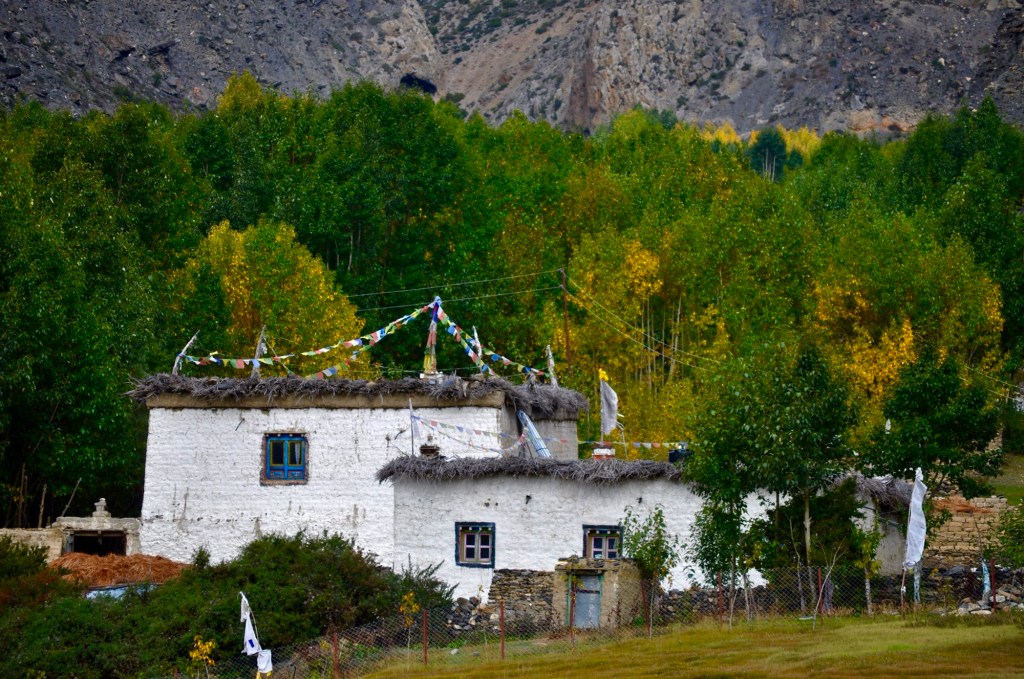
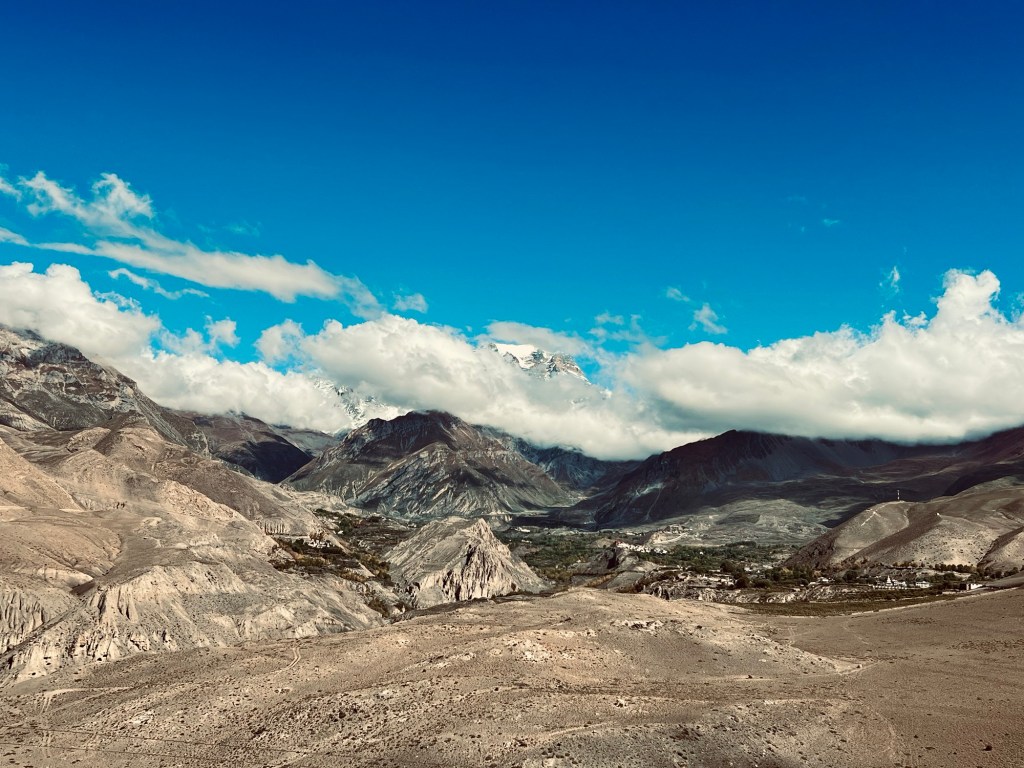
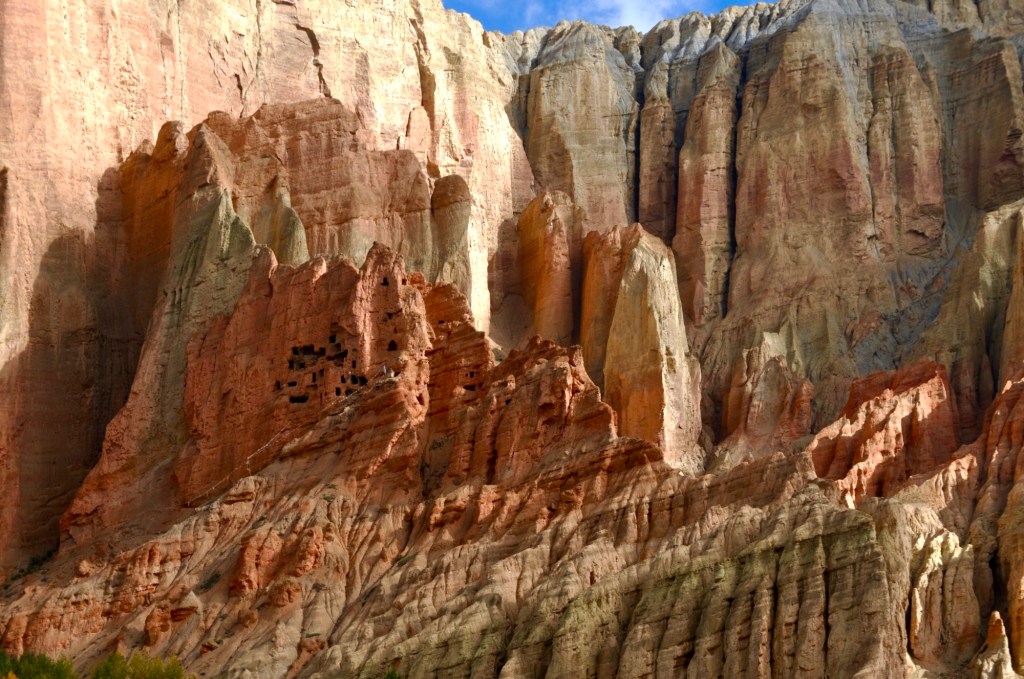
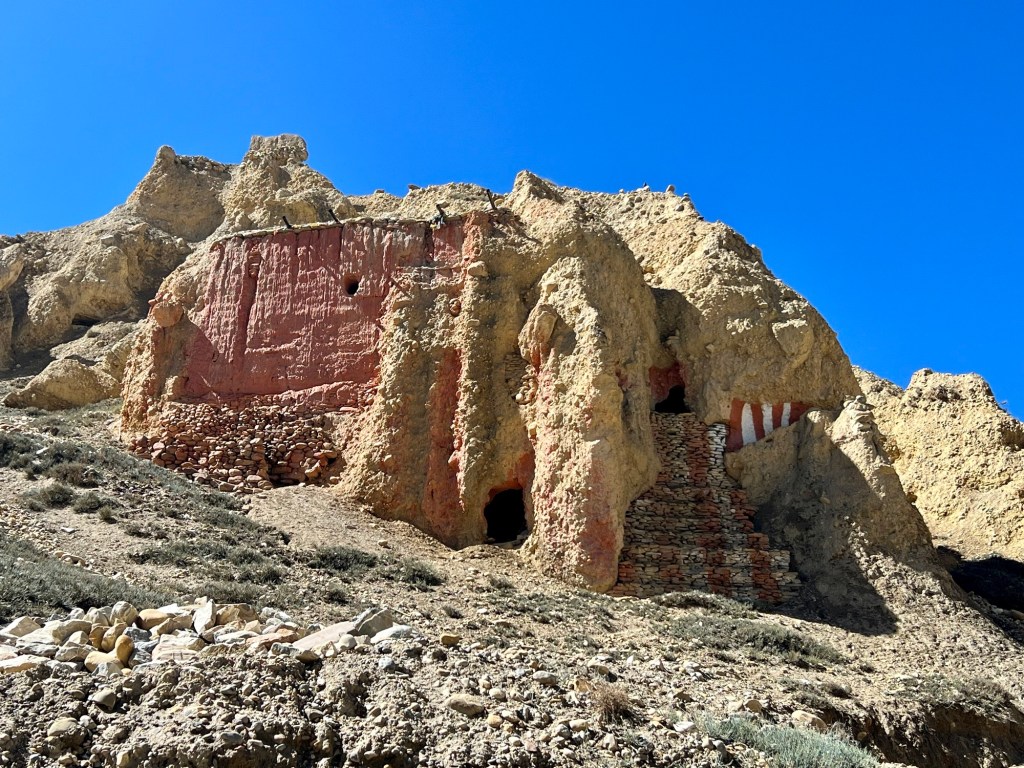
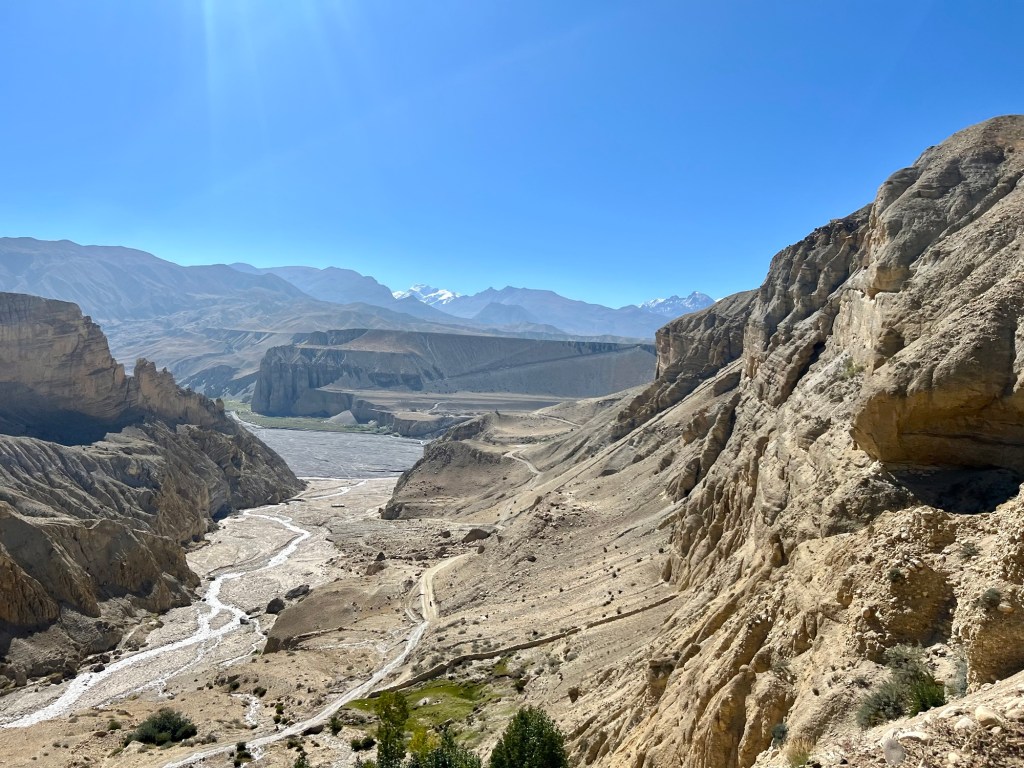
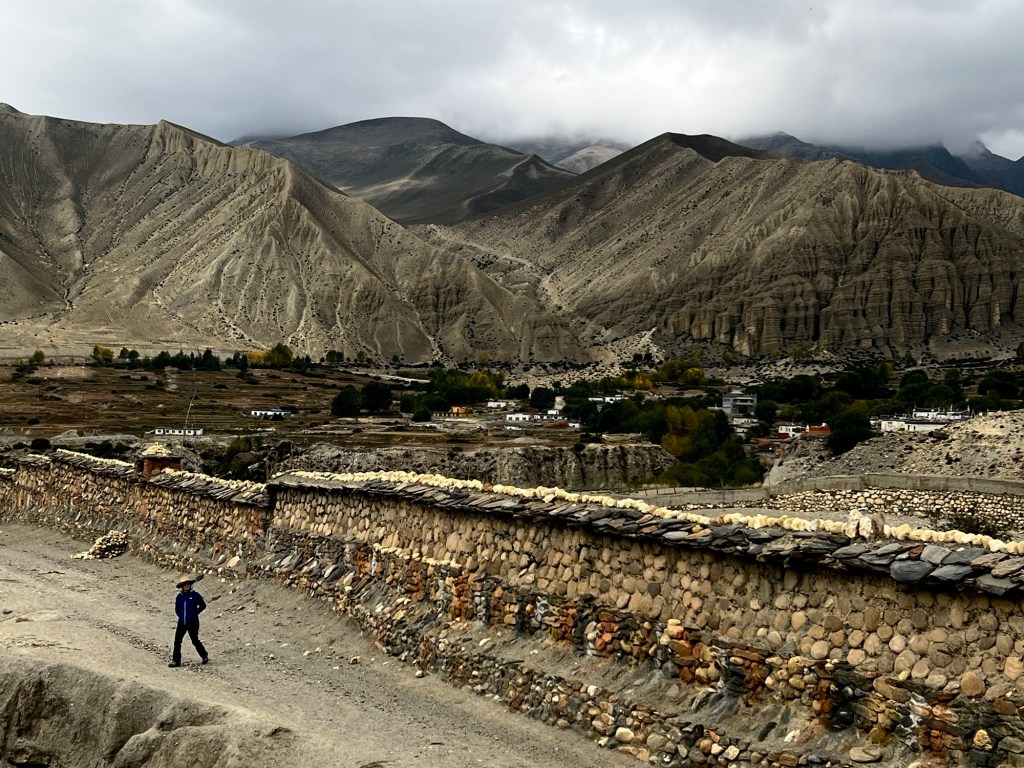
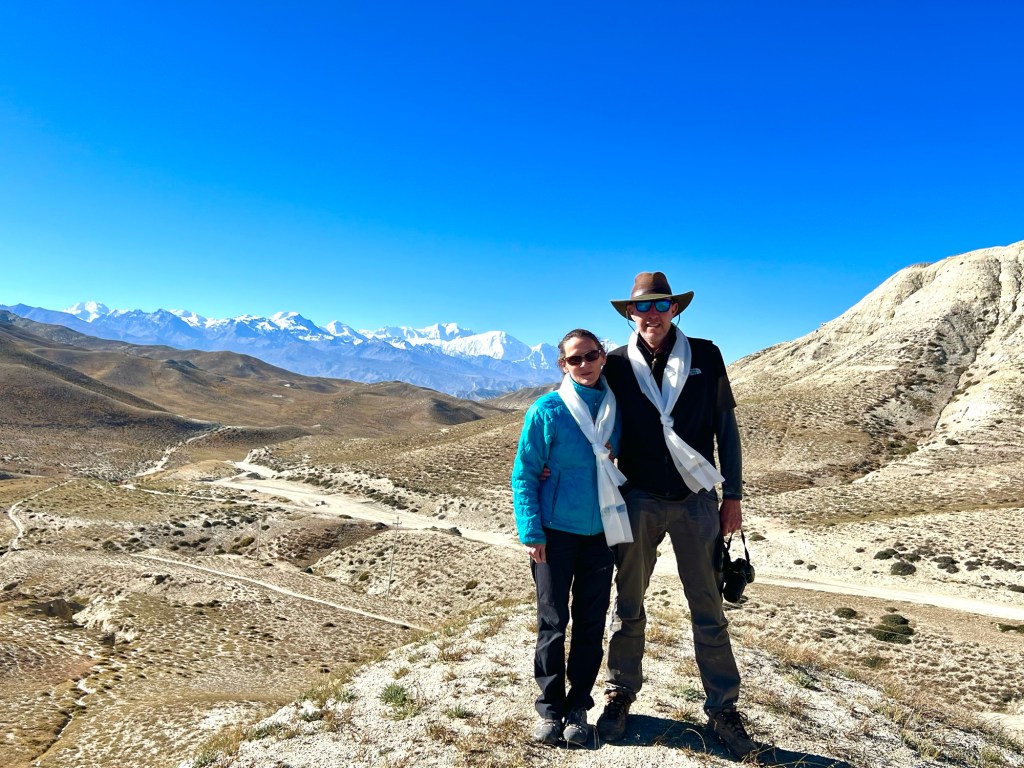
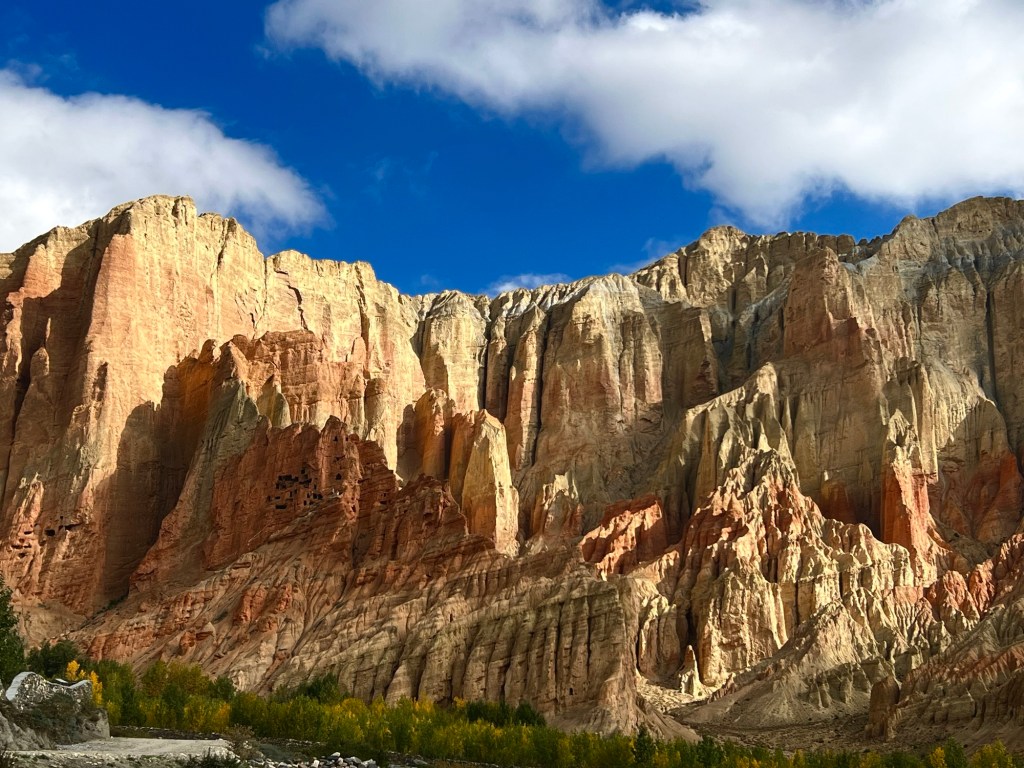
  The arid region of Mustang (Muh-stang) is the most sparsely populated part of Nepal. Small villages dot the riverbank and nestle in the green clefts of side canyons. The stone houses cling to steep ledges below vertical palisades shaped like organ pipes. The towering rock walls are pockmarked with man-made “sky caves” in locations that appear inaccessible to any creature without wings, accentuating the mystery of their origin. Apple orchards and the ruins of watchtowers from the old kingdom are scattered throughout the valley. A few nomads still wander around, though that way of life is slowly fading away. Shepherds herd changra goats that are the source of cashmere wool. 

Sky caves
Changra goats

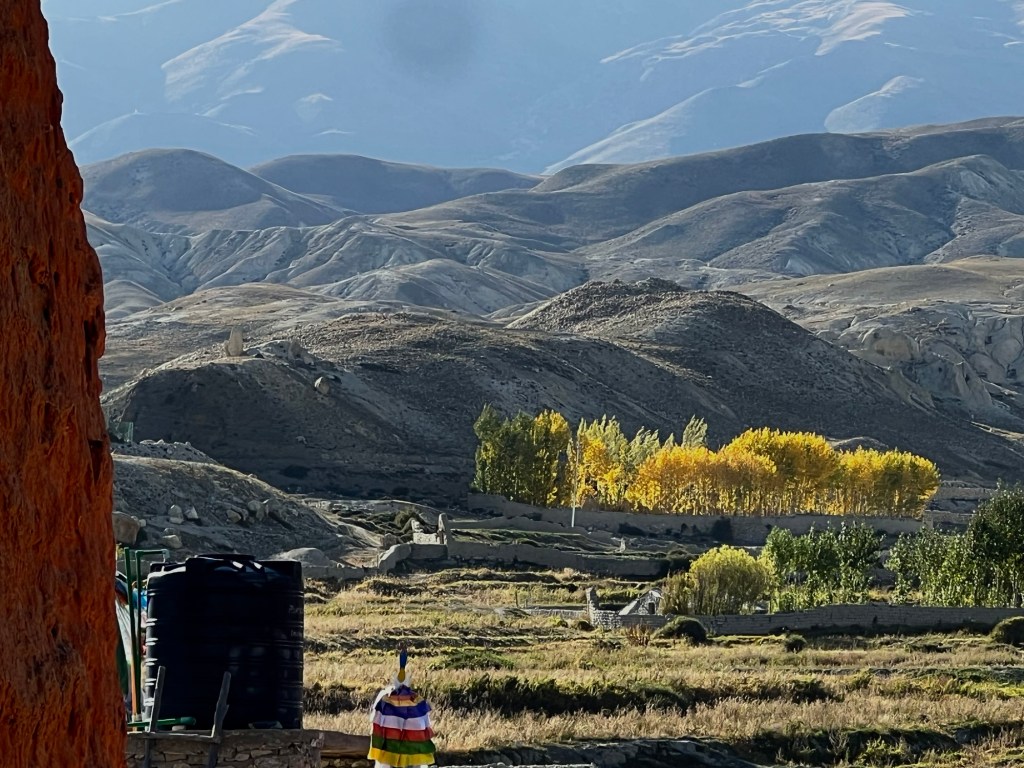
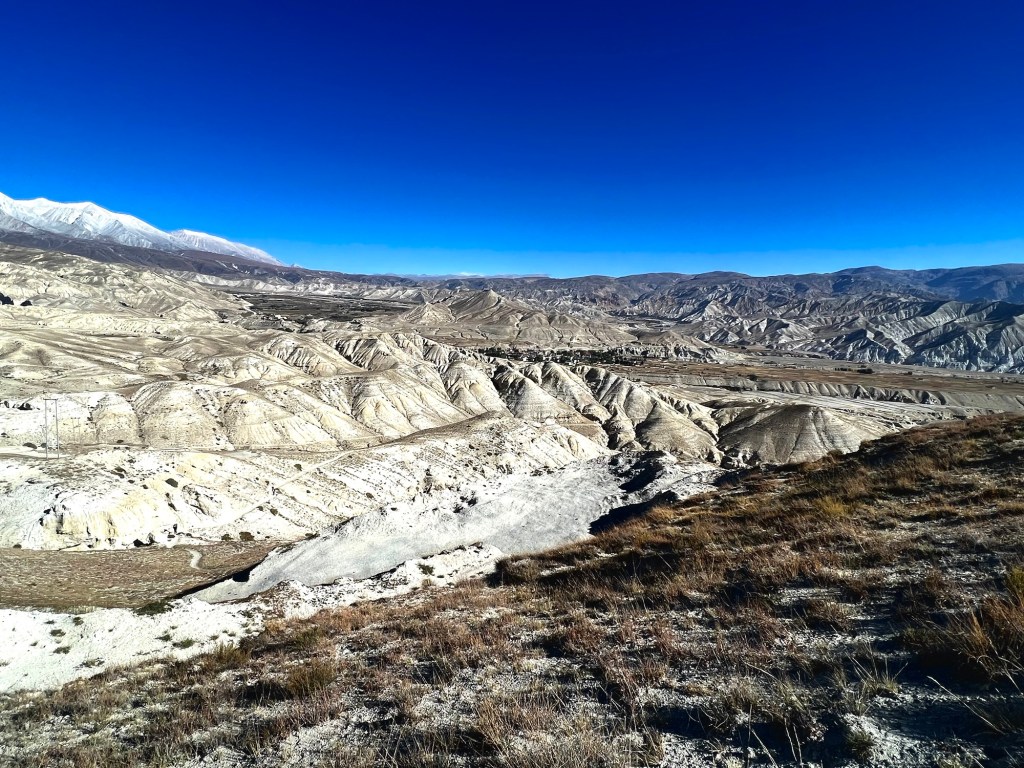
    Mustang is north of the Himalaya Range so is always in its rain shadow. The arid, treeless landscape is as barren as the moon. Agriculture would not be possible without an intricate system of irrigation, and even with that consists mostly of high altitude grains like barley and buckwheat, potatoes, mustard, and peas. The soil is fertile and with a little water, apple trees  thrive and apple pie is a specialty. 

Barley grain drying in sun

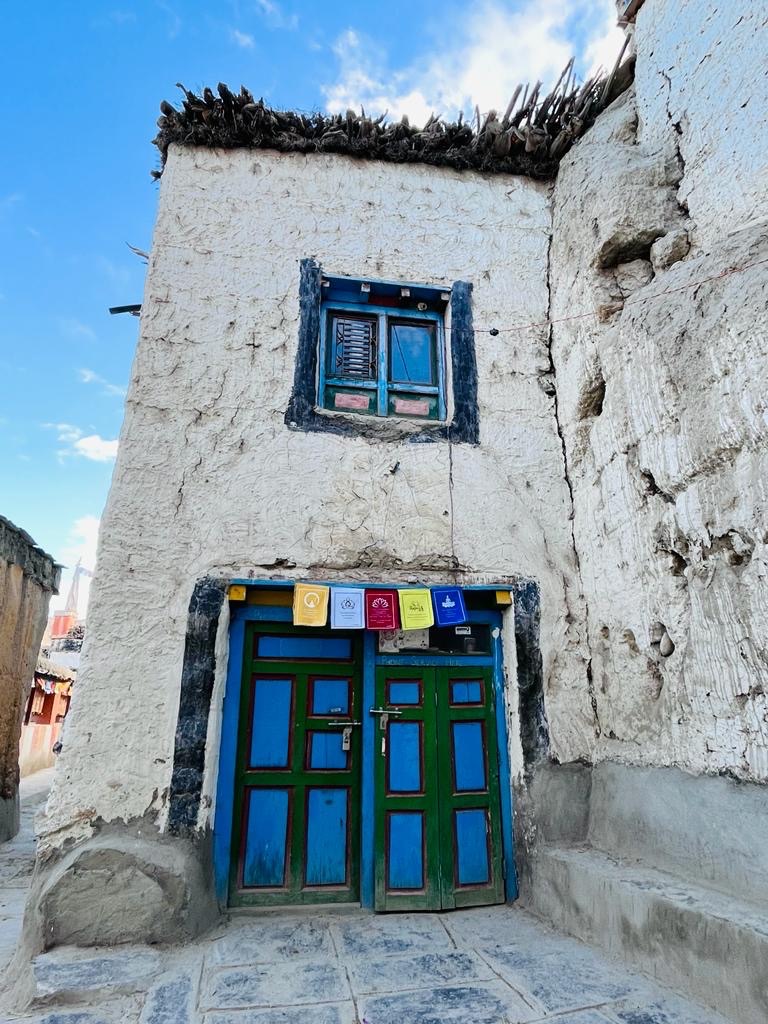
   The air is thin and the withering climate is harsh enough to age you in dog years. A stampeding north wind from the Tibetan plateau is funneled between the parallel mountain ranges and stoked into speeds that merit a hurricane rating. They whip up dust storms that could pass for a scene from Lawrence of Arabia. The earthen houses have brightly colored doors but small windows,  and no one leaves their shelter without some type of face cover and hat. As the sun rises and the cool night air quickens, the gusts grow ever stronger and more unforgiving, so even on a cloudless day, all takeoffs and landings at the small airport in Jomsom are halted after 10 AM. 

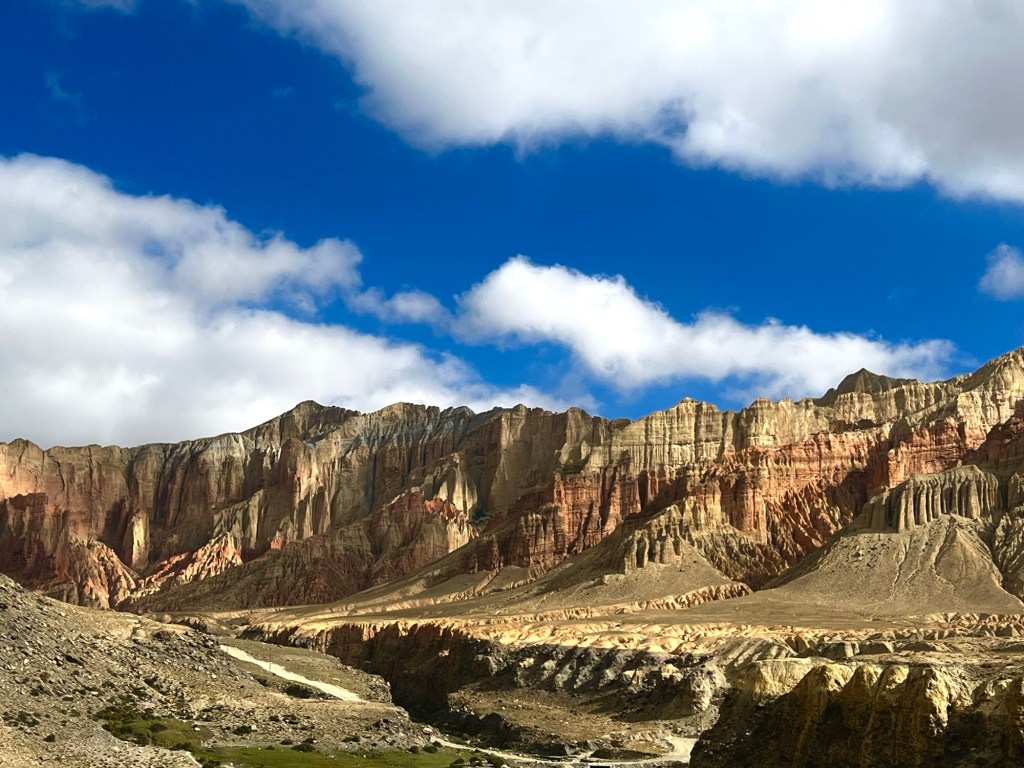
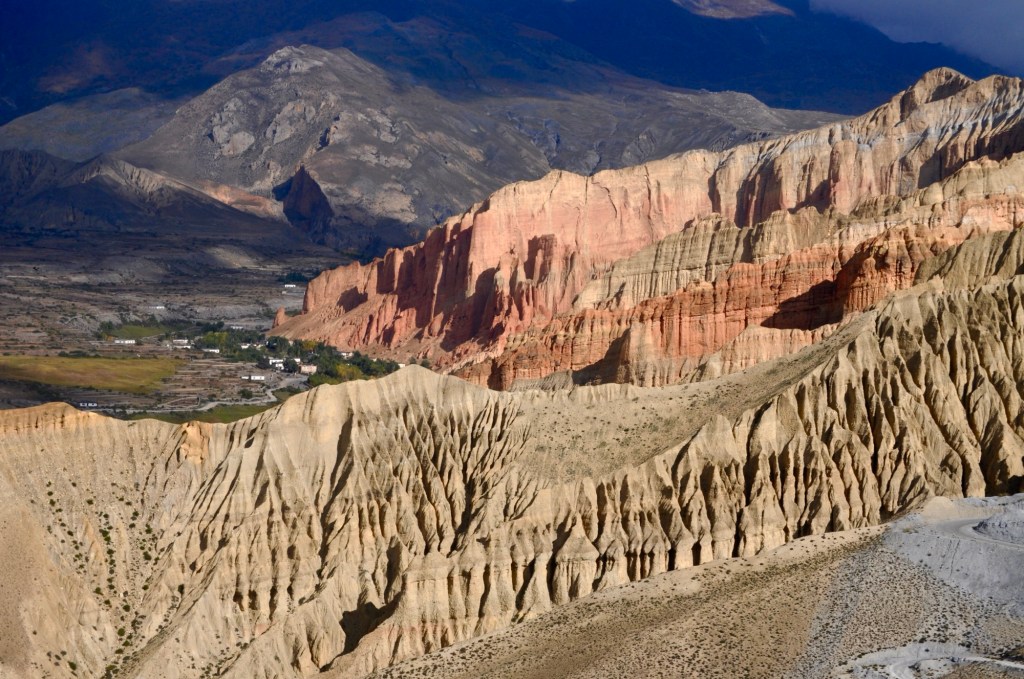
    The vermillion cliffs are a crash course in geology, their diagonal striations a testament to the tectonic uplift of what was once the floor of a prehistoric sea. Further evidence are the  ammonite fossils of sea creatures—known locally as shaligrams—that are found only here and gathered by people of the valley to be sold to tourists and collectors in Kathmandu and abroad. Kali Gandaki is one of the major tributaries of the Ganges, Hinduism’s most sacred river and the “embodiment of all holy waters,” so the shaligrams are revered as a non living manifestation of Vishnu, another god of the Hindu trinity. They are good fortune to those who find one and a talisman to be carried or passed on. 

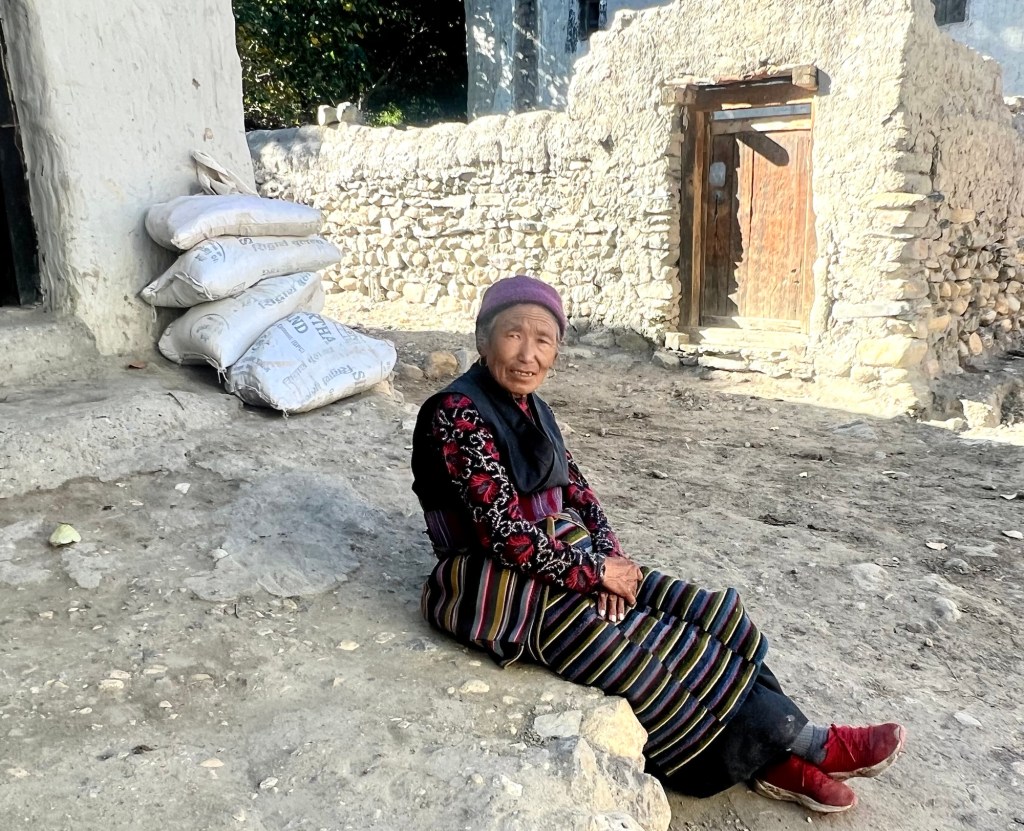
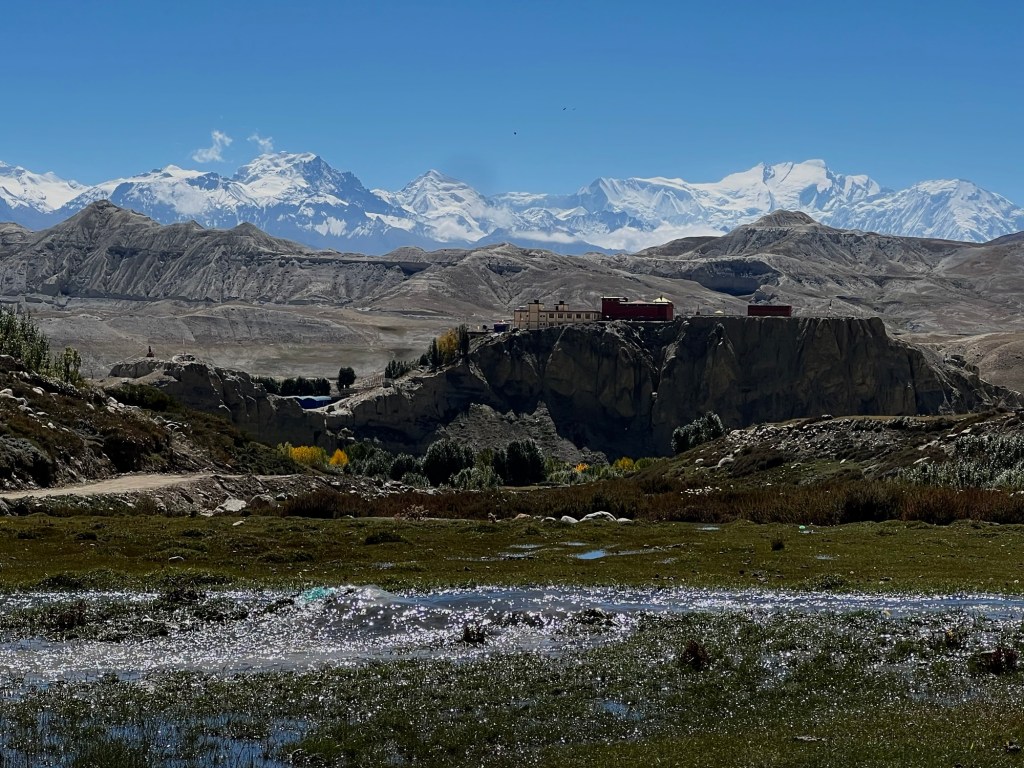
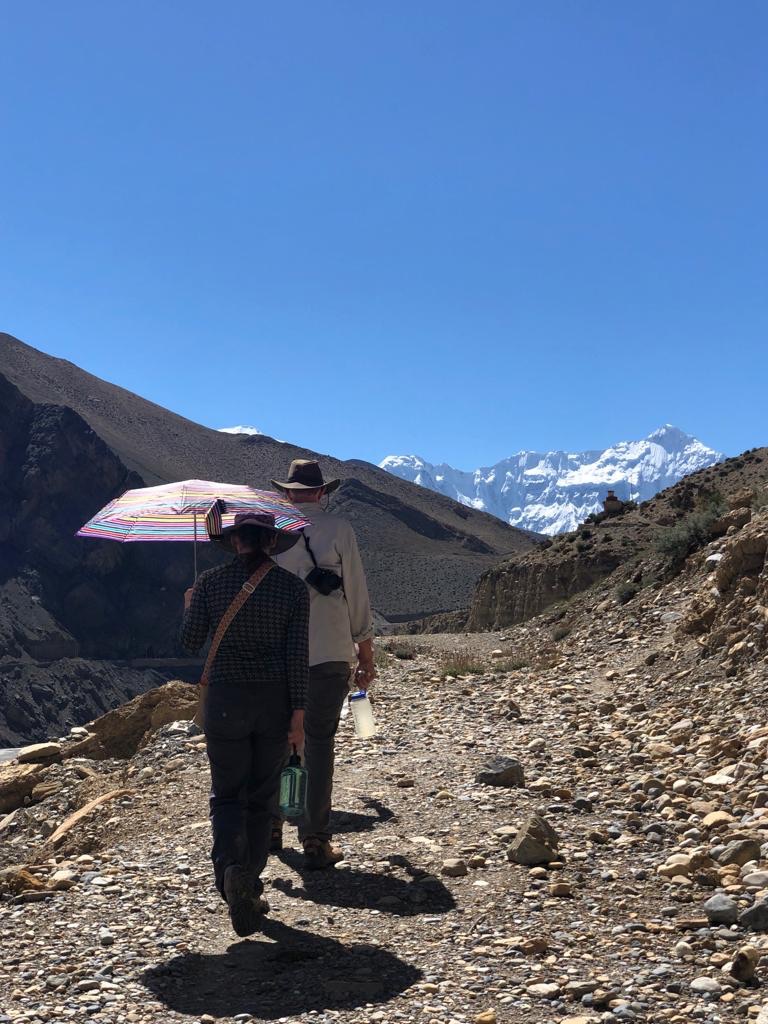
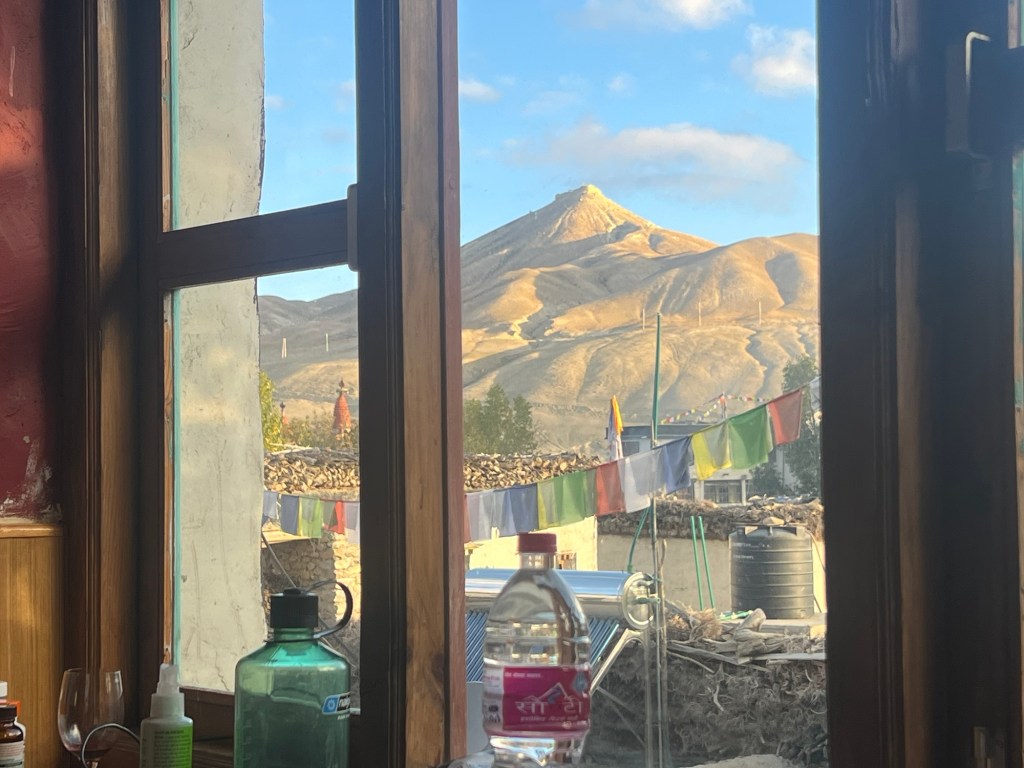
Nepal’s Mustang District, once the Kingdom of Lo, is remote and inaccessible, one of the last unspoiled places on earth. Before 2008 it was an independent kingdom- the “Forbidden Kingdom.” Mustang is sealed off by geography—bordered in the north by the Tibetan plateau and sheltered on both sides by some of the world’s tallest mountains. Strict regulations kept it officially closed to foreign travelers until 1992, and few people even tried to go there before then.  It took a month in 1990 for our friend and guide Sanjeev Chhetri to walk to Lo Montong, the capital city, from Pokhara in western Nepal.  He slept on the roof of one of the monasteries and then walked back (Sanjeev and his wife Sirish went back to be married there, in full Tibetan regalia). Even now there is a strict limit on the number of visitors, and until five years ago, the only way to get to the capital city, Lo Manthang, was still to walk or go by horseback. Staying independent and forbidden is easier if the outside world can’t easily reach you.  

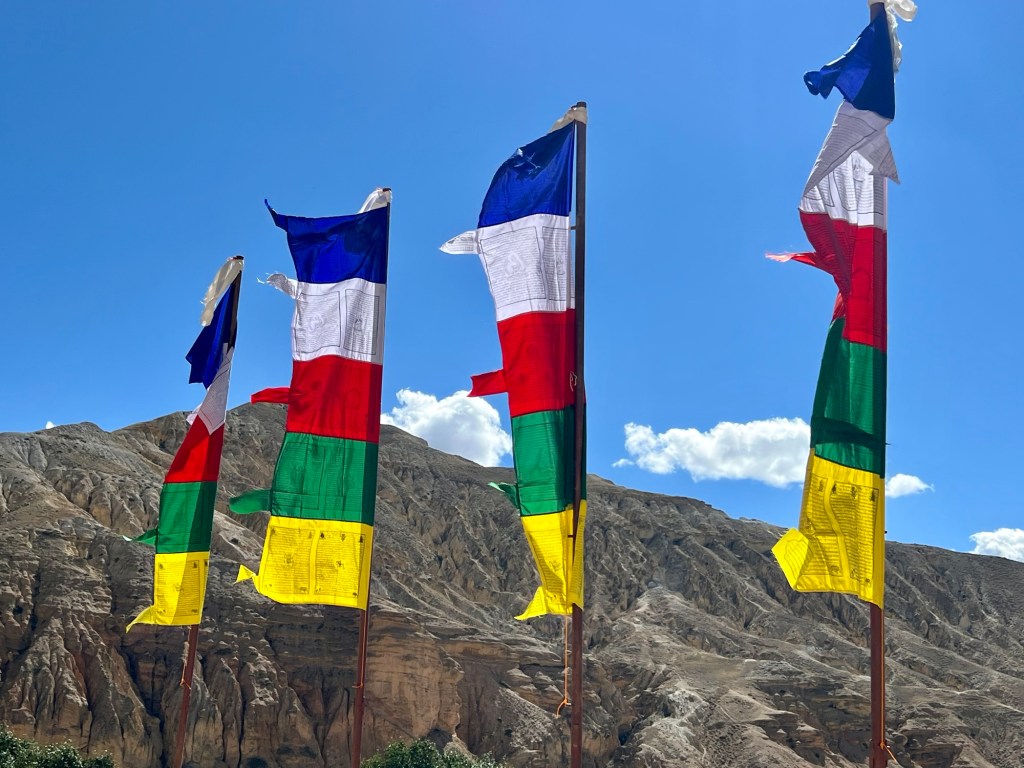
     Mustang still harkens back to an old Nepal, like Tibet before it was overrun by Han Chinese. The Dali Lama observed  that “authentic Tibetan culture now survives only in exile,” and this is one of those places. It is said that Mustang is more Tibetan than Tibet. 

The road to Lo Montang

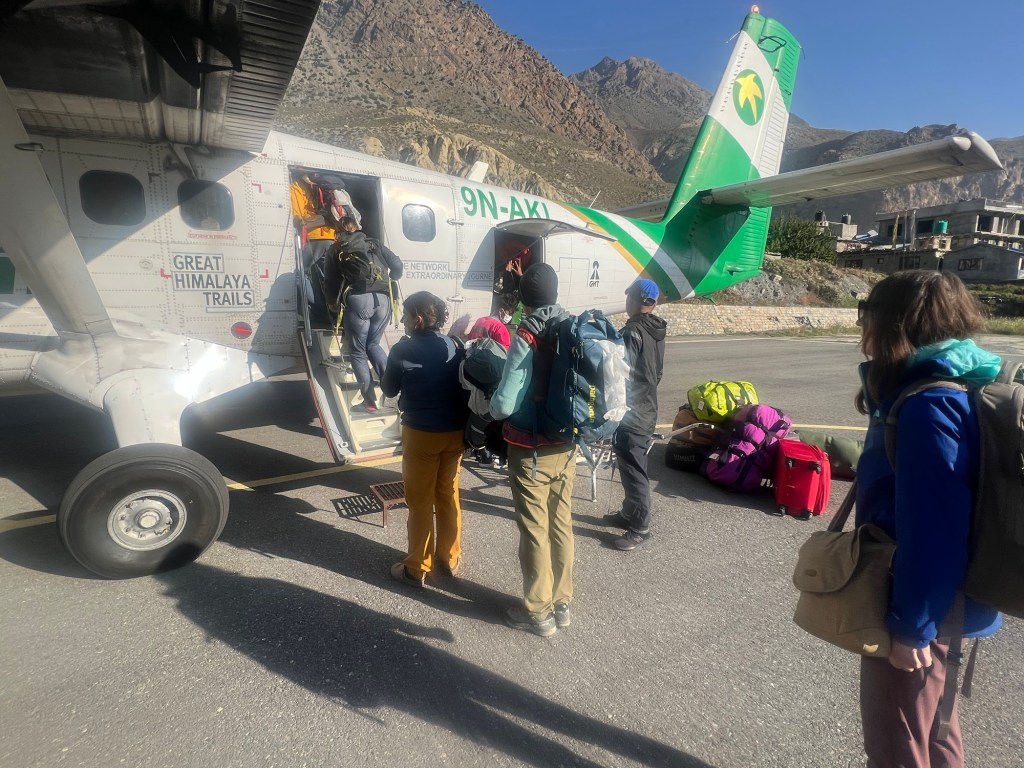
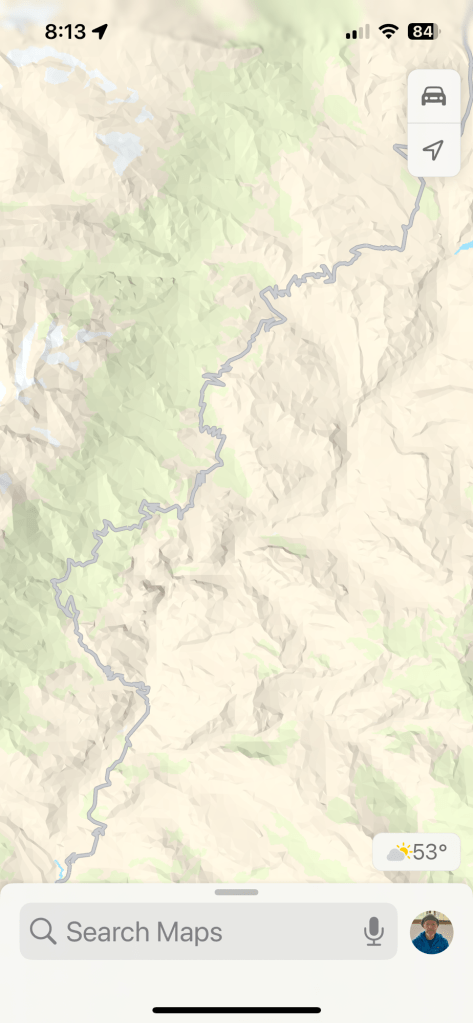
   To reach Lo Montong, we flew on a small propeller plane from Pokhara to Mustang’s southern entry point, the town of Jomsom, and from there we traveled north.  The drive through Mustang alone could serve as a history lesson—how things used to be before there was concrete or bulldozers. The distance is only fifty kilometers over roads that in places were, as Caroline put it, “beyond horrible.” 

Lo Montong, capital of Mustang -the green line in center of photo
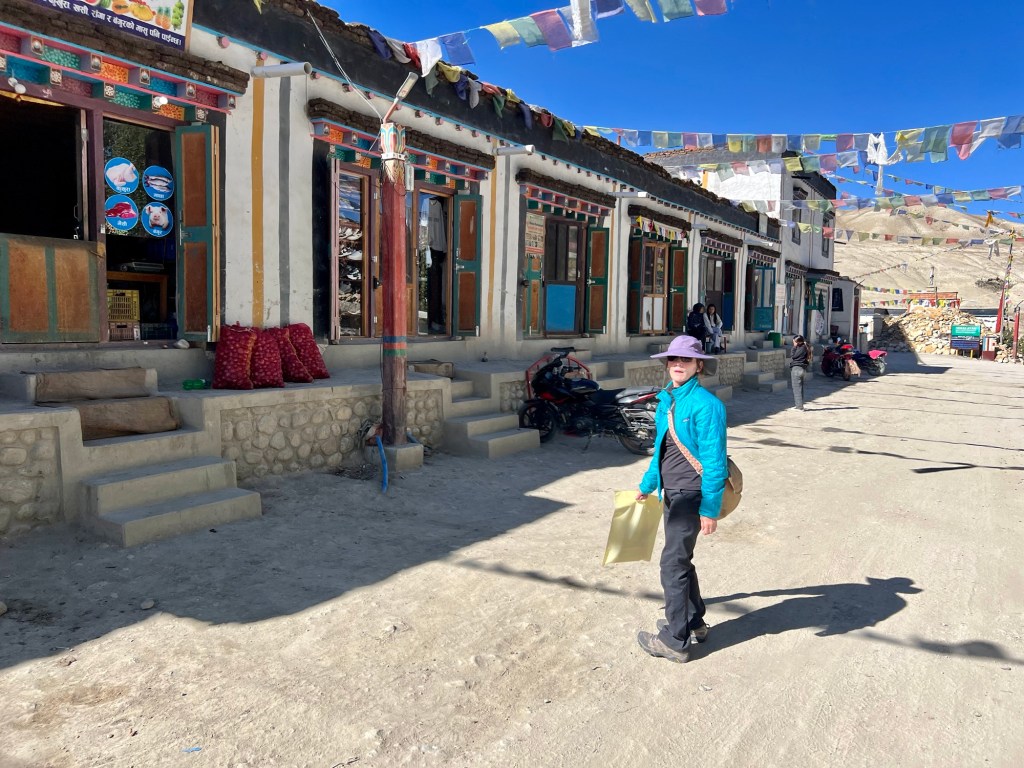
Lo Mantang main street

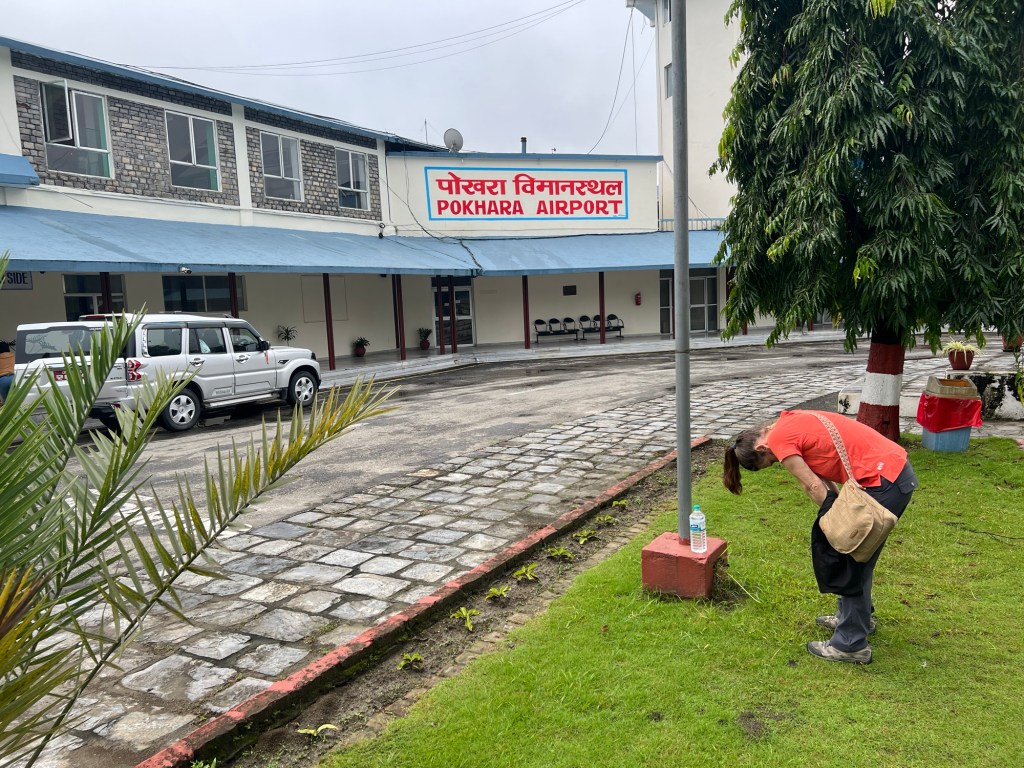
    We are accustomed to epic road trips in Nepal and had just endured one on our way to Pokhara from Kathmandu when our flight was cancelled due to weather and Sanjeev managed to find a driver instead.

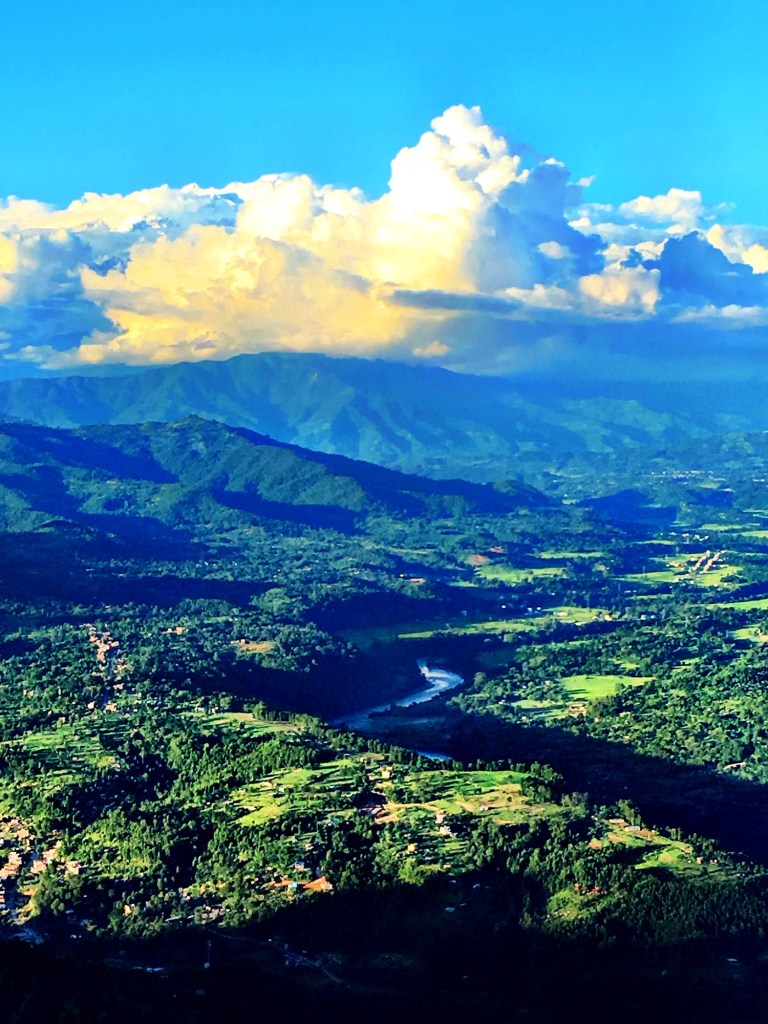
Kathmandu Valley

   The Kathmandu Valley is as pretty as a postcard, but driving through it requires perseverance and resolve—“more off-road than on,” according to Caroline.  It was bumpy, like riding in a tumble dryer instead of an SUV.  Rickety bridges spanned rivers swollen from monsoon rains; the only guard rail some bamboo sticks linked together by strings.  Caroline again, “No inspections here; they know it’s time for a new bridge when the old one falls into the river.” 

  This was the main connection between Nepal’s two most visited cities, but the government has stubbornly refused to make road repairs. If we asked our friends why, they answered with the ubiquitous South Asian head bob. 

In Nepal, the head bob can mean whatever you want it to mean—a gesture that is neutral enough to allow you to respond without committing yourself. It is like a shoulder shrug and is used to signal understanding, agreement, or mutual bewilderment. Everyone does it, and it is useful enough that I would adopt it for myself if I thought anyone at home would understand it. 

      The one -hundred-mile journey from Kathmandu to Pokhara took ten hours, and we arrived late at night when everyone else in western Nepal was asleep. By the time we finally pulled into Pokhara, Caroline had escape plans running through her head and was checking flight schedules out of there.

     The next morning she told me she was staying, but what really bugged her was not that she had to hold on while being tossed around in the back seat; it was that I had fallen asleep.  

      Caroline is typically a good sport about our escapades.  Before we were married,  I suggested that we climb the Grand Teton in Wyoming together and she agreed without really knowing what she was getting herself into. We did it, and sometime later one of our friends remarked,  “And she married you anyway?”   Eventually, she learned to say no. One time we were in Paris and I wanted us to take a nighttime walk together in a cold rain because it would be romantic. She responded, “It’s just the idea of doing those things that is romantic.”

Sanjeev Chhetri

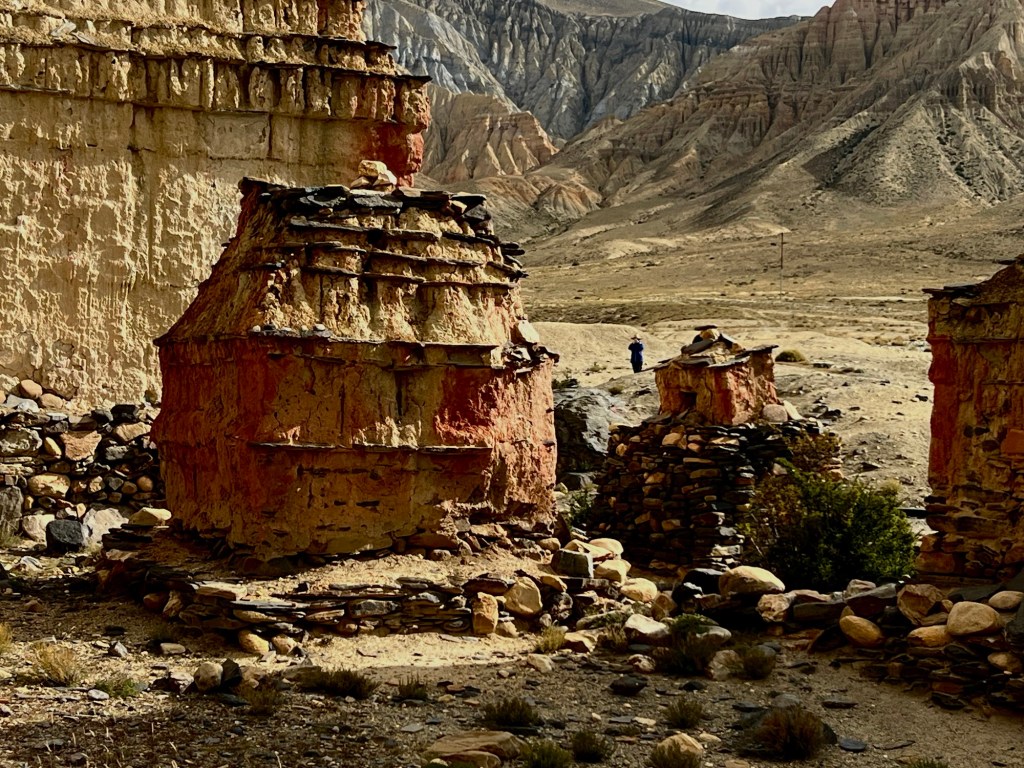
The people of Lo, known as the Lopa, are closely related to the people of western Tibet, and Mustang was for many centuries a crossroads between India and China. Yak caravans regularly passed through the valley carrying wool, grain, spices, textiles, and handicrafts.  During the salt trade, the region was affluent. Some of the monasteries built in that golden age were palatial, although most have succumbed to time and neglect. What remains of the architecture and artwork attests to the opulence of a bygone era.  

     In 1950 the border was sealed by Maoist China and all trade stopped. The economy now amounts to subsistence farming, animal husbandry, catering to religious pilgrims, and a trickle of tourism. 


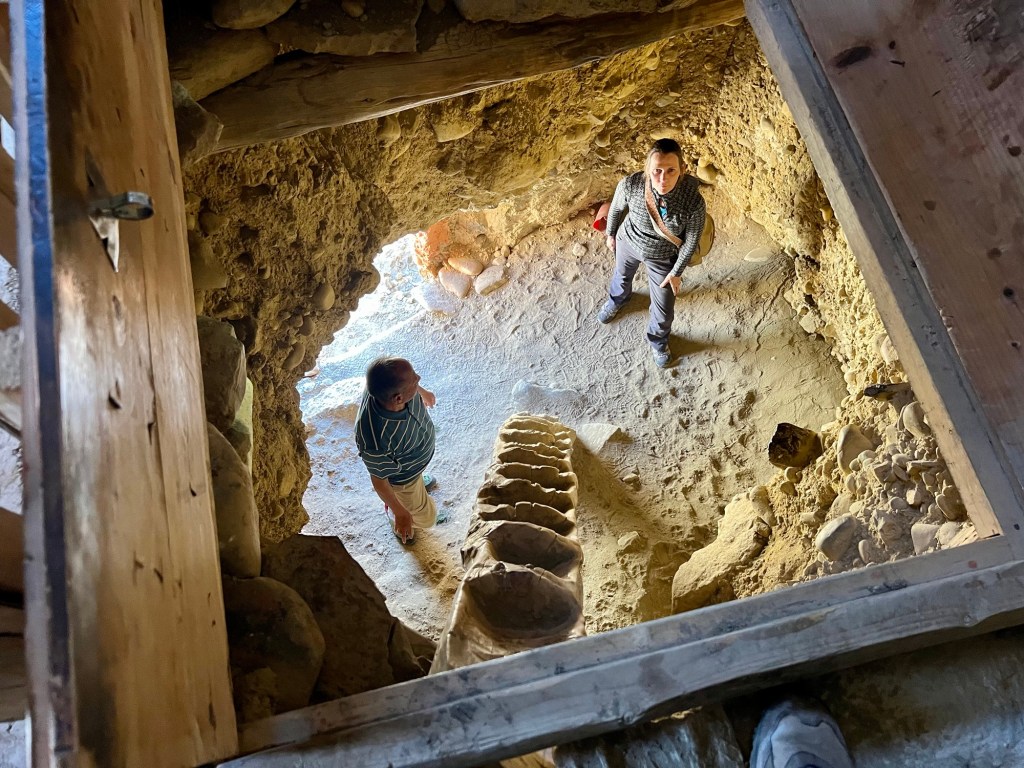
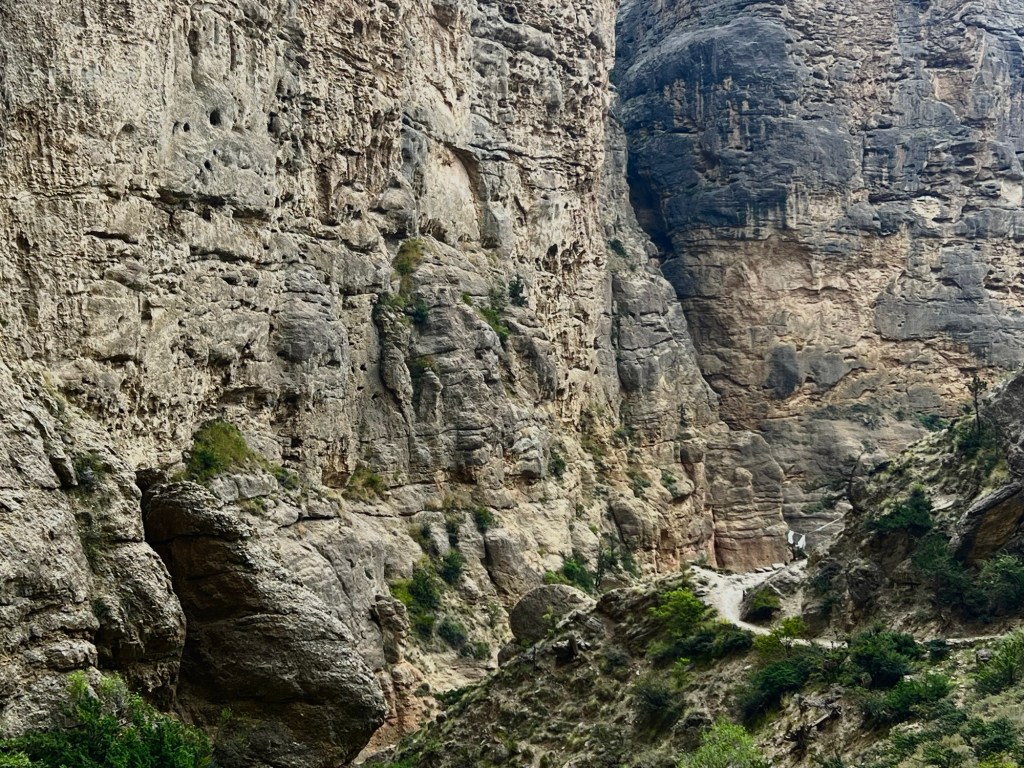
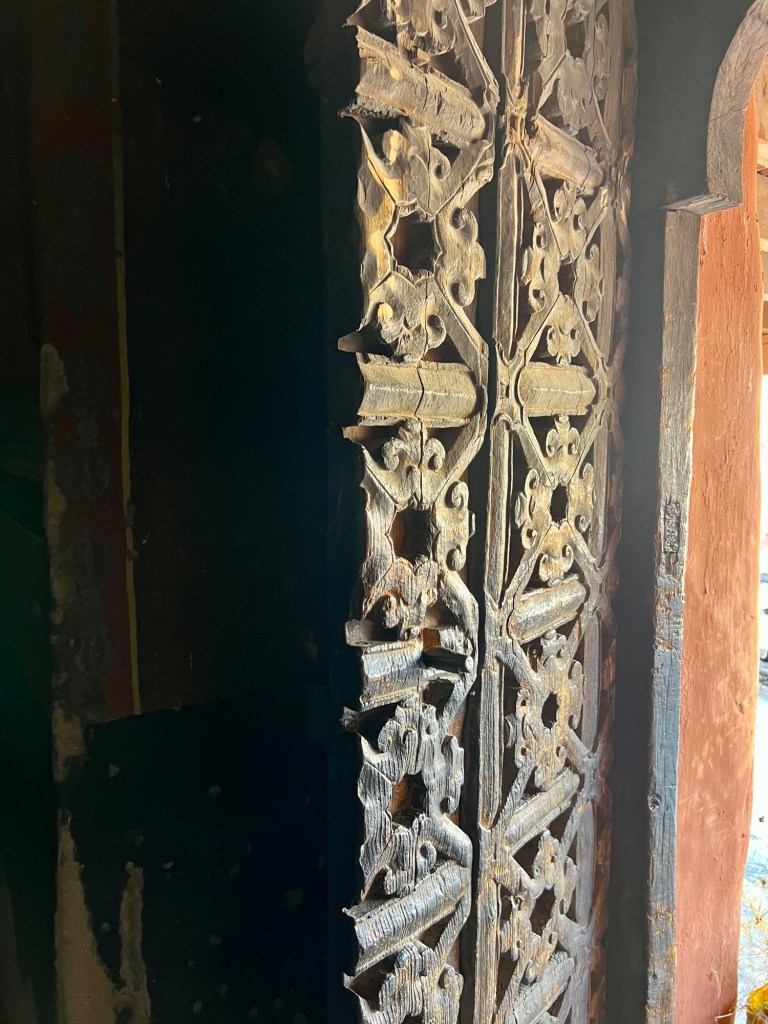
  The sky caves are relics of a time before recorded history.  How they came to be is as mysterious as the reasons why. Little is known about their origin or inhabitants, and that they would be inhabited at all is difficult to fathom. Why make what is already a hard place to live even harder?  The caves were chiseled into towering escarpments of stone in places that would be fit for a swallow to nest. For a human they appeared very inconvenient, and I wondered how it would feel to live there and climb back to my cave only to find that I had forgotten something from down below. 

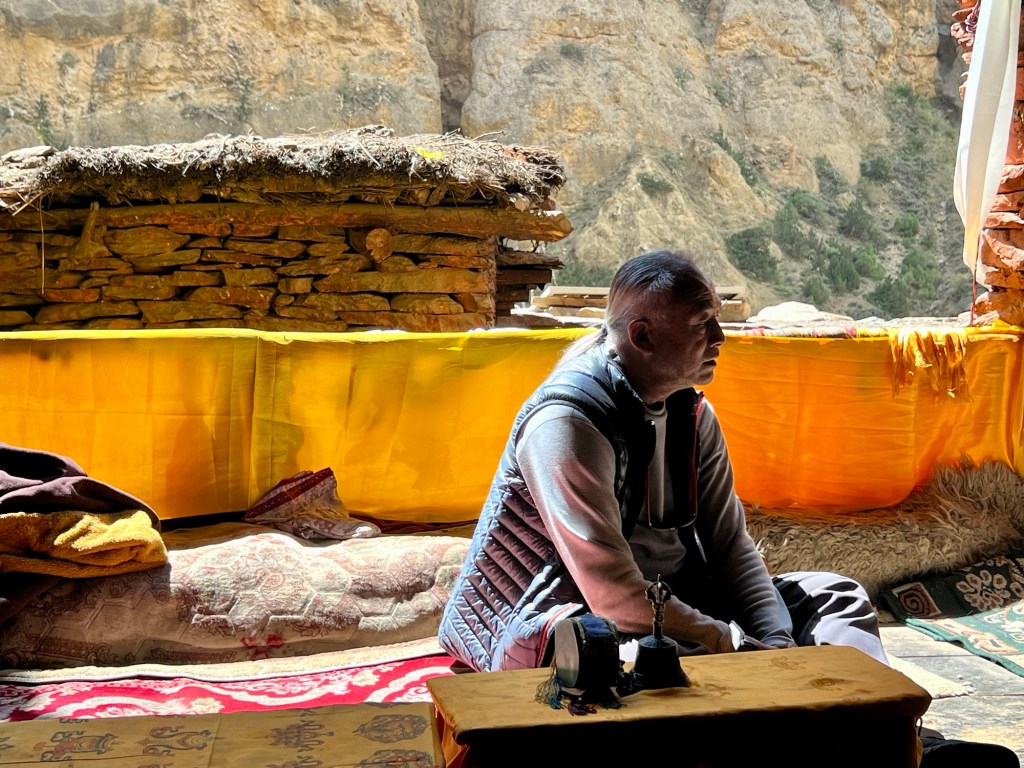
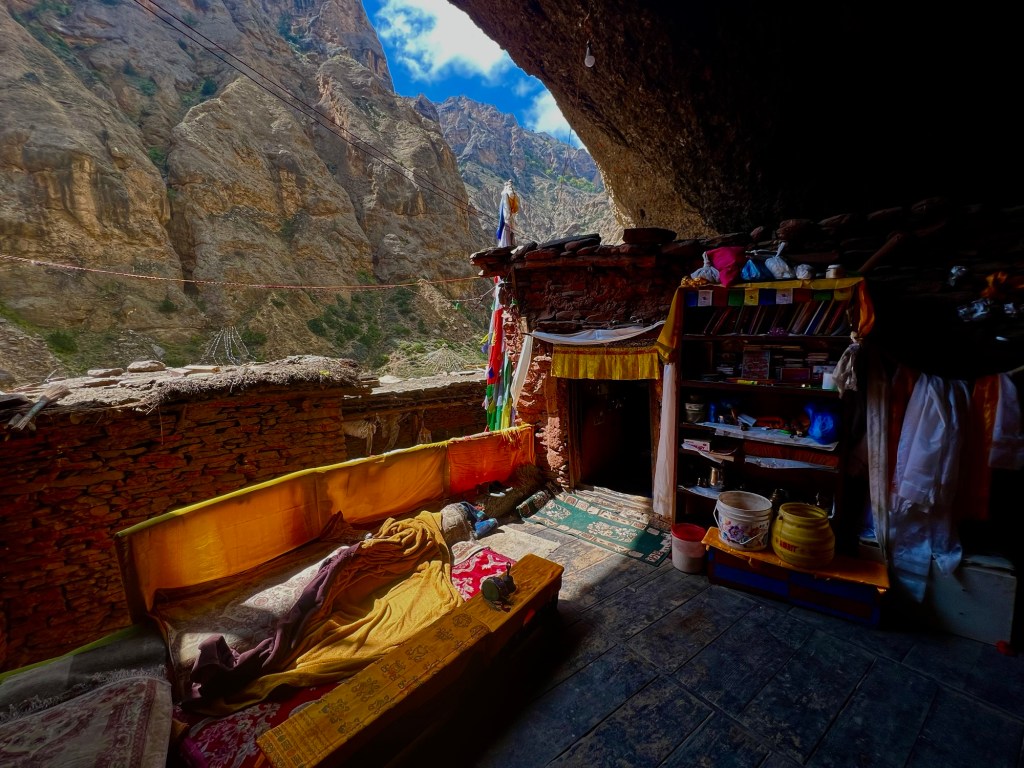
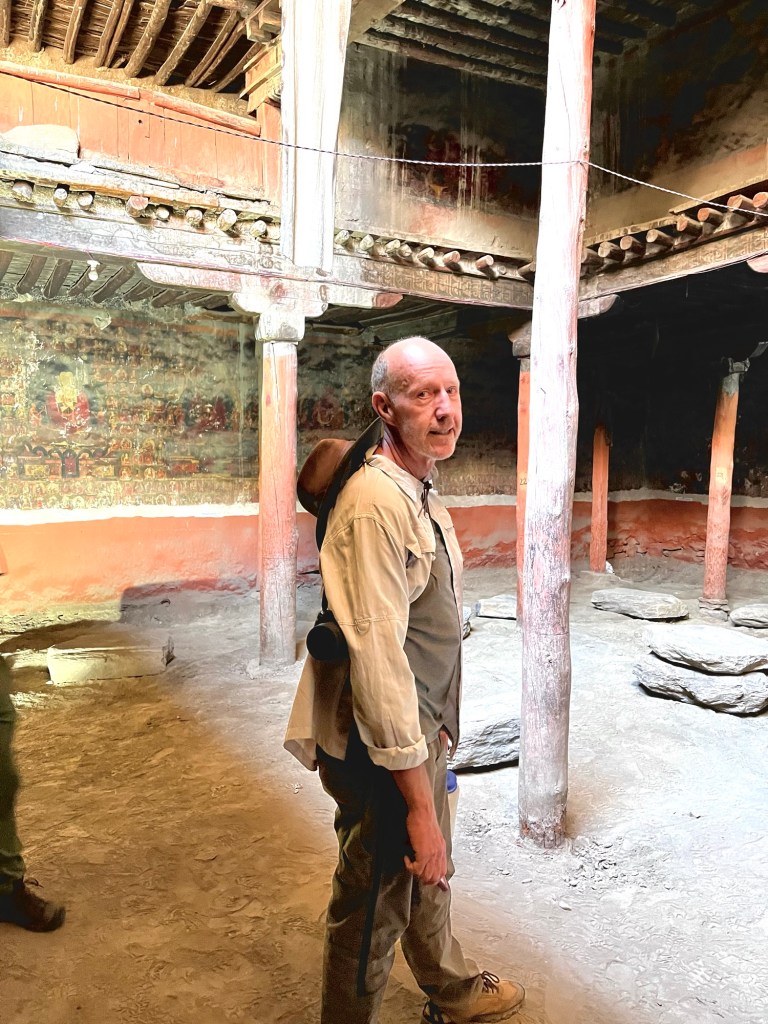
  Artifacts and iconography in the caves attest to a story of sacred worship and burial. A few cave monasteries still have a solitary monk living in them, meditating and doing other things that monks do. Candles abound and need to stay lit, and there is a large store of sacred texts to study and preserve. 

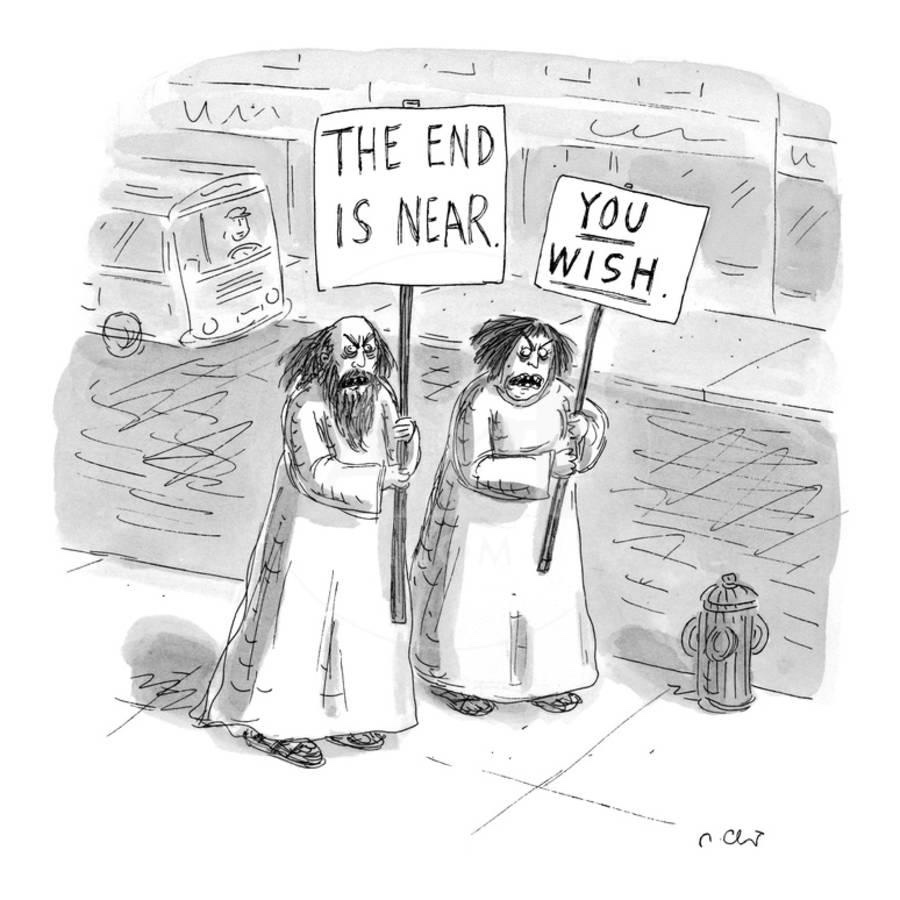
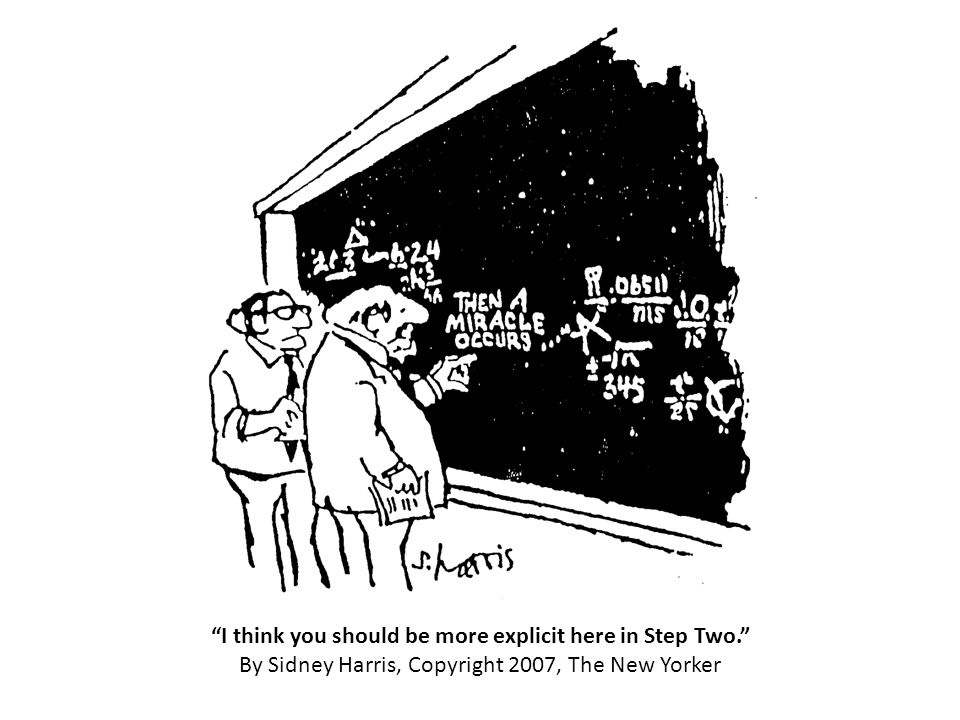
    The sky cave’s origins have traditionally been explained as mysterious places for ritual and ceremony, where robe-clad holy men sit in contemplation waiting for seekers to climb up and listen to their pronouncements— like the template for a New Yorker cartoon. The whole truth about the caves is more practical.  The theory is that, at one time, they could be reached by steps, ladders, and platforms constructed from local materials.    They seem impossible to reach now because the network of infrastructure that once led to them has long since fallen away.  Most of the caves were actually used to provide protection and security from the marauding war parties that frequented the area and also from the elements—snow squalls in the winter, searing sun in summer, and the unrelenting wind that tears through the valley every day of the year. 

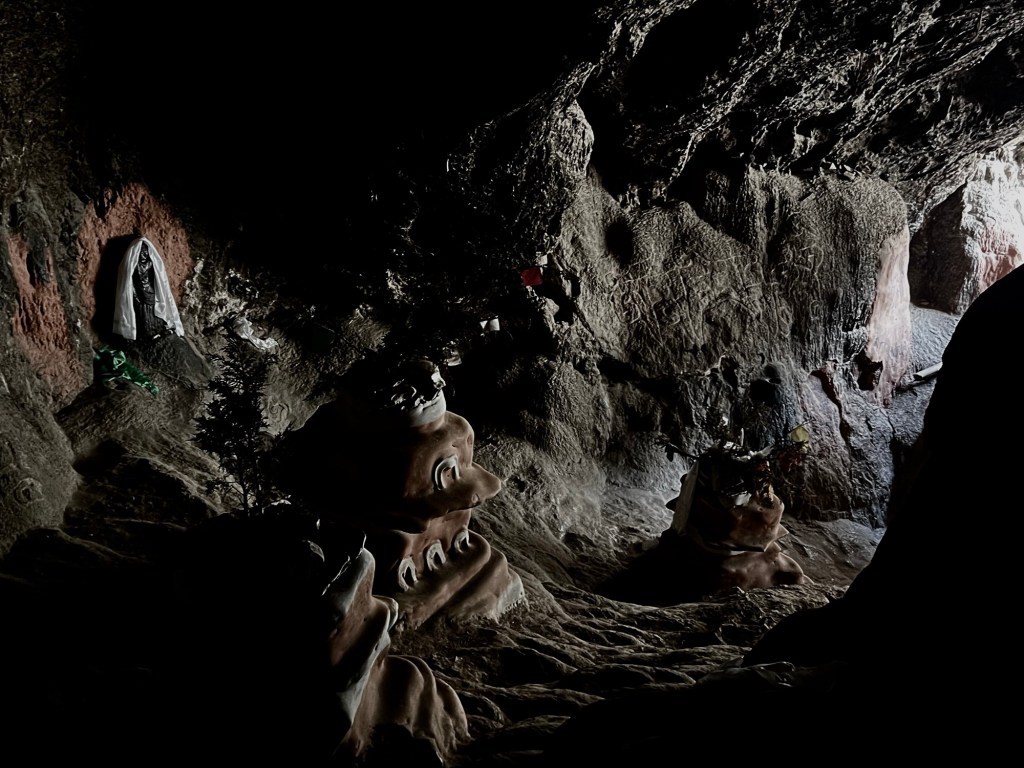
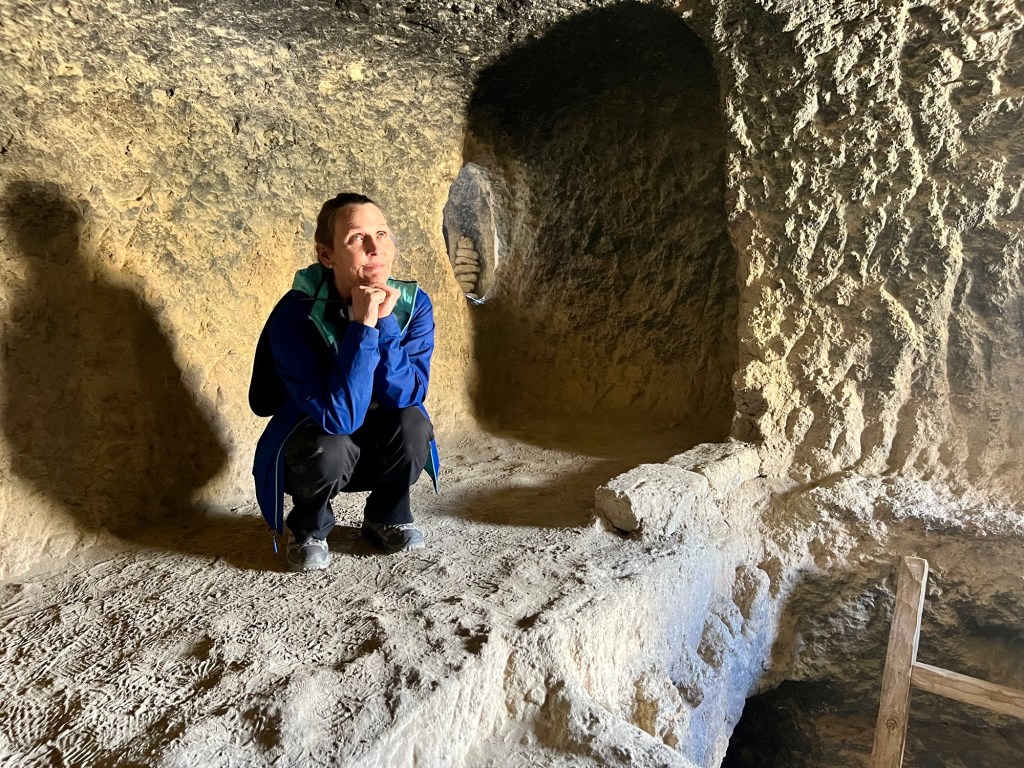
     One afternoon we climbed a series of ladders to a round hole high up on the face of a vertical wall of rock. Every cloud had been chased from an ultramarine sky and the sun tormented us like a schoolyard tyrant. The mistral wind was laden with grains of sand that reflected the light like shards of glass, as if every cathedral window in France had been pulverized and sent flying skyward.  The face of the cliff appeared varnished in ochre, marbled with hues of rose and plum, and streaked in the brown of a roasted nut—it might as well have been the canvas of an abstract expressionist painting.  Once we ventured inside the cave, it made perfect sense.  It was cool and comfortable; the best shelter you could ask for—as impregnable as the citadel of Masada and as cozy as a feather bed. 

Inside sky cave residence

   If the sky caves have a practical logic, there still exist in Mustang places of magic and mysticism.  The tradition holds that the great Buddhist sage Guru Rimpoche (Padmasombhava) passed through Mustang when he traveled from India to China to spread the teachings of Buddha.  Scattered throughout the area are places that he is said to have stopped to rest and meditate.  I thought of George Washington in colonial America and half expected to see placards reading “Padmasambhava slept here!”

    As it turns out, Guru Rimpoche could fly, so he frequented the sky caves and other locations that are even more difficult to reach, such as atop natural stone columns shaped like the hoodoos of the American west—tall, thin, and precarious. 

The sunbeam is shining on a thin stone pedestal where Padmasambhava meditated

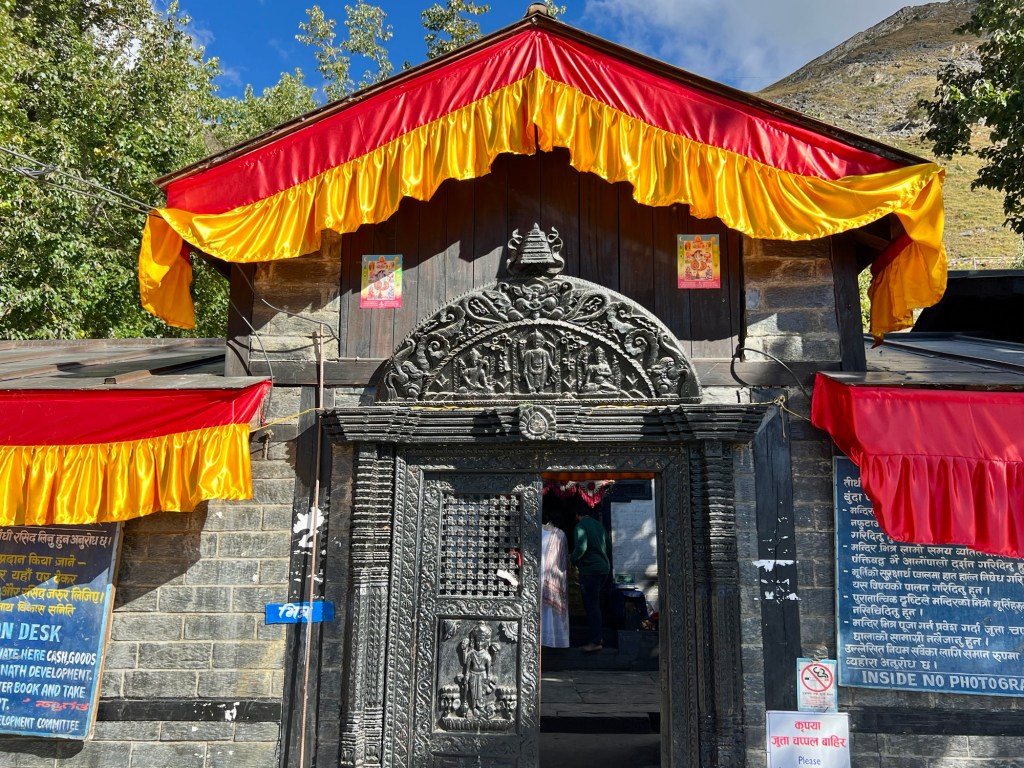
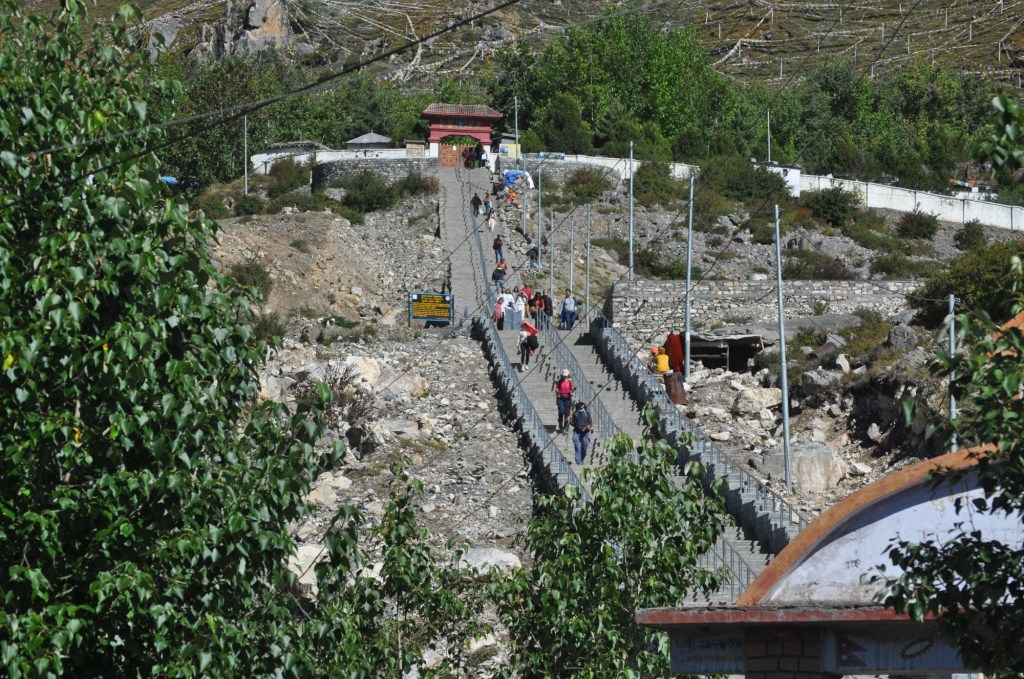
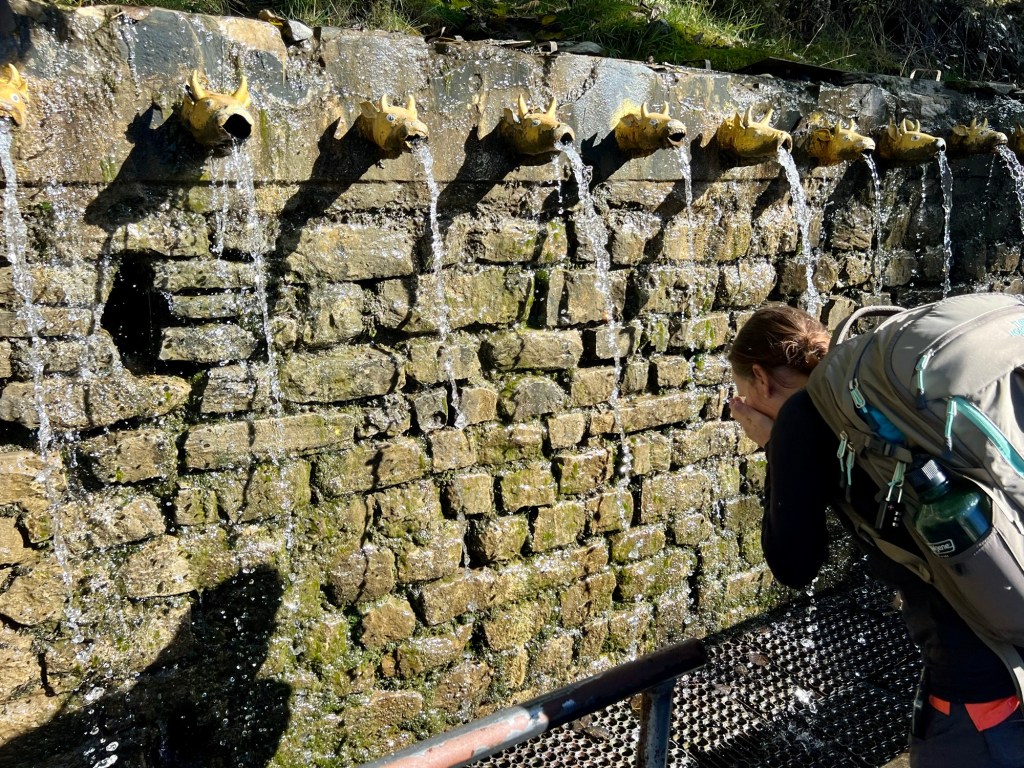
   The temple of Muktinath is another place that marks where Padmasambhava stopped to meditate, and it seemed like a better choice. As one of the world’s highest temples—3800 meters—it sits at the foot of Thorong La pass and has sweeping views of the valley below. A long stone stairway  leads up to a small sanctum nestled in a sheltered grove of trees beside a spring where the wind murmurs through the branches like a whispered conversation. We washed our faces in the cool water that flows from 108 troughs shaped like the heads of bulls, the “spouts of liberation.” Muktinath is also the legendary birthplace of the Dakanis, or Sky Dancers, a type of Tantric female goddess. 

Muktinath Temple

    The Jwala Mai Temple is situated adjacent to Muktinath and is revered for its natural cave grotto where an eternal flame, ignited from an unknown source, is fueled by natural gas that emanates from deep underground deposits and seeps out from between the rocks. 

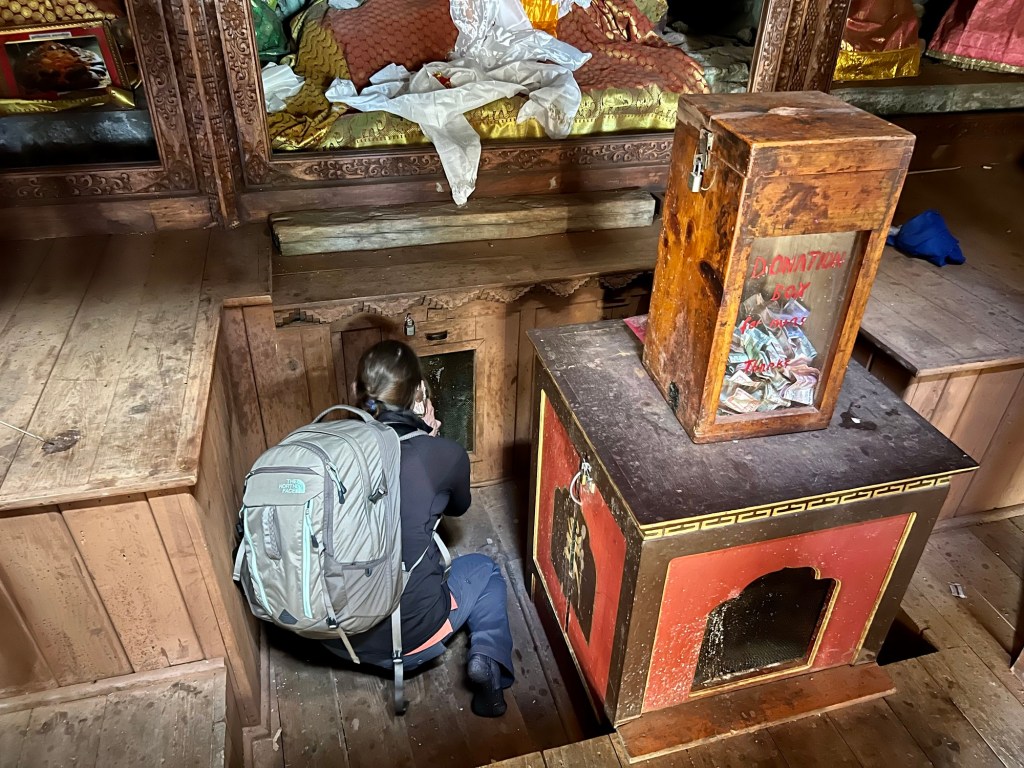
    The flame is believed to have burned perpetually from time beyond time. It is small, and we had to lie down to peer into the grotto and catch a glimpse of it. The flame appears to arise from a rock next to a small pool—maybe even magically from the water itself—and in doing so unites three sacred elements: stone, water, and fire. 

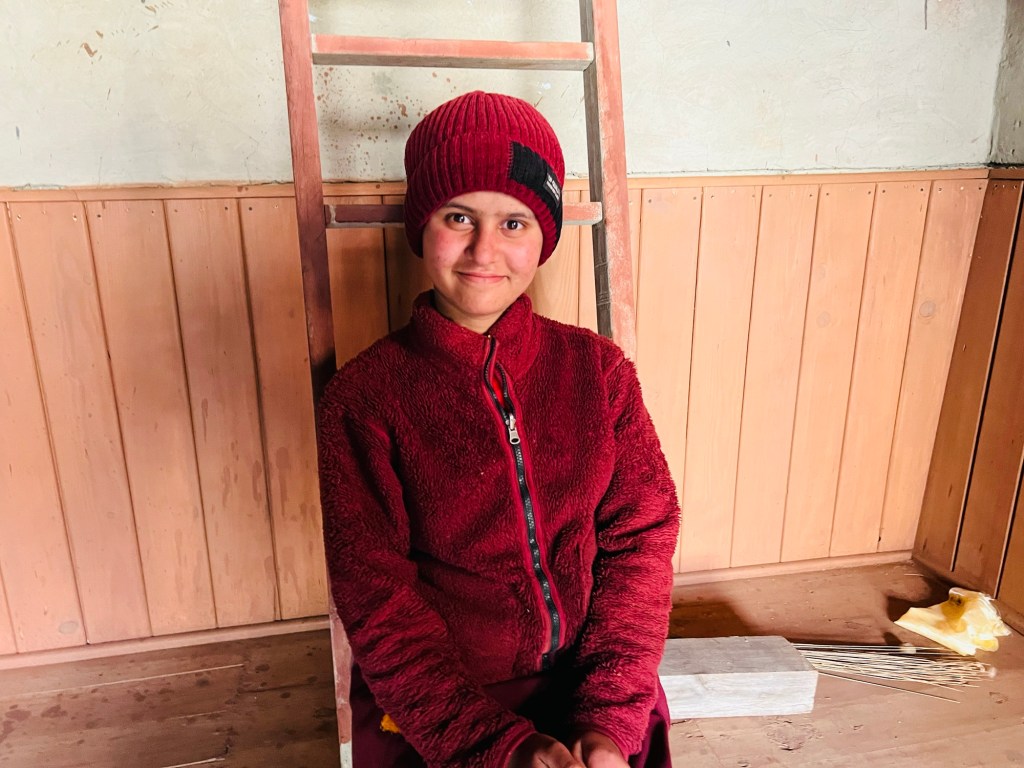
    Jwala Mai Temple is tended by a solitary caretaker nun. This nun is young, a teenager, and she is Buddhist (again, it’s a Hindu temple).  The whole temple complex is sacred to both Hindus and Buddhists so is a symbol of religious harmony where they can worship together. Sanjeev told us that in Nepal people say that no matter your place of origin, race, religion, or creed, your blood is red. 

     We have known Sanjeev for twenty years. He was raised Hindu but does not follow any specific tradition now. Still, he prayed in every puja room, temple or monastery we frequented. He told us “Religion is good. It’s people that make it bad.” He believes that “there is one god with different ways to find and follow him,” and described it as like a tree, where “the branches are the religions, but there is only one trunk and the soil is the same for all.”


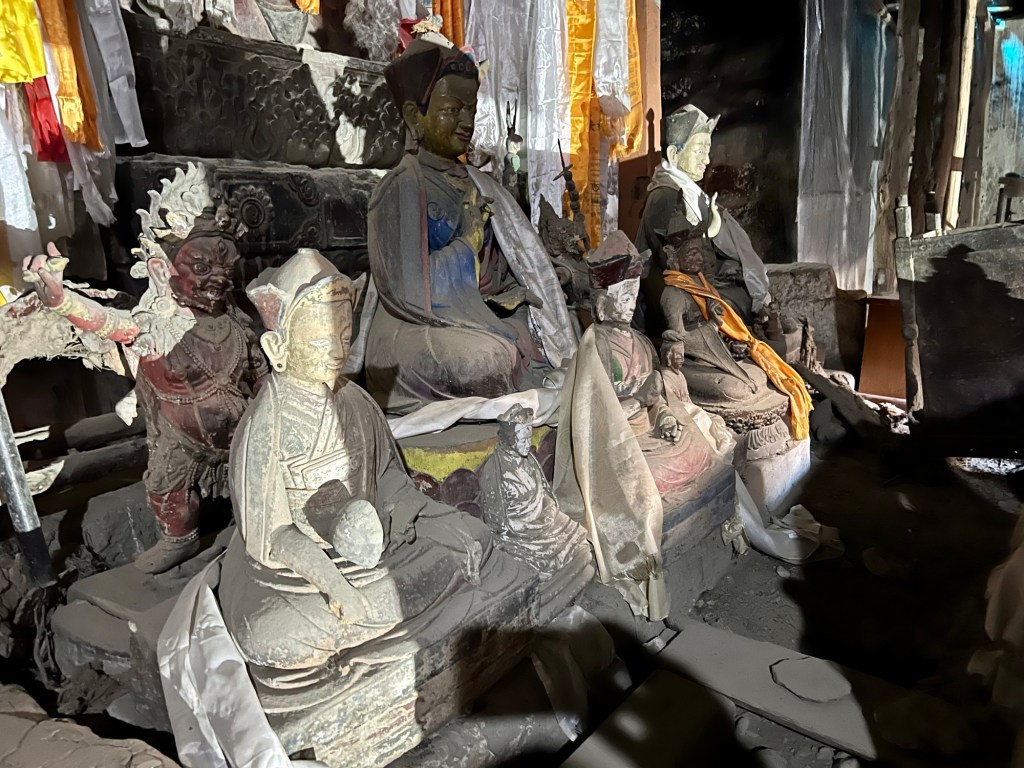
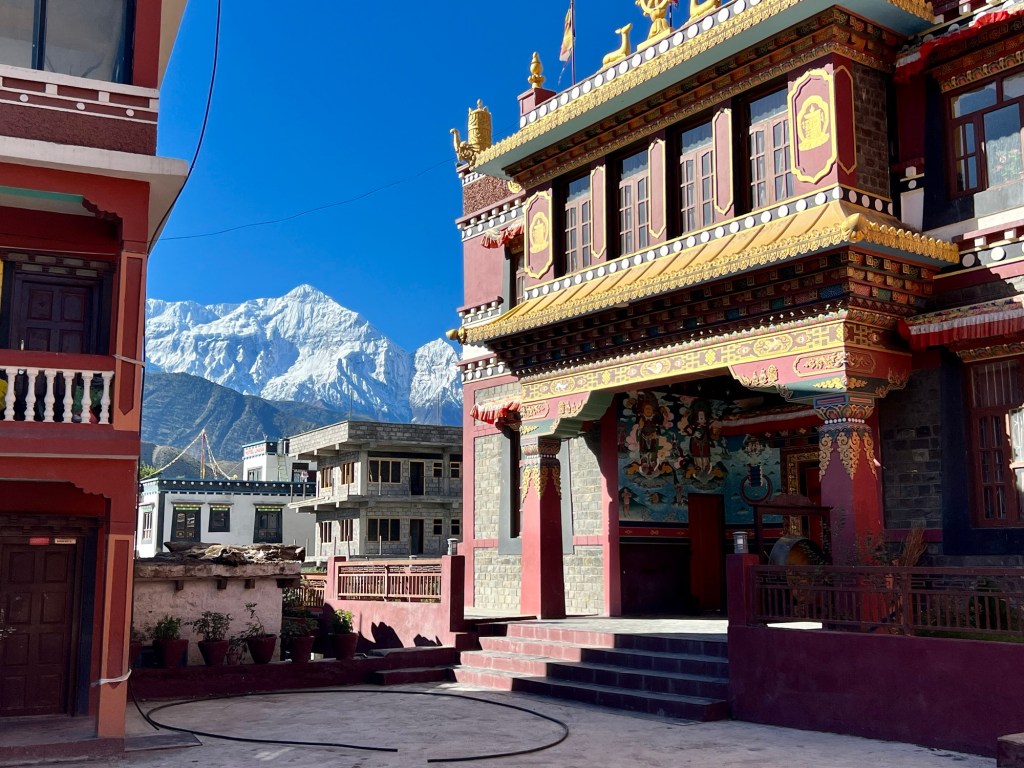
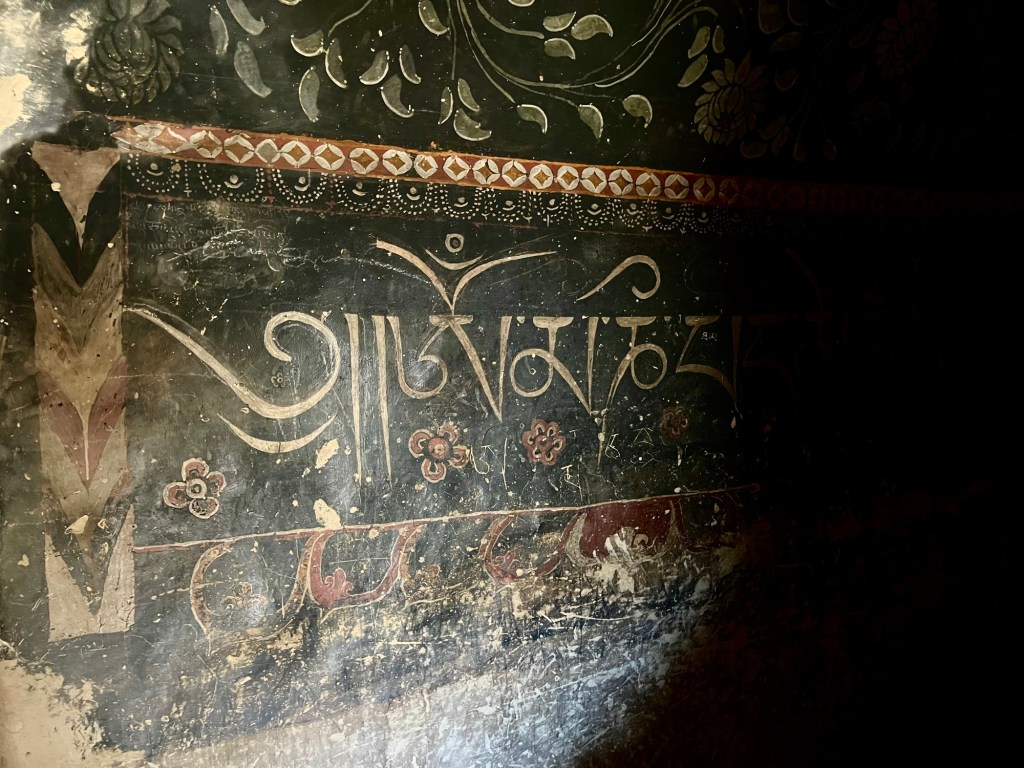
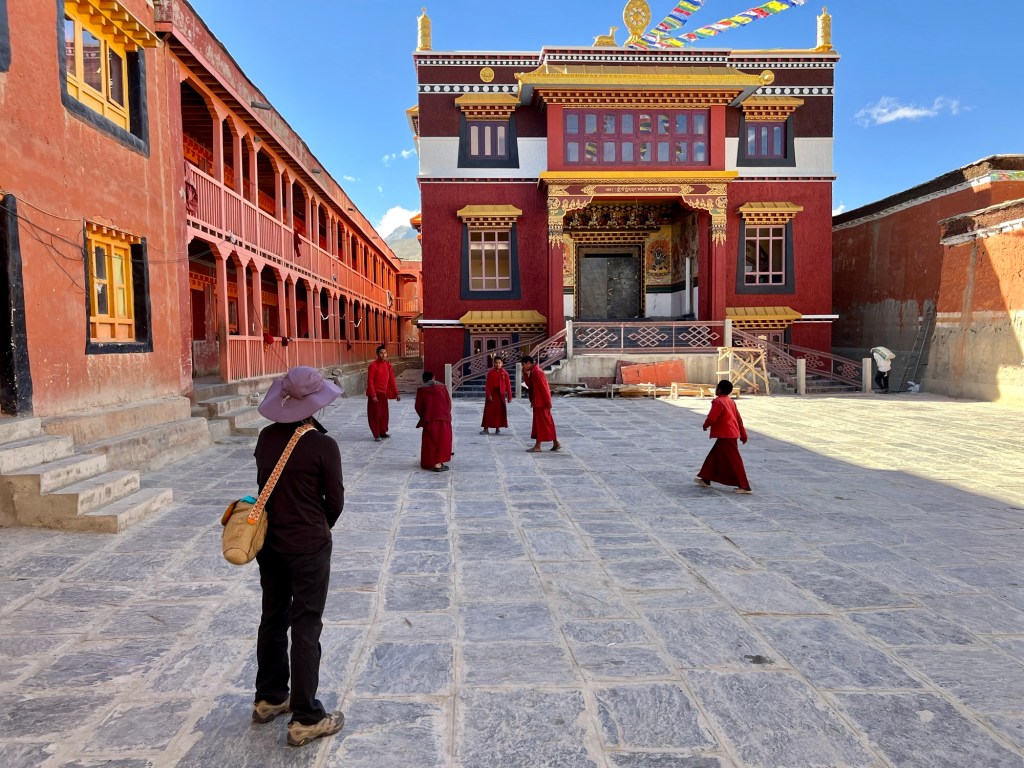
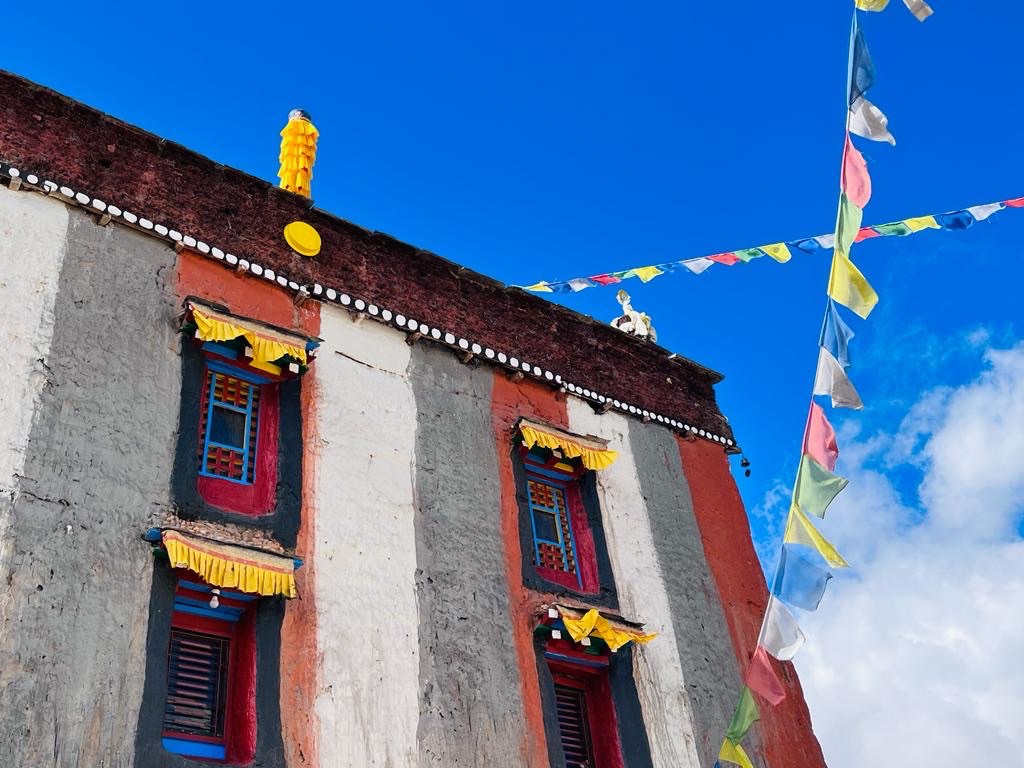
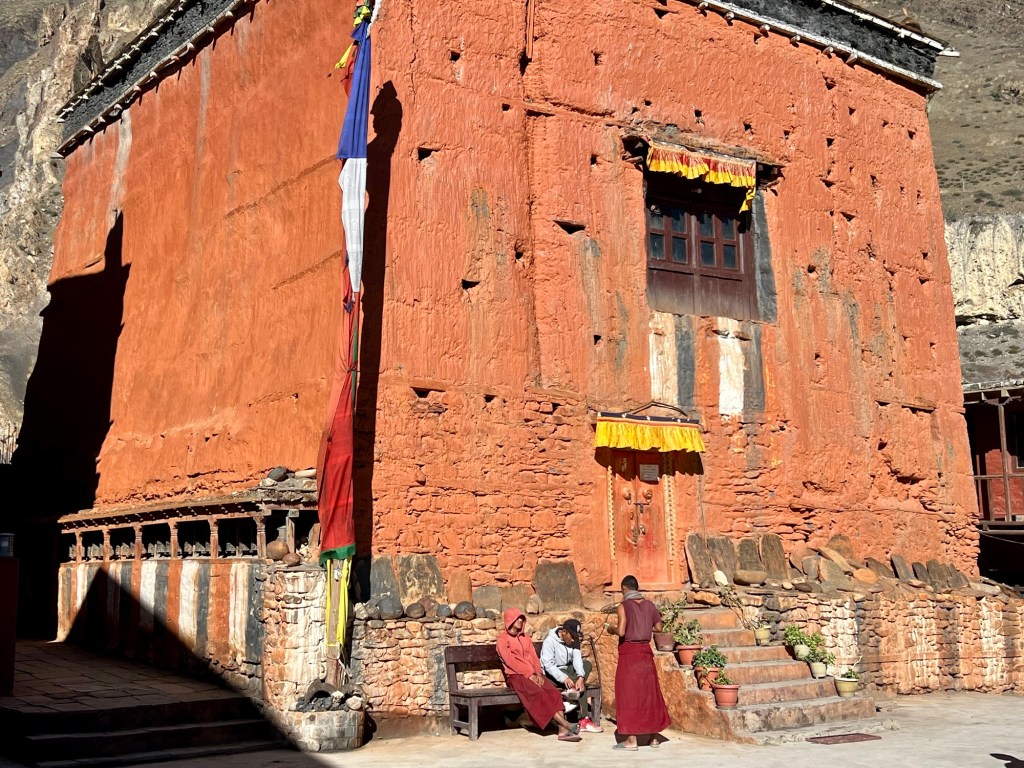
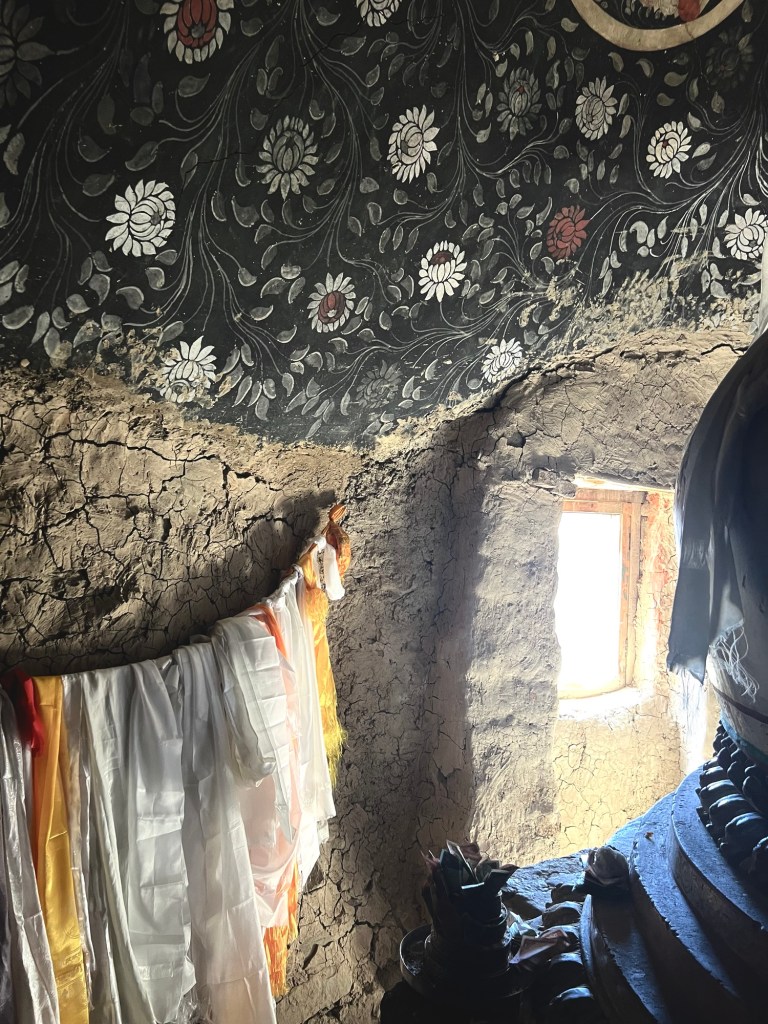
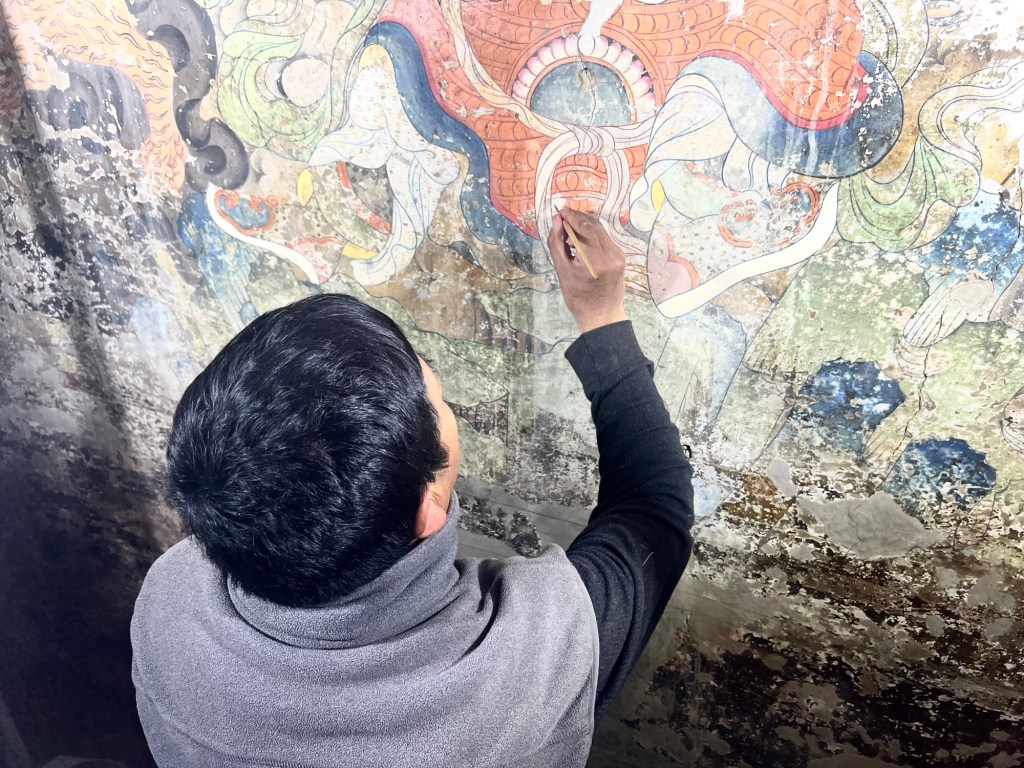
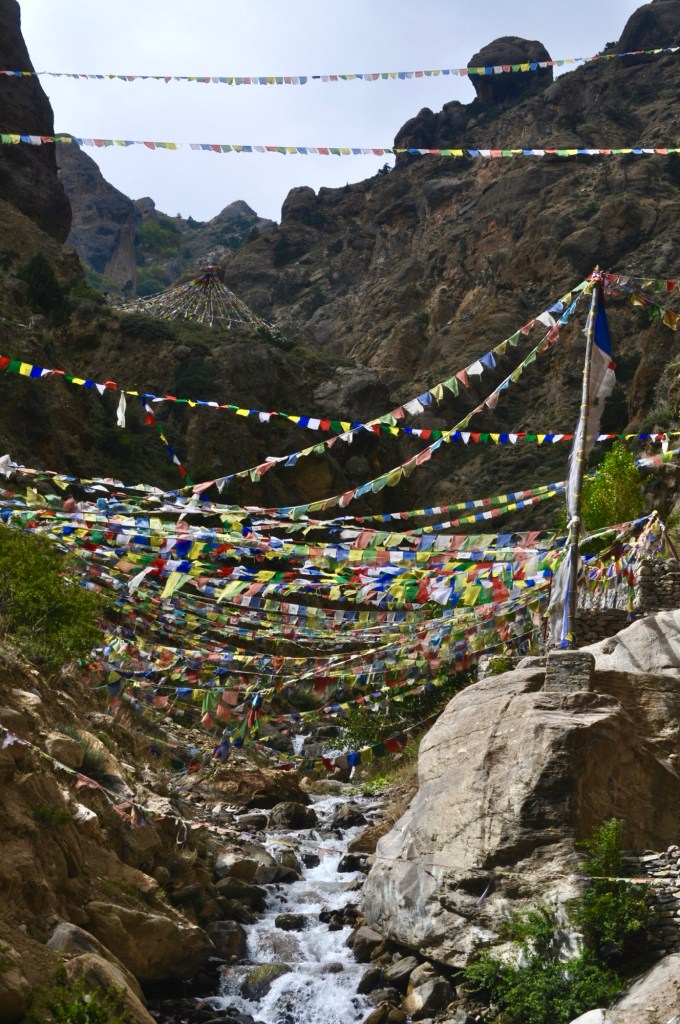
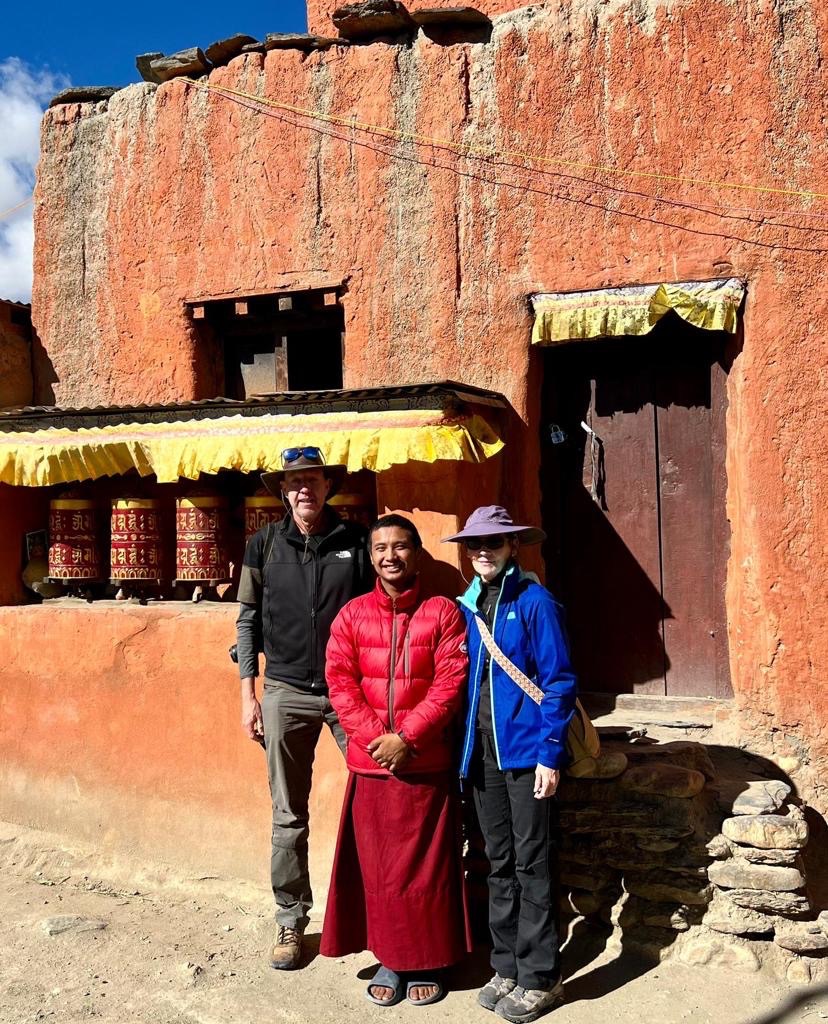
 We drove from village to village, each with its own monastery (gompa) like a parish church. The serene interiors of the gompas are designed for ceremony and contemplation, so we left our shoes outside and spoke softly, if at all. The walls were crowded with intricate murals depicting mandalas, the Buddhist Wheel of Life, Bodhisattvas and the pantheon of celestial beings. They tell stories and teachings of Buddha much like medieval  cathedrals in Europe use statuary and stained glass to tell about the life and ministry of Jesus. Long ago, the murals were painstakingly painted with great intricacy by generations of artisan monks using stone pigment from pulverized colorful rocks gathered from the hillsides. The finest details required a brush consisting of a single horse hair.

Lo Montong Monastery
Charang Monastery
Cave monastery
Kagbeni Monastery

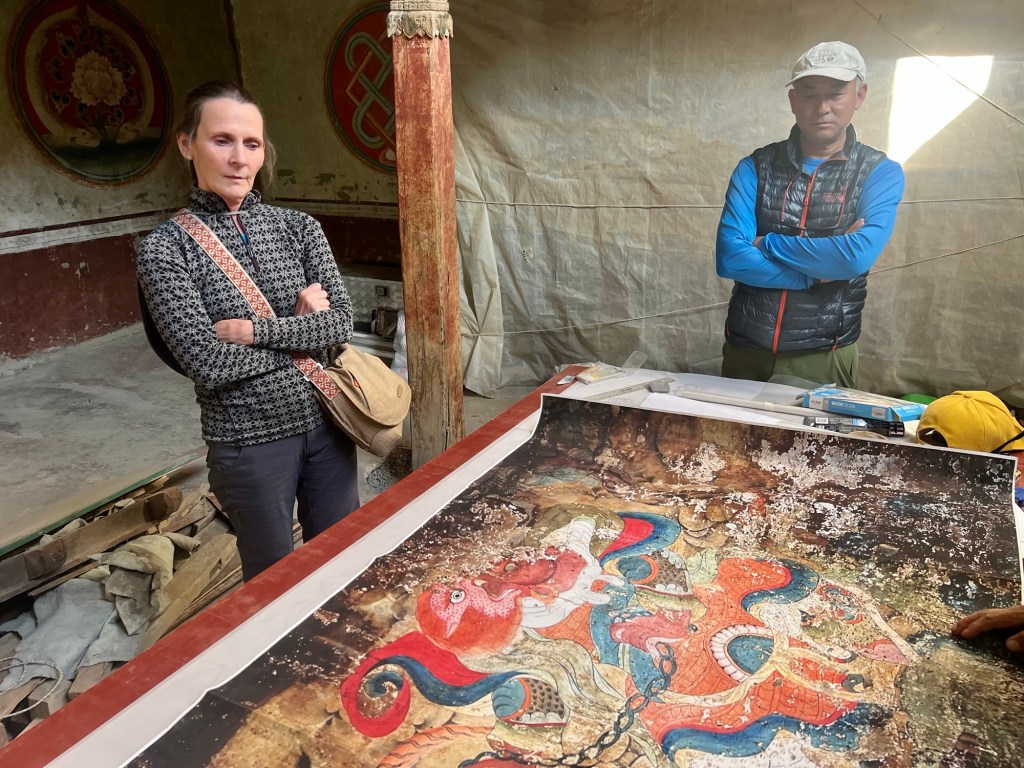
   The inside walls of the monasteries have endured the soot of countless butter lamps over hundreds of years and have become covered by an inky patina. Some are beyond repair, while others survive and are being lovingly restored.  Sanjeev’s wife Sirish Chhetri is a conservation architect and restoration specialist who has spent years leading teams who are returning some of the murals to their former splendor. 

Lo Montang Monastery from the north

  In Mustang, there are still places where one can see how it once was, how it looked a thousand years ago (or a thousand years before that); pieces of history and art that would draw crowds at the best  museums around the world.  The villages, caves, and monasteries are not a Disney production, created for our entertainment. They are an authentic living heritage. 

  Living in a monastery must have involved equal measures of adversity and enchantment. I told Caroline that we should shave our heads and spend a day at one, meditating and doing seva (selfless service or noble work).

  She didn’t take me up on it. “Shaving your head? What would be the point in that? You’re halfway there already.”


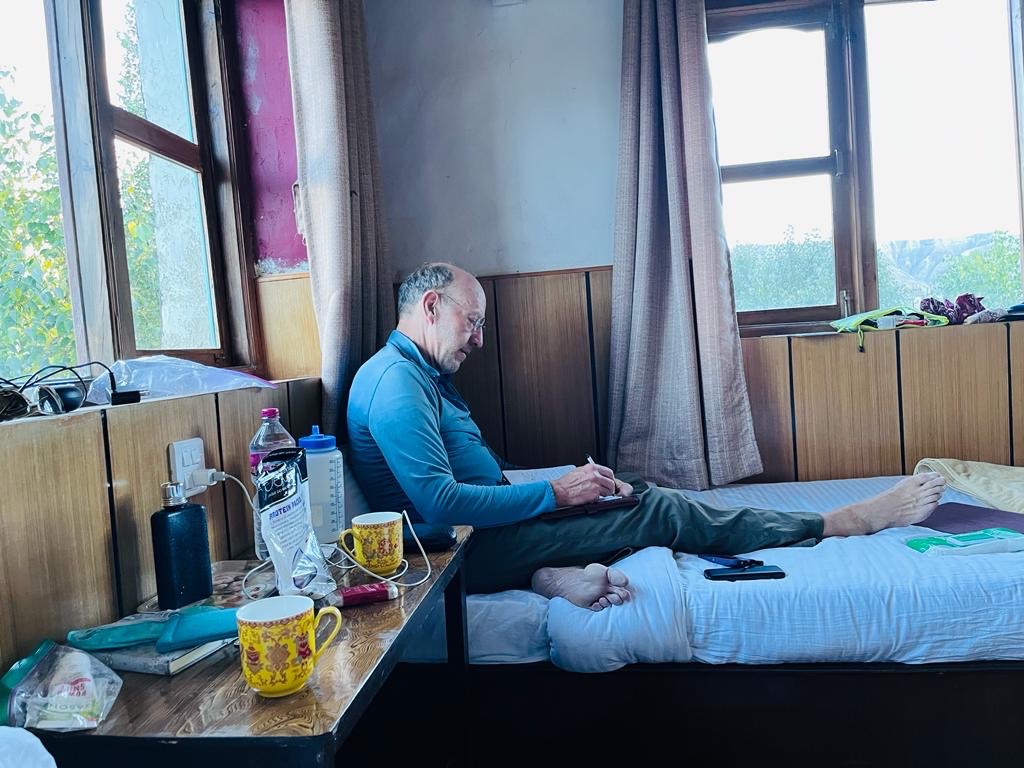
    We were a long way from home—we could see China from our bedroom. The traveling was difficult and we were always exhausted at the end of the day. Despite the cold and wind, we slept with the windows open because the dust and mold in our room was watering our eyes and making it hard to breathe. The tepid water in the bathroom  was just warm enough to take quick splash baths, though we often chose not to. More than once Caroline informed me that,  “I am not even thinking about taking a shower here. I’m sleeping with my clothes on again.” 

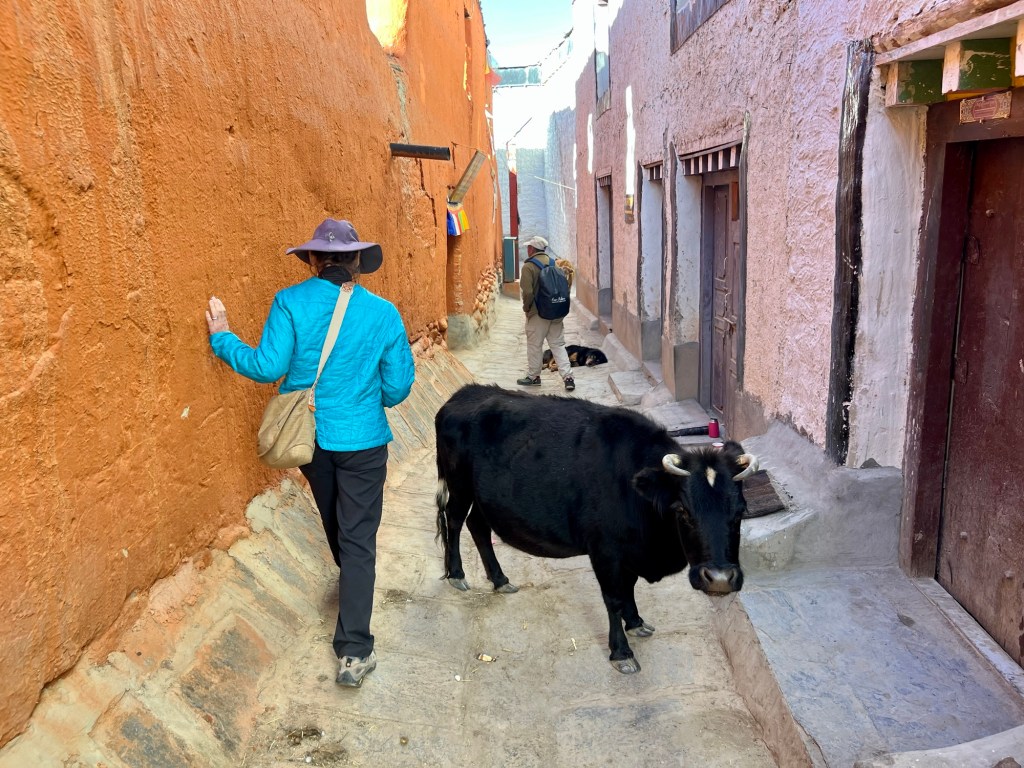
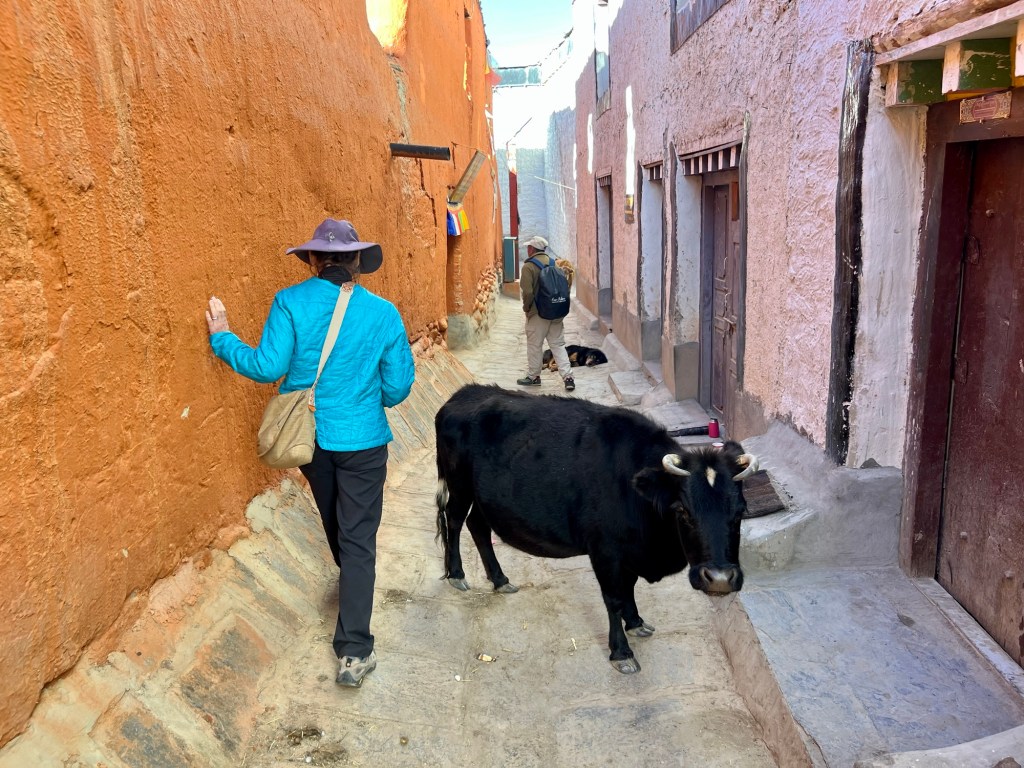
    A cow stood right outside our window, day and night. Carol leaned out before we went to bed and talked to her. She told the cow good night and to be good. It made me wonder how would a cow be bad? 


   It expands a person to be off the grid for a while and see what else is out there. It is good to be challenged physically and culturally. As we drove the serpentine route over yet another mountain pass, I said to Carol,  “I know this is hard, but I am happy you are here with me. If you weren’t, then there would be times when I would think, ‘I wish Carol was here, she would love this.’”

  Her reply, “Yes, but not all of it.”


  Some places seem impervious to change, as if frozen in amber. 

On first inspection, Mustang appears that way.  Its geographic isolation has kept its culture, lifestyle, and heritage intact for centuries. There are still places in Mustang where you are less likely to see a person with a cellphone than one who bears nothing about them to suggest even the discovery of the wheel. 

     Yet change comes to the Kingdom of Lo like it must everywhere. Mud is slowly being replaced by concrete as the preferred building material and  most of the guest houses have electricity, some even WiFi. 

Change is creeping in, barely perceptual, like the tide.             

Old
New
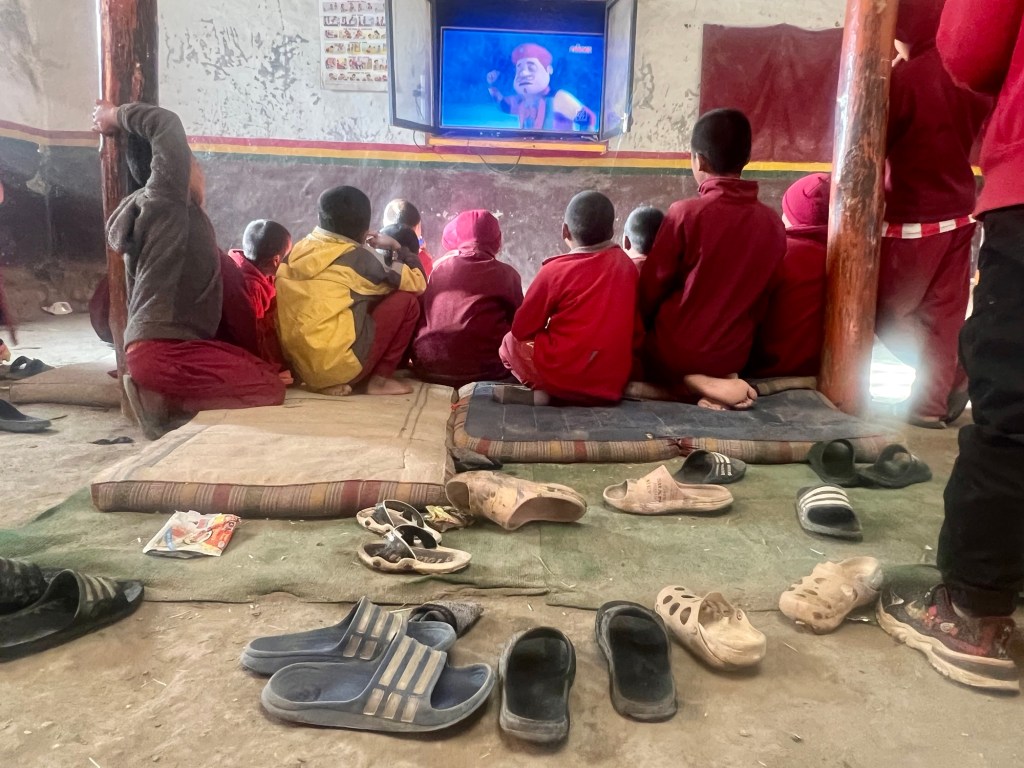
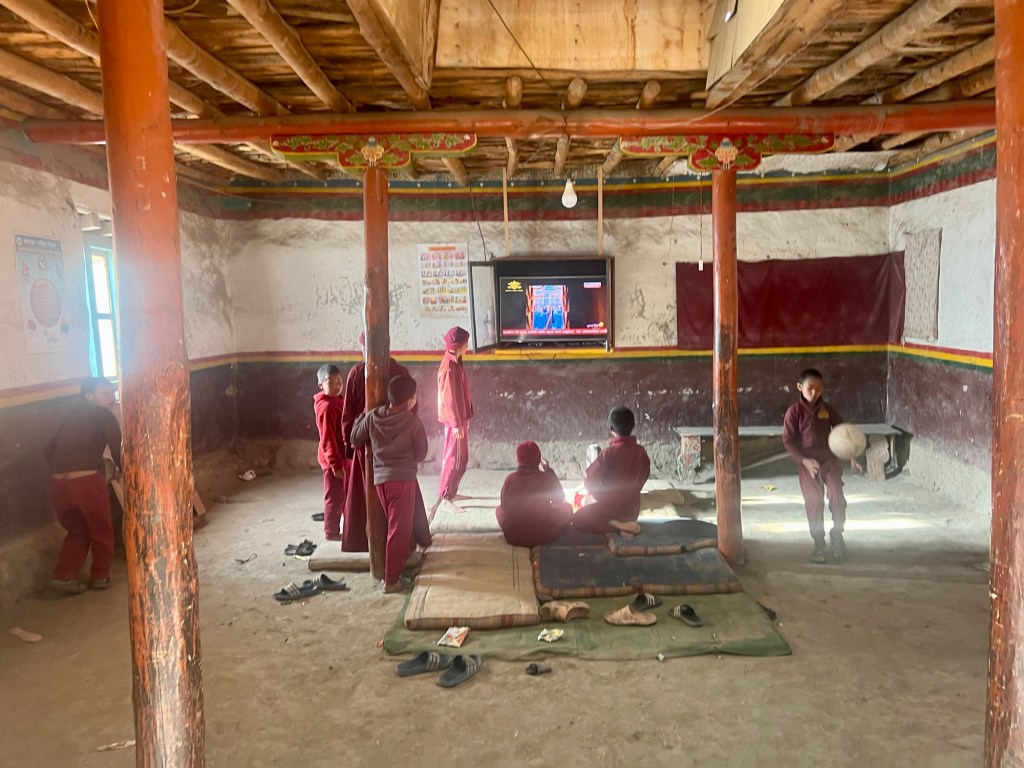
Child monks watching cartoons

   For me and where I live, change is not that subtle—less like the tide and more like a tidal wave. True enough that everything changes, but not at the same pace it seems. My reality is different than  the one in Mustang and the stark contrast has served to focus my attention on all that is changing.   I have only to look around to see that things are not the same as they were few years ago, even a few days ago.

    I could say the same if look inward. My body reminds me every day that I’m not bulletproof like I once thought I was, and my inner dialogue—the one I have with myself—includes more time reevaluating my place in the world and what comes next. My patients and others keep asking me when I am going to retire, and I find myself wondering the same thing. When will be the right time for me to stop doing what I have always done and do something else? 

     Sometimes I think that I haven’t changed enough and should have gotten better about how to live and how to be. I know that life is a work in progress, but I also know that I don’t have forever to get it right.

     Here is a thought experiment to consider: Ask yourself what you would say to your 18 -year-old self. It’s not an exercise in second guessing but a method to realize what you have learned over the years.  I would tell my 18-year-old self to be willing to change his mind. 

    It’s the young who have high standards and who insist that life be a certain way, that certain things have to happen. Yet they almost never do as we expect.  I would tell my younger self that life is always arriving, so he will need to constantly adjust. 

     Changing your mind is not a weakness but a sign of intellectual integrity and a step toward truth.  If you don’t change your mind occasionally, you’re going to be wrong a lot and be mired in ossified opinion. Wisdom is not just a matter of thinking deeply but of thinking over, rethinking, and coming up with a different solution or insight. That’s the kind of healthy change that we can embrace.

     And it is always an option to have no opinion at all— just admit to yourself that you don’t know and reserve judgment until you have more information, until more evidence comes in. Something else I would tell my younger self that came to mind on my travels through Mustang is that we only know a small sliver of what is going on, so best to maintain a humble perspective about our place in the grand scheme of things. 

   Mustang is vast and unmastered, and it is easy to be overwhelmed with a feeling of relative smallness. I felt both humility and awe, transfixed by the inescapable sense of just how insignificant I am and how much is beyond my comprehension, freed from the delusion that the world had been sculpted to suit my ambitions and needs or the impulse to try to control everything. 

Feeling small

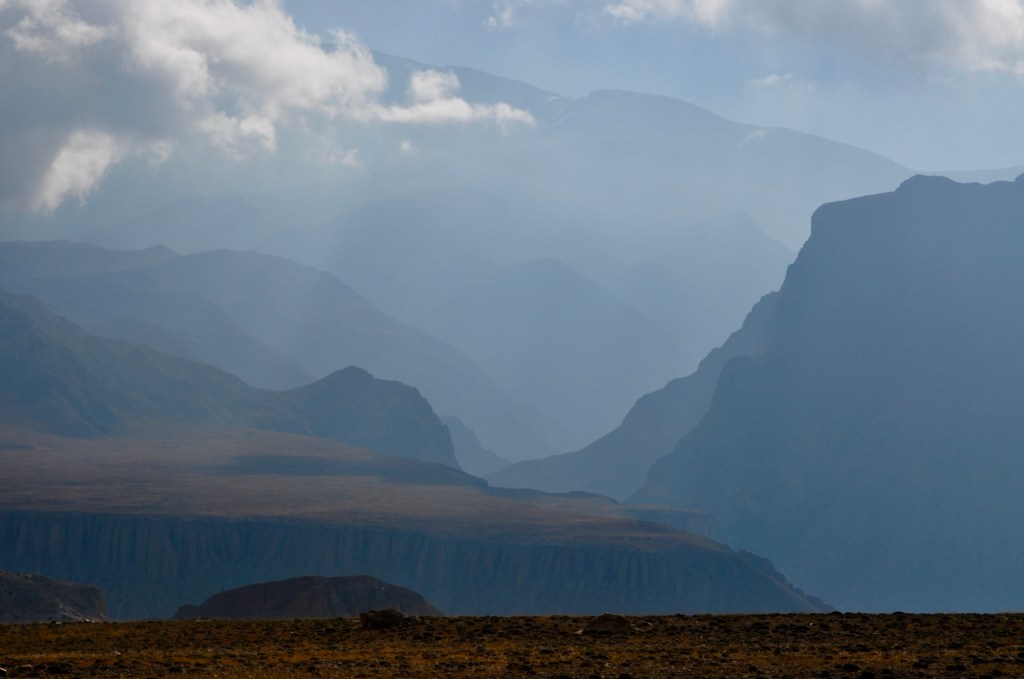
      In Mustang there are apricot colored cliffs and a cobalt sky, torrential rivers and tempestuous windstorms, and an exquisite stillness to the nighttime  firmament where you can see a shooting star race across and think you might have heard it, too. The wildness of the land is so fiercely beautiful and starkly rugged that it calls forth and amplifies a wildness within and an awareness that you are standing in the presence of something greater than yourself, something that enables you to feel profoundly diminished and radically expanded at the same time.

    Life is a flowing process with change and death a necessary part. Like a river, if it does not flow out, nothing more can flow in. To resist change is like holding your breath; if you persist, you die. The best way is to plunge in and join the dance. 

    Much of human effort is directed at making permanent the experiences and joys that we encounter. Yet we value some things—like an ocean wave or a kiss—because of their transient nature. Life is more like music than painting—it has movement. If  a melody stops to prolong a chord beyond its time, the fluidity is lost and so is the meaning and purpose. 

  As we get closer to the end, we have thoughts of our lives, how the narrative played out and stacked up against the hopes and dreams we had chased in our youth. What would my 18-year-old self say to me? Would I disappoint him? 

    We should not regret the past, just learn from it and move on. And hold on to the idea that change is opportunity and the possibility that we can always reinvent ourself better than we had been before.

Kathmandu Morning. Dispatch. 2023

In the day’s small hours, the stillness is pierced by the clang of temple bells tolled by worshipers as they make their clockwise circumambulations.

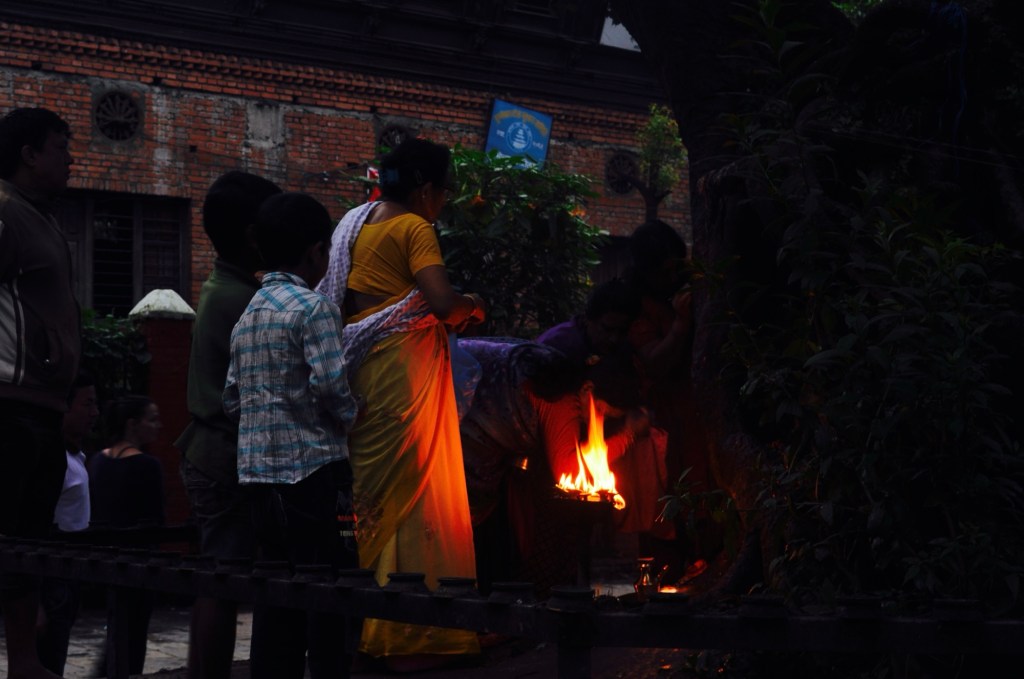
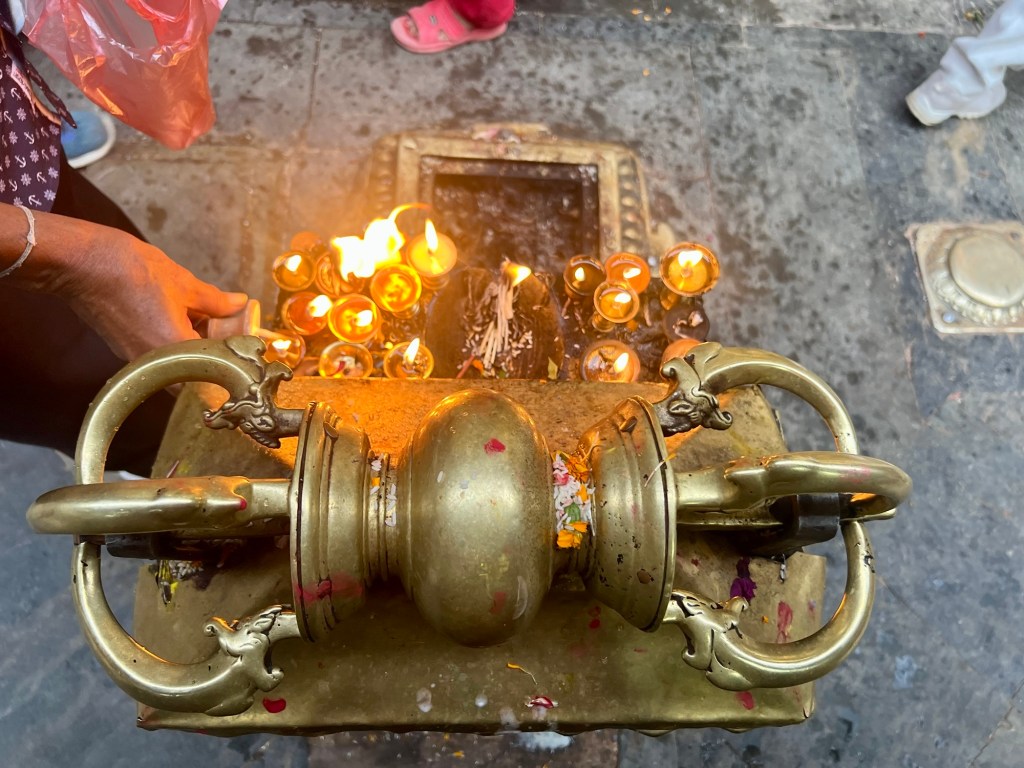
Flickering butter lamps cast shadows against the white walls of a stupa.

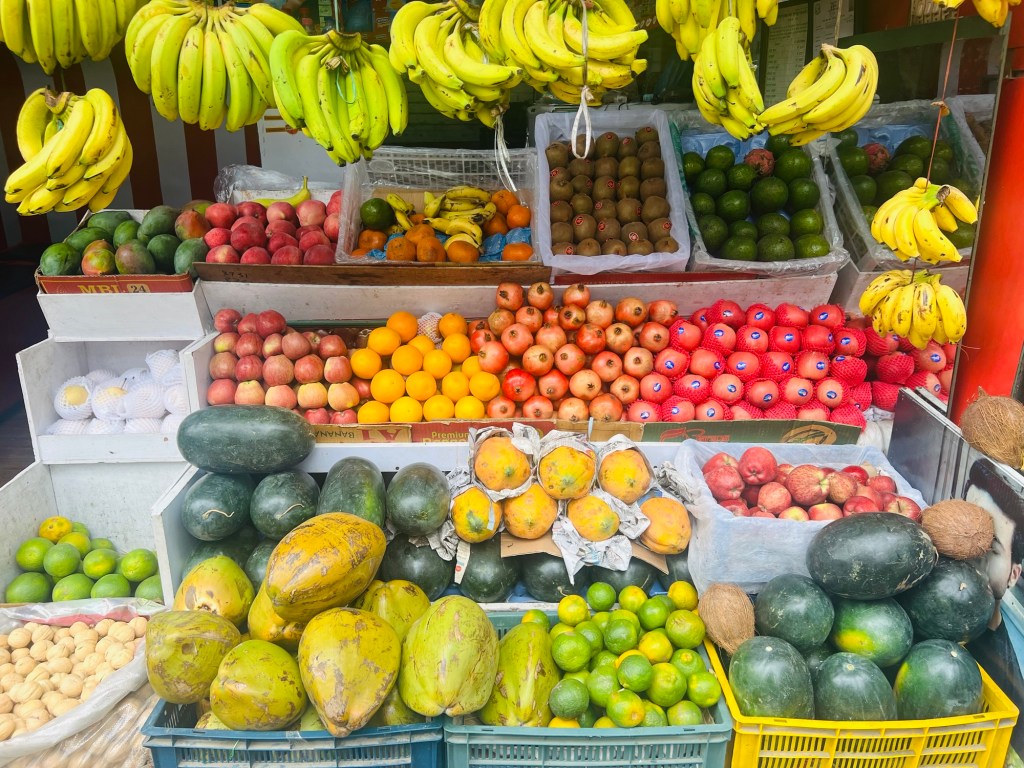
Colorful fresh fruit and vegetables are laid out in orderly rows like a box of crayons.

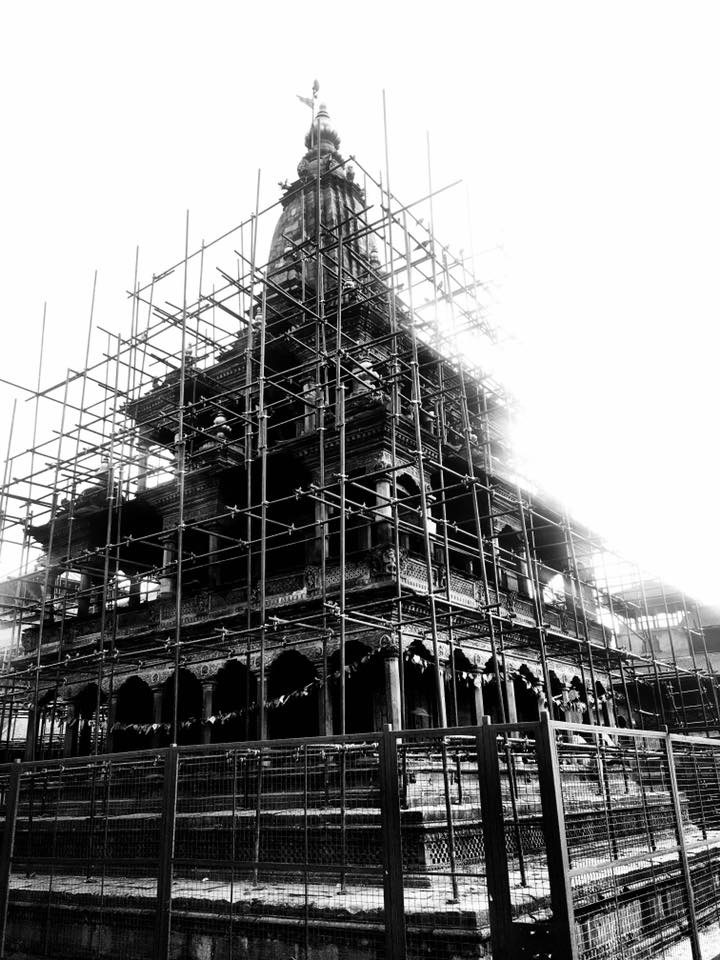
Craftsmen congregate at the pagodas in Durbar Square—reduced to piles of rubble following the 2016 earthquake—to resume the painstaking process of placing stone on stone.

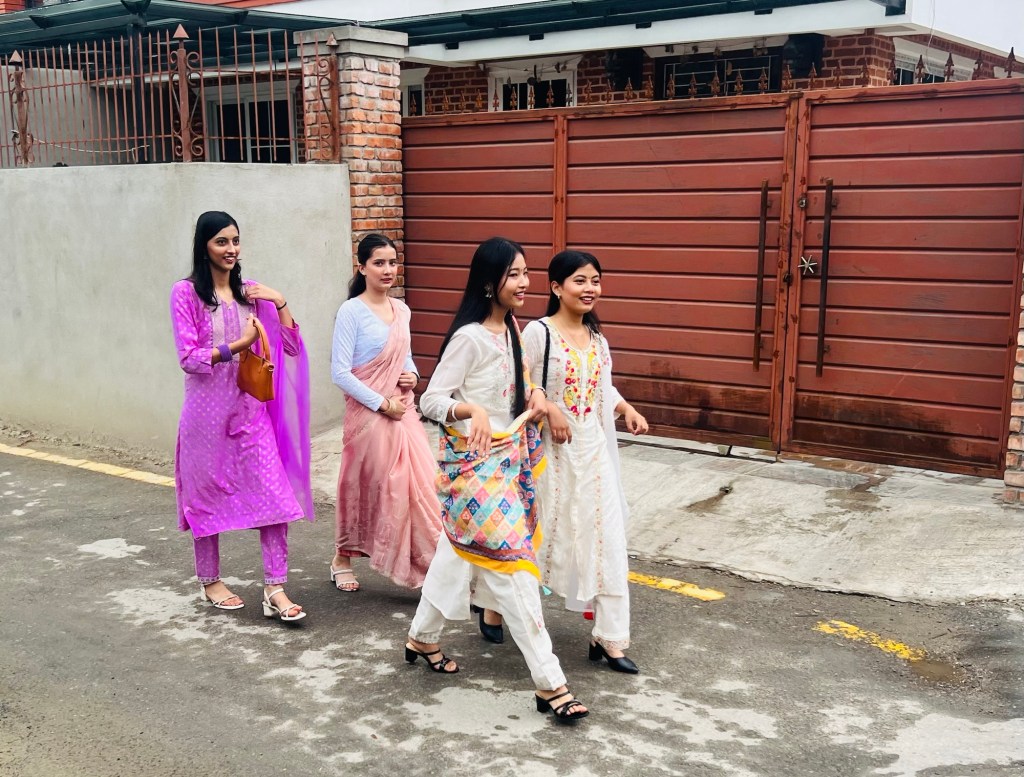
Women dressed in vivid Salwar Kameez (a knee-length tunic over billowing pants) begin the noble but futile effort to sweep clear the sidewalk of dust.

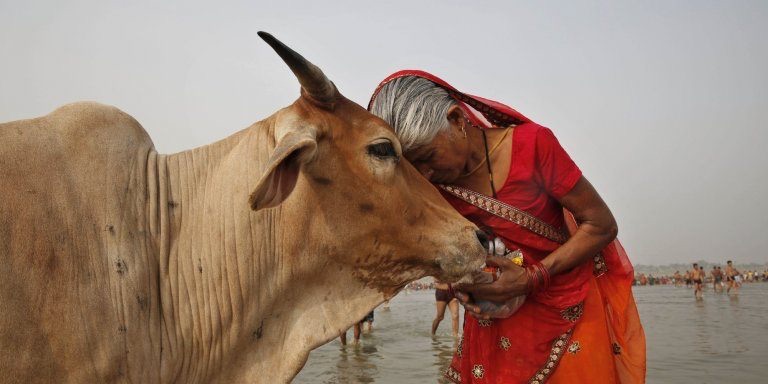
Doorsteps and busy intersections accommodate feral dogs and wandering livestock who hold the entitled attitude of deities, which in this country they are.

Garlands of marigolds and intricate wood carvings adorn ancient temples where elders perform their morning puja (ritual offering and prayer). Some do their puja on a small metal plate on their doorstep.

The far pavilions of Manaslu and the Langtang Himal stand watch, their bleached summits gleam in the sun’s first rays.


Waking up

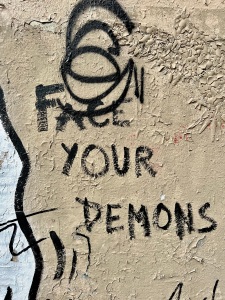
The paradox about waking up-the ordinary kind of waking up like you and I did this morning—is that, even while it is inevitable, you can’t make it happen. The same holds true for spiritual awakening. You can’t force yourself awake. It’s hard enough just to realize that you’re asleep.

On the flight into Kathmandu, I sat next to a well-traveled young businessman from New York City who was making his first trip to Nepal. He recently completed the Inca Trail and had Mt Kilimanjaro on his to-do list. He was with a tour group that would take him to all the important sites in the Kathmandu Valley. My first time in Nepal was in 2000 and Caroline and I have returned many times since then. As I listened to him, I recalled seeing it all for the first time.

He said he had always wanted to come to Nepal because he thought it would be a spiritual experience. You hear that. Many people come here to see the mountains, and just as many come expecting to encounter something spiritual. Some locations in the world have that going for them: Jerusalem, Sedona, Bali, Mecca, and Rome. Not Missouri, where I am from. No one ever comes here to search for their soul, but people have always come to Kathmandu looking for an awakening of some sort.

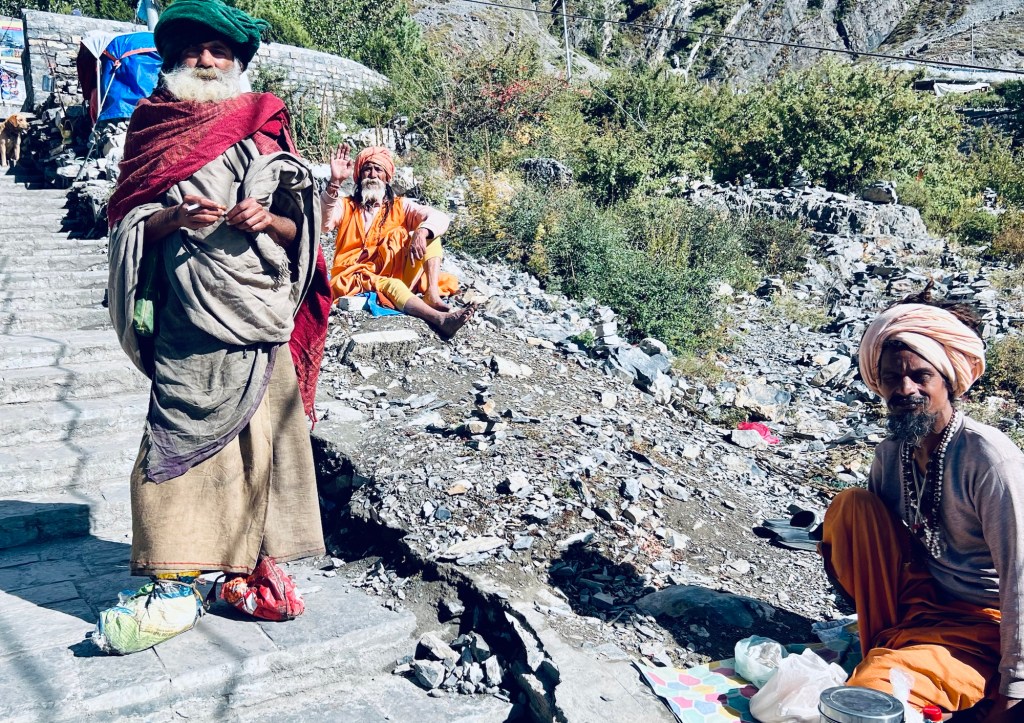
It’s easy to see why. There is a temple, sadhu (Hindu holy man), or yoga instructor on every street corner; you can’t throw a singing bowl without hitting a guru—everybody has one. And the Buddha? He is like Waldo or Forrest Gump, popping up wherever you look.

Three holy men
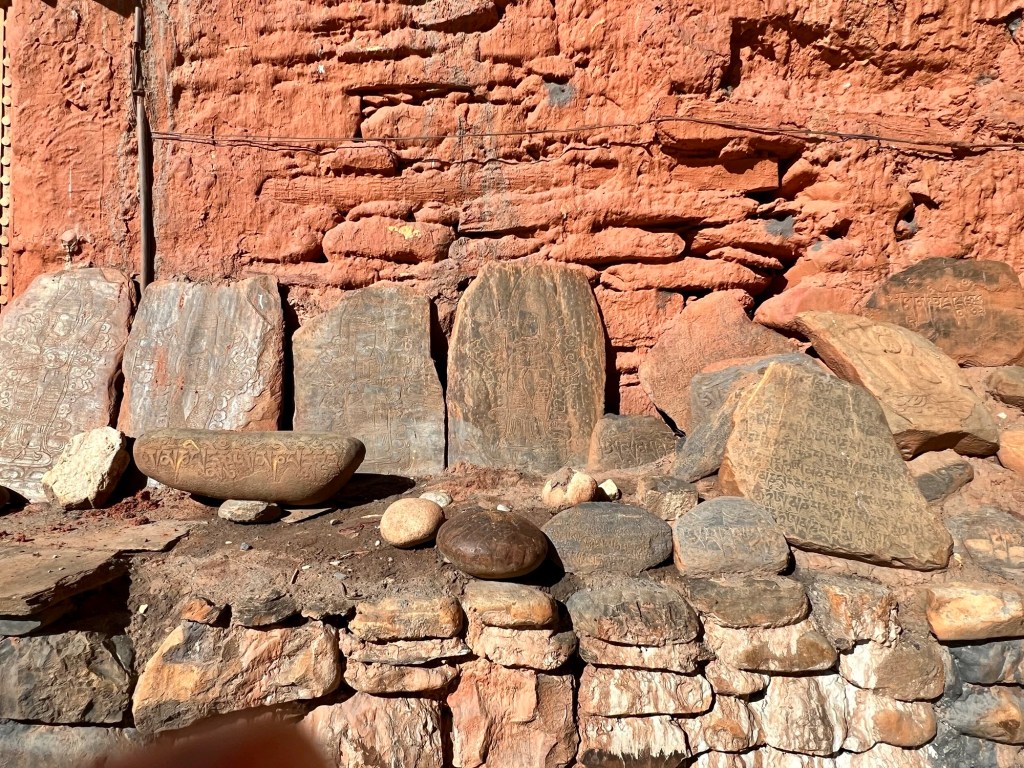
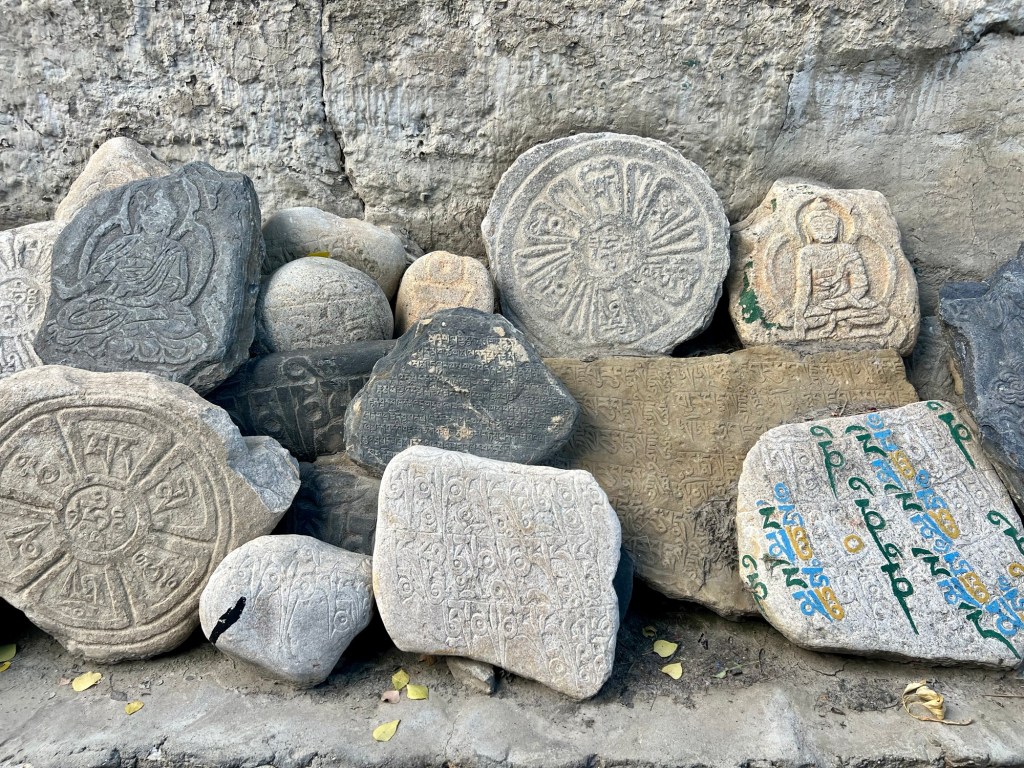
Mani(prayer)Stones

It’s hard not to be intrigued by Hinduism’s bewilderingly large pantheon or be seduced by the exoticism of it all. Hindu philosophy is endlessly fascinating and defies a thorough explanation. Trying to understand it is like shoveling mist.

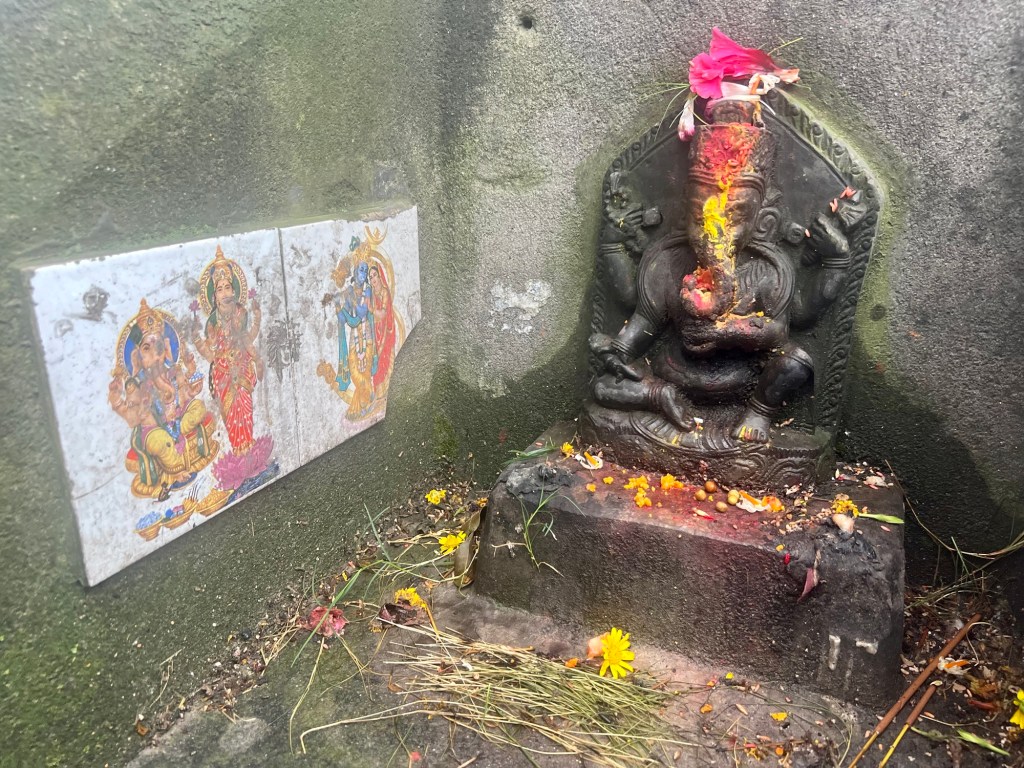
Ganesha

And yet, when it comes to spiritual awakening, I know it is not about location. I suspect that the guy I met on the plane will learn that there are no shortcuts and that no single place, including this one, holds the key to enlightenment.


Did you ever have the same dream twice?

If a call from the hospital wakes me up out of a dream, and if the dream is a good one, I try to remember and reenter it as a way to help me drift off again. When I am dropped back into the streets of Kathmandu, I think, “I have had this dream before.“

I first came to Kathmandu more than twenty years ago and have returned enough times to have lost count. Return is a pervasive theme here—it is what most Nepalis consider life to be all about. Hindus and Buddhists believe that our lives are a cycle that goes on and on and what you come back as is determined by how you lived the previous life. The ultimate goal is to escape the cycle (samsara) and attain liberation (Moksha).

While there isn’t quite that much riding on it for me, I recognize a return when I am having one. For me it’s like a return to an alternative, but familiar, state of consciousness—something like lucid dreaming.

This time the Kathmandu streets and sidewalks are cleaner (a new mayor has seen to that), and the traffic seems just a bit less frantic. However, things aren’t really much different than they were when I left the last time. There still is not a Starbucks or McDonalds in sight, and you have to wonder if there ever will be.

Nothing has changed very much, and yet change has occurred. What is different is me. I’m the one who is not the same.

Hinduism describes four stages of the ideal life (Shakespeare said there are seven):

1. Student—dedicated to learning.

2. Householder—get married, get a job, raise children.

3. Forest dweller—withdraw from the life of working and begin to divest possessions; move into a forest hut.

4. Renunciate/Wandering Aesthetic—leave it all behind and devote yourself to meditation and spiritual pursuits.

I’m not sure how I would categorize my life stages, but I would say there are more than four of them and I like the image of “forest dweller” rather than retired person. While I am not in the forest yet, I can see it from here.

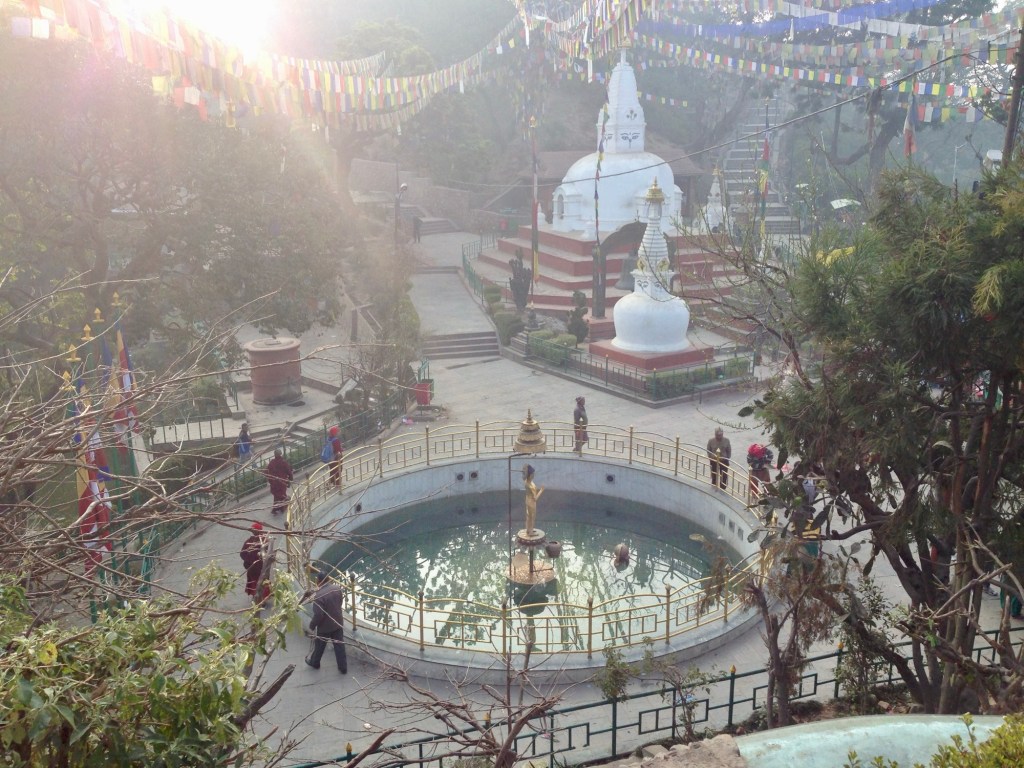
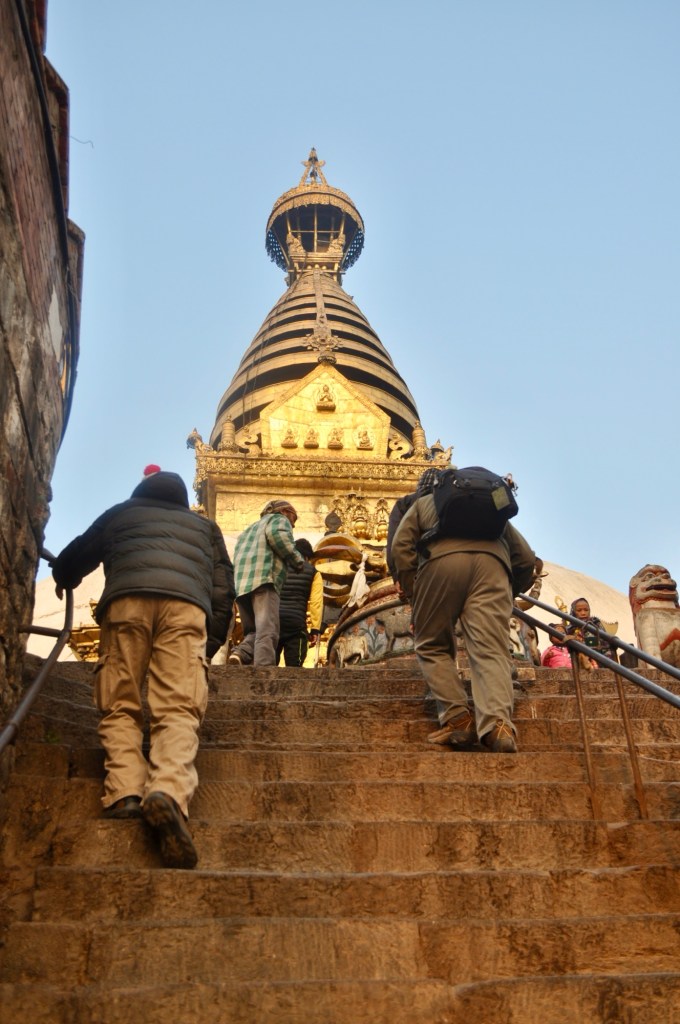
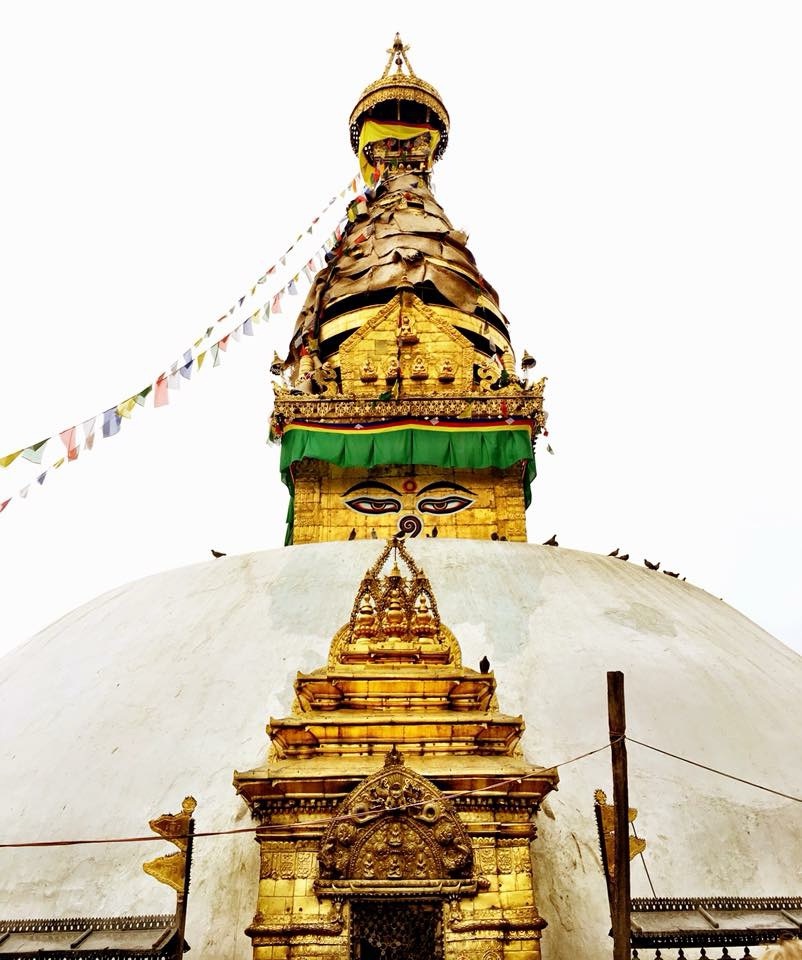
Each stage offers a different vantage and our task is to change and evolve. I am not the person who came here the last time, even less that person who came the first time. In that earlier stage, I wasn’t seeking in Nepal the meaning of life, and I wouldn’t have recognized it had it greeted me on the steps of Swyambunath, the Monkey Temple. Now I’m not looking for it because I know it’s not here. The wake up calls in my life have not come from any place in Kathmandu, dripping as it is in the wisdom of the ancients.

It’s like in the story about a Buddhist monk who says to the hot dog vendor, “Make me one with everything.”

Then the vendor gives the monk a hot dog and the monk hands him a twenty. The vendor stuffs the bill in his pocket and they stand in silence until the monk finally asks, “What about my change?” The vendor replies, “Change comes from within.”


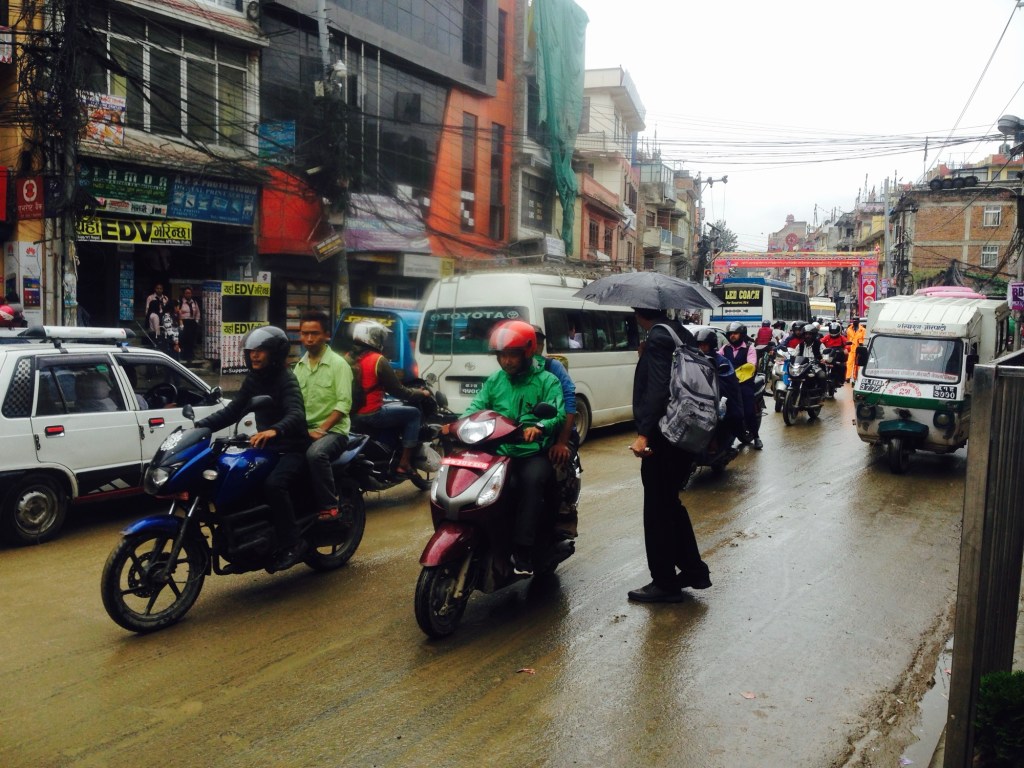
Kathmandu wakes me up, and not always gently like my mom used to do. The drive from the airport alone is a splash of cold water on my face. There’s so much going on outside the car window that the streets back home seem soporific by comparison. The traffic jams are monumental, with a cast of characters that could rival anything Barnum and Bailey would put on. Prismatic trucks the size of log cabins lumber by, painted in so many colors it’s like being inside a kaleidoscope. On the smaller end of the scale are the dogs, chickens, and even monkeys that wander aimlessly through intersections, stopping traffic as effectively as any police officer. Mileage is beside the point because even a small journey can seem epic and is best measured in time spent in your vehicle rather than distance traveled. I feel the jet lag but couldn’t fall back to sleep if I tried. I would sooner be bored at a bullfight than a drive though Kathmandu.

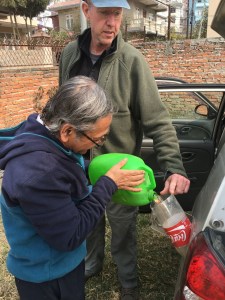
Filling up in Kathmandu

On an earlier visit I saw someone wearing a t-shirt that said “Unlock Yourself.” That sounds like another way to say “wake up.” It’s easy to sleepwalk through life, to get locked into patterns of thought or petrified opinion. Our beliefs and thought patterns should be more than what we habituate to, acquired and reinforced by our culture and the company we keep. Sometimes, “A man hears what he wants to hear and disregards the rest,” so our opinions don’t always track with objective reality, more often they are designed to make us feel comfortable. Let go of that and even the opposite of what seems obvious will still deserve full consideration.

“Truth is one and the people call it by different names.” It’s a Hindu aphorism describing how a single truth can intersect across different frames of reference. What we believe need not separate us from others, and it won’t if we accept that the outlines of reality are inherently blurry and we embrace a hint of uncertainty. Even the religion most people follow is determined primarily by the family and culture they are born into. That doesn’t mean that their tradition isn’t true, but it suggests that it is not the only truth.

Not my photo

If we look with curiosity at people who do not share our opinions or values, they become interesting rather than threatening. Cultivating a questioning mind and engaging in conversation with someone I may disagree with enriches me. I can tire of my own nonsense and figure my presumptions can use a periodic reshaping. I need to occasionally unlearn who I think I am. That is what happens when I am thrown into a strange land with an unfamiliar people and language and am confronted with uncertainty and confusion. I am forced out of myself and feel my edges softening.

Travel dismantles our worldview by turning everything around and, as Mark Twain said, “…is fatal to prejudice, bigotry, and narrow mindedness.” That is because it is hard to think of people as “the other” when we go to them and get to know them on their own terms. A part of my waking up in Kathmandu is that it helps me realize that, sometimes, the other is me.


Kharma

Monk with cell phone

It seems to me that Western and Eastern belief systems are in more agreement than they appear on the surface. When I am in Nepal, I try to take in what sounds new to me and understand how it fits in with what I already hold to be true.

Kharma is one of those words that has become so overused in the West that it has been exhausted of its essential meaning. We assume that karma is an Eastern concept, and it is, but it is not a foreign one. We live it every day as a part of practical wisdom that we all know innately

The point is not that the universe is doling out reward and retribution—a carrot and stick guide to how we should live. Karma is simply the inexorable law of cause and effect. Karma is about actions and consequences, not unlike basic physics or mathematics, and it functions day to day and moment to moment.

Sometimes it is straightforward and immediate; if I smile, likely I’ll experience a warmer reception than if I scowl. Sometimes, cause and effect is less obvious or not what it seems; when the gas gauge in my car is on E, it’s not the meter itself that caused the car to stop.

It requires some discernment, but the essential insight is that some actions lead to suffering for ourselves and others and some lead to relief of suffering. We are charged with figuring out which is which and, with kharma, even intension and motivation count.

If we entertain the possibility that consciousness continues beyond this life, then karma also functions in the long run. Every action we take plants a seed that will come to fruition in this life or in a future one. The poor choices we make are visited on succeeding generations, and so are our good ones. At the very least, kharma makes us take responsibility for what we do rather than point our finger at someone else. The good news on karma is that we humans have the capacity to understand our predicament and choose something different.

Kharma, as practical wisdom, is a statement of the obvious fact that who we are today is determined by our previous actions, and our current actions will shape who we are in the future. We know this. Even non-Hindus would have to agree with that statement.

Dharma

Hinduism also affirms a cosmic order to things and each being must find its place within it. The idea of doing one’s duty and finding one’s place within the cosmic and social order is the fundamentals task of living. This cosmic order, and the duty, or obligation, that results from it, is called dharma.

Dharma has multiple meanings depending on the frame of reference. In the broadest context, it is the foundation for the entire universe, yet dharma is not the same for everyone. There is also a personal, individual aspect to it. Dharma is both the cosmic order into which we must all find our place, and our individual dharma, or duty, is what tells us what is that place.

The concept of dharma factors into the Hindu caste system. Our western sensibilities object to the idea of social status being determined by caste, but we in the West tend to determine social class by wealth, so it amounts to much the same in practice and neither seem like the best way to appraise a person. It is worthwhile rethinking some of our own cultural assumptions. For example, the idea that “all men are created equal” is, with a moment of sincere reflection, an obvious fiction. They are not. Fairly or unfairly, some people are smarter, or stronger, or better looking than others. Some are born into more advantageous situations than others.

This is another thing we know from direct experience. Hinduism provides some explanation to those differences that satisfies our innate sense of justice. Does it not make sense to have different expectations for different abilities? Hindus would say it does. Maybe there shouldn’t be a a single standard of achievement by which we can measure a person’s success or failure. Every human life has value, but in different ways, measured differently.

In the west we don’t call it dharma, but we know what they are talking about. Within each of us there is a longing. We want not just to live, but to live for something. We want to know that our lives have meaning. Viktor Frankl, in his book Man’s Quest For Meaning, states that while we might ponder the meaning of life generally, what we really want to know is the meaning of our particular life. Each person must ask the questions in their own way and time. Arriving at a final answer is lifelong project and a deeply personal journey.

Bill Plotkin, eco-depth psychologist, author, and wilderness guide, writes that we must each ask ourselves, “What is my particular way of belonging to the world? What place within the earth community am I meant to occupy?” We are born subconsciously knowing what that place is, and it is waiting for us, alone, to fill it. The world cannot fully express itself without each part of it, in turn, fully expressing itself. A jigsaw puzzle might appear fine even if a piece is missing, but without that one piece, it is not complete. In the same way, the world is not whole if a part of it, even the small part that is you or me, is not fully expressed.

The principle of dharma is that we are to live as if our place in the world matters. To discover what is our genuine and unique gift is our greatest opportunity and challenge. Offering that gift to our community is not an attempt to save the world but to fully belong to it.

In a nutshell, dharma is what we should do, and kharma is what we do.


Here is a story that is not really about karma but does have an underlying theme of return.

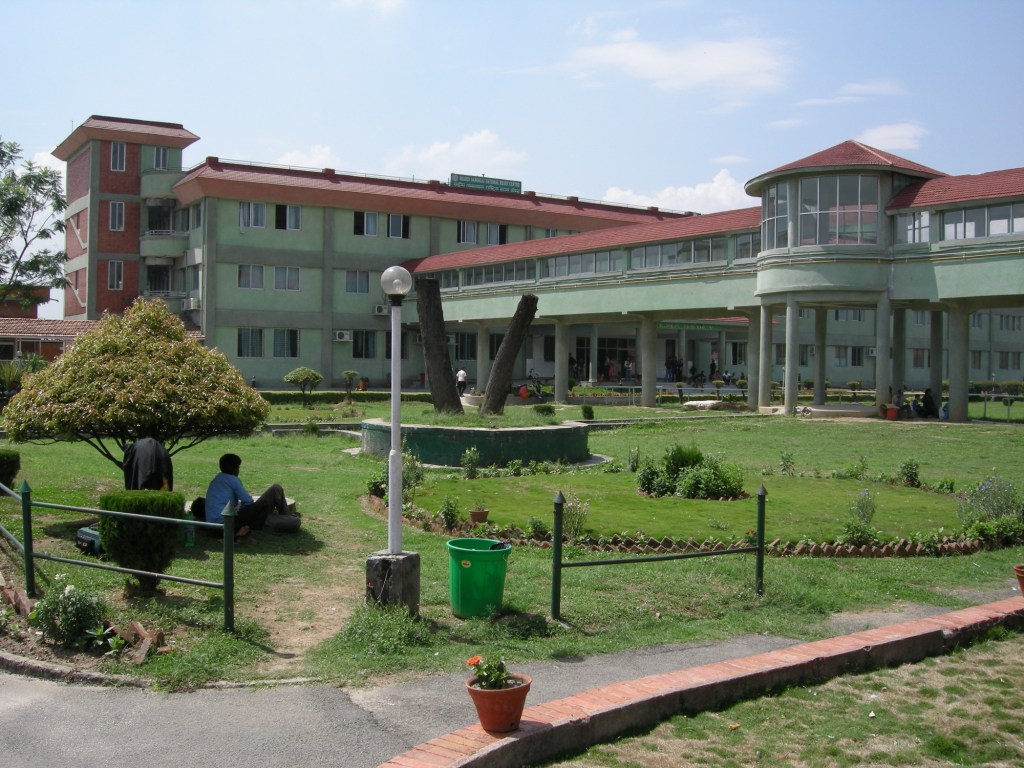
Shahid Gangalal Heart Center
Rabi Malla

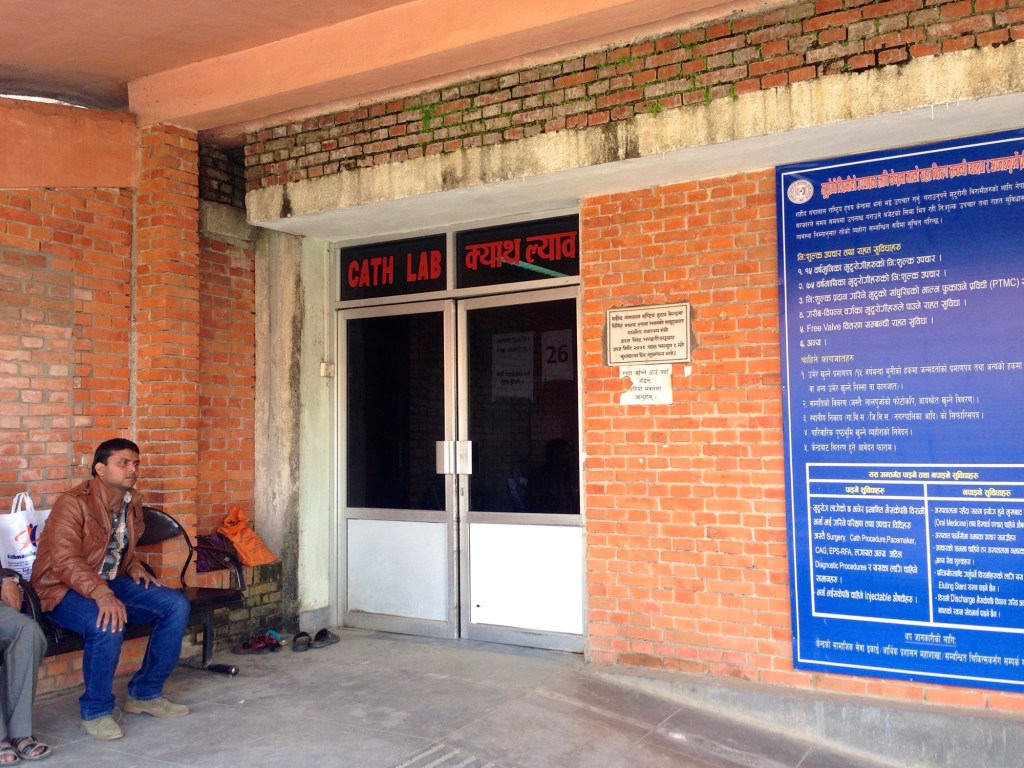
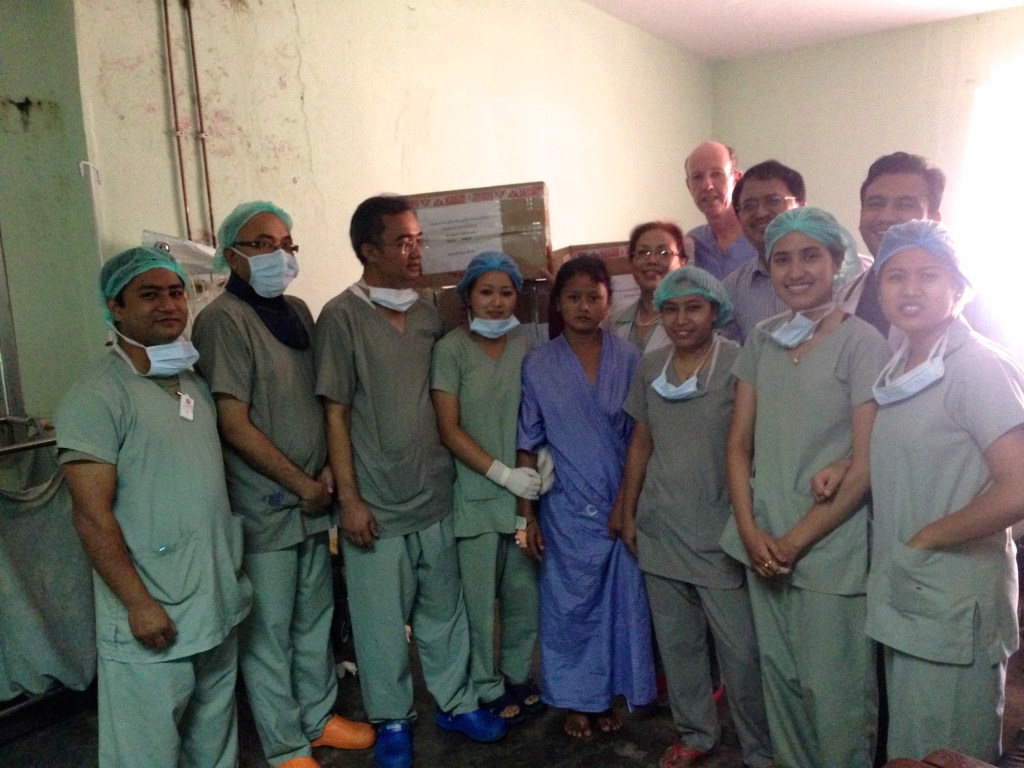
I first went to Shahid Gangalal Heart Hospital in Kathmandu in 2009. Dr Rabi Malla and the few other cardiologists on staff at that time had less experience than I with new interventional techniques and equipment, so they were eager to learn anything I had to teach them. I scrubbed in on procedures and they laughed when I struggled to fit into their too small surgical gowns. The Cath lab “slippers” that we wore extended little more than half way down my feet. Fortunately, I brought with me scrubs from home or I would have looked like Ichabod Crane wearing clothes on loan from Danny Devito.

I have returned to Gangalal on subsequent visits to Nepal, including this year. The Cath lab has changed with each succeeding visit and it is great to see how far they have come from those earlier days. I told them that I have nothing more to teach. I learn from them now.

These days at Gangalal there are four Cath labs and 37 cardiologists. They do 40-50 procedures a day. Watching them in action was fascinating, like watching the North Pole on Christmas Eve. They still reuse wires and balloons. The equipment is collected after each case is over, repaired as best it can me, resterilized, and reused until the angioplasty ballon breaks or the wire cannot be made straight again. It made me think of how spoiled I am in my own Cath lab.

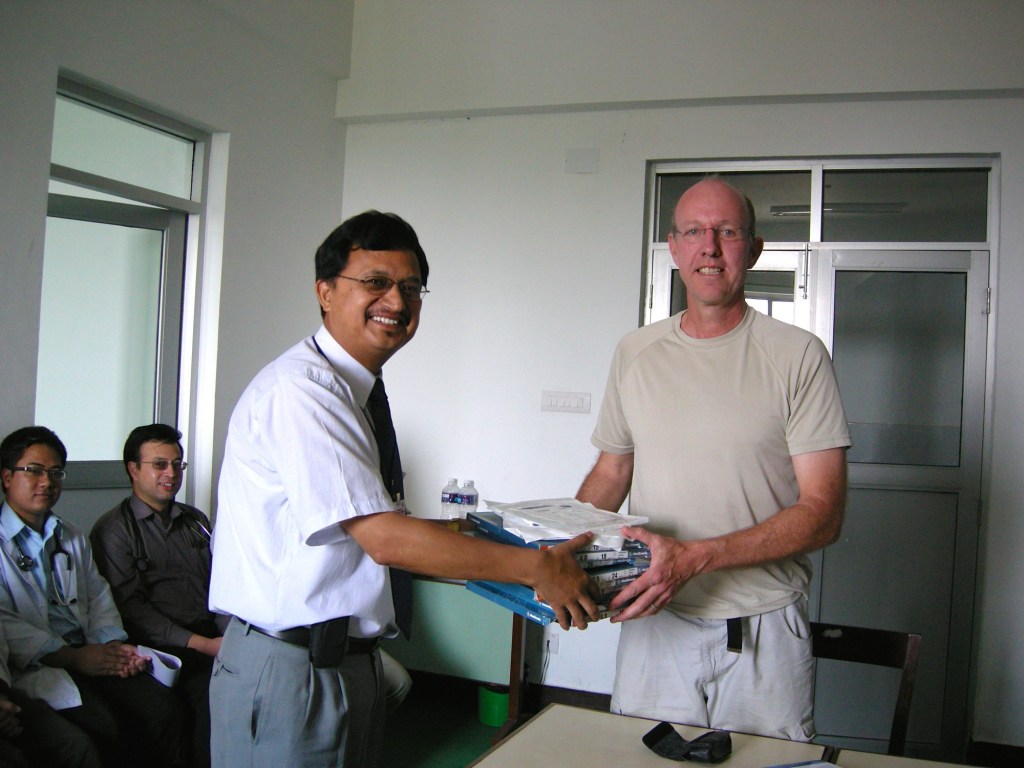
Rabi introduced Radial Artery access to Gangalal and I reminded them that he was the one who taught me. It changed my practice and has helped my patients ever since. Rabi now holds the position of Senior Consultant. The junior doctors and nurses can’t say enough good things about him and they told me his real title should be “Godfather.” They said he is a “pioneer” and I agree with them. Binay Rauniyar was a “junior” cardiologist when I first met him years ago. He was the one who spent the most time with me, trying to coax me into learning Radial access. He is now Cath Lab Director (Rabi’s old position) and we watched some cases and chatted. Last year, he visited Mount Kailash in western Tibet, like Caroline and I did the year before, so we talked about that, too. He was a bachelor back then, but now has two children. I talked to another junior cardiologist whom I had never met before, and he said that “Dr Malla talks to us about you.” I told him that I talk to my friends and colleagues about Rabi Malla.

Rabi and Binay 2009
(I did NOT touch these knobs)

Rabi asked me if I wanted to scrub in on some cases like I used to do. I told him “no thanks;” I was fine just watching and I knew their scrubs don’t fit me. He said, “But I have your scrubs right here in my locker.”

He did. The same scrubs that I took with me in 2009, waiting all that time for my return.

That is the kind of friend I want to be.


I Was So Much Older Then; I’m Younger Than That Now. Dispatch.Autumn.2023

I rode my ten-speed to work every day of my residency. I wasn’t deterred by the steep hills or the weather’s mercurial mood swings. In Iowa the winters are dark and deep, but even on the coldest winter mornings, I assumed the attitude of a mail carrier and saddled up. In the opaque December dawn, streetlights cast liquid shadows across the pavement, and I heard nothing louder than the gentle snowflakes as they fell from the sky, like in the third act of La Boehm. The stillness reminded me of how tree leaves become silent just before a cold front moves in. The looming towers of the University Hospital were the distant thunder, portending an approaching storm. The calm ended at the hospital’s glass doors.

The first year of my Internal Medicine residency was difficult. It was designed to be that way but not as a method to grind us down and mold us into something different—like they do to marine recruits or to college freshman pledging a fraternity (although the medical profession is that, in a way). Our basic training was an attempt to cram as much experience and information into our brains in the shortest possible amount of time.

We slept two nights out of every three— the third spent on the inpatient wards performing every kind of task you can imagine doing to, or for, a sick person. Each morning, after a long call night, we met in the office of the Chairman of Medicine for morning report, where we were fair game for criticism about our clinical decisions the night before. I usually lurked behind the potted plant in the Chairman’s office, trying to be inconspicuous and hoping he wouldn’t call on me to talk. My effort to blend into the surroundings made me even more noticeable, like a bad hairpiece, so I learned to hide in plain sight by sitting right next to him.
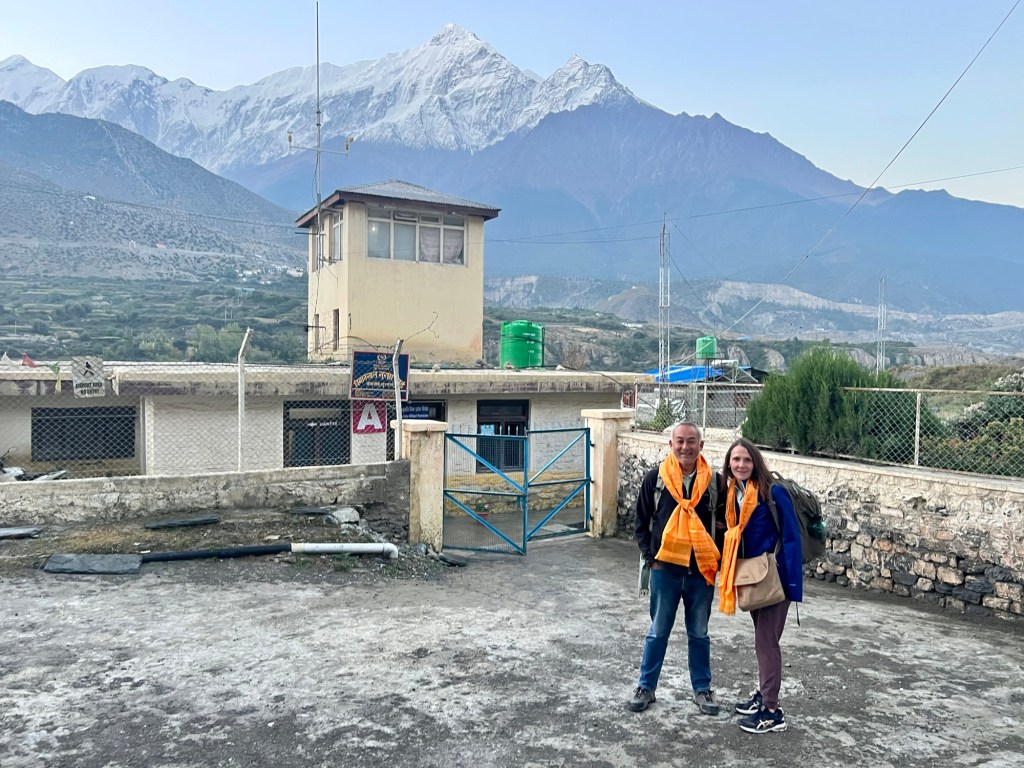
One morning, after report, I got on the elevator with two of my friends who also had been on call the night before. With drooped shoulders we stood in silence, chins on our chests, contemplating the full day ahead. We could not go home yet, and sleep was a distant shore.

The elevator ascended one floor and stopped. Its doors opened, and a third-year resident stepped through. He looked freshly minted—well breakfasted, hair combed, wearing a necktie, of all things. Those had all become foreign concepts to us—-how people behaved in another country, not ours.

We greeted each other without words as the door closed behind him. A beat passed and his face donned a wry smile as he looked us over and said……..”Aah yes, the young lions.“
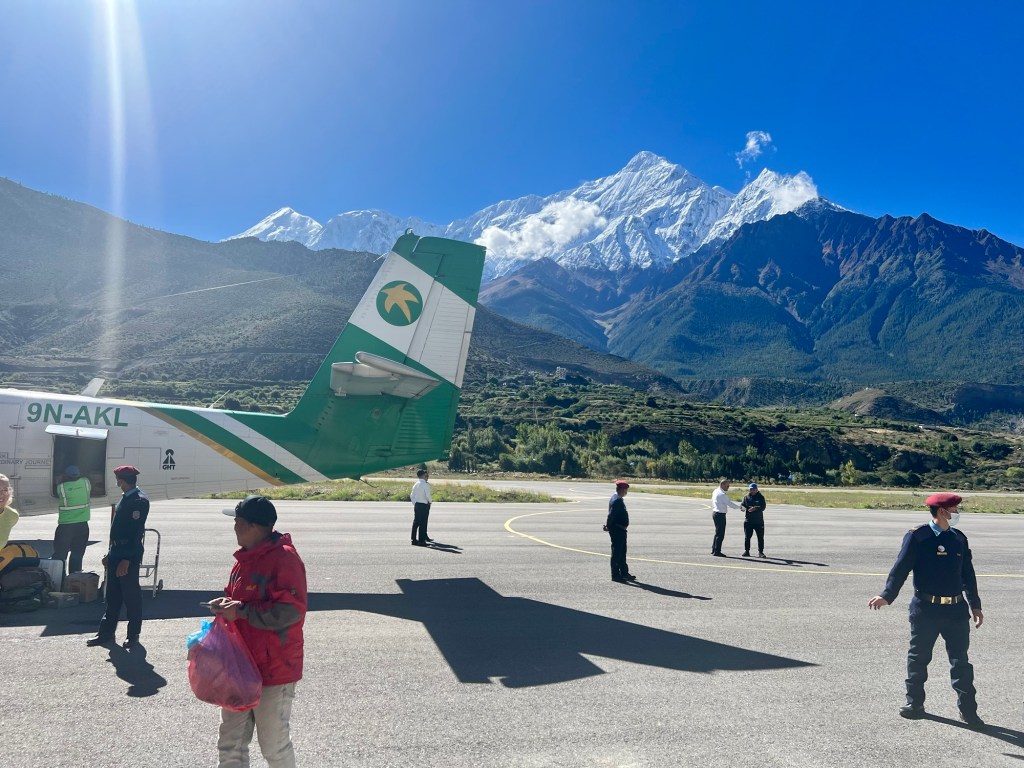
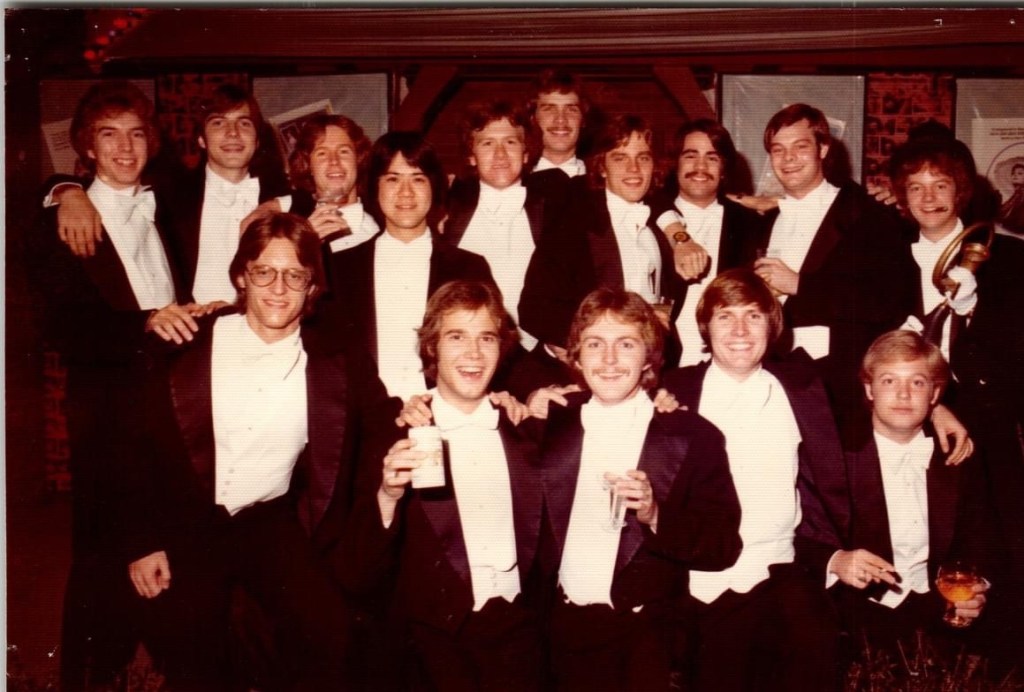
My fraternity brothers when we were young lions

I knew about the young lions. He was invoking Earnest Hemingway’s Old Man and the Sea, a book that should be on the required reading list of every American young man, like Treasure Island is for every boy.
Santiago, the old fisherman in the novel, ponders youth and old age during his three-day fishing journey. In his bed in the village and in his boat, he dreams of lions on the beaches of Africa at sunset, which he saw when he was a boy on a ship that sailed and fished off the coast. The lions symbolize Santiago’s youth, strength, and virility.


I recently attended my granddaughter’s graduation from high school. I like commencement ceremonies and the way everyone is awash with joy and optimism. It is a time of celebration, and the graduates are rightfully congratulated for all that they have learned and accomplished. They are not thinking about how it is really all still in front of them and how much there is for them yet to learn. Commencement is a good name for it—it’s more the beginning than the ending of something.

As I watched the procession, I remembered the young lions and suddenly realized that I no longer am one. For me, it’s not still all out in front. There is no escaping the basic fact of accounting that the days ahead are outnumbered by the ones I have left behind. I was allotted a certain amount of time, and it’s something I cannot invest, only spend, until it runs out.

Once I was a young lion. When I stopped being one I couldn’t say for sure because sometimes I still don’t feel like a grownup. I never really noticed getting older, although I’m sure others did. There are some things that younger generations think make us look old just because we know about them, like cassette tape players, the movie You’ve Got Mail, or a kazoo.

92 St Park. Last scene in movie You’ve Got Mail

Once was I the one with vigor and boundless enthusiasm. I had that going for me, yet I now realize that I had little understanding of the way the world actually works and almost nothing in the way of self-awareness. l was booksmart but as dumb as they get when it came to why humans act the way that they do—especially myself. I was one of those who did well in class but had no clue about practical matters. I could recite the kings of England or explain the Periodic Table but stumbled at wearing clothes that fit or made sense.

I was a source of endless frustration to my roommate in college. He used to ask me how was it that I could get good grades yet had no common sense. Caroline, my current roommate, has had the same experience and frustration—she once called me “remedial.” She was nice about it and said that I had just been busy and that I hadn’t really had time for self-reflection.

Maybe. It’s true I hadn’t even considered trying to figure myself out. I didn’t know that was a thing—introspection. The workings of my interior self were Sanskrit to me.

I’m better than I used to be. This is the most introspective post I’ve written, and now, when somebody asks me, “How are you?” and I say, “Fine,” a part of me asks myself, “Are you really fine? Which parts are fine? Which ones are not fine?”


Did you ever notice that a truly wise person doesn’t say much while the foolish can’t stop talking? It’s because true wisdom is knowing what you don’t know, or as Socrates famously said, “…is in knowing that you know nothing.” He also said that the unexamined life is not even worth living, that all knowledge is founded on self-knowledge.

As we age, it turns out we don’t find all the answers like we once thought we would. It’s the questions, like the turtles in that creation myth, that go all the way down. Where did I come from and where am I going? Why am I still so unfinished and unvarnished? What have I learned and what, sadly, do I never seem to learn? What do I know and, most importantly, what do I not know? As my youthful audacity has worn away, I have become more aware of just how much I don’t know.

What is life if not constantly either hilarious or devastating? I had a friend who once told me, “The reason young guys don’t like to listen to the Blues is because they haven’t lived them yet.” He was right that it’s only after being in life for a while that we realize how hard it can be and how little we know and understand. We learn the hard way as our ideals and pragmatism war with each other and our bodies give way to the slow advance of entropy, creeping in like the tide.


There is a particular type of creative genius that arises only in the young. The romantic poets Keats and Shelley, Vincent Van Gogh, Mozart, or Bob Dylan come to mind as people who did their best work in their youth. You could say the same about most every rock band you can think of— certainly of every athlete.

The exuberance of youth is marked by a sense of wonder and a voracious lust for life. Promise and possibility are the basis for everything. Every moment of your life you enter a new universe, and with every decision you make, you are setting a path. And there are no easy paths—just paths.

Sense of wonder
No easy paths

Knowing and Not Knowing

The Dalai Lama, a wise person by most accounts, likes to say, “This seems like a good time to be quiet.” People come to him because they think he has reached the summit of understanding, and they ask questions about all kinds of things, including marriage or child rearing. He laughs and says, “I am a Buddhist monk; I am the last person to ask. I know nothing about those things.” Each morning his followers ask the Dalai Lama, “What will happen today?” and his reply is always, “I don’t know.”

There seems to be an inverse relationship between thinking of yourself as wise and actually being wise. As I have gotten older, I have been trying to more often say the words “I don’t know.” Because I usually don’t .

Albert Einstein (another person who did his best work when he was young) knew a lot of things, yet he is also famous for some of the things he got wrong. He was usually the smartest guy in the room but was willing to acknowledge and learn from his mistakes. He knew how much he did not know.

Einstein didn’t think that the universe was expanding even though his own theories suggested it was. To resolve the discrepancy, he introduced a fudge factor, the cosmological constant, into his equations. As the evidence for an expanding universe mounted, he admitted that he was wrong and considered the cosmological constant as his greatest mistake.

He made other errors, and it must have been difficult for him to sort it all out, knowing he was right about some things but not others. His theories were revolutionary enough to draw plenty of detractors even when they were correct. When Einstein was told of the publication of a book entitled 100 Authors Against Einstein, he replied, ”Why a hundred? If I were wrong, one would be enough.”

That seems to me like the right balance. We are entitled to our opinions and need to plant our flag somewhere, yet there is always the chance that we are wrong and will need to revise.

When we think we already understand, we fail to notice anything else. When we think we have the answers, we stop searching and thinking—nothing ever progresses and nothing more is learned.

To the traditional list of human virtues I would add the willingness to change one’s mind. It doesn’t happen as often as it should. I’ve listened to conversations where one gets the impression that world affairs have been settled once and for all. Some people will tenaciously cling to a position they didn’t really hold in the first place or argue with the fervor of a Pentecostal an opinion that is less about truth seeking than what makes them feel comfortable. As Carl Sagan said, “We should not be overly attached to a hypothesis just because it’s ours.” That’s true, nor reject one because we don’t want to share it with people we don’t like.

We do well to hold our dogmas lightly and approach things with humility and curiosity.


Ways of Knowing

There are ways of knowing that don’t involve thinking, and we can know something without really understanding it. The intuitive forms of knowing bypass the conceptual side of the brain; they aren’t made up of thoughts and can’t be explained in words.

Anyone who knows how to ride a bicycle would be hard-pressed to write down just what that knowledge is that allows them to ride. They could not easily explain exactly what they are doing and how. We know more than we can say, and our concept of reality itself is shaped and formed partly by intuitive or tacit forms of knowing. So there is also wisdom in not believing everything we’re thinking.

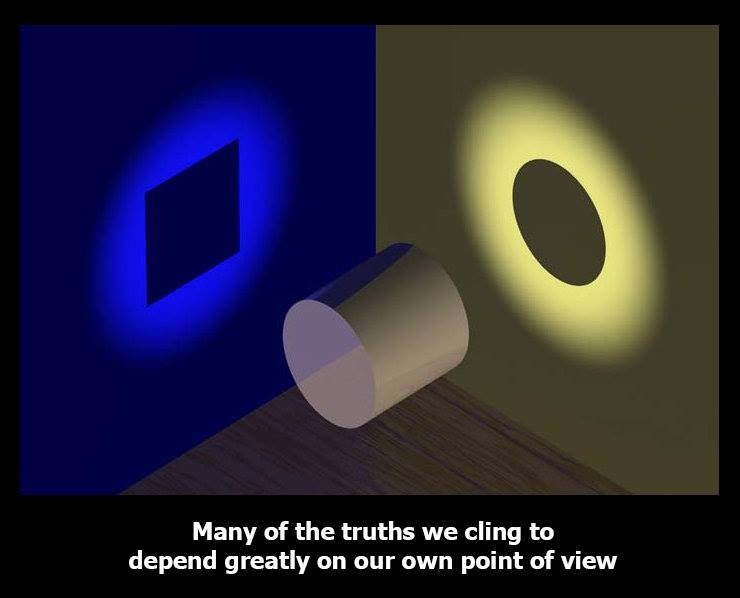
When perspective shifts, our reality is transformed. For example, up versus down is a concept that is shared by everyone around us but not someone standing on the other side of the Earth. I have friends in Nepal. If one of them and I are both told to point up we will be pointing in opposite directions, yet we will both be correct.

What we think we know for sure might be dependent on who is watching and where they’re watching from. Not every object or event we witness is fixed and immutable. Some of our most basic perceptions may not always be what they seem. Look at a star that is light-years away — it might actually have gone dim a long time ago. What we think are absolutes might be more like the constellations, which seem real enough but vanish when the same stars are viewed from a different spot in the galaxy.

What exists and what happens next, like Schrodinger’s cat, depends on the observer. The feathers of an indigo bunting contain no blue pigment. They appear blue because of the particular way light is refracted from the bird onto our retinae. “Blueness” is not a material present in the strands of the bunting’s feathers, just as “sweetness” is not something present in the molecules of a jar of honey. Blueness and sweetness are names we give to the subjective experience that occurs when we encounter those objects. We assume that the experience is the same for everyone, but there is no way we can say that for sure. I can never be certain that what I see as red is the same as what you see. Blueness and sweetness (and many other aspects of our reality) are real things that exist in the world; it’s just that they wouldn’t exist without us.

One person’s perspective is as unique as their fingerprints and more malleable. We can change our perspective when we assume an alternative viewpoint and see things through the eyes of another person or from another place. Say I take a walk in nature to ponder solutions to my problems. Once I get out there, I realize that everything looks different, as if they aren’t really problems at all.

The other’s perspective

Knowing and Timing

Perspective partly depends on where we are on the timeline. To a young lion, the thought that anything is possible is both exciting and frightening while to an elder, life can seem like a knot of paradox and contradiction.

My oldest granddaughter, the graduate, just left home for her freshman year of college. She is riding the winds of change, where uncertainty and anxiety are buoyed by youthful optimism. My life perspective is different than hers, and my innate idealism has worn thinner as I have had time to reflect on the oddities of life.

One thing that I have noticed is that however good or bad a situation is, it will change. Nothing stays the same, and we just hope that it all evens out in the end. I’ve seen that if you hang on and keep moving, you make a breakthrough to the next level, where things can be great for a while, until the pattern repeats itself. Each cycle pushes us to a higher level of consciousness and character. We don’t know that until we have lived through it a few times.

In any well -examined life, there comes a point where regret creeps in like a chill autumn mist. I wish I had continued taking piano lessons as a kid, and my boxes of vinyl records, along with my turntable —I sold them to a pawnshop. There are other, more consequential, regrets. For me, suffice it to say that mistakes were made. Many of my regrets are a result of my poor understanding at the time. They are complicated, and some things I would like to change, but not all of them. Everything is intertwined, and we take the good with the bad.

The poet/farmer Wendell Berry wrote that the best remedy for mistakes is to not make them in the first place. That’s a good thought but not an option for most of us. It’s too late, and anyway, our mistakes can be the best teachers of all. Our regrets are really just another way of wanting our wishes to come true, but we should be careful with our wishes and dreams—they, too, have to be put into perspective. Like Stephen Colbert said, “If we were all granted our first dreams, the world would be overrun by cowboys and princesses.”

It turns out that life is hard to understand while we are living it, and the world is not a wish-granting factory. The only way to look at it is that chance and choice are what make us who we are. We might mistake one for the other, but our choices are the cobblestones that pave the way to our destiny. The process of becoming one’s self involves the willingness to own our choices and their consequences. It is easy to mourn the lives we never lived, but we can’t tell if any of those other versions would have been better or worse, and we only get one life.

It takes a long time to grow all the way up, and in some ways it’s like coming full circle. We spend the first half of life tying to learn ourselves, and then we begin to see there are some things we are better off unlearning. We start out thinking that we don’t need “anybody’s help in any way,” until suddenly, “those days are gone and (we’re) not so self-assured.”

Bob Dylan, as usual, says it best:

“Ah, but I was so much older then,

I’m younger than that now”

(My Back Pages)

Caroline has a way of saying something with a few word while it takes me many. I shared some of my thoughts while writing this blog and she summed it all up with this:

“When we are younger, we are so sure of ourselves. We think we have all the answers. We get older, and we realize we don’t really know anything.”

There is an internal dialogue between what we hold as accepted fact and the questions that linger and gnaw at us. We think that a sign of adulthood is when we have it all figured out, but then the opinions that we once held with passionate intensity are shattered by the doubt and uncertainty that comes with knowing that we don’t know everything.

It’s not as if we have nothing to hold onto. We do, and it’s fine to have the courage of our convictions, but it’s only when we know what we know and know what we don’t know that we have arrived. It is when we throw out the certitude that we cling to like a security blanket and start over with fresh perspectives rooted in a “blank slate” way of looking at the world that we actually live the freedom and innocence of youth for the first time.

When we unlearn ourselves, we unlock ourselves and reawaken to openness and possibility. The font of wonder need never run dry, and it’s never too late for a happy childhood

Gorillas In Our Midst.Dispatch.2023


They say it’s easy to spot an American traveling abroad. He’s the one wearing short pants, sneakers, and a ball cap for every occasion. If not the outfit, we Americans are betrayed by other traits more attractive than our dress code. By nature a confident and happy group, we are loud talkers and relentless smilers, openly friendly to complete strangers as if the world was a giant receiving line. We have inherited an innate optimism that instills the peculiar American notion that every problem has a solution and the future can make up for the past.

Africans, too, have traits that distinguish them, including their own version of civility. They won’t touch you with their left hand and don’t want to be touched by yours. If you sit down at a bar or restaurant with an African friend, he will pour your beer into your glass and wait for you to pour his.

There are other distinctions. The African works hard when the situation calls for it but sees no reason to expend more energy than is necessary. They aren’t layabouts, but an African won’t go out of his way to burn calories like Americans do—I’ve never seen a Cross-Fit in Africa. Wasting energy doesn’t make sense and wouldn’t occur to most of them since they might need it for other things. My last time in Africa, I turned down an offer for a ride as I walked up a steep hill. An African would have gotten in the truck.

Americans are as independent as wildflowers, and we value our freedom more than anything else. Most disagreements during the pandemic actually came down to people just not wanting to be told what to do or how to think. I get that. I can be as skeptical of authority as anyone but, if playing an instrument in an orchestra, I wouldn’t say “I’m gonna play these chords no matter what everyone else is playing.” What seems like conforming might, in a certain context, be simply an attempt at harmony.

Don’t act like this guy

We should not be so wrapped up in our own stories that we forget that we are all supporting characters in someone else’s. The world is not made up of only two kinds of people—me and everyone else. I recently saw an exhibit of work by the artist Edward Hopper. I liked it a lot, even though the figures in the paintings looked lonely, as if his favorite subject was Eleanor Rigby (it was actually his wife).

Africans are not as concerned with their individuality and personal freedom as we are. Nor their personal space; if you live with a big family in a small house, you adjust. They must become accustomed to group living in the same way that bees do. Africans are the world champions at standing in line; I’ve seen them queue up closer than dominoes and wait indefinitely without complaining.


In Bwindi Impenetrable Forest.

January 2023.

Impenetrable Forest is not a description; it’s the actual name of the national park near Bwindi in western Uganda. Africa has some of the best place names—Timbukto, Zanzibar, Limpopo, Mountains of the Moon. “Impenetrable Forest“ sounds like something Joseph Conrad might have come up with, or the name of a ride at Disney’s Adventureland.

Bwindi means “place of darkness,” and it is definitely that. The obsidian nights in Bwindi are the darkest of dark. There is no light pollution, so the sky is bisected by the frayed banner of the Milky Way and the multitude of stars are like postcards from a distant place and time. Artificial light has become so ubiquitous that we have become unfamiliar with the night sky. Only one fifth of the population in the US and Europe can see the Milky Way at all. When the recent wandering of Jupiter and Venus created a lovely confluence in the evening sky, people called the police to report that something was amiss.

In the tropics, night descends abruptly. When you sit astride the equator, there is almost no dawn or dusk; daytime fades into a gray indifference and then it is night, until twelve hours later you suddenly realize it isn’t anymore.

Even during the day, the deeper recesses of the jungle are enveloped in darkness. The forest is penetrable, after all, and it has a serenity and dignity that is felt immediately as one enters and becomes swallowed by shadow. The colossal tree trunks are like the columns on the Parthenon and they support an opaque leaf canopy unpierced by sunlight. It can seem as if you are standing inside a circus bigtop.

A bigtop complete with elephants. We looked for mountain gorillas by following a trail pockmarked by elephant tracks the size of manhole covers. I may be under-estimating something I really know nothing about, but it seems that gorillas aren’t all that hard to track. The line of elephant tracks was littered by softball size pellets of gorilla poop—any Boy Scout could have followed it. The gorillas deposit evidence of their high fiber diet everywhere, and they are not light on their feet, leaving flattened vegetation in their wake.

Impenetrable Forest
Elephant tracks

It was late in the morning by the time we found them, and they had stopped to rest under a huge mahogany tree. What we didn’t know was that on a branch high above was a wasp nest. As soon as we stopped to pull out our cameras, the wasps attacked and we all scattered.

The wasp nest was the size of a Volkswagen Beetle, and it made me think that Africa must be like Texas, where everything is big. The gorillas themselves are extra large. They travel in troops, and their number-one is a silverback that can weigh four hundred pounds and look strong enough to crush rocks with his fingers or punch a mule in the face and knock it cold.

The spirit of Jane Goodall rested over us as we journeyed through the forest. We were trekking with Gladys Kalema-Zikusoka, Uganda’s first wildlife veterinarian and a new “Jane Goodall,” only for gorillas instead of chimpanzees. It was Jane who wrote the foreward to a recently published book by Gladys, and last year she presented Gladys with a conservation award.

Jane Goodall is an icon for anyone who cares about nature and the environment, so I asked Gladys to tell me about her. What is she like in person? Her answer began with, “Jane is nice.” It sounds like she must be humble and unpretentious in the way that some famous and influential people are not. Heroes can sometimes disappoint, so I was happy to know Jane Goodall won’t be one of them. Gladys said, “Jane has broadened her scope, going from saving chimpanzees to saving the world.” The name of her current book is The Book of Hope.

Gladys

Humans and gorillas are similar in many ways. Gladys repeated a commonly cited fact—that humans share 98% of our DNA with gorillas. Still, that other 2% must be pretty important since there are some significant differences, too. Many aspects of the gorilla’s appearance and behavior remind me of myself, but not all of them. We’re cousins, but I would like to think we aren’t likely to be mistaken for each other.

There’s something there, though. I’ve been close enough to gorillas that I could reach out and touch them, and there’s no way to not feel the connection.

I read about a study done years ago—one that could only have been conceived in the U.K.— in which the researchers tried to understand a gorilla’s mental capacity by teaching it to play squash. A gorilla was taken onto the squash court and they whacked the ball around, hoping to coax him into following their example. It didn’t happen.

In frustration, they left the gorilla alone on the court with ball and racket to see if his natural curiosity would tempt him to pick them up and start playing squash. They waited outside for some time, but all was quiet. Finally, one of the researchers went to the door and peered through the peep hole to see what was going on. All he saw was an eyeball staring back at him—the eyeball of a gorilla. When you stare closely at a great ape, there is something (someone?) that stares back at you.

Anyone who looks deeply at the world can see the world looking back and might attest to seeing something of themselves in the other.


Names and Labels

In the Ursula Le Guin Earthsea Trilogy, a character’s true name is so intimate and important that it is held as a closely guarded secret; whoever knows another person’s true name gains a measure of power over them. Native American and many other Earth-based traditions consider a name as something to be earned and a reflection of the person’s character. Jim Croce sang that he had a name and would “carry it with me like my daddy did.” A few years ago, when I went on a vision quest in the desert, our guides encouraged us to take a “soul name.” They said we would not have to search for it; our name would find us and we would know it when we heard it. Names are as personal and comfortable as old shoes. They become intrinsic to our identity and important to our relationships with ourselves and others.

However, labels are something different, I think. We use labels to help us make sense of a complex world so that labeling things comes naturally to us, as naturally as this blog’s first paragraphs about Americans and Africans. We reach for labels reflexively— to resist would be like trying to suppress the urge to yawn or sneeze. We intimately attach labels to ourselves like they are additions to our given names and presume that they define us when they really don’t. We are more than our neighborhoods, doctrines, or worst mistakes. It must be that labels and categories play to our deep seated desire to belong. Yet, when they become stereotypes, labels become libels, and categories become the “us-versus- them” silos that everyone talks about.

To generalize is to oversimplify, and to categorize is to divide. When we talk about “Baby Boomers” or “Millennials,” are we saying that they all think the same or so differently from the other? Even the “Greatest Generation” must have had a few bad apples in there somewhere. I have decided to avoid labels for myself whenever I can. I don’t want to be put in anybody’s box, especially my own. I just think I am more complicated than that. Labels don’t take into account the complexity of an individual, the myriad connections that exist, or the way that everything is intimately entwined.

“Are you a Liberal or a Conservative?”

“Are those my only two choices?”

“Are you a Christian?”

“Maybe. Whose criteria are we using?”

In his book, Ways of Being: Animals, Plants, Machines: The Search for a Planetary Intelligence, the writer and technologist John Bridle takes issue with our tendency to give everything a label. He points out that science is beginning to break down the taxonomy of things and challenge the narrowness of our vision. Bridle points out that the closer we look without trying to categorize or control, the more we see of life’s splendid complexity and variety.

Consider what we label a forest. We think of a tree as consisting of a trunk, branches, and leaves because that’s all we see, but there is much more going on below. Suzanne Simard, a professor of biology at the University of British Columbia, has done more than anyone to help us realize that the forest underground consists of a living, symbiotic network of interconnected fibers of fungi intertwined with tree roots, called the mycorrhiza, that allows sharing of both nutrients and information between individual trees. Trees have always been social creatures that live in communities and have ways to intimately synchronize and communicate with one another through a teeming world of voices we never hear. The forest is not a lot of different things; it is actually a single, vibrant organism.

There is no better example than an aspen grove, where the individual trees resemble one another about as nearly as blades of grass, and what looks like hundreds, or thousands, of individual trees is not. They are all connected, arising from the same root system and genetically identical to the other. The grove is a single organism, not separate ones; it is one thing, not many.

Humans are so used to viewing the world from our “city on a hill” that we have ceded the awareness of our connections and common predicament. Symbiosis is not just something we learn in freshman biology; it is simply the way it works. A human being is an interdependent participant in a vast and complex web of more-than-human life, a network of mutually dependent organisms. The bacterial microbiome in our gut (there are more bacterial than human cells in a human body) profoundly influences our health and well-being. Insects and flowers can’t survive without each other and our own food supply, our ultimate fate, is inextricably entwined with the plight of the honeybees.

Change has always been the way of the world, but it’s like someone has reached in and turned up the dial. That’s unsettling, and we can’t shake our looming sense of dread. We feel paralyzed by the immensity of it all.

Yet sometimes there is a part of the universe that appears to us as if to say, “pay attention to this right now.” It seems this is one of those times. Climatic change and social upheaval are challenging us to question the whole idea of our individuality, awaken from the delusion of our independence from the rest of creation, and abandon our presumptive superiority to all that is not us. With a small shift of awareness, the world can break into song in a way that it never did before.

We are living within a great unfolding, and I think it calls for us to alter our perceptions. If we unlearn the constellations, we might better see the stars. For one thing, we can recognize the value of the other without having to identify in it qualities that remind us of ourselves. That goes for other people and other species. We can reshape our idea of what is intelligent and what is not. There are no scientific studies in past decades that have shown that animals and plants are actually dumber than we thought. Quite the opposite. Each year we learn that many types of creatures have the capacity to learn, to communicate, and to remember. There are many types of intelligence, plenty of ways of how to live in this world. The more-than-human world—as philosopher, David Abrams has called it—is a commonwealth of beings, companions on the great adventure of time and becoming. He writes, …”we start to move forward (when) we learn to ask questions that are less concerned with ‘why can’t you be more like us’ and more ‘what is it like being you?’”

Lynn Margulis was an American evolutionary biologist and a primary proponent of what she termed “symbiosis” in evolution. She thought that there is more to it than just survival of the fittest and was a leading developer of the “Gaia Hypothesis,” which defines the Earth as a single self-regulating system. She wrote that “everything is equally evolved“ and that “life did not take over the world by combat, but through cooperation.”

We are assemblages, riotous communities living within multiple overlapping time frames. There are different conceptions of reality and levels of understanding, yet one level is no less real than all the others. Knowing that destroys any idea of hierarchy or division, splitting or lumping. Another way of phrasing it comes from John Muir, who said, “When we try to pick out anything by itself, we find it is hitched to everything else in the universe.”

Some differences are just a matter of perspective and scale, distinctions of shape, size, or duration rather than kind. A meandering stream and a glacier are both water flowing downstream. Every part is important to the whole, even though the slower, smaller, or quieter one often goes unnoticed, like a sneeze in a tornado. The poet Gary Snyder said it this way:

“As the crickets’ soft autumn hum

Is to us

So are we to the trees

As are they

To the rocks and the hills”

There will always be those who insist on categories and traffic in tired labels. I hope there will be others who choose to move beyond our ruthless individualism and realize we are the product of cooperation, interaction, and mutual dependence, both within the family of man and beyond it.

What does it mean to be a good human, a good earthling?

John Bridle said, “Just try to be nice. Be kind. Do the least harm.”

Anthony Bourdain said, “Go somewhere you’ve never been and listen to someone you think may have nothing in common with you. Be open to a world where you may not understand or agree with the person next to you.”

Wendell Berry, the Kentucky farmer/poet said, “No use talking about getting enlightened or saving your soul if you can’t keep the top soil from washing away…. Slow down. Pay attention. Do good work. Love your neighbors. Love your place. Settle for less, enjoy it more.

Lao Tse said, “Treat those who are good with goodness. And also treat those who are not good with goodness.”

Human Entanglement. January.2023.Dispatch.2

There is this thing called quantum entanglement. Scientists have proposed it as a theory to explain observed phenomena and as one of the physical laws of the universe.

Quantum entanglement posits that two entities can become connected in such a way that to know something about one entity instantaneously reveals something about the other. The connection remains true even if the two objects are separated by a great distance. It is a property that is hard-wired and strong enough to allow for the communication to occur faster than the speed of light—which is not supposed to be possible.

The idea arose out of thought experiments devised by scientists almost a hundred years ago, and even Albert Einstein didn’t buy it at first. He said it couldn’t happen. His theories were based on the fact that nothing can travel faster than the speed of light, and he didn’t believe in what he called “spooky action at a distance.” As it turns out, he was wrong.

Entanglement actually happens. Experiments on subatomic particles were devised, and they all proved it to be verifiably real. If that’s true, then what about something larger than atoms—like humans. Can we become entangled with each other?

Earnest Hemingway was a close friend of the actor Gregory Peck, and he once said that “We see each other seldom but our bond is strong.” I understand how that works.

Friendship is a curious thing. We can spend a lot of time with some people but still not connect on any meaningful level. With others, while our time together is fleeting, the bond becomes timeless. I have had both of those kinds of friends.

Joe Templeton was something in between those two possibilities. In Africa we forged a transitory but fervent friendship, then went our separate ways. We didn’t stay in touch, but he left an indelible mark.

Every person we meet knows something we don’t, and everyone in our life is a teacher so sometimes it’s best to just be quiet and listen. Joe was that way for me, I learned stuff by just being around him. He taught me that attention is our most valuable commodity and we should be deliberate in how we spend it. He had an “Occam’s Razor” approach to problem solving and to life in general. He didn’t overthink everything, and one of his rules for living was to ask himself, “What’s important now?” I think it’s a good rule even though I’m not very good at following it.

1996: Thomas and Joe Templeman(on left)

As for the rest of my friends in Africa; Louis stepped on a land mine in Goma, lost his legs, and died from complications. Time and separation have left the threads that once bound me to the others frayed to nothing.

All except Thomas.


It is hard to put into worlds what it was like to be with Thomas again after so long apart.

What was twenty-six years seemed like one hour, as if we picked up on a conversation that had just left off. He filled in some gaps in the narrative for me, as I did for him, but his memory of the times before matched closely with my own. That was not a given; two people often perceive and remember events differently. We remembered them the same. I guess we became entangled.

It’s not like we haven’t changed—we have. Thomas noticed my hair (its absence) and I noticed his eyesight is failing from diabetic retinopathy. While we might not look exactly the same, he is the same on the inside. I always enjoyed just talking to him, always knowledgeable and interested in what is going on in the world. He has his opinions, but holds them lightly. Like Joe Templeton, he gives his attention to what he thinks is important. Thomas said, “Jeff, we do not care very much about politics. We care about what will give us food.” He still smiles a lot, and he makes me feel like smiling, too.

Since Goma imploded and his family fled across the border with Uganda to seek asylum, Thomas has found temporary employment with NGOs, airlines, and news organizations including BBC, CNN and NBC. Those jobs never last more than a few months, but other people besides me have learned how valuable Thomas can be and they seek him out when there is a position available. Thomas told me, “I live by my relationships. This is how I have managed to take care of my family and send my children to school.”

Thomas occasionally returns to Goma if his job calls for it, and it becomes an opportunity to check on the house he still owns there. He said the house got “cracked” in the last volcanic eruption and the earthquake that followed. He told me that Goma has gotten worse, if that’s even possible. You can fly there and be relatively safe in town, but nobody leaves the city limits for fear of marauding militia in the countryside. (On an earlier trip we were able to drive into the bush and visit gorillas—we couldn’t do that now.) Thomas told me that the church construction was completed after I left, roof and all. I was a little surprised, and very gratified to learn that. He is happy to have his family out of there, but it was hard for them to pack up and walk away. Roland, the oldest child with us that day (he is the baby that Thomas is holding in the family photo in the last blog post), was seventeen years old at the time, and he told me that “It is hard to leave your home country, but if you have to in order to be safe, then you just make the best of it.”

Thomas has eleven children, all with his wife, Angeline. Carol sent a Nepali scarf to give to Angeline and she immediately wrapped it around her head in the traditional fashion. The kids all speak fluent English and the older ones have cell phones (some things are the same wherever you go). They knew when they should not be on them and politely listened to the conversation, although they must have been bored watching their father and me reminisce. I know they had heard about me and must have been a little curious. At first they were very quiet and respectful, but it was easy to draw them out in conversation. What opened them up was watching Thomas and me telling stories, laughing, and teasing each other. By the time it was over they were using my phone (mine, I am guessing, because they had no way of charging theirs) to take pictures. With all the photo ops, it was like they were on the red carpet.

Seven of the kids and one grandchild came with Thomas, and I talked individually with each of them. They are all either in school or have completed higher education. Roland has a master’s degree. That’s pretty amazing for a refugee family. Thomas has a very precarious income stream, yet the education of his children has always been a top priority.
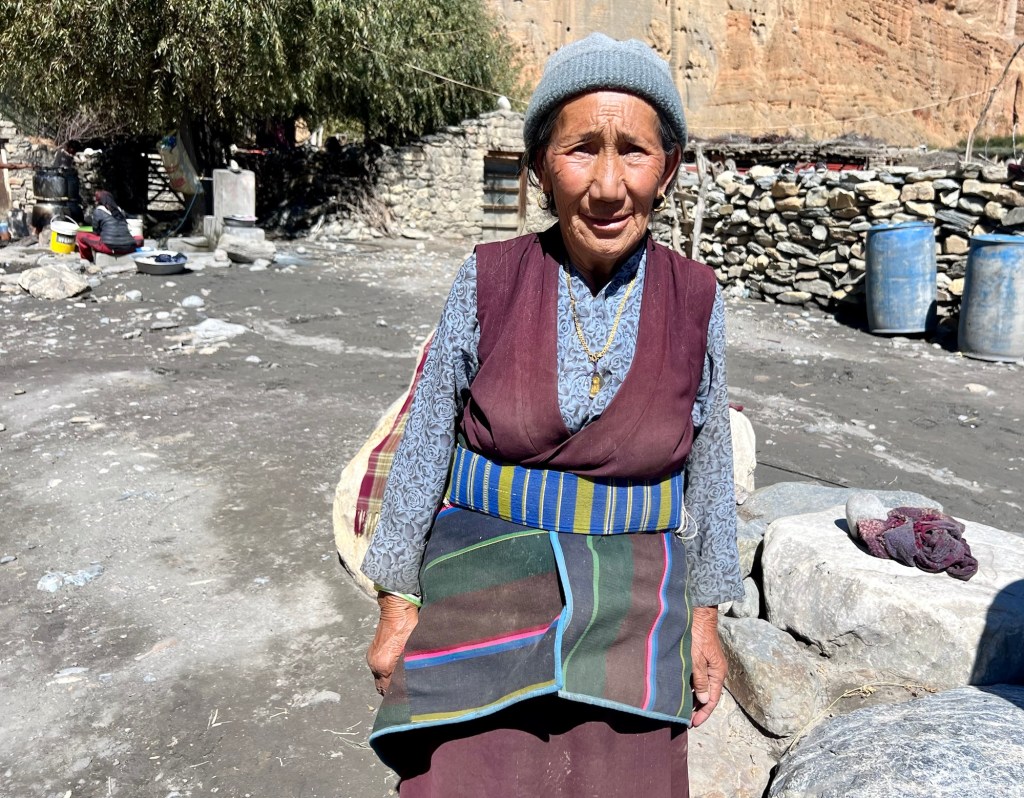
There were six girls with us that day, and each one was either in school or seeking employment in their chosen field. They all had life ambitions, and none of those included getting married at an early age.

For lunch we sat together at a long table on the porch of my guest house. We were a large group, and it took a while for everyone’s food to arrive. Not a fork was raised by those who were served first until everyone had their food; they all waited patiently. Before eating, the girls very quietly bowed their heads and said grace silently to themselves.

A text from Thomas:

“We all loved the physical meeting with you at the round table of Papyrus Guest House with all our beloved children who were so excited to see u for the first time.”

A later text, verbatim:

“Hope you wreached home safely.

The dreams will happen one day. The Lord is our shepherd! Thanks again for your love and support for us. We remain thankful and grateful.”


At Bwindi Impenetrable Forest

What called me back to Africa was learning that my sister had helped obtain a grant to work with the Ugandan NGO “Conservation Through Public Health” (CTPH). The grant is from the National Geographic Society. The project is one that she has planned and tried to implement for years. The process is education and advocacy. The objective is to create and train “Bwindi Youth Guardians.” What the Guardians will guard is the rain forest ecosystem; the culture, health, and welfare of the surrounding villages; the population of indigenous people (Batwa); and the plants and animals of rain forest, especially the gorillas.

Gladys Kalema-Zikusoka and her husband Lawrence Zikusoka live in Buhoma, Uganda, on the edge of a forest that is as dark and dense as anything out of a fairy tale by the Brothers Grimm. Gladys is a veterinarian, trained in Uganda, London, and North Carolina, who became Uganda’s first wildlife vet and a world authority on primates and zoonotic diseases. From humble beginnings, CTPH has grown into a vital and effective organization that employs a unique approach to protect the mountain gorillas and their habitat, the most biodiverse ecosystem in the world. Gladys argues that nothing exists in isolation, especially not endangered species, so if we want to help the gorillas, we need to improve the well-being of the whole community. As remote as the forest is, the gorillas still reside in someone’s backyard, namely the impoverished families who live around the protected areas. Coexistence has become difficult due to competition for food and real estate, resulting in human encroachment into the protected areas, poaching, and the spread of disease. It has been difficult to reconcile the different interests, but Gladys (and Laura) say that common sense solutions exist.

The poaching problem, for example. Gladys explained that there are many reformed poachers in Bwindi and even a Reformed Poacher Association. But if the poachers give up poaching, they still have to eat. They need to be given alternatives so they won’t backslide. Helping the former poachers protects the gorillas.

CTPH acknowledges the interdependence of things and believes the solution is to improve the health of the animals and people together. Gladys says, “When you protect the gorillas, you protect the whole forest.”

The projects that Laura’s Bwindi Youth Guardians will plan and execute have similar holistic approaches to the problem so she and CTPH seem like a good match. She and Gladys found each other six years ago and Laura has been planning and preparing this project ever since. Laura believes that knowledge is power, so when the local people, especially the youth of Bwindi, are taught about their natural environment they will come to care more deeply about it. When they understand the ways that humans interact with the wild places they will want to promote a healthy and sustainable coexistence. The most powerful forces in the world are invisible, like wind or electricity. Or love. Laura wants the forest to be loved.

Laura led four days of workshops teaching these concepts and practices to large groups of young people and community leaders in two district parishes, one of which was a bumpy, dusty, hour-long drive from Buhoma. She had a strong team of Ugandans from CTPH helping her and spent several days before I arrived teaching them how to, in turn, teach the people who came to the workshops. The long term success of the program is in their hands since Laura won’t always be there.

Ebenezer

Some of the Bwindi Youth Guardian projects include ways to:

Improve hygiene and sanitation. Reduce conflict and disease transmission between gorillas and livestock who wander into the park.

Reduce the need for people to go into the park by creating new ways to earn income and another reliable source of protein in their diet.

Reduce the need to cut trees by introducing other heat sources for cooking.

Protect and sustainably use medicinal plants that grow in the park.

Reduce rubbish in and around the park.

Reduce the use and introduce ways to repurpose plastic bags and water bottles.

Improve overall community awareness of why people benefit when the forest is healthy and when the gorillas and other wildlife are protected.


When Laura asked me if I would like to go to Africa with her at first I said no; I couldn’t just drop everything and go to Africa.

That was fine until we talked some more and what I heard from her was not just a question of whether I wanted to go, but that she needed me to go. That was different. When your little sister says she needs you, you’re supposed to show up.

My only purpose in being there was to help Laura, so I spent the week watching her and doing whatever she needed to be done at the time. I was her Sherpa on this operation. There were mountains of materials and supplies to be loaded, unloaded, sorted and distributed; errands to run; photographs to take so that the whole thing would be documented. I spent an hour tying strings into knots for a group-building activity. Sometimes I would follow Roger’s lead. He understood what was happening better than I did and is one of those essential but quiet heroes who work behind the scenes to make things go smoothly.


About my Sister

Many of the great wisdom traditions teach that true wisdom begins and rests with knowing oneself. If we work at it, we can achieve a measure of self knowledge and come to realize our humanity in the course of a lifetime. To me, Laura exemplifies someone who knows herself. She has learned her true talents and gifts, knows where her inspiration and joy comes from, and what, to her, gives life meaning.

It can take a long time to find yourself. Nobody can do it for you and you have to go through some stuff. Laura is more fully herself now than in 1991. That is when she first went to Rwanda and her story with the gorillas began. A lot has happened since then. She has done the work, inside and out, and this is where her journey of self discovery has led.

At some point in our lives—usually when we are young—we have a dream. We might create an image in our mind of a dream house, career, or relationship—something like that—and for some of us, our dream comes true. For others, if it doesn’t happen right away, the dream begins to fade, and we allow our pure or useful enthusiasms to dim. Laura’s dream didn’t happen right away, but it never dimmed. Her dream was to teach African children to love and protect their home. Only with persistence, persuasion, and a lot of perseverance did it finally become real. I loved watching her pour everything she had into that noble purpose. If only the rest of us could redirect our dream away from ourselves and towards something as worthy.

Laura is perfectly equipped for this kind of work. In Africa (like everywhere, really) things never go as planned, so Laura’s remarkable capacity for flexibility and seemingly limitless reserves of resourcefulness were always in play. She never stopped moving. I think I have a lot of energy, but she wore me out. She also draws on some mysterious wellspring of optimism that I wish we could bottle and pass around. Laura could find the sunny side of a shadow.

I have known these things about Laura for a long time, but to see her in action was something wonderful. My sister is awesome. She is an African rock star. From now on, whatever else I accomplish in life, I want to be known as Laura Sanders Arndt’s brother.


A few of the team from CTPH:

Kanie Kaniwabo Elizabeth

Richard Bagyenyi

Gracious Twebaze

Morris Ndiefi

Ebenezer Paul

Ezera Mugyenyi

Jessica Abenakyo

Sharon Akampurira

Human Entanglement.January 2023.Dispatch.1

I had a friend in Africa.

Words and stories are like maps— ways of finding our way back to ourselves. Songs are useless if we don’t sing them and stories don’t mean a thing unless we have someone to tell them to.

This dispatch is a story. As it is being published, I am traveling back to Africa. My story, from half a lifetime away, will tell why.

One of my African friends was Louis, a thin man who drove me around the eastern borderlands of Zaire, Africa in the 1990s. He and I didn’t share a language, but we didn’t need words to communicate. He was as much a part of my personal landscape as the roads themselves, the shoreline of Lake Kivu, or the looming volcanoes that were always in our peripheral vision.

I had other friends: Doctor Wembo; Joseph, an elder in the local church; Blaise, an architect whose ambition was to construct a church building and orphanage; and Joe Templeton, an American missionary.

And there was Banywesize “Thomas” Maheshe. Sometimes a person can happen to you. Thomas happened to me.

Thomas in the middle

The movie Grand Canyon explores some interesting themes and one of them is serendipity. The plot line includes several brief, seemingly chance, encounters that change everything for the characters. In one scene, Claire says to her husband, Mack, “Something has happened. You can’t go back and have it not happen. Some kind of connection has been made. It has to be played out.”

This dispatch is about that type of connection—how people get entangled with each other.


East Africa 1994-1996

Rwanda is a small country in Eastern Africa where the physical beauty of the landscape belies the turbulent history of its people. It has been called the “Switzerland of Africa” and is known by Rwandans as the “Land of a Thousand Hills.”

A thousand, at least. Verdant, undulating hillsides appear as green waves, one upon another, like an emerald ocean, their slopes swathed in terraces carved by hand into the fertile soil and draped with lush coffee and tea plantations. The valleys are cut by the rushing torrents that arise from the rainforests of higher elevations. Volcanos flank the country’s western perimeter as part of the Ruwenzori Range, the fabled “Mountains of the Moon.” That’s where the mountain gorillas live.

Most of the population survives on subsistence agriculture, so the Rwandan landscape is speckled with small farms where families live in thatched or mud-brick, chimniless shambas, with smoke from charcoal fires seeping out though the walls and roof. It’s easy to see why a constant dry cough is so prevalent— a person living in those quarters might as well be smoking a cigarette with a paper bag over his head. The shambas are connected by a lattice of footpaths, trod by women dressed in traditional garments consisting of wrap-around skirts made from cloth in iridescent colors. Viewed from across the valley, they create the effect of a terrestrial tableau of prisms refracting the sunlight— like little rainbows coursing through the green foliage.

My first visit to Rwanda was in 1992. My sister Laura and her husband Roger were there working with an organization that was continuing the work of Diane Fossey, the naturalist who was selected by the anthropologist Louis Leaky to do for mountain gorillas what Jane Goodall had done for chimpanzees. On that earlier visit, I saw gorillas and met some Rwandan people, and it left an indelible mark.

Two years later, in 1994, I watched the news reports of the genocide in Rwanda and was reawakened to the land and its people. I wanted to go back and help in some way but had no clear idea of how. As it turned out, through a series of circumstances, I found myself in the first wave of missionaries sent to East Africa to deal with the humanitarian crisis that was unfolding.

Historians and social scientists say there is no significant biological or historical distinction between the tribes of Rwanda. Unfortunately, humans are all too adept at drawing a distinction between themselves and others even when there is none—a trait that Sigmund Freud called the “narcissism of small differences.” So it seems with current events in this country, and it has long been true of the Hutus and the Tutsis in Rwanda. Perceived differences between those groups of people have been exploited and exaggerated by previous ruling governments and have remained ingrained in the collective consciousness long after the end of colonialism. The Hutu refugees around Goma had been the majority group in Rwanda, but they had been replaced by Tutsis, who previously had themselves been exiled across the northern border with Uganda. The history of it was very cyclical and tragic.

The Rwandan genocide was followed by a massive influx of refugees into neighboring countries. The rest of the world watched from the sidelines until relief organizations eventually went into eastern Zaire, where much of the population of Rwanda fled as their country’s civil war raged behind them. Many of the relief organizations sent missionaries to Goma, where most of the refugee exodus was concentrated.

Goma-town is nestled on the shore of Lake Kivu, one of the bodies of water created when the tectonic shifts of the Horn of Africa formed the Great Rift Valley. It was a beautiful setting, but no longer was Goma a resort destination.

We had to look past the crumbling hotels and shuttered storefronts to imagine better days, when there were tourists strolling the sidewalks rather than bands of teenagers brandishing hand-me-down assault rifles. Goma had gone from what was once a tropical resort to something more like a crime scene—from Bora Bora to Tora Bora. The roving gangs were “soldiers” only by way of being heavily armed, not because of any training or discipline; it was best to avoid encounters with them. It was like an African version of the Wild West, without the black and white cowboy hats or anyone assigned to keep the peace.

Downtown Goma

I happened to phone the United Methodist Board of Global Ministries on the day that they began to assemble a team, and before I knew it, I was thrust into the middle of the relief effort. I had never been a missionary and didn’t know what I was supposed to do when I got there, but when they offered to send me, I didn’t say no. Then the original leader of the mission team (who was an actual missionary) dropped out and they asked me to be the new leader—which only shows they had few other options.

I said yes to that, too.

I had some friends in Missouri who took a leap of faith in me and signed up to go along, so it was our small group that became the first team sent to Goma by the Methodist church. We were tasked with helping to staff a make-shift hospital and orphanage that was caring for children who had been displaced from their families in the flight from Rwanda. The hope was that most of them could eventually be reunited with their loved ones, although some of the children were the only ones in the family left alive. It was a lot for us who had never done anything like that before. With equal parts courage and naïveté, we dealt with it as best we could and tried to make it up as we went along —as if playing a musical instrumented while at the same time constructing it.


That was my first trip to eastern Zaire (now the Democratic Republic of Congo, “DRC”). There were two more. In 1996 I was in Goma for the third time, and conditions had improved only a little. The refugee camps were still there, and when I walked down the muddy footpaths of the sprawling shantytowns on the outskirts of the city, it was among more than a million people sheltered in squalid huts made of plastic tarps, sticks, and grass. The humid air lay over the valley like a wet blanket. The soot from the numberless open fires refused to rise and dissipate, infecting everyone’s mood like a persistent toothache.

It seemed that nobody had gone home, and they all had a story and a reason why not. The refugees themselves were not all created equally; all of them were survivors; many of them were victims of circumstance; and a few of them had participated in the genocide that started it all. There was no way for us to tell the difference, and a United Nations official once warned me to…”never trust a survivor until you know what he has done to survive.”

This time I was living with Joe and Lydia Templeton, two career missionaries with the Methodist Church. Joe and I liked to take morning walks and typically started at first light, the most pleasant and safest time to be out of our walled compound. We passed under the mango tree in our front yard and noticed the aroma of baking bread wafting from a kitchen across the street. The outline of the volcanoes became visible, and the tranquil surface of the lake would shimmer with amber flecks of sunrise. It was the quietest period of day, when the streets were nearly empty and the only people out were a few merchants unloading their wares for market or an occasional “mamma” tending a charcoal fire or sweeping her front doorstep.

Goma was perfectly flat except for a strange promontory right in the center of town. Mount Goma (its actual name) seemed out of place in the natural landscape. It must have been formed by some long-ago geologic event and, over time, had eroded into an ugly mound of volcanic rock that created an obstacle to anyone who traveled across town. If we wanted a good view of the sunrise and a little more exercise, Joe and I would follow the narrow road that led up a steep climb to the summit, where we had a panoramic view of the city and the surrounding countryside.

One morning, while it was still dark, Joe and I started up the dirt path that spiraled around the hill. We were halfway up Mt. Goma when we passed a small military outpost consisting of a few tents, a fire pit, and a cannon— which seemed weird. A cannon? The makeshift uniforms on most of the soldiers were in tatters, so how did they manage artillery?

The troops were still asleep in their tents, so Joe and I passed by silently and trekked to the top to watch the sunrise. By the time we came down, the sun was up and so were the soldiers. They were agitated to see us coming down instead of up the hill and immediately began to question and reproach us like we were a couple of wedding crashers. One guy in camo pants and a dirty t-shirt, rifle in hand, seemed especially perturbed, as if he had apprehended a pair of enemy commandos in their midst.

He pointed his gun and gestured for us to step off the road and into one of the tents. That didn’t seem like a good idea to us, so Joe and I put our arms in the air, showed the soldier our United Nations I.D. name badge, and started backing away.

Having a gun pointed at you quickly brings things into focus. Joe and I were lost in conversation just minutes before, then all my senses became suddenly on high alert. My perception of events unfolded as if everything had first slowed and then happened all at once.

Joe and I were more afraid of what might happen if we did as we were told than if we tried to call the guy’s bluff, so we kept moving away and hoped he wouldn’t shoot us. He really was just a kid, and it was anybody’s guess who was more nervous—him or us. Like any teenage boy, he could play the tough guy, but we hoped he might think he was in over his his head if he tried to do that with two Americans. We weren’t sure how seriously to take him, but the weapon he was brandishing said pretty seriously.

I asked Joe, “Do you think he’ll shoot us?”

Joe replied, “I don’t think so, do you?”

“I don’t know, probably not, do you?”

He didn’t shoot. Joe and I took a deep breath, turned our back on the gun-toting teen, and walked away. He kept shouting, but the sound of his voice faded as we rounded a bend. When we were out of his sight and range, we started to breathe again and scurried home.

View from Mt Goma on a different morning

I decided to stay in Africa longer than planned because we were making progress on the construction project and every day made a difference. That’s what I told myself at the time, but to be honest, I just wasn’t ready to leave yet. Blaise, the architect, gave me more credit than I deserved when it came to my part in the construction. I didn’t really know what I was doing, and it would all happen (or not happen) with or without me being there, yet still felt a part of things. Extending my stay was not a popular decision, and it involved a lot of explaining to the people who were expecting me to come home on time.

Joe and Lydia went home before I did. Before they left, we talked about my previous visit to Rwanda and my desire to go back. They were against it for several reasons. They argued that there was no reason for me to be there— no useful purpose —and it had nothing to do with my mission to Africa. When we parted, they left me with one last piece of advice—don’t go.

Me, Blaise, Lydia Templeton. Louis in front, in pink cap.

I went anyway. I could see Rwanda when I stood by the lake in Goma and I wanted to return. I had my reasons—it’s just that my reasons didn’t seem like very good ones to anyone else. Mostly, I wanted to see where this part of my story began. The idea came into my head and it never went out again. A whim can be a powerful thing.

The Americans in Goma told me that without a visa I shouldn’t even consider going to Rwanda. It was still technically a war zone and the U. S. had not reestablished diplomatic relations. With no presence there, the church said they couldn’t protect me. The Africans said “no problem,” but they said that about everything. Joe and Lydia were definitely against me going, but they weren’t there anymore.

Thomas

I asked my closest friend, Thomas Maheshe. Thomas was a schoolteacher who worked as a translator and facilitator for the NGOs in the area. I met him the first day I was in Goma in 1994 and he became my constant companion. He thought I could go to Rwanda and even asked to come along.

I took Thomas’s advice with a grain of salt. I trusted him, but he wasn’t someone I would choose to go with me into battle. He was a good soldier in the mold of Radar O’Riley, not Rambo. When he asked if he could come with me, it wasn’t because he was looking for adventure. It was the schoolteacher in him who wanted to purchase school supplies in the market in Gisenyi, the Rwandan town across the border.

Thomas and I walked into the border station and were confronted by three grim officials wearing expressions like professional pallbearers. They took our passports and started asking questions. Why didn’t we speak French? (Thomas did). Why did my passport say I was born in Germany? (It was at a US military base). They seemed determined to find a reason to refuse us entry, and admittedly, they had good reason. We did not have visas for Rwanda; we had no contacts or in-country address; and there was no valid purpose in us going there in the first place. Thomas was doing his best to talk us through but getting nowhere, and it was starting to look like our journey would end before it began. Suddenly and inexplicably, the guards lost all interest in us and the tension dissipated. Before we knew it, we were walking into Rwanda.

We stood on the outskirts of Gisenyi, and it was eerily quiet. As the epicenter of the mass migration of refugees, the whole area appeared plundered, still in shock, as if a place, instead of a person, could have PTSD. The only person in sight was a man who looked beset by strife, like a character out of a Grahme Green novel. He was standing next to a world-weary Suzuki hatchback that, after a brief negotiation, became our taxi for the day.

Virunga Range and Lake Kivu
A pirogue on Lake Kivu

The lush Rwandan landscape was what I remembered. I had returned to the Africa that I yearned to see again— Africa as it was meant to be. This was not the scarred and deforested terrain of Eastern Zaire. In this part of Rwanda, vegetation carpeted the hillsides and extended to Lake Kivu’s shoreline. The rain forest’s green mansions were laced with mist that was truly mist, arising from moisture rather than the smoke of a hundred trash fires. The streets of Gisenyi were clean and calm, not like the confused and aimless tangle of traffic in Goma. The hotels were vacant but could have welcomed tourists if there had been any but Thomas and me. Pedestrians were mostly women and children walking along the roadside, cooking over an open fire or tending their gardens. Absent were the huddled masses of refugees or the marauding gangs of young men riding in the back of pickup trucks.


Departure and Return

“Water has a perfect memory, and is forever trying to get back to where it came from.” Toni Morrison

Departure and return is something that inevitably creates an emotional response in us. Longing is one of the strongest human emotions. Poems are written about leaving home and not being able to find our way back, and the best songs are not about being in love but about love lost. Great music happens when something gets broken. As Mary Oliver wrote in her poem A Dream of Trees, ……”No one makes music of a mild day.”

We sense that the ending of every story is when it returns to the beginning. The great epics of literature tell it that way—the hero leaves home on a quest but longs to return. Some of our favorite songs tell a similar story; Simon and Garfunkel are “Homeward Bound,” and John Denver is “Leavin’ on a Jet Plane.” Even without the lyrics, a song’s melody alone can create a subliminal tension as it starts with a note in its key signature, explores variations on a theme, and then returns to the note that it started with. We sense, subconsciously, that the song will not end until it gets back to the place where it started. We all just long to go home.

I felt drawn back to Rwanda and have been told that, on some level, Africa has that effect on every human. I was in the part of the African continent—the Great Rift Valley—where humankind began. More than once, when I have met a native African in Africa, they have said, “Welcome home!”

Somewhere deep inside all creatures there is an innate connection, a genetic memory, that draws us back. The salmon swim upstream; the swallows go back to Capistrano; and Man returns to Africa.


An African market, this one in Nairobi

We stopped at the Gisenyi central market. While Thomas shopped, I wandered among the stalls. I tried to recede into the shadows and remain inconspicuous, but that was difficult since I didn’t look like anyone else. I didn’t exactly blend in with the crowd, like the time I went to an Indigo Girls concert.

I noticed how few people were out and figured they must all be next door in Zaire. I tried to avoid making eye contact with the numerous Rwandan soldiers who patrolled the market and streets. They looked different than the makeshift militia I was used to in Zaire. They had clean uniforms and guns that looked like they came from somewhere other than a pawn shop.

We left the market and drove into the town center. I had visited Gisenyi from the Rwandan side the first time I was in Africa and I remembered the location of a souvenir shop overlooking Lake Kivu well enough to find it again. When we got there it was closed so we asked around and learned where the owner lived. When we drove there, she was gone. We decided to go look for her until I asked the obvious question of whether any of us knew what she looked like and would recognize her if we saw her. We recruited the shopkeeper’s teenage son to go with us and drove off to find her, but never did.

Our driver reluctantly told us about another shop on the top of the hill above town. That didn’t work out either. Our vehicle was as likely to drive us back to Missouri as to the top of that steep incline in Rwanda. We made it halfway up before the car sputtered and died. Thomas and I got out and walked to the top of the hill where the shop was located but, when we got there, it was closed, too. Nobody answered the door when we knocked but it was open so we went in and looked around before we left to walk back to the car. We jump-started it several times by rolling it backwards down the hill until our disgruntled driver, a man seemingly exhausted by the human condition, used my Swiss Army knife to make enough repairs to get us back to town.

“No hurry in Africa” is what they say and, like most everything else, we arrived late. Crossing the border was less arduous when leaving Rwanda than it was in coming (nobody really seemed to care who came into Zaire). It helped when a little money changed hands (made me wish I had thought to do that on the way in).

Louis was still standing just where we left him. He was a thin man—like a stick drawing of a person-and wore the oversized t-shirt with a Memorial Community Hospital logo that I had given him. A small man with a big heart, Louis could have passed for the brother of Sammy Davis Jr.. He was worried, and wore an expression of a parent waiting up late for his teenager to return home from a night out. Louis never took his eyes off me, as if the power of his gaze could draw me back to him.

Louis is kneeling in front, wearing cap

A few other church members waited with Louis, and we all drove back to the guest house together. I watched some women taking an English lesson until their class broke up and they started to cook beans and rice for supper. One of the women’s first name was Perseverence.

Some of the “mammas” praying

After we ate I rode with Thomas and Blaise, the architect, in a pickup truck with the women riding in the back. We took them home, then the three of us stopped by the church construction site. Blaise wanted me to see what they had accomplished on the day that I was away. Many bricks had been laid and the walls were noticeably higher. Lake Kivu stretched out before us and Mt Nyiragongo loomed above, steam rising from its smoldering caldron as an ominous threat that it might explode at any time (two years later it did erupt for real). A volcanic eruption was all they needed in Goma- lava on top of everything else that had been heaped on that sorry city.

And yet, volcanic eruptions were taken in stride, like thunderstorms in the American Midwest. Blaise and I were sitting on volcanic ash that was commonplace in Goma. It was the “topsoil” that was mixed by the masons into mortar that, when packed between bricks, dried harder than woodpecker lips.

We looked out at the water as the sun set over Lake Kivu, one of the pearls in the necklace of “great lakes” that lie along the cleft in the continent of Africa. Tangential sunbeams shimmered on the windswept surface of the water, creating more twinkles than a Christmas tree. For some reason that is the image I remember most vividly. There were so many sparkles that we could have been characters in a fairy tale instead of a true-life human dystopia.

The sun descended and the day folded over itself. The shades of night closed in, and a soft breeze caressed my sunburned face. The sound the wind made as it sifted though the leaves was as soothing as someone singing a French lullaby. Silence enveloped us and we savored it together. After awhile Blaise spoke softly, almost a whisper, and said, “You are my savior!”

That is what he said, but I knew it wasn’t true, I was not his savior. I had been away too long. It was time for me to go home. I told Blaise that I would miss him and he replied, “Can you stay another week?”

Many people told me it might not be safe to go to Rwanda. My friends could see that, despite my reservations, I was determined to go. Joseph, who wrote my name Njef (the beginning “N” is silent in Swahili) said, “Njef, don’t you know? We are watching you and won’t let anything bad happen to you.”

I thought that I was supposed to be helping them. In their minds, however, they were watching over me.

Joseph(of the local church), Thomas, Blaise

Outwardly, I had little in common with my African friends, and I have lost contact with all of them except Thomas. Yet, even now, so many years later, they seem close; they still feel like friends.

I am on my way to meet my sister in the mountains of Uganda, the same range and just north of the Rwandan mountains where I was before. Laura is an educator, and her specialty is teaching teachers. She will be working with children in the rural western part of the country, and she recruited my brother-in-law and me to help her.

I am going to Africa for Laura—and also for myself. Thomas Maheshe left Goma with his family years ago —they are the refugees now—and they live in a settlement outside Kampala, the capital of Uganda. My plan is to find him.

Thomas and family, 1996

Sometimes a person happens to you, and Thomas happened to me. We have managed to communicate over the past twenty-five years, and when I sent him an email to tell him I was coming to Uganda he wrote back, “…it will be a joyous day when I see you again after so long.”

Yes it will.

My most recent photo of Thomas

For The Time Beings. Dispatch. Autumn 2022


“Time is but the stream I go a-fishing in.”

Henry David Thoreau


Nebraska: Late Winter, 2022

“You know you’re getting old when you start bird-watching.” That’s what Caroline said as we huddled in the cold on the banks of the Platte River in central Nebraska. Sandhill cranes spend the winter in Mexico, and their summer breeding grounds are in Canada. Their migration flight pattern forms an hourglass over a map of the U.S. with the narrow isthmus directly over Kearney, where the birds pause to rest and refuel on their journey north in the spring. At night the cranes roost in the braided waters of the river where they are safe from predators, and during the day they fly to the surrounding fields to feast on grain left over from fall harvest.

The Sandhill Crane migration brings people from all over to watch the spectacular takeoffs and landings that happen on the river every sunrise and sunset. Eighty percent of the world population funnels through central Nebraska, so it’s a lot of birds in one place.

It was an evening in late winter on the Great Plains, cold and clear, as if the air had been polished. There was a bottle of wine and some binoculars in my backpack. We wanted to stay warm and figured a beverage might help. Another group of people brought shots of whiskey to stave off the cold.

There was a general air of anticipation as we waited. Some people chatted, while others made ready their cameras, some with lenses the size of tree trunks. The late winter sun, along with the temperature, slowly descended and when it touched the western edge of the earth, we all went quiet. It was like the moment before a church service or concert begins, when somebody backstage dims the lights and silence comes over the audience.

Like any good performance, it started softly and gradually built up to a crescendo. We knew the cranes were coming when we heard their distant squawking, as faint as your breath on a cold day. The sounds grew louder until the first line of birds appeared above the horizon. Soon there were hundreds, thousands, maybe hundreds of thousand, of birds, waves upon waves of them, like when the ocean approaches the shore.

Caroline was partly right about the demographics. Most of the people were our age, but not everyone. I spotted a brooding teenager with orange hair, wearing black clothes and a black attitude. I felt bad for her and could imagine what else she would rather being doing on a Friday night instead of spending it bird-watching with her parents.

When we are young, it’s all about building up and creating. We are busy learning and growing and don’t have as much time to notice and savor—skills we cultivate as we mature. But nature is a great equalizer, and when I saw that family later as the cranes receded into the darkness, I noticed that the daughter looked as transfixed as the rest of us, gazing at the sky with a half smile on her face and wonderment in her eyes.

We walked back to our cars in silence as the evening star led the way and a rising full moon reflected over the surface of the Platte.


Time and the River

I have been thinking about time. I wonder what it is like to be a Sandhill Crane and wedded to the timing of the seasons, swayed by the rhythm of the earth. As I observe the turning of my personal seasons, the rhythms of my own lifecycle become clearer.

Humans, like all creatures, are “time” beings. Time is a river that we are dropped into, and it sweeps us downstream whether we paddle with or against the current.

I am of two minds about my place on a river of time; it flows so much swifter than the meandering Platte. I know I should move with time’s current, but sometimes I don’t. I want to keep up, but am amazed at the amount of popular culture that is common knowledge to other people, yet I know nothing about. I resist being bullied by society into spending a lot of time on social media, yet don’t want to miss out or feel left behind.

There is a story about Yvon Chouinard, the founder of the outdoor apparel company Patagonia. He once said that most of his friends were now emailing each other and he was being “excluded.” To the suggestion that he learn to email he replied, “It’s too late.”

I don’t want it to be too late for me, so I recently decided that I should learn some new music and stop listening to the familiar favorites from my past. However, in another unfortunate instance of me overthinking something, I went so far as to almost sell our tickets to see Elton John in concert, telling myself that if I am going to a concert, the artist should at least be younger than me. Canceling on the concert would have been taking it too far (and a monumental mistake), but I did ask my children and grandchildren to help me connect with newer artists. They have tried, but I always drift back to the upstream music, the singers and melodies from my youth. Going back to them can feel like going home.


Time and Entropy

We are creatures of time while not really knowing what time is. We think we know, until we are asked to explain it. Time is as hard for physicists to define as life is for biologists. Many have tried without coming up with an entirely satisfying explanation. Aristotle thought time is simply a measure of change, while Isaac Newton said it is something more fundamental than that. Saint Augustine said this, “What is time then? If nobody asks me, I know; but if I were desirous to explain it…plainly I do not know.”

The nature of time (along with the nature of consciousness) is one of our most enduring mysteries. What is hard about it is that time is not an actual thing. There is really no such thing as wasting or saving time, it doesn’t fly and we don’t actually run out of it. When we try to examine it—to look closely at time—it melts away, like trying to hold a snowflake.

Time, for those who have tried to define it, seems to be intimately involved with entropy. Entropy—being the progression from order to disorder, structure to dissolution—is when the waves erode and reshape a beach or the house paint fades and cracks with the seasons. In the movie Out of Africa, Karin speaks of the difficulty in cultivating a coffee plantation in the African bush. She says, “Every time I turn my back, it wants to go wild.” She is describing entropy. Entropy is the shape shifting of a towering cumulous cloud on a summer afternoon. It appears static, but, when we look away for a few seconds and then back again, it has changed form; its entropy has increased slightly and in proportion to the amount of time that has passed.

Entropy is a quantifiable and measurable quantity that can increase or stay the same but never decrease, so it seems to contain the directionality that we associate with time. Yet in the flow of time, what, exactly, is flowing? That’s a good question, but we do know that every time there’s a difference between the past and future, entropy is involved.


Time and Memory

We also can’t think about time without thinking what it’s like to be concretely human, to be one’s self. No concept lies nearer to the core of our consciousness than our awareness of the passage of time, and we are marked by the imprinted memories that become a part of who we are. They make us feel connected to a certain time and place, so that, fifty years later, the lyrics to “our” songs arise from out of the basement of our subconscious.

Our minds are not tape recorders, so the firmness of the past is an illusion, and our memories a kaleidoscope pattern of images rather than one that is fixed. The world of our shifting past is like shapes in clouds, and our memories become a river without banks (like the Platte, come to think of it ), where everything is moving, drifting, and mixing together. As we accumulate memories, our brains winnow through them, weighing consequence, burying pain, and holding contentment.

Why is the future different than the past? We fully expect it to be. What has been called the arrow of time seems to point in only one direction. If time moved in any other direction, it would be hard to make sense of it, and a world that didn’t change at all would be exceedingly boring. The physicist Alan Lightman points out that, “…without the ability to imagine the future …each parting of friends is a death….each loneliness is final…each laugh is the last laugh….and people (would) cling to the present as if hanging from a cliff.”


Time and the Journey

What youth has going for it is energy and possibility. We will never be more resilient than when we are young — so small that falling down doesn’t even hurt that much. Even though I don’t want to go back, I remember the thrill of youth and the idea that you can be anyone.

As we age our bodies encounter our own version of entropy, and we exchange the vigor and potentiality of youth for hard-fought wisdom. As it turns out, wisdom and good judgment come from experience, while experience often comes from poor judgment. Some of my elderly patients who are farmers know that all too well; not all of them have ten fingers. The best we can do is learn from our mistakes and try to get better. Hopefully, we find that success isn’t something you can measure, and life isn’t a race you can win.

Life does nothing if not humble us. As we age we realize how much energy we have wasted on nonsense. I look around and see that I have acquired all this “stuff” without knowing how many things there are in the world that I don’t need. I’ve also seen the fallacy of giving too much weight to what other people think of me. It’s like how Winston Churchill put it, “When you are twenty, you care about what everyone thinks about you. When you are forty, you stop caring what others think about you. When you are sixty, you realize they were never thinking of you in the first place.” He was not only stating a truth but also warning us that it takes a long time to learn it.

In a “On Being” podcast, the Irish poet David Whyte said that one of the gifts of getting older is a form of youthfulness that has nothing to do with the body. It involves a sense of discovery which is tied to an awareness and acceptance of our mortality. He also said that a sign of maturity is not that we know we are going to die—that happens in your 40s—but the realization that the rest of creation might be just fine when we do, even “a little relieved to see us go.” He put it this way, “We have to make way for something else, for what, or who, we have broken trail for.”

The world will keep turning without me, and fear of death is like being afraid of reality itself, like being afraid of the sun. Before we know it, all of this will be “20 years ago,” so it is best to not put things off too long. “Someday” can be a dangerous word.

At this point I’m just happy that I can dance at all, whether anyone is watching or not. I read that Frederick the Great of Prussia, at the height of his power and influence, took lessons and learned how to play the flute. My first thought was how much better the world might be if all political and military leaders were required to play the flute. I also thought about how wise it was that Frederick wanted to play the flute at all, and that he didn’t put it off until he was finished doing all the things that made him so great.

Life is like eating an avocado; it’s all in the timing. Sometimes things happen exactly when they need to; they lodge in our memory and steer our trajectory. Some things are valuable only because of their position in time: a birth in the family, a first kiss, a love late in life. For other things, their transient nature is one of the things we value: breathing in the air on a cold winter evening, a lover’s smile or a child’s laugh, the taste of fine wine or a special dessert. If they lasted forever, we would not appreciate them as much as we do.

I don’t want to last forever, either. To me, immortality would lead to indifference, and even eternal bliss seems overrated. That my days are numbered is the cost of making them count. That there is no turning back in time is what makes my life precious.


Wintering

Nothing is as responsible for the “good old days” as a bad memory. Still, our memories are enduring artifacts of the past, and we draw on our memory of events, experiences, and emotions in order to imagine and anticipate future events.

We don’t have memories of the future, so time certainly appears to us to be linear. Katherine May, in her book, Wintering, suggests that we can reset our very notion of time. She writes that we can try to look at time as something that is not only linear, but also circular, bending back on itself, like the seasons of the year do. When things look cold and dark, we don’t have to think it is the way our life has turned out—it’s just winter. We all know from experience that although winter can be bleak, it’s not going to last forever.

May writes, “We tend to imagine that our lives are linear, but they are in fact cyclical…we grow gradually older, but while doing so, we pass through phases of good health and bad, of optimism and deep doubt, of freedom and constraint. There are times when everything seems easy, and times when it seems impossibly hard. To make that manageable, we just have to remember that our present will one day become our past and our future will be our present. We know that because it’s happened before. The things we put behind us will often come around again. The things that trouble us now will one day be past history. Every time we endure the cycle, we ratchet up a notch. We learn from the last time around, and we do a few things better this time, we develop tricks of the mind to see us through. This is how progress is made.”

Adam Sanders photo

Many things we consider essential in youth prove with time that they are not. The thing that an old person might tell a young one about the fears and fractures of life is that life teaches us through our mistakes. All things change and life goes on. It goes on until it doesn’t. And then, when it doesn’t, it is another way of coming home. After all, the sea refuses no river.

To See or Not To See…Dispatch.Spring.2022


Africa, 1992

Rosamond Carr was a young fashion illustrator in New York City in the 1940s when she followed her husband to Africa and began what she later said was “a love affair between a woman and a country.” At that time, the country was known as the Belgian Congo. Now it is Rwanda.

The marriage did not last, but what did endure was her determination to stay on and live in the African bush as the manger of a flower plantation. From her home at the foot of Mt Karisimbi, she witnessed half a century of tumultuous events in a deeply troubled country, including the wars for independence, the relentless clashes between the Hutus and Tutsis, and the horrific 1994 genocide.

She also saw some of the best and most beautiful parts of Africa. The mountains of Rwanda, known as the “Land of a Thousand Hills,” are green and lush; the ranges are cloaked with dense rainforests; and deep valleys are cut by the watershed of the Nyaborongo River, the true source of the Nile. Rwanda could be Switzerland if that country was encased in a giant greenhouse.


Virunga Range
Lake Kivu

Roz was a friend of Diane Fossey, the researcher who was hand picked by the paleontologist Louis Leaky to study mountain gorillas in the forests of the Virunga Mountains. Diane would come down from her research station to stay with Roz at the farm, and I have wondered what they talked about as they strolled among the flowers. Diane was young and passionate about protecting the gorillas and their habitat, but she suffered from various physical ailments and struggled with emotional instability. Roz was the more stable one; her passion was more in the mold of Jane GoodalI, and I think Diane must have been drawn to that. Roz befriended Diane when few others did, and Diane sought her out when she felt troubled and lonely.


Laura and Roger Arndt

I met Rosamond Car myself. In 1992 I visited her farm near Gisenyi, a town near the shore of Lake Kivu, one of Africa’s Great Lakes in the continent’s Rift Valley. I was there with my sister and brother-in-law who were working in the schools and helping with conservation efforts related to the mountain gorillas. We were living in the village of Ruengheri, which on a map appeared close to Gisenyi but really was not when conditions on the ground were factored in. The roads in Rwanda were trafficked by more people on foot than in motor vehicles, so when we drove to the farm it was slow going. The narrow roadways undulated over emerald hills and into valleys where we fell in line behind processions of pedestrians. There were women dressed in bright iridescent, fabrics, balancing loads of fruit or sugar cane on their heads; barefoot youths pushing carts or bicycles laden with market produce; and old men herding a cow or some goats. On one stretch we were delayed by a Tepoi, or African “ambulance,” which is a stretcher hoisted on the shoulders of four men and used to carry someone to or from the hospital.

The farm itself was so idyllic it might have emerged from central casting for a movie set in the Garden of Eden. The cash crop was flowers that Roz sold to hotels and shops in Kigali, the capital city. There were acres of blossoms in every direction. We strolled the grounds, took pictures of the flowers, watched children kicking a hand-made soccer ball, and chatted with local people as they gathered to watch the dancing that took place there every week.

When the dancing was over, we had tea in the parlor of Roz’s house, where I was intrigued by her bookshelf. She had many classic novels, histories, and field guides. There was one title I didn’t know but thought was entirely appropriate—I Married Adventure, by Osa Johnson.

Roz Carr was a force. In the movie Gorillas in the Mist she was portrayed by the actress Julie Harris. Rogas, our driver and interpreter, had met her before and told us that everyone who knew her was impressed. He said that with women like her, it was easy to see why the U.S. always wins at war (at the time, we did win at wars).

Rosamond Carr


There is something about Africa. Earnest Hemingway said it was where he went to “…work the fat off my soul.” Human beings feel the continent’s tug of origin and return in the same way the salmon do when they swim upstream or the swallows when they fly back to Capistrano. The immensity of Africa can swallow you whole but it’s more often the human connections that affect us most.

I think that was true for Roz Carr, and it was for me, too. Some of the friendships I have made in Africa endure to this day. On that trip, I watched a troop of mountain gorillas lounging in a nest of nettles and witnessed steam rising from an active volcano, but what really stays with me is the memory of hordes of children standing in the rain, waving at us as we drove away from their school. At the farm, I noticed one little boy as he watched the dancers. I don’t know what it was about him that drew me in but something did, perhaps his ears or a facial expression that begged the question of what he might be thinking. I was taking pictures of the dancers, the flowers, and the other children when my camera lens lighted on him and I didn’t want to move it away.

We vowed to leave Roz’s farm in time to get off the road by dark, but it was late before we could pull ourselves away, and it didn’t work out the way we had planned. We might have just made it but for another roadblock that brought traffic on the main road to a standstill, prompting us to take a detour over backroads that were even more remote and rugged. As the sun went down, we saw the flicker of cook fires in the doorways of the thatched-roof shambas and a few lights in the distance that indicated an approaching village in the valley below.

The sights and sounds of the Rwandan countryside during the day were innocent enough, but at night it was a whole different story. What we heard at night included gunfire and hand grenades exploding. The country was in a lull between what seemed like a perpetual civil war, so a drive to anywhere was interrupted by military roadblocks every few miles. During the day, the roadblocks were a nuisance. At night they could be outright scary, manned by teenage militia with machine guns, who were often drunk on banana beer. The detour did not go well. As night fell the road conditions worsened until we were barely creeping along. Our forward progress slowed to a crawl and then stopped completely on the outskirts of a small village.

Did you ever have the feeling that you were somewhere that you just did not belong? Most of the villagers we met on our travels were friendly enough, but this time our vehicle was surrounded by a mob of young men who did not seem happy to see us. Who knows what they were really thinking, and I’m sure that we were in less danger than it seemed at the time, but it was pretty intimidating, nonetheless. Rogas got out and somehow talked our way through, and eventually we made it home safely.

It was all a harbinger of what was soon to come. We were unaware of the current of unrest flowing though the countryside. Little did we know that the the smoldering conflict between Hutu and Tutsis was soon to erupt into an all out war culminating in one of history’s worst genocides.


The contrast between the dire situation we thought we were in on the drive home compared to the one earlier at the farm—so bright and hopeful—was jarring.

It’s that way sometimes. The things of the world are interlocked, braided together such that nothing is ever just one way or another. We are living in a patchwork of the good irreversibly intertwined with the bad.

Take the pandemic. It happened— which is bad, of course—but most people can come up with a few blessings in disguise that came with it. For me, when I travelled less, I spent more time walking in nature close to home and rediscovered bike riding on the Katy Trail.

Me with COVID
With COVID, leaving for bike ride on Katy
Grandchildren in nature

Many people have had times in this pandemic when they have found inspiration and hope, if they managed to look at it a certain way. The first days of the lockdown were a weird, uncharted time with an air of impending doom draped over everything. I remember driving downtown one Saturday night to pick up some takeout for dinner. A line of cars crept along High Street at Christmas-parade pace, and sacks of food were being delivered from the restaurants to customers sitting behind the half-open windows of their vehicles. We were all trying to figure out what was going on and stay safe even though the ever evolving CDC guidelines had us scratching our heads— we might as well have been trying to interpret the lyrics to “American Pie.” Yet, in the midst of all the fear, angst, and confusion it was a strangely festive occasion. Everyone was in a good mood and more courteous than usual. I have rarely seen a stronger display of common cause and community.


Darkness and light. Awe and despair. Life and death. They are always part of the same story; never one without the other.

The civil war in Rwanda erupted after we left and a few years later, in its aftermath, I returned to Africa as part of a relief effort for the many Rwandan refugees who had fled across the border into Eastern Zaire. I have a photograph from then. Actually, it’s two photos I took from the same vantage. One of them looks down on a sprawling refugee camp where hundreds of thousands of people huddled in small huts made from sticks and the blue tarps provided by the United Nations relief agencies. The other photo is of the view up the hill from where I was standing, where someone had erected a giant cross. It was a stark juxtaposition of the sacred and the profane, the cross serving as a beacon of hope across the desolation in the valley below.

Even a small kernel of light can change everything, the way a single candle can change a darkened room.


All the Light We Do Not See

The story goes that in 1869, when Charles Darwin was trying to get his new book published, the editor of the respected journal Quarterly Review was sent an advanced copy of The Origin of Species. He thought it was good but that its subject matter was too narrow to attract a wide audience. Instead, he urged Darwin to write a book about pigeons. “Everyone is interested in pigeons,” he observed helpfully. I’m sure he meant well but as it turns out, that was bad advice.

There is another story of when Joseph II, the Austrian emperor, first listened to to the music of Mozart. He was not impressed. His only remark was, “That was an enormous number of notes.”

I think the editor and the emperor were both missing something. Everyone does. Clueless is the default position for most people and we all see like through a glass, darkly. For example, Mozart spent his whole life trying to get a job that paid a living wage, and Van Gogh sold only one painting while he was alive. Nobody saw the greatness that was there.


What is true and real eludes us— like if we would try to catch the wind or reach the end of a rainbow. And appearances can be deceiving. We see the evening star as the brightest object on a moonless night, and we wake up to the morning star on the opposite horizon. Yet the evening and morning star are actually the same thing. Both are the planet Venus.

What seems obvious at one moment can turn out to be completely wrong the next, even in the most mundane situations. Once while in the public library in Iowa City, Iowa, I went into the restroom and wondered why there were no urinals. I was perplexed, but it didn’t stop me. I figured it must be how they did things in Iowa. I did my business, and as I left a mom and her two young daughters passed me as they walked in. I was in the women’s restroom the whole time.

I can be one of the worst at paying attention and noticing things. I miss a lot—too much, really. I don’t always get what is really going on with people. It’s the same as when I’m watching an episode of Survivor, where I never quite understand what any of the contestants are really thinking and doing.

Those who know me would say that I can be distracted and absent minded. They could provide examples, but I didn’t ask them to. A charitable description would be “absent minded professor,” but there are others less charitable. It has been a problem for me. I come off as aloof and uninterested, when mostly it’s me being oblivious.

It’s funny how the words we say never seem to live up to the ones inside our head, and the things considered essential in our youth prove with time that they are not. As a result of my cluelessness, I have made mistakes, and I have accumulated my share of regrets. I am sometimes amazed at how wrong I have been about some things. At least I know that now. Besides an apology, all I have to offer in reparation is my self-awareness.

A full life comes paired with apologies, and having begun to suffer the small humiliations that come with age, I have seen that mistakes need not be fatal; and I know that if we have no regrets it just means we haven’t learned anything. I figure my brain has already made most of the neurologic connections it is ever going to make, but I would like to keep evolving enough that my future will amount to more than just my past with less hair.


Blue Moments

“Vision is the art of seeing what is invisible to others.” Jonathan Swift

We are born. We grow up. We try our best. We die. As the basic framework, it’s that simple, really. We can only understand life backwards, but we have to live it forwards, and understanding can only take us so far. Still, in the time we have, there are moments of beauty and grace, the rare moments that seem to transcend our daily affairs.

A commencement speaker once told the graduates in his audience something that, at first, sounded backwards. He said, “Some of your worst days lie ahead.” That was not a very uplifting sentiment for the occasion, but for those young adults just starting out, it was a true statement. That being said, he went on to point out that it is hard to tell the worst days from the best or the ones that, in retrospect, were the most important.

How do we know which days are the best days? What makes them so? Brian Greene, a theoretical physicist, writes that we all have our list of life experiences where we felt something shift in the way that we see the world. At those moments our world expands, and we are pointed to a more genuine reality that we have lost sight of but that sends us hints that it exists. Greene offers the example of a great work of art, particularly music, as something that can burrow into the core of our life, and the world‘s life, and connect us to something deeper. What do people do art for, anyway, but to locate within themselves the essential thing that breathes significance into existence and then to share it?


The wonderful purity of nature also offers ample reminders of that hidden, but more genuine, reality. I go snorkeling in the ocean and find a beautiful complexity below the water’s surface. I see a leafless tree in winter and think nothing of it, but then return in summer to find it covered in apples and think, “Huh, you were a fruit tree all along.” In the natural world, what Aldo Leopold called the “vast pulsating harmony” is hiding in plain sight; we need only to go outside and get quiet. I don’t think there has ever been a boring sunset, and no star wears a veil.

These moments of clarity are experienced privately and are felt deeply, filling us with wonder and gratitude. There are no adequate words to describe them. How would we explain the experience of falling in love, hoping when all seems hopeless, hugging a friend after an absence, grieving a loss, being overwhelmed by nature, the way it feels to hold a new grandchild, the ache of loneliness or lament, or what it’s like to go deeply inside a prayer or meditation. Such experiences happen to us in the very basement of our consciousness.

The author Kent Nerburn, in a letter to his son, calls these experiences a “blue moment,” a moment “when you are truly alive to the world around you.” They are the unexpected moments of grace that come unannounced. They don’t happen if we seek them, and not all blue moments are reserved for starry nights aboard ship—some might happen at the most ordinary times. We must only notice them and not try to force or create them. If we abandon expectations, they will come on their own volition and reside in our memory. If we seize and hold them, they string together like the pearls of our life.


Back to that little boy at Roz Carr’s farm—I saw him again.

It was when I was in Goma a few years later, after the war, and that time on the Zaire side of the border with Rwanda. He was a refugee, one of multitudes, and I saw him walking through a market. There was the same face from a few years earlier except he was older— a teenager. He was dressed similarly in a tan school uniform which he had outgrown. I was sure it was he, his face imprinted in the back of my mind as it was. I smiled at him, and we met each other’s gaze for an instant, but we did not share a language, and he would not have recognized me; so we both just kept walking.

I did not tell anyone about it, and I haven’t since then —until now. Yet, somehow it has remained one of my most vivid memories. It just seemed so unlikely that the two of us, coming from such different starting points, would find each other the way we did—twice.

The farm in Rwanda was an idyllic setting; Goma was not— just the opposite, actually. That part of Africa, at that moment in history, was one of the most wretched and frightening places on the planet. It’s a thin line between the sordid and the sublime, and that little boy and I were together on both sides of it. It was a scene out of the core of my life story, and helped me to realize that I am a part of something greater than myself. For me, it was a blue moment.

Think of things you have seen and tried to understand but never did. It might be that some things are beyond understanding. Some things of the world are like a soprano—we can’t not hear them. Other things are more like the rhythm section—not what we were listening to and thinking about, but what we were dancing to all along. I heard an art teacher suggest that to paint water it helps to be in a different state of consciousness; consider having a cocktail before pulling out the brushes. He said that to paint water, don’t actually paint the water. To see water, don’t see it; see past it. Maybe it’s like that—watching for the blue moments.

When I spent time in the desert a few years ago, I was taught that thinking is only one of the ways of knowing. There are other ways. I want to see and hear with the eyes and ears of my heart, not just my brain. I want to slow down and not allow the frantic concerns of life to make me miss out on my blue moments.

The world is not a bed of roses, but neither is it a field of thistles. Both terrible and beautiful things are going to happen. I could easily have missed that boy in the market in Africa, but for once I had the clarity to see with my heart and caught a glimpse of something beyond good or bad, something wonderfully inexplicable.

We live in troubled times, and I know many people are more troubled than I am. I know the silver linings are few and far between. How does noticing the blue moments or silver linings help the people in Ukraine?

It doesn’t, not tangibly. I am just saying that there is something to be said for finding joy, savoring beauty, and noticing mystery whenever and wherever we find it. It is possible to be in wonder that kindness and gentleness reside in the midst of brutality, and we can always add our small good to the sum of goodness in the world, hoping that it might change things in ways we cannot imagine.

Two trees hugging each other with their roots

Carr, Rosamond Halsey, with Ann Howard Halsey. (1999). Land of a Thousand Hills: My Life in Rwanda. New York,NY: Penguin Group.

Johnson, Osa. (1947).I Married Adventure: The lives of Martin and Osa Johnson. New York, NY: J.B. Lippencott.

Greene, Brian. (2020). Until The End Of Time: Mind, Matter, and our Search for Meaning in and Evolving Universe. New York, NY. Vintage Books.

Nerburn, Kent. (1994). Letters To My Son: A Fathers Wisdom on Manhood, Women, Life and Love. San Rafael, CA. New World Library.

Caroline Sanders took some of these photos

Love in the Time of COVID. Autumn 2021. Dispatch

The Law of Karma

“Everyone over forty is responsible for their own face.

If we smile a lot, we have smile lines.

If we frown a lot, we have frown lines.”

(Author unknown)

India, 1997

It is a sultry afternoon; the air is as hot as the local curry sauce, and the land as parched as the lips of a thirsty camel. There is no moisture anywhere; it must have evaporated along with any motivation on my part. All I feel like doing is doing nothing at all, so I am idling in a patch of shade on the terrace, waiting for a breeze to appear. It’s wishful thinking. A gust of wind is as likely to come along as the popsicle man driving his musical truck. The others are reclining on bunks in their rooms in a general show of lassitude; no one in India goes out in mid afternoon.

In the distance I can see a reluctant windmill, spinning languidly, assuming the attitude a young boy tasked with some unpleasant chore. The street is quiet but for a single bullock, not looking very god-like, strolling aimlessly down the center lane. A few unfortunate fieldworkers are tending their crops, while most people have sought shelter from the unrelenting sun.

This morning dawn traced a pink line over the horizon and I watched an egg-yolk sun rise over a parched scrubland. The terrain here is flat as a thin crust pizza, but in the distance there is an earthen escarpment that was the destination for my morning run. When I reached it, I climbed to the top and traversed its spine until I could go no further. I could see for miles. Below me, there were people walking and pushing bicycles laden with goods to be sold at market. The townspeople see few westerners here. To them, I didn’t belong and they weren’t sure what to do with me. I could feel them watching me when we passed on the dusty road, yet they wouldn’t engage. If we made eye contact at all, they looked away, as if I had caught them eavesdropping. One man returned my smile, an older gentleman. He was dressed in traditional dhoti pants and had eyebrows like caterpillars. He sported a mustache that would put the actor Sam Eliot to shame.

I came across a group of schoolchildren sitting on the ground outside their classroom, eating breakfast. Their teacher stacked peas and other vegetables onto piles of rice in their wooden bowls. Everyone ate with their fingers, tipping the bowl to get the last few morsels into their mouths. I had met this teacher before. She was young and friendlier than most of the women, who won’t talk to a man they don’t know if they are by themselves. She must have been Brahmin; she was well dressed in a green sari, golden chandeliers hanging from her earlobes and bangles on her wrists. I sat down on the ground with the children and took some pictures. They offered me a bowl of their food, and I ate it, throwing caution to the wind. More than once when in Asia and Africa my stomach has paid the price for eating street food.

This is the dry season in one of those places where the rhythm of the seasons is determined not by warm and cold, but by wet or dry. The weather patterns are binary, divided into either one extreme or another, with no in-between. It’s as if a day consisted of only midnight or high noon, with no dawn or dusk. During monsoon, the rain is torrential and incessant. The deluge arrives abruptly, but after a few months it stops as suddenly as it began. What follows is a drought that lasts longer than anyone could have wished for during the wet season. Like some houseguests, the monsoon outstays its welcome yet is missed once it has gone. The people anxiously anticipate its return, like a sailor’s wife does as she stands on shore, waiting for a ship to reappear on the horizon.

If you live in rural India, water stays on your mind; there is always either a flood or a drought in progress. Water is vital to the planet, like breath is to a human being, but too much oxygen is toxic, and too much water is as much of a problem as too little (as we have seen in opposite parts of our country this year).

Humans will go to great lengths to get the water they need, and I see that here. It’s a long way to the well and back every day for some villagers.

Still, it could be worse. The driest place on earth is the Atacama Desert in Northern Chile, yet indigenous people have managed to live there. They know there is moisture in the sea mist that drifts ashore from the coast, so they weave and erect large nets and place them on the arid hillsides. When the fog touches the tall nets, it forms drops of moisture. The water rolls down along the plastic strands and moves through small gutters, collecting at the bottom of the net, where the trickle is funneled into a pipe that leads to a cistern.

Too much or too little. Seems like there are two sides to water.

I am in Jamkhed, a small town in the countryside of south-central India. I was invited to come here with a small group of career missionaries. I’m not one of them (career missionary), so I’m not sure why they asked me, but they did, and here I am.

In 1970 doctors Mabelle Arole and Rajanikant Arole were asked to come to this small town in one of the poorest parts of India to provide health care to the people of Jamkhed and the surrounding villages. In doing so they created the Comprehensive Rural Health Project (CRHP), which treats illness and also has served as a catalyst for social change. Poor, low caste women have been provided a basic education about proper public health practice, and with that knowledge, they have become community leaders. The process of improving the health of the residents has transformed the social fabric of the entire community. The Methodist Church Board of Global Ministries is trying to learn about this program and how to create something similar for its mission projects in Africa.

Dalit woman, Village Health Worker and mayor of her village
Raj Arole

The Aroles are local celebrities, but not in a rock star sort of way. They are revered for their kindness and wisdom, yet they don’t inspire the kind of excitement that we might have felt if we had seen Elvis Presley in the flesh. Instead, it is more like how we would feel if we got to meet Mr. Rogers. When we walk though a village, many people recognize Raj, and they pause to greet and acknowledge us. Most just smile and watch from a distance, and a few approach to kneel in front of him and touch his feet, the ultimate gesture of respect.


Night Scene

One night, at dusk, I walked with Raj through a crowd of revelers who had gathered for a college graduation ceremony in a nearby town. Raj was invited to attend ,and he asked Charles, a church official, and me to come along.

We exited our vehicle and walked into a grassy clearing encircled by the silhouettes of tall trees against a dimming sky. The leafy branches of a huge Peepal tree cradled a rising, torchlight moon. The meadow was thick with families dressed up for the occasion, the women in colorful saris or pajama-like salwar kameez. Loudspeakers blared a playlist of traditional sitar selections mixed with Bollywood favorites that beckoned us to dance along with the teenagers, frolicking to the infectious beat of the music. Cookfires filled the air with the aroma of curry and the sweet, earthy smell of saffron, and vendors strolled around selling samosas as if they were boxes of Cracker Jacks.

We were led past the chairs that were set up for the audience, escorted up onto the stage, and invited to sit cross-legged on king-size pillows that were so enormous and squishy that they threatened to swallow us whole. The pillows were a patchwork of vibrant shades of red, blue, and gold and the entire stage was enveloped by a backdrop of garish colored tapestries. Garlands of marigolds were draped over everything, even the microphone in center stage. Spotlights were directed into our faces, so we couldn’t see the gathering assemblage, but we heard the chattering of anticipation as the formalities began.

It started with singing, then a dance performance by students wearing traditional costumes, followed by a long speech that we couldn’t understand. Next, a parade of students marched across the stage to receive diplomas from the school president until he unexpectedly asked Raj to come up and hand out the certificates. Then Raj coaxed Charles to take over, and then, before I knew what was happening, it was me congratulating the graduates and presenting them with college diplomas.

At the time, it seemed like a very peculiar situation, and still does. I could see why they asked Raj to be there—he was like their favorite uncle—but I was a complete stranger, appearing out of nowhere to participate in one of the most important occasions of their lives. I was like the Forrest Gump of India.


From Absurdity to Astonishment

That night in India was so bizarre and long ago that it’s like I traveled there only in my imagination. It’s all written down in my journals but still seems, in a word, absurd.

The philosophers known as Existentialists proposed that absurdity is an intrinsic part of the world. They argued that there is irrationality built into everything.

In everything? That sounds extreme, but I get their point. Doesn’t everyone, at one time or another, sense that life is a riddle that is not quite solvable? We all have our moments—the crazy situations that don’t make sense, yet stand out in our memories. Then consider the more ordinary and commonplace events of daily life. Based on appearances alone, they also can seem pretty weird. Imagine someone who, for some reason, has no knowledge or interest in something that humans do instinctively and without contemplation— like eating, talking on a telephone, or having sex—and try to explain how to do that (or why). They would be like, “You want me to do what?!” Unless you’re actually doing it, from the outside it can look pretty absurd.

I have been thinking about this because, to me, there have been a lot of absurd things happening lately. If this past year of strange and disturbing events was a movie, the screenplay might have been co-written by Edgar Allan Poe and Monty Python, both sinister and ridiculous at the same time.

Jean-Paul Sarte, and others before him, said that we are “thrown” into this world, forced to perform roles for which we never auditioned, tasked with the project of creating ourselves. The “thrownness” is in arriving in a world we did not ask for and the absurdity is in our seeking meaning or purpose in situations where there is none and from being faced with a dizzying array of decisions to make without really understanding what’s going on. Albert Camus thought that part of the human condition is our intuitive awareness of the absurdity of life, and to illustrate his point, he used the Greek myth of Sisyphus, in which Sisyphus is condemned by the gods to push a heavy bolder up a steep hill, only to have it roll back down again and have to start all over.

These past two years have made each of us into a Sisyphus, laboring away, thinking things are better, until they are not.

We can’t change most of the external events that unsettle us; that kind of control is as impossible as trying to smoke a cigar and play the trumpet at the same time. All we can do is focus on what is up to us and accept the things that are not, while holding that the good and bad in life are not entirely dependent on the external circumstances we have been thrown into but rather on how we react to them. Camus said we can imagine Sisyphus as happy, and that in the face of absurdity, we create meaning in life by living it.

It is not just about the song. It is that the song is being sung.


“There are only two ways of living your life. One is as though nothing is a miracle. The other is as though everything is a miracle.” Albert Einstein

“If the stars came out only once a century, humans would stay up all night long marveling at their beauty.” Immanuel Kant

How we see the world depends radically on our state of mind. That is easy for me to say, since I’m not in a COVID ward, or a refugee camp, or an unemployment line. But anyone can try to see the world as amazing rather than absurd, and doing that can be an antidote to despair.

Sure, the world is absurd, but that’s not all it is. That night in India was both weird and wonderful.

“Awesome” is an overworked word these days (by teenagers and generals alike) and some of the things people describe as awesome really aren’t so much. On the other hand, it is good to be awestruck, and we can be open to astonishment. I was on a road trip recently, and I came across what is now my favorite roadside placard. It was on a turnout overlooking a vast expanse of the Sonoran Desert in Southern California. The sign said to look out at the scenery and “let it fill your eye and mind.” It said that previous travelers have searched for adequate descriptive words—“spectacular,” “breathtaking,” “immense.” Then it challenged the reader by saying, “Why not form your own description?” The park ranger who wrote that must have really liked his job. I think he was a little awestruck himself.

Mary Oliver wrote poems about the forests and shorelines of Cape Cod and was able to capture the intrinsic magic in a tree, or a bird, or in a wave.

She described herself as “a bride married to amazement” and believed that we can hold in wonder even the things to which we have grown accustomed. It’s like the flip side of seeing absurdity in everything. We can be astonished that a bird can sing, that a giraffe can be shaped that way, or that the Milky Way exists. I can be amazed at the dahlias in my garden blooming again after spending the winter as dried up, seemingly inert, clumps; I can be called to the hospital in the middle of a moonless night and look up at a sky so dark I could count every star if I had enough time; I can marvel at the fact that I woke up this morning, because there are many who did not; and there is nothing more astonishing than watching my children being born or grandchildren growing up.

I am becoming more aware and astonished of how quickly life goes by and how soon it will be over. Whether the world is absurd or astonishing to us, if we are always looking for logical sense, we are missing the point. The earth will always have many mysteries; we don’t need to solve them all.

Despite recent evidence to the contrary, there is much here that is good and this curious ride we call life does not require an explanation, just occupants.


Complementary

“Haste makes waste”

“ A rolling stone gathers no moss”


“Familiarity breeds contempt.”

“Home is where the heart is.”


“Opposites attract.”

“Birds of a feather flock together.”


“Don’t cross that bridge till you come to it”

“Don’t put off till tomorrow what you can do today.”


It seems that two viewpoints can appear incompatible, but actually are not. They both can be valid.

Complementarity is the concept that one single thing, when considered from different perspectives, can seem to have different, even contradictory, properties but is still the one thing. (like water, from earlier).

The most fundamental examples of complementarity come from the realm of quantum physics, which attempts to describe the most elemental aspects of reality. Is light a particle or a wave? Turns out, it’s both, depending on how you look at it.

That question was an area of intense debate among the theoretical physicists of the last century as they worked out the equations and models of quantum theory. A famous and intense argument took place between Neils Bohr and Albert Einstein about what we can know, and what we cannot, when it comes to how things work at the subatomic level. The two of them were good friends, but did not agree on the basic idea of whether or not the world is deterministic. Einstein thought that it is —things are either one way or another—and that what we do not understand we just have not figured out yet, but will someday. Bohr thought that reality, at least on the subatomic level, is not deterministic and consists of probabilities, not certainties. Einstein famously said that, “God does not play dice with the universe!” After hearing that one too many times, Bohr quipped, “Albert, stop telling God what to do!”


“The opposite of a fact is a falsehood, but the opposite of one profound truth may very well be another profound truth.” Neils Bohr

One thing we know is that the world is wrapped in dualities. It can seem both simple and complex, organized and chaotic, understandable and mysterious. And yet, what appears to be a duality can, in actuality, be two things being true at once. Facts don’t always falsify other facts, they might just represent different ways of processing reality.

Take music, for example. We don’t ask which is the truth about music, the melody or the harmony. Each is a meaningful aspect of music, but we can’t sing both at once, and it’s not like one is better, or more musical, than the other. There is really only the one song.

We experience a pandemic by separating ourselves from each other, yet we still crave and seek relationship and care for each other by keeping our distance. We smile with our eyes, not our mouths, and show affection without touching each other. The COVID pandemic is not one thing; it’s both isolation and interaction, sequestration and connection, solitude and community.

People can also be viewed as a blend of opposites. We, too, contain dualities. Humans are enormous in relation to the individual cells of our bodies or the viruses that inhabit them, yet tiny compared to a mountain or an ocean, the planet, or the universe. We are like a Cubist figure portrait that portrays different perceptions simultaneously, one on top of another.

It is clear that we are not all of the same opinion—on some things not even the same species. I have opinions, too, and, of course, I think I am right about some of them. Maybe I am, but it doesn’t mean that the others are completely wrong. And anymore it’s not about being right or wrong, anyway, but about what group we want to belong to.

I do know what doesn’t work. That is to point out to someone that they are wrong, to argue with them, or try to convince them to change. All we can change is ourselves. If we try to understand and acknowledge different ways of thinking, it doesn’t mean we have to agree or adopt them, but it might help us to get along and not be as angry.

Caroline photo

This idea of Complementarity, when I can summon it, helps me to recenter myself and find hope that things aren’t as absurd as they seem

It’s that we need each other that gives life meaning, and the world could use a little love right now. We all can agree on that.

Carly Sanders photo

——-


“What matters therefore, is not the meaning of life in general but rather the specific meaning of a persons life at a given moment. To put the question in general terms would be comparable to the question posed to a chess champion ” Tell me, Master, what is the best move in the world?” There simply is no such thing as the best or even a good move apart from a particular situation in a game and the particular personality of ones opponent. One should not search for an abstract meaning of life. Man’s Search for Meaning, by Victor Frankl

“When Death Comes” by Mary Oliver https://www.awakin.org/read/view.php?tid=477


Complemetarity

“Complementarity is an invitation to consider different perspectives. It can be a tool for smoothing out our current public discourse.” Physicist and Nobel laureate Frank Wilzeck

https://www.scientificamerican.com/article/the-mind-expanding-power-of-complementarity/


Absurdism

https://en.wikipedia.org/wiki/Absurdism


Thrownness

https://en.wikipedia.org/wiki/Thrownness


“Keep in mind that opinion is one of the lowest forms of human knowledge, …..empathy the highest.” Bill Bullard

Caroline’s photo