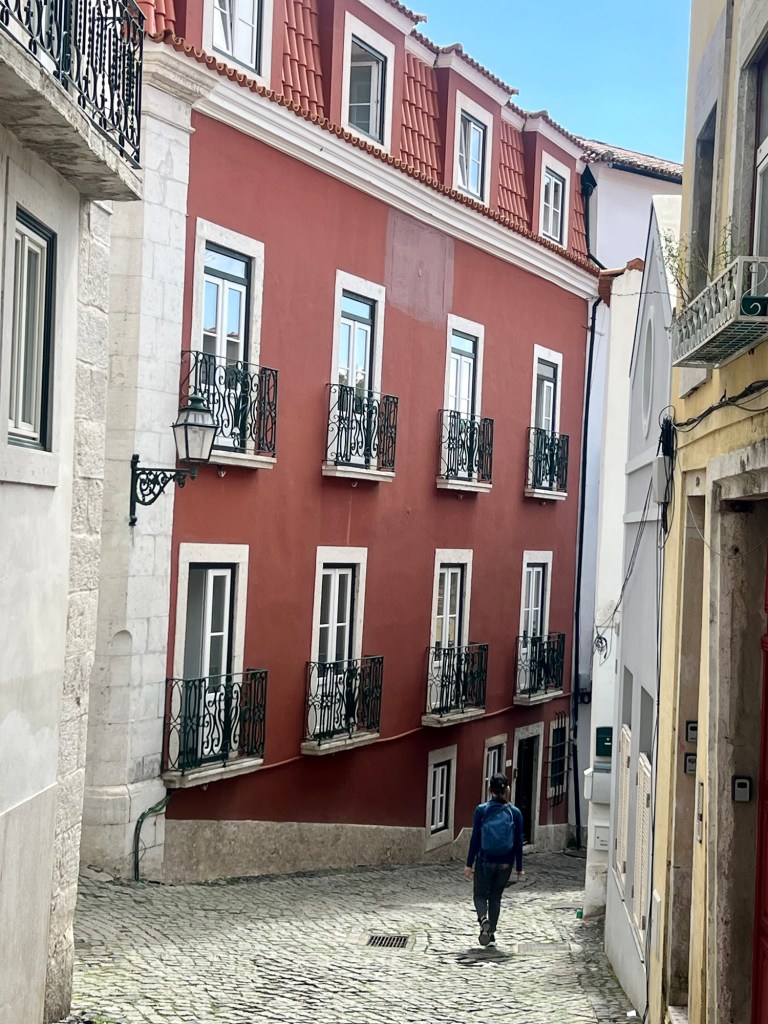
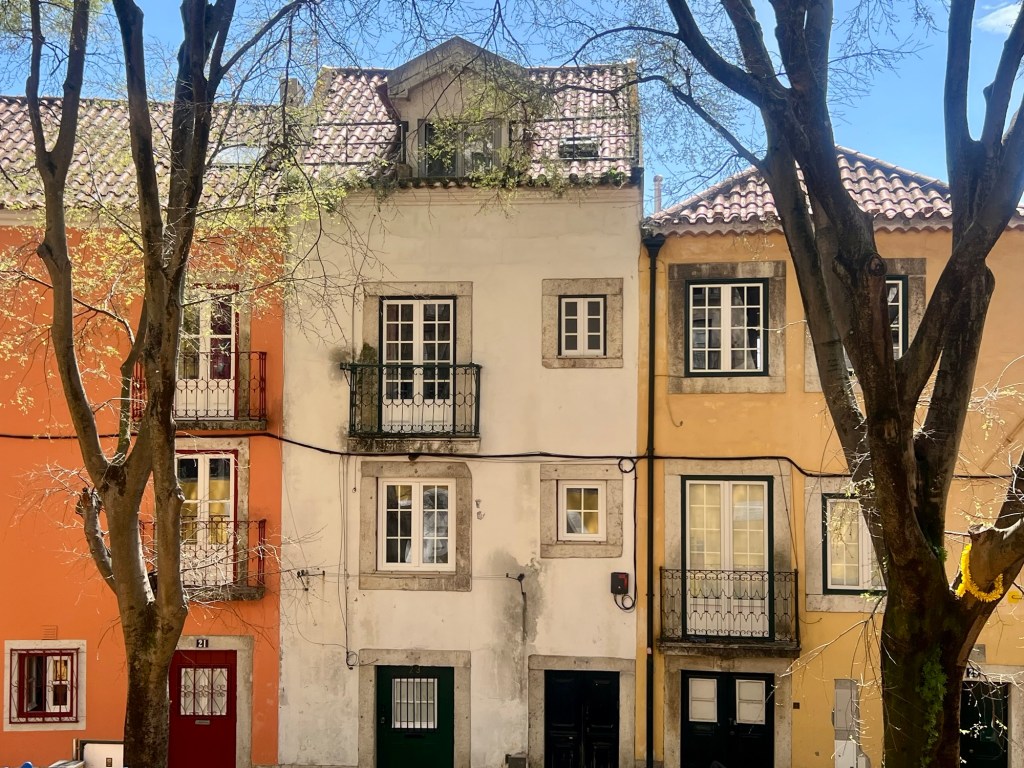
Saint Anthony is the patron saint of Portugal. I didn’t know that until I walked into the Igreja de Santo Antonio (Church of Saint Anthony), which was built over the house where he was born in Lisbon in 1195. I didn’t know much at all about Saint Anthony except that he was good at recovering things that are lost.
Anthony was an early follower of Saint Francis, who preached to the birds. Most people know that story, but less well known is that Anthony preached to the fishes. The legend goes that when his preaching was ignored by the townspeople where he was spreading the word of God, he decided to go talk to the fish instead. When he walked to the water’s edge and started speaking, multitudes of fish came to push their heads above the surface of the water. They gave him their full attention.
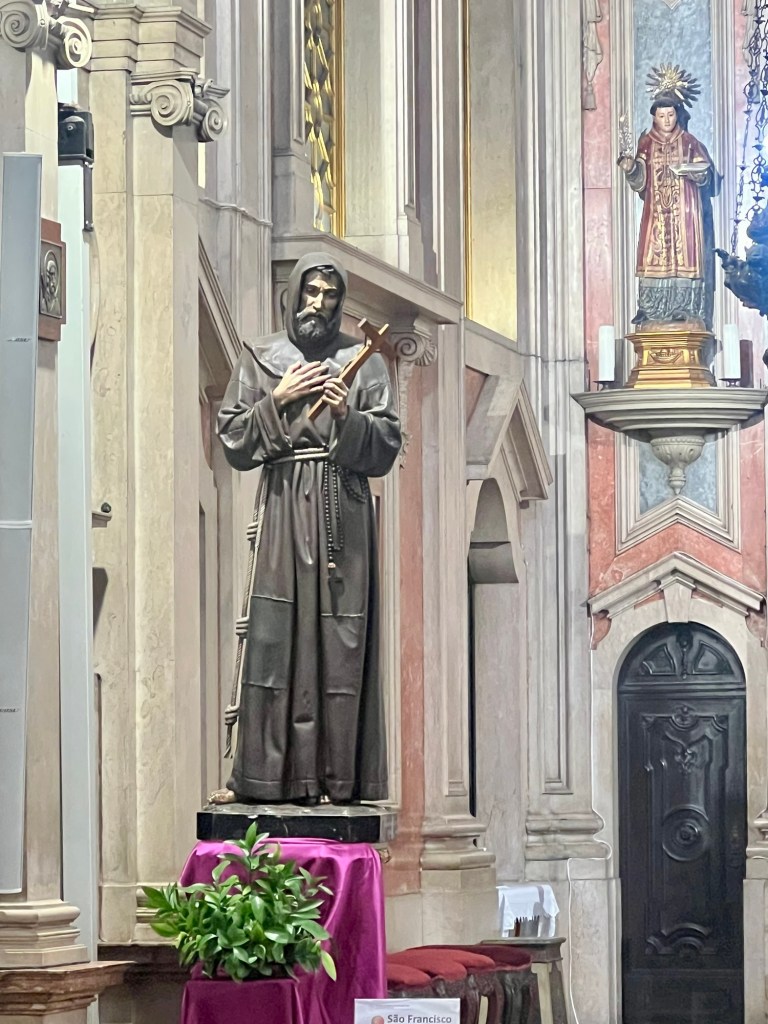
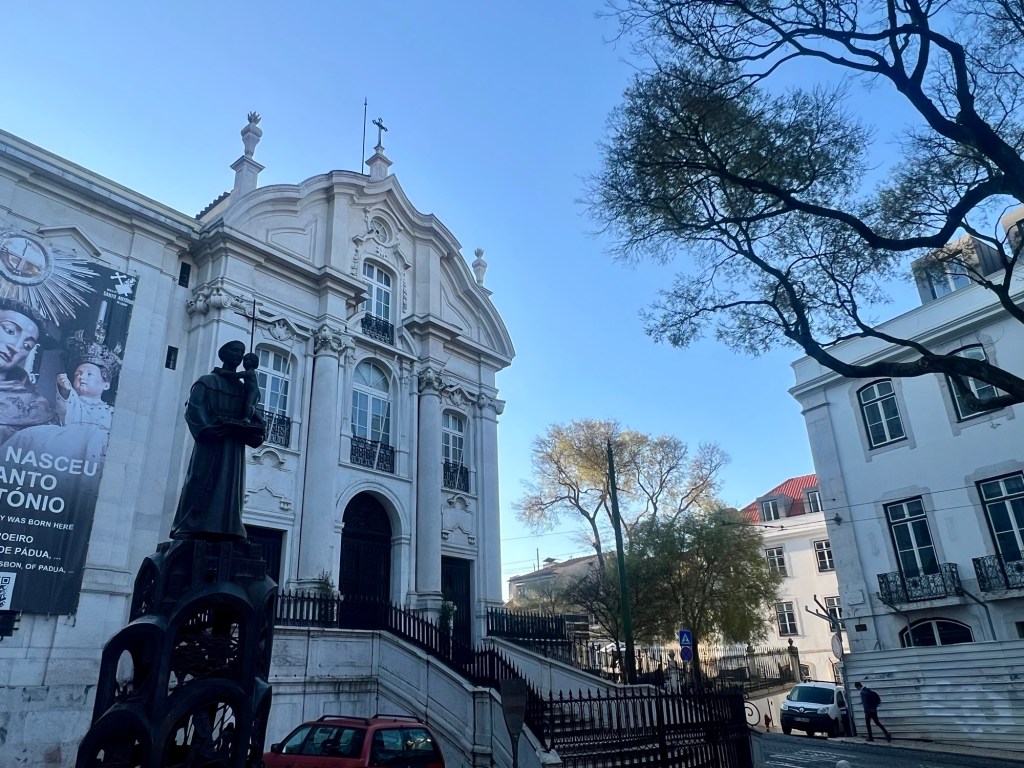
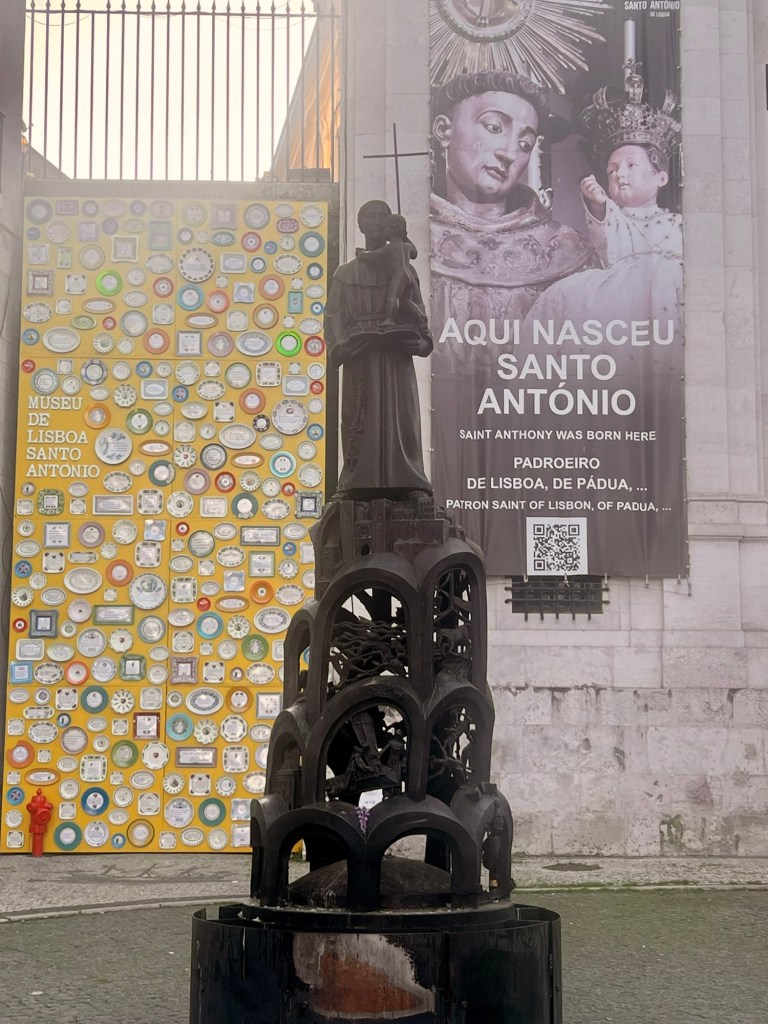
I haven’t had a patron saint of my own. If I was allowed to choose one, I might go with the poet Mary Oliver. Or the Dalai Lama would be a good one, too.
I would consider Anthony, who has long been venerated as the patron saint of people searching for lost items. That alone puts him in good stead with me. His patronage also includes travelers, sailors, fishermen, and even mail carriers. He is patron of harvests, animals, and people who are poor, sick, hungry, or generally oppressed. And I like that Anthony is the patron of anyone searching for a spouse–which I take to mean not matchmaking but of anyone just wondering where their spouse is. That would be helpful, also.
Anthony died at age thirty-five. It is said he died “under the branches of a walnut tree,” and at that moment, the church bells started spontaneously ringing of their own accord
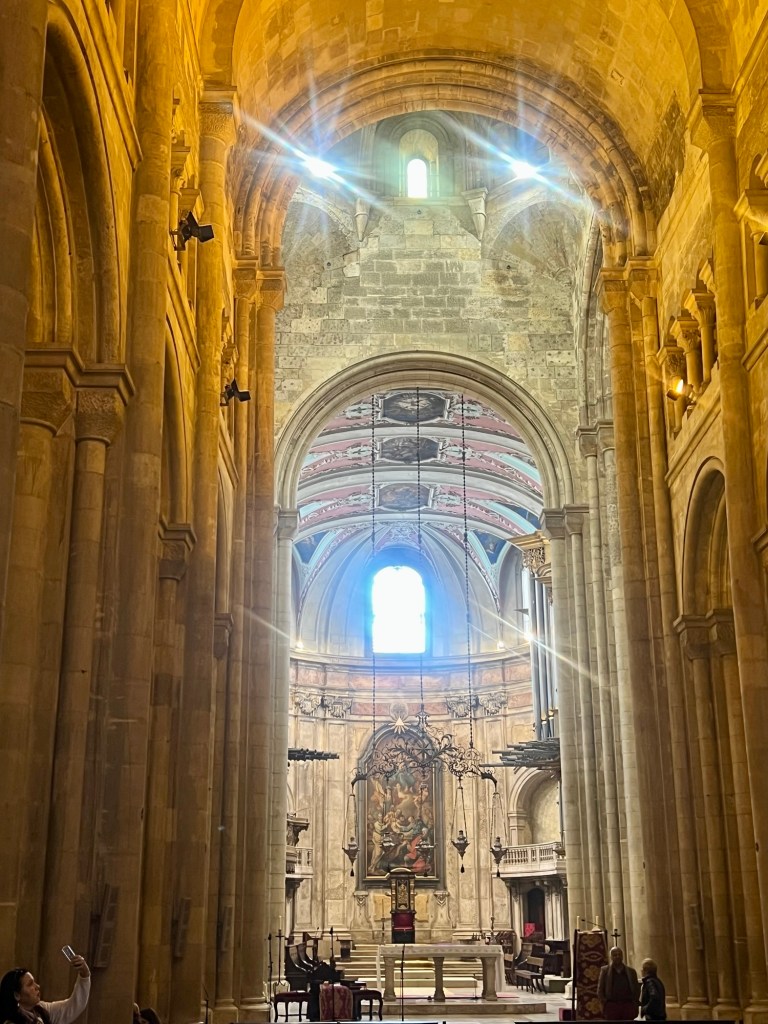
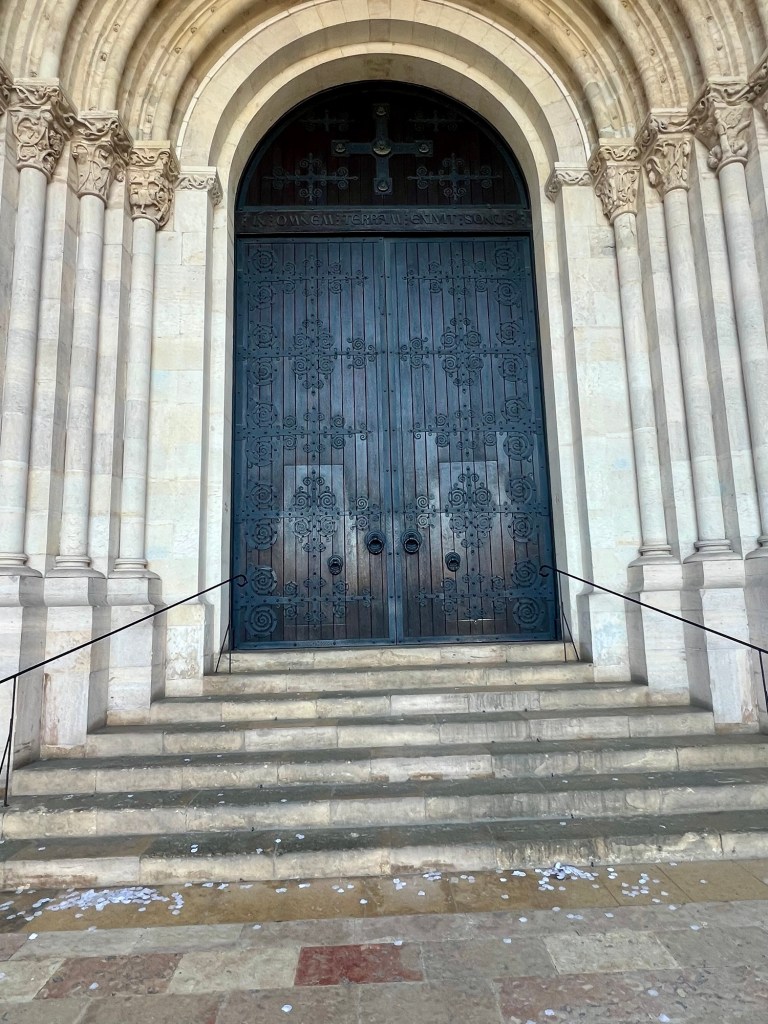
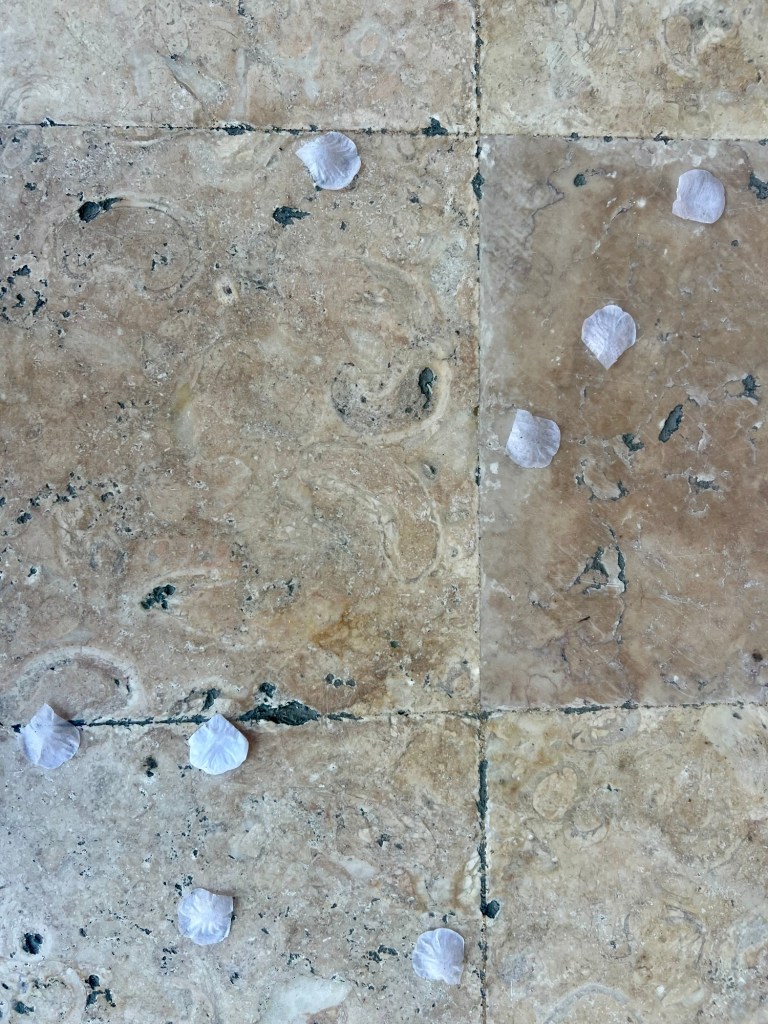
The Romanesque Cathedral of Lisbon stands next to Igreja de Santo Antonio and is the traditional starting place of the Camino de Compostela in Portugal. I was there early in the morning, the only person in front of the portico leading to the cathedral’s center nave. The bells tolled for me alone, and the tall wooden doors were in shadow, bolted shut as if expecting a siege. Scattered over the steps were cream-colored flower petals shaped like scallop shells.
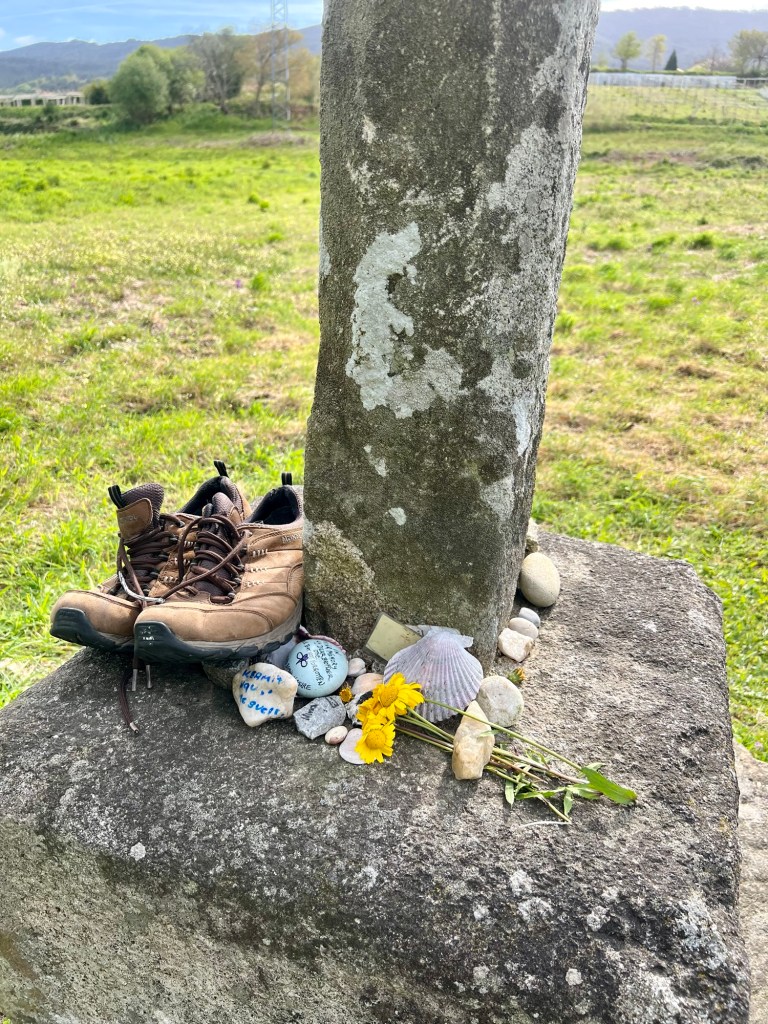
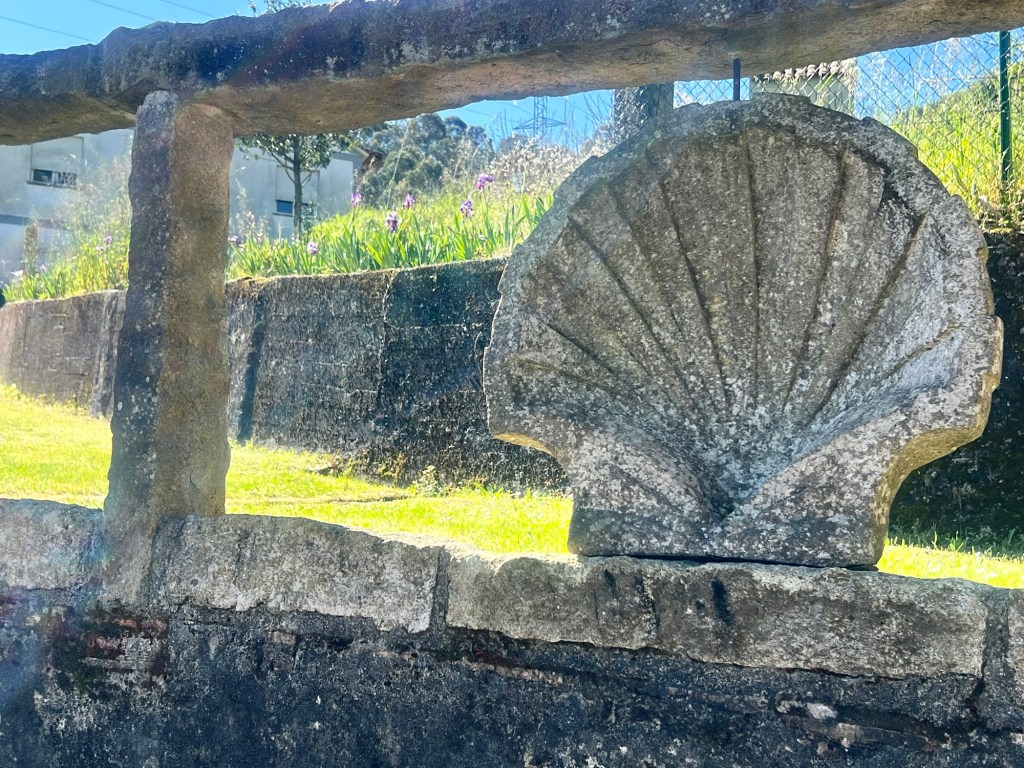
I wondered if their shape was my imagination. The shell symbolizes the Way of Saint James and identifies the peregrinos (pilgrims) walking it (like Caroline and me). Was I reading too much into it? All I know is that the scallop petals were there at sunrise when I was alone but gone later in the day when the tourists crowded in.
A little girl was in a class that had been given a drawing assignment. The teacher looked over her shoulder and said “What are you drawing?”
“I’m drawing a picture of God.”
“How could that be? Nobody knows what God looks like.”
“They do now!”
It’s hard to hold onto that degree of fearless self-confidence, but it would be nice if we could. I would like to draw or paint as boldly as a child does, unafraid of being wrong.
However, the brash confidence of youth doesn’t last when stacked up against the reality of life. When there is more past than future, we begin to look inward and find that we don’t really have everything figured out.
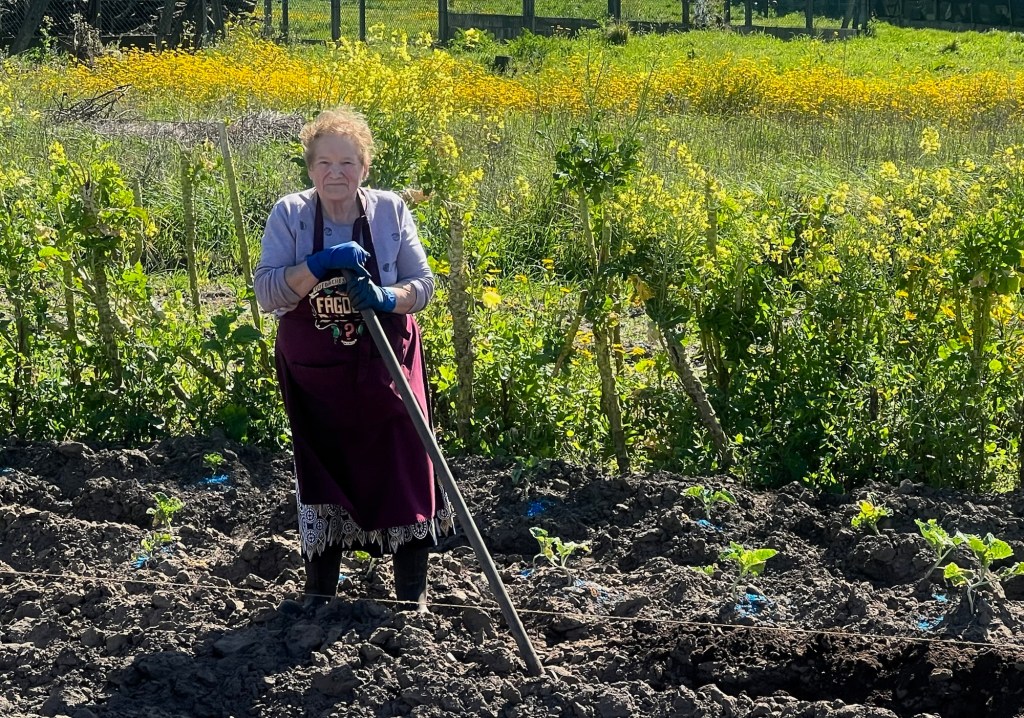
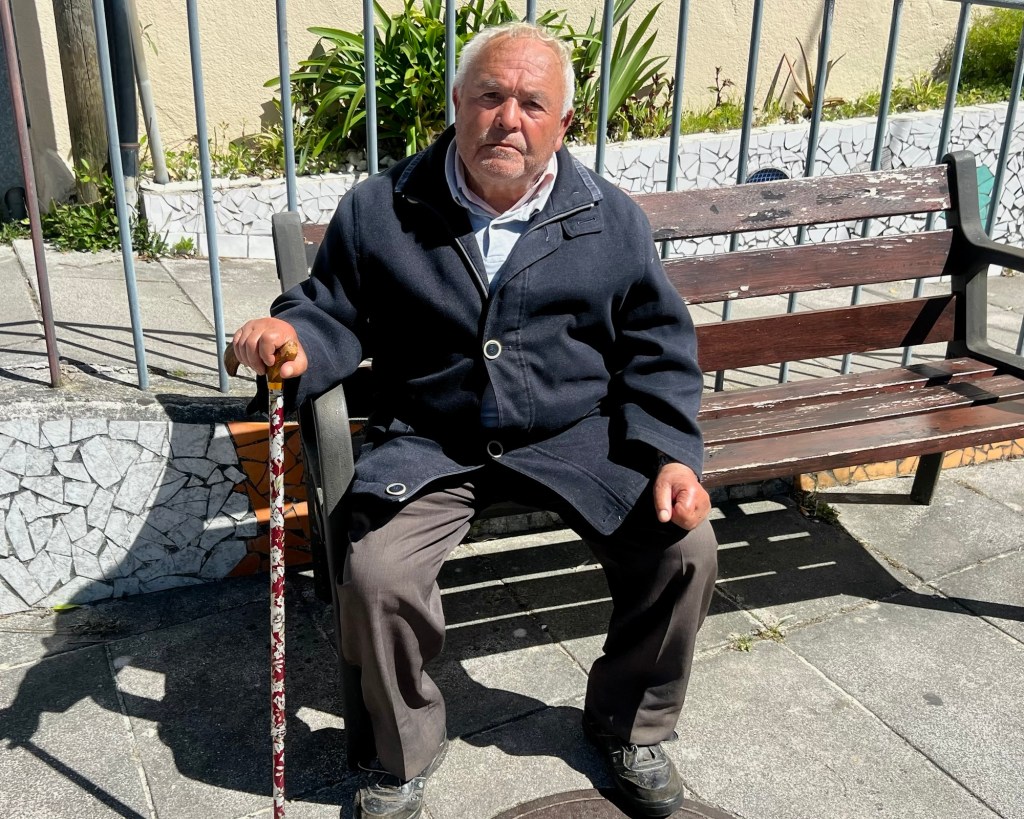
Travel is a good way to learn things–for me, the difference between a duvet and a bidet. What I also learn is how much I have yet to learn. In that way, travel can also serve to humble a person. The world is so full of things that I didn’t know about that I sometimes feel that what I truly understand could fit into a thimble.
I have become aware of the many times when I was certain I was right and saw things clearly but, in fact, had it wrong. I’ve tried to be Sherlock Holmes but now feel more like Helen Keller.
I think the idea is to see enough of the world to know my place in it; to know what I don’t know; and to let go of the need to have an opinion about everything.
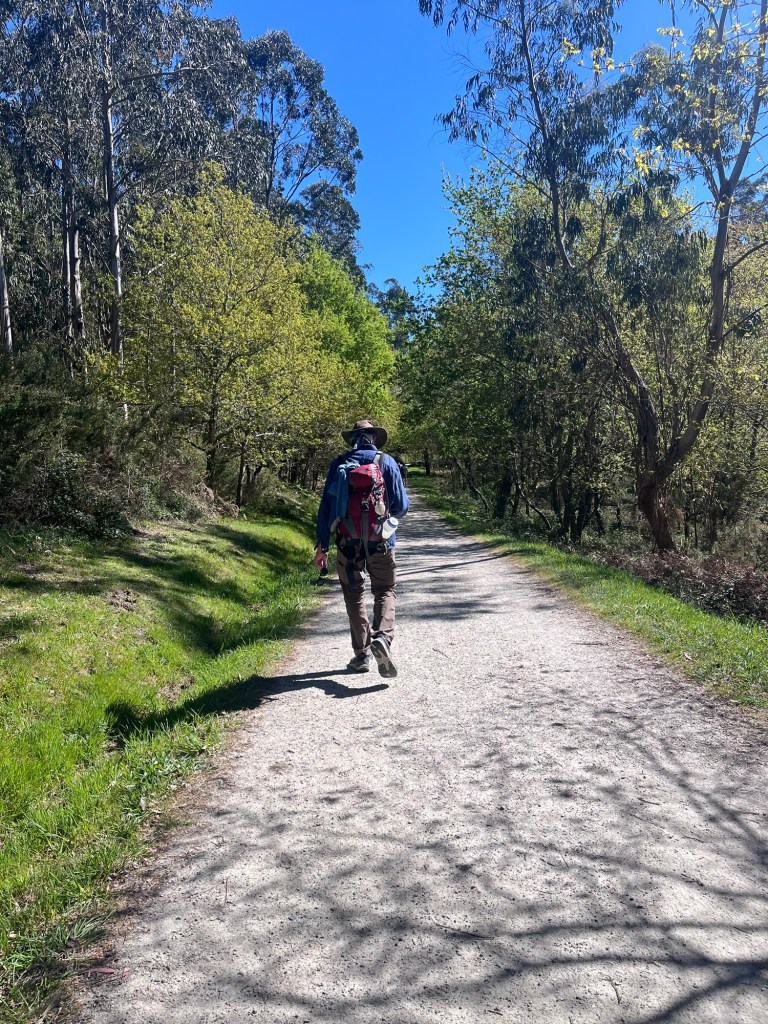
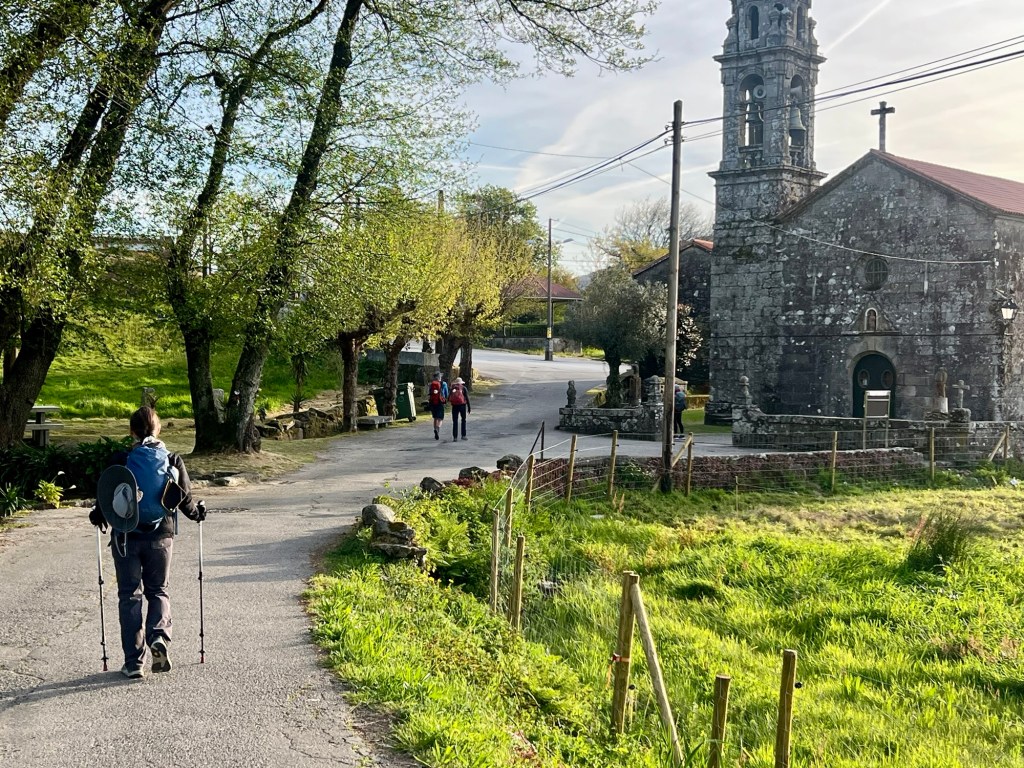
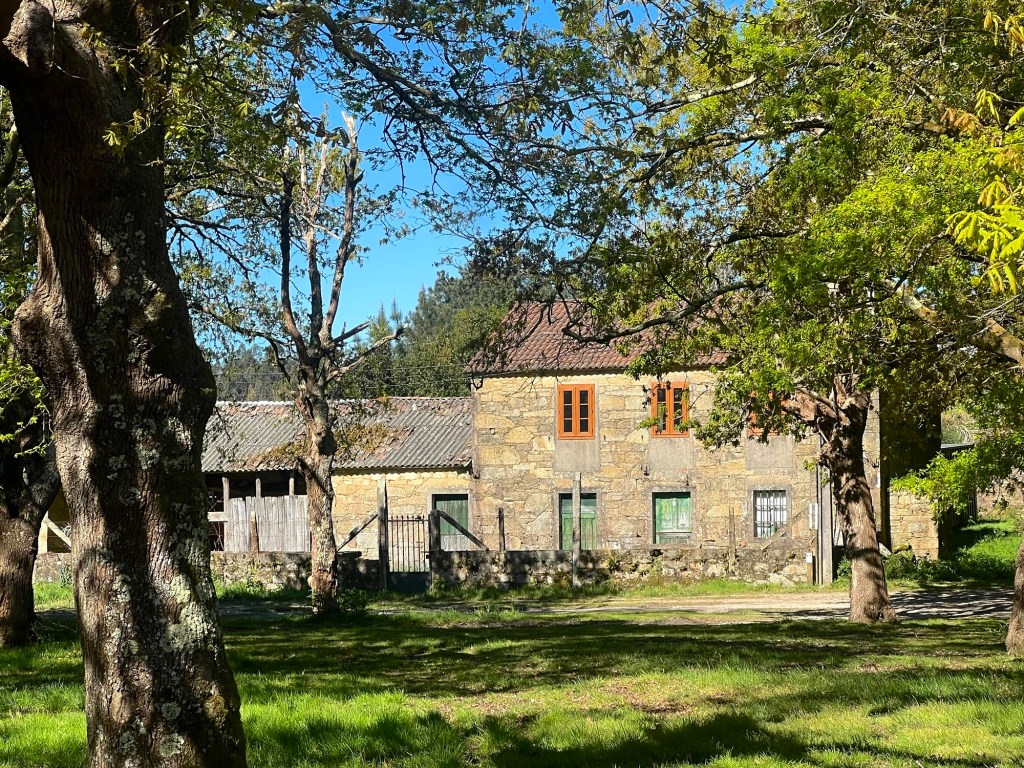
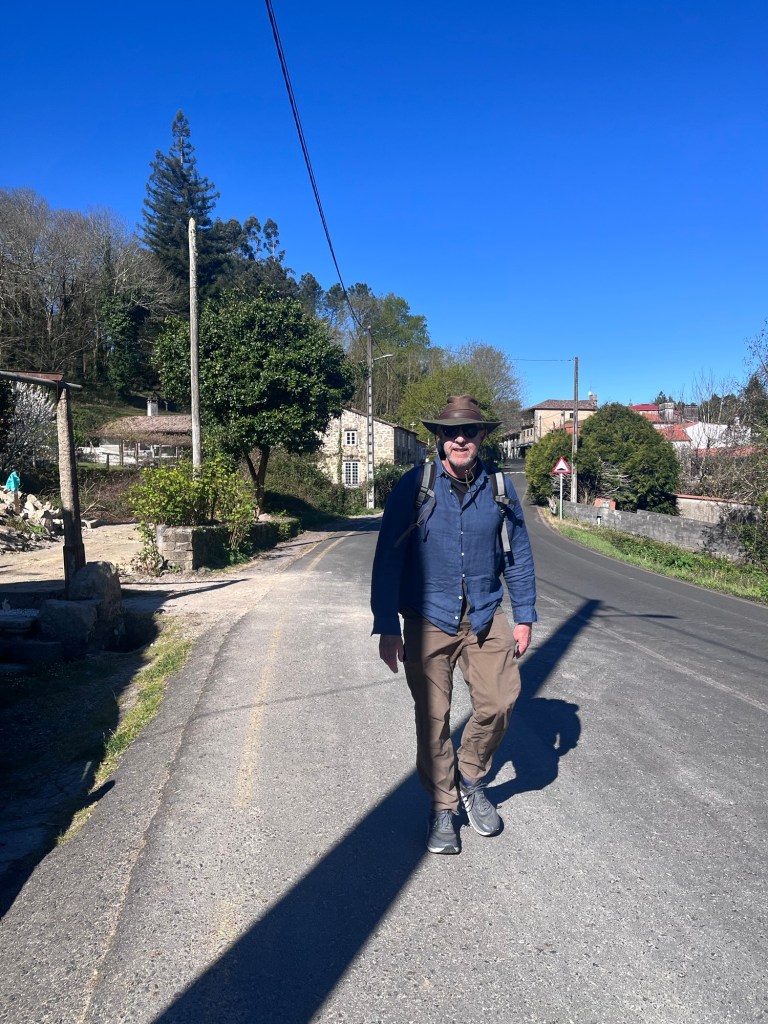
We came to Portugal to rejoin the Camino de Santiago Compostela. Our path followed the Atlantic coast until it cut inland to join the traditional routes that funnel into Santiago, Spain.
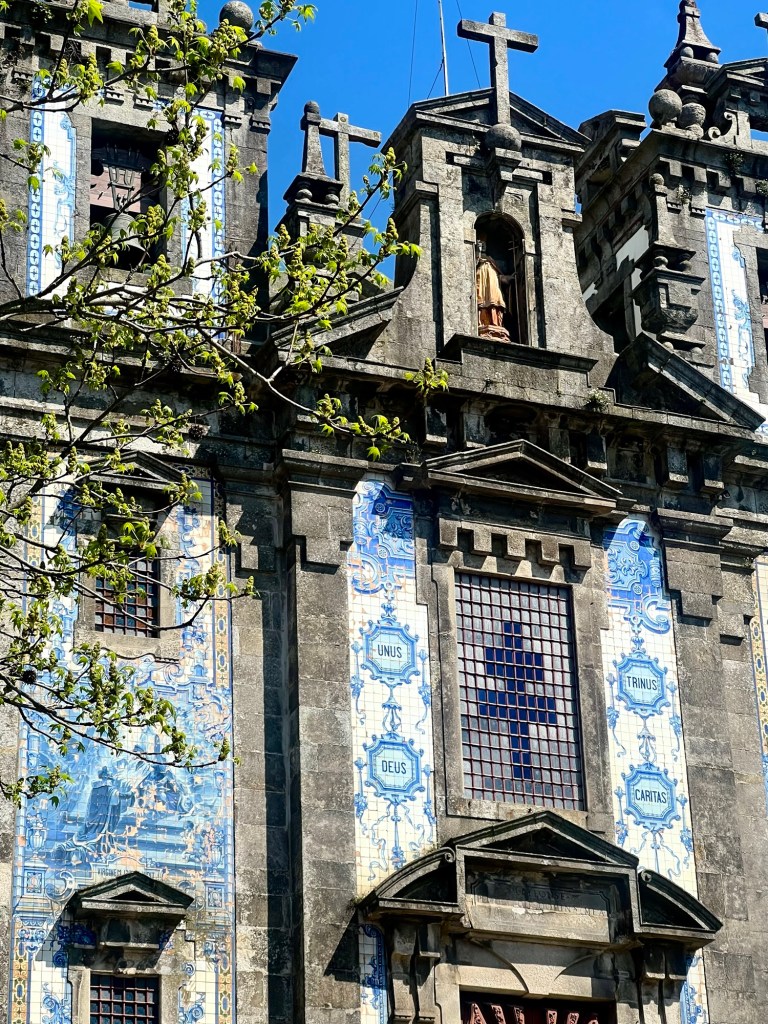
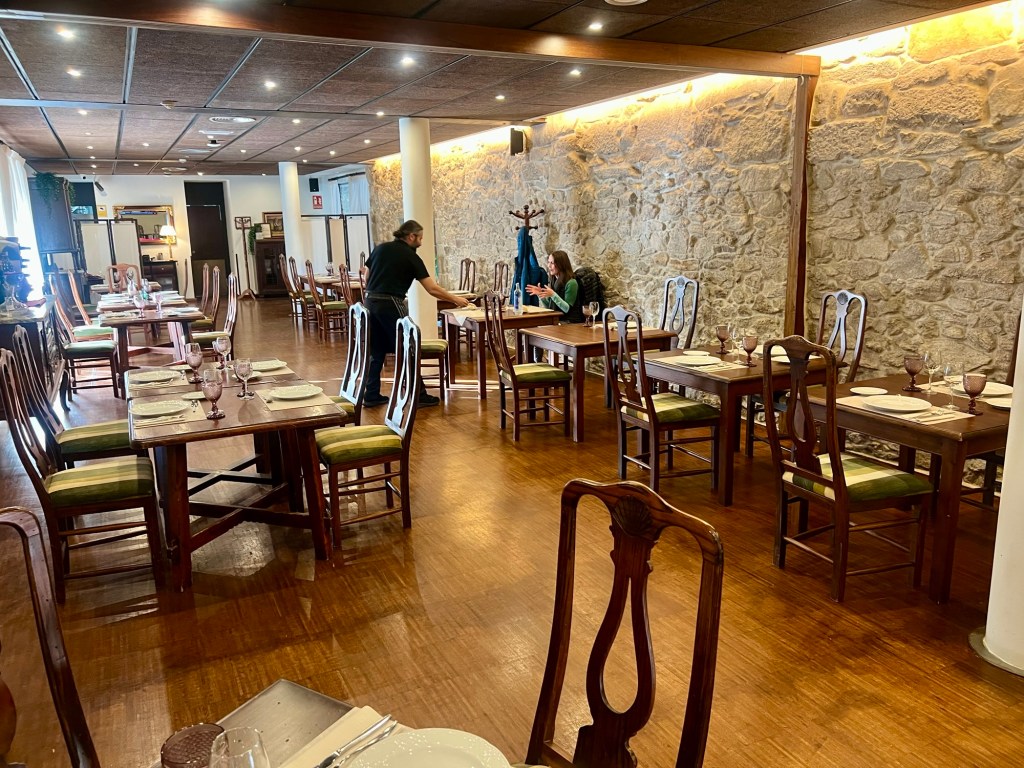
We really had no business being there, so completely out of synch as we were. We rose too early in the morning and retired before anyone else sits down for dinner. Sometimes they gave us a pass and some food if they knew we were pilgrims and had to get up early the next morning. We were wide awake in the afternoons but the only ones who were. The Spanish are completely devoted to the siesta. It underlies and nourishes everything else they do, as elemental as roots to a tree.
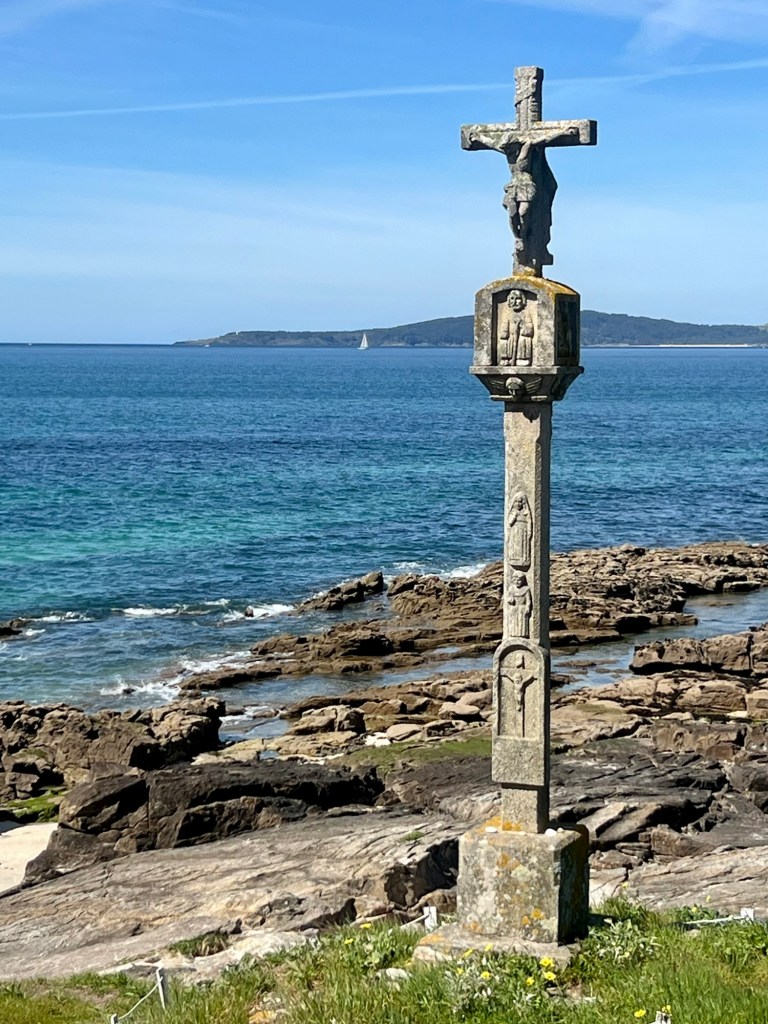
We started walking where Portugal becomes Spain. The coastal town of Baiona is where on March 1, 1493, the Pinta, one of the ships from Columbus’ first voyage, returned to Europe. The flagship Santa Maria ran aground on a reef off Haiti, so Columbus and crew piled onto the Nina and the Pinta and set sail. The two remaining ships became separated on their return and the Nina, along with Columbus, stopped off in the Azors, so the Pinta was first to arrive home. They landed in Baiona, making it the first place in the Old World to receive word of the discovery of New.
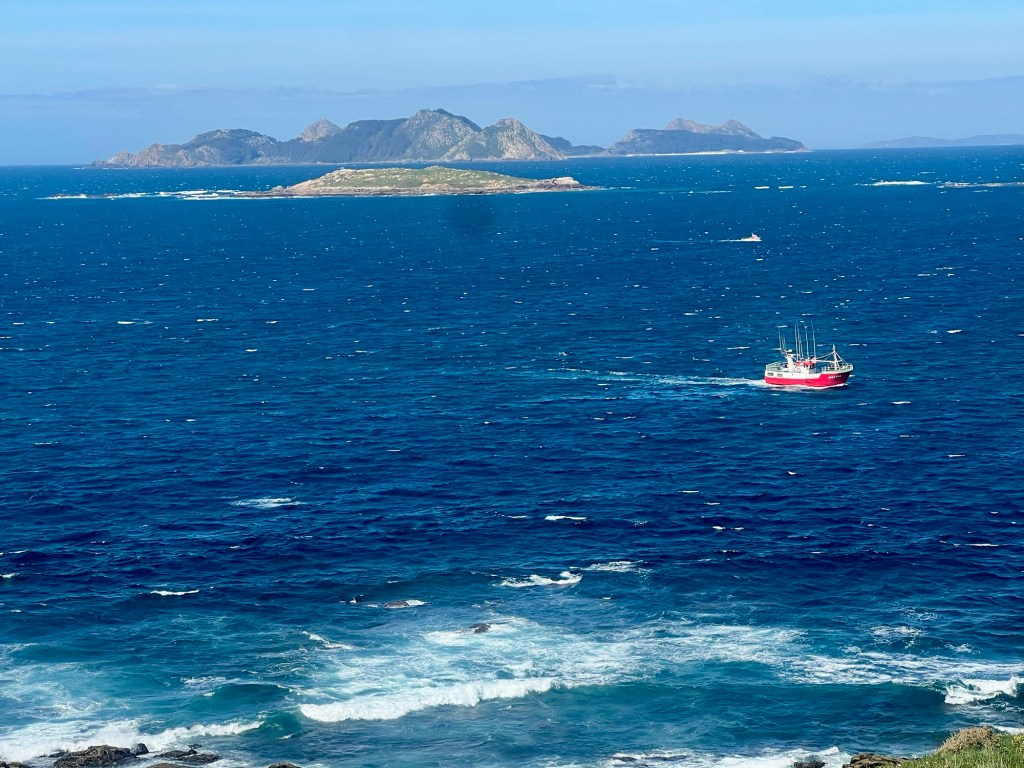
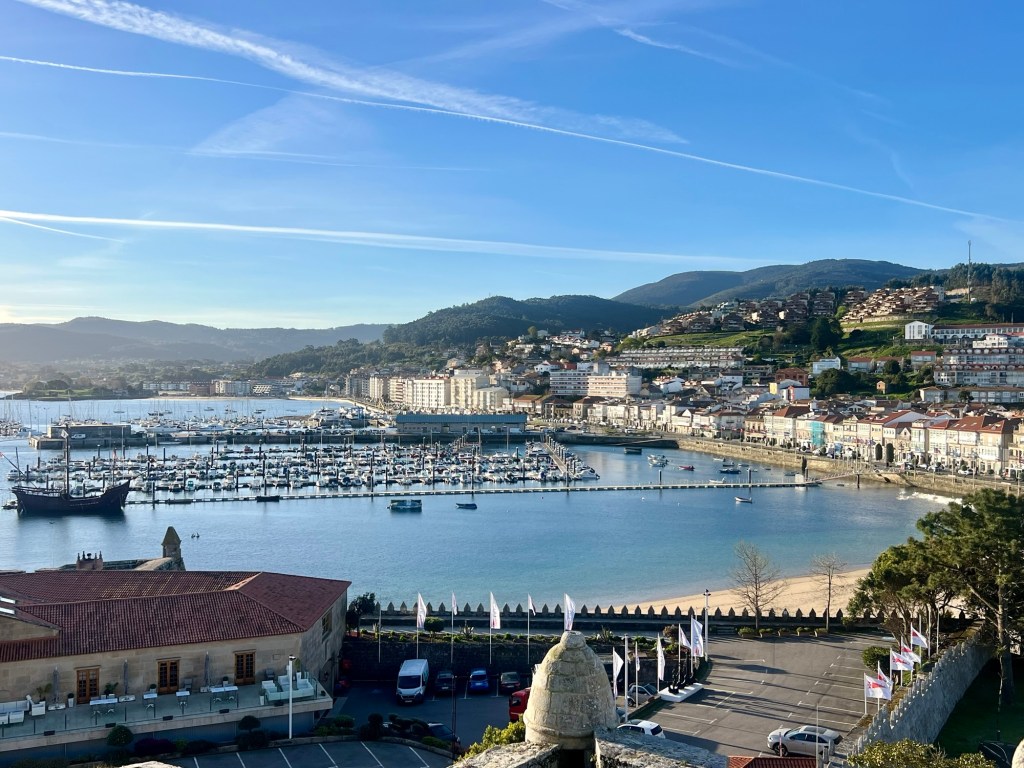
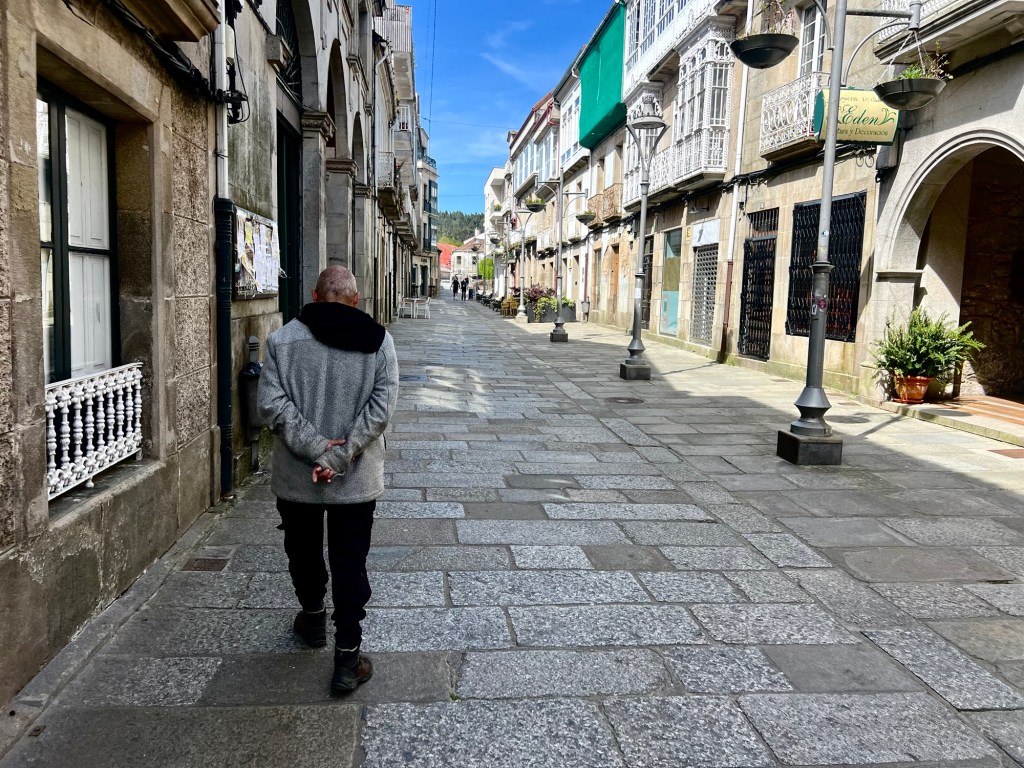
We walked from Baiona into the harbor city of Vigo late in the day, passing cafes along the waterfront. The people we passed smiled, and one man put his hand to his heart. A well-dressed older woman sitting at a table with her husband called out to us, “Buen Camino!”
Caroline asked one of the locals what the Portuguese and Spanish think about peregrinos (pilgrims), “Do you think they’re crazy?” His reply, “Yes, but we love them.”
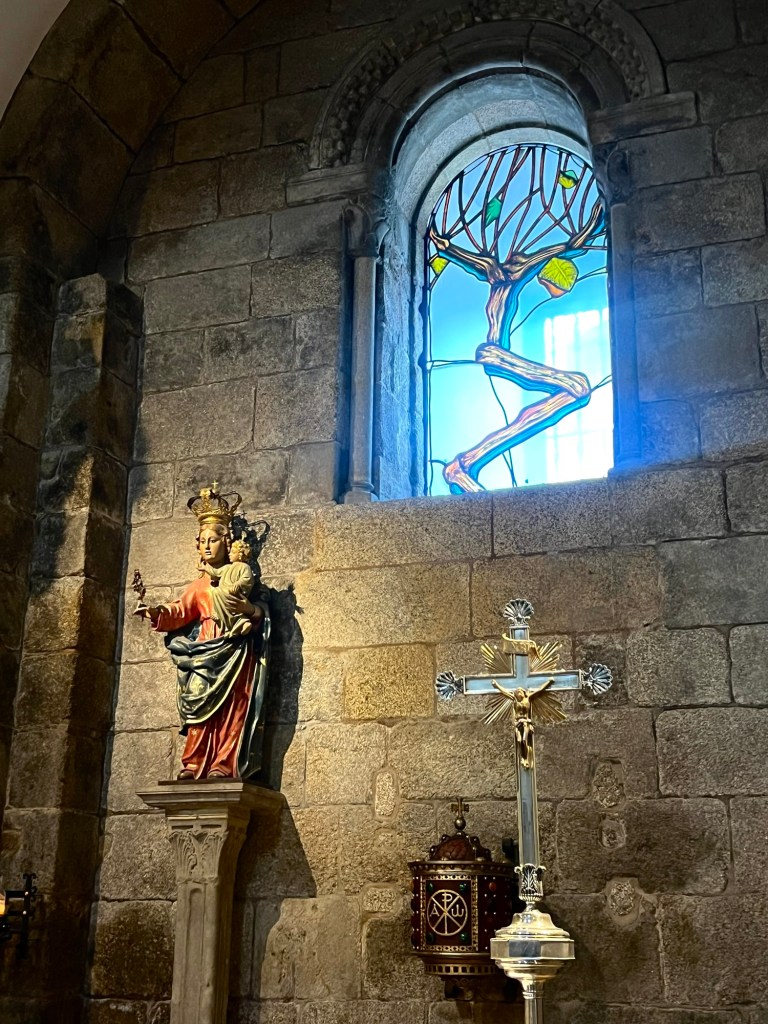
I grew up in Protestant churches where one is to be wary of religious idolatry and I always thought that worship should be centered on the sermon. Now I think that it doesn’t have to be.
There are other ways to feel close to God besides thinking and talking about Him–less cerebral, more physical ways. My eyes were first opened when I started spending time in South Asia, where a connection to the divine is a natural occurrence and a part of everyday life. The Hindu pantheon is endlessly fascinating, and depictions of their many gods are everywhere. There is a Buddhist celestial being for every occasion, and they also show up at every opportunity. You can’t help but be constantly aware of their presence. Relationship to the sacred flows intuitively from normal daily activities.
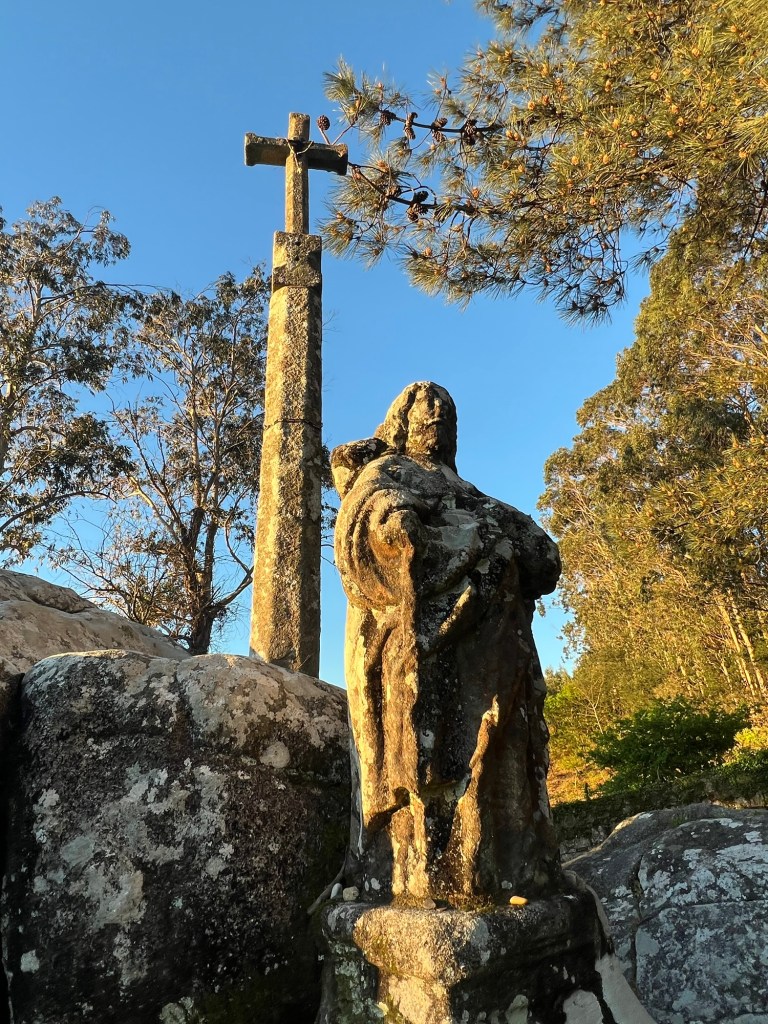
Ritual and religious idolatry can make abstract concepts tangible, and by engaging all of our senses, they make the relationship to the divine more physical and personal. Idols, statues, and icons are physical objects (as are we) so can offer a more palpable connection to God, one more intimate than reading or quoting scriptures.
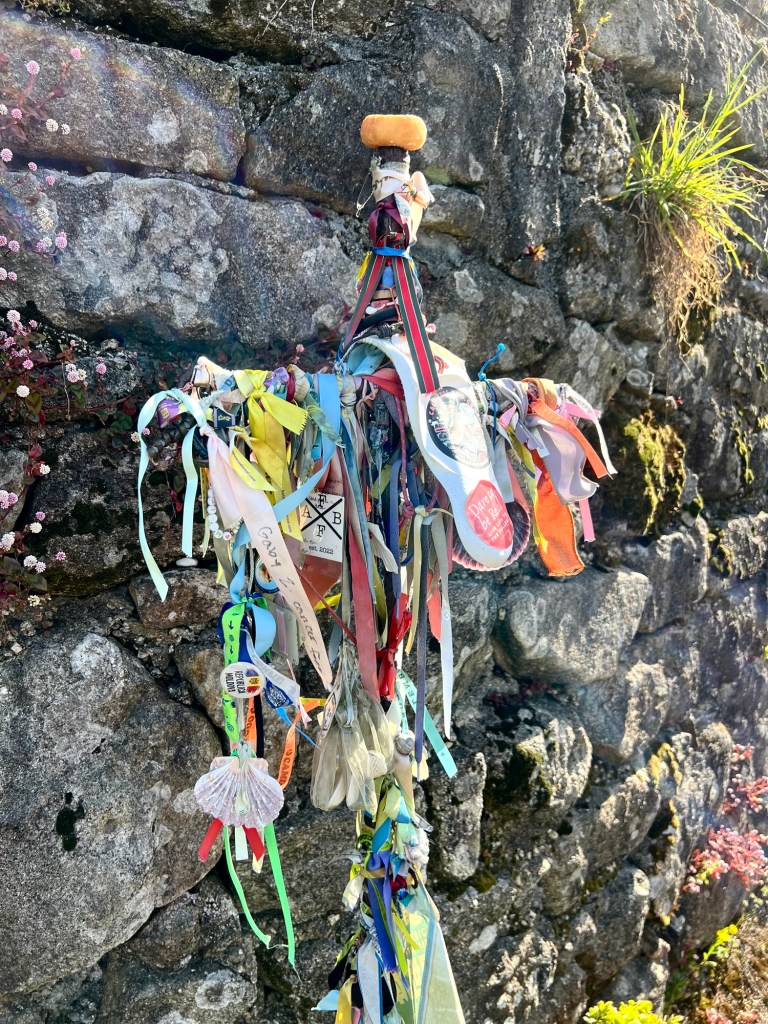
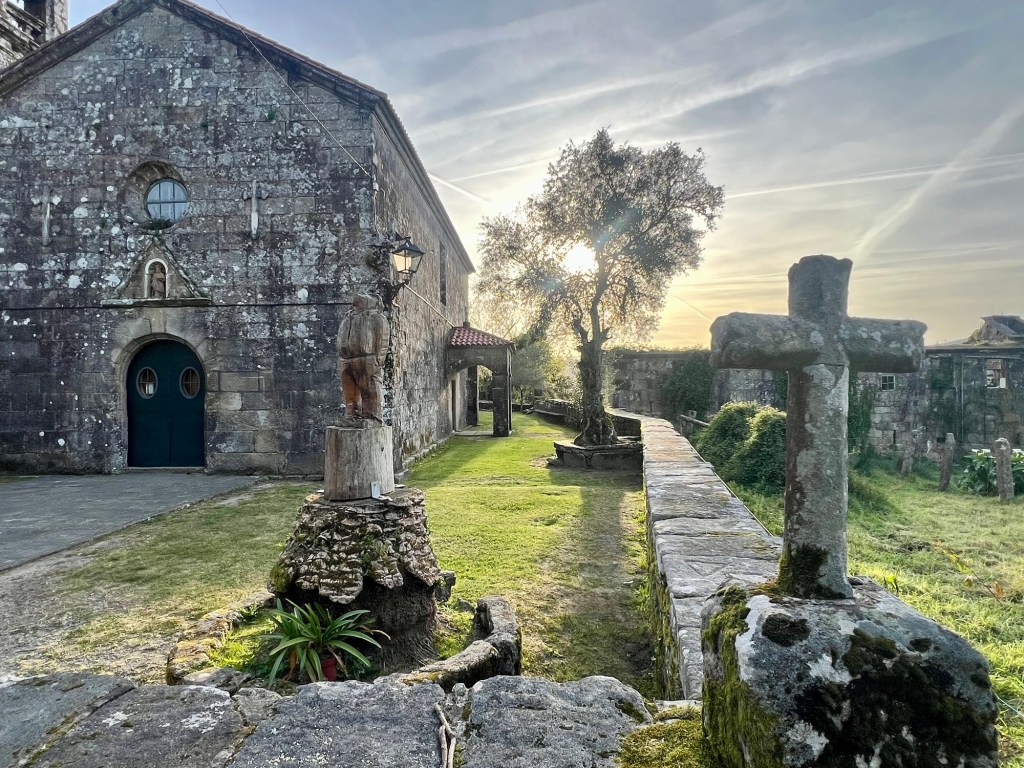
On the Camino de Santiago, physical representations of the divine are woven into the landscape. They are as common and occur as naturally as the songbirds. In Spain and Portugal, you are never alone. Along the Way to Compostela, Jesus is on every street corner, at trailside rest areas, and in every plaza and farmhouse’s front yard. Mary, as mother of Jesus, is exalted at the smallest chapels and in the grandest basilicas, usually wearing a flowing shroud in cerulean blue and a serene expression as she gazes either down at her son or up to heaven. The figure and symbols of Saint James are everywhere you look and enlighten the pilgrim’s journey like a flashlight in the dark.
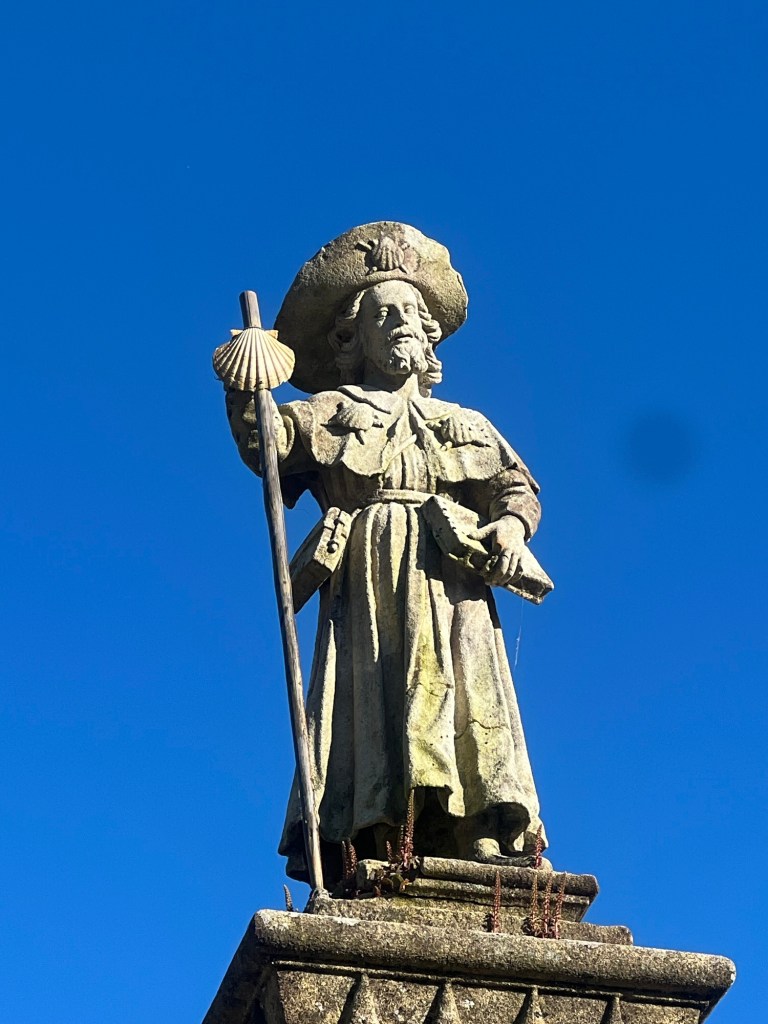
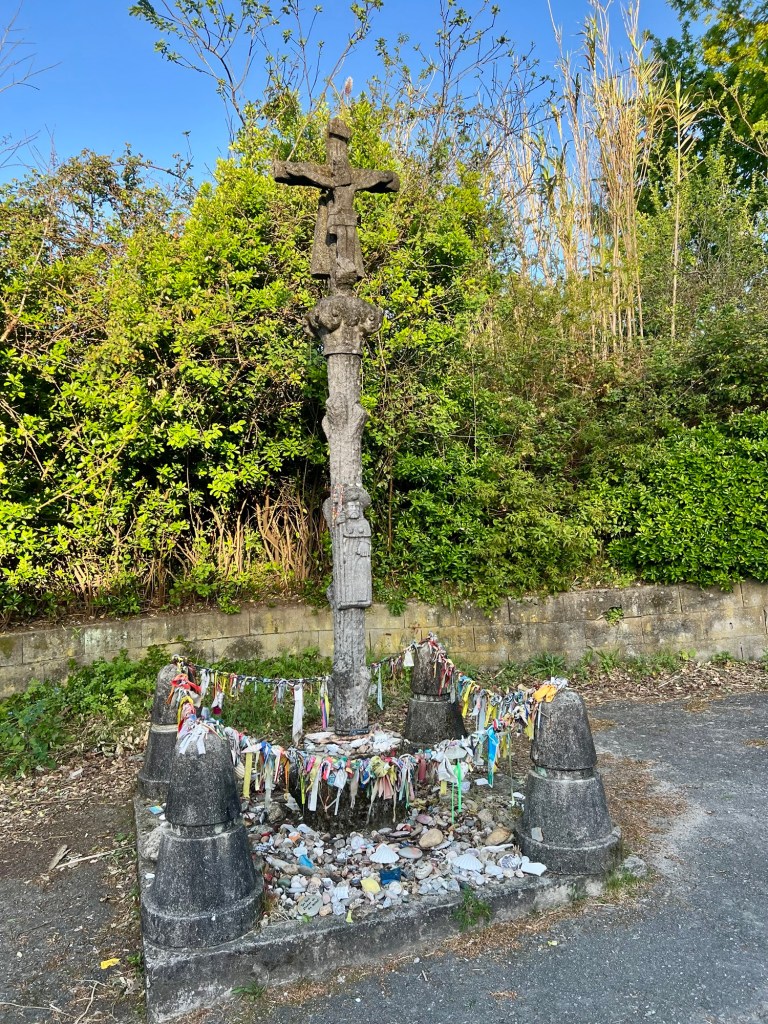
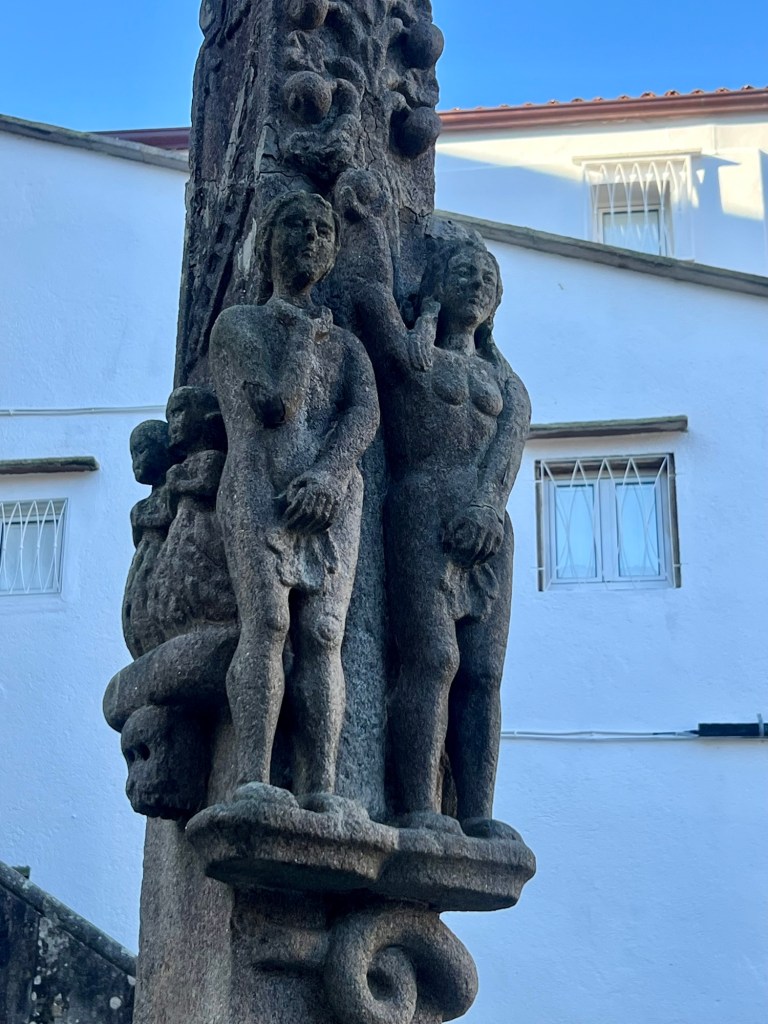
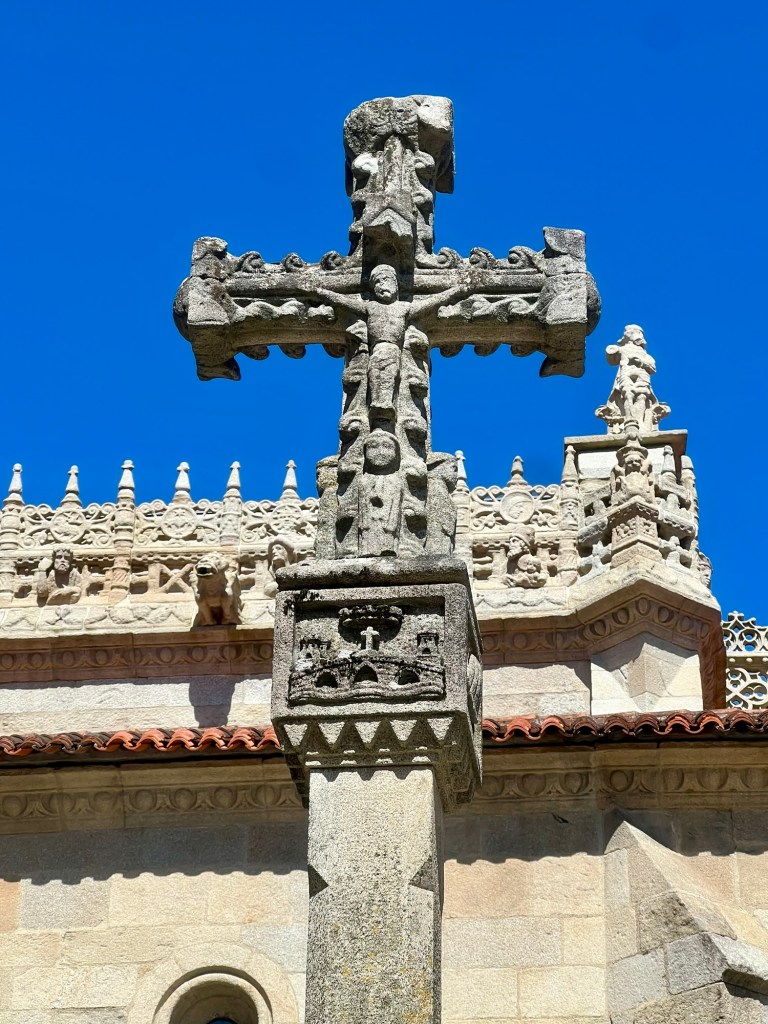
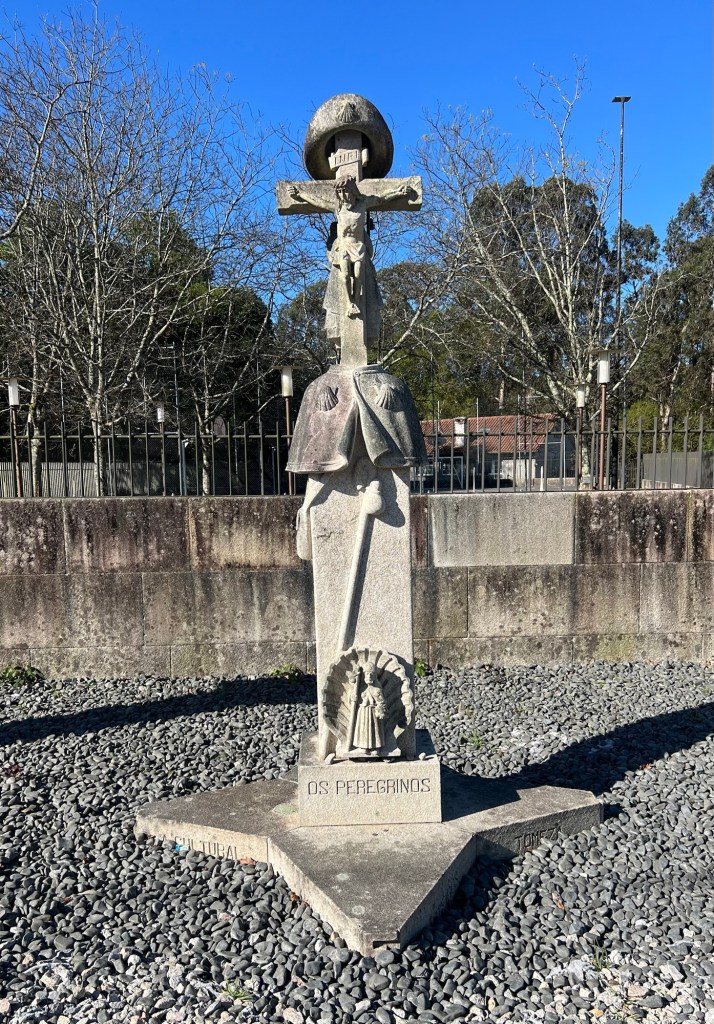
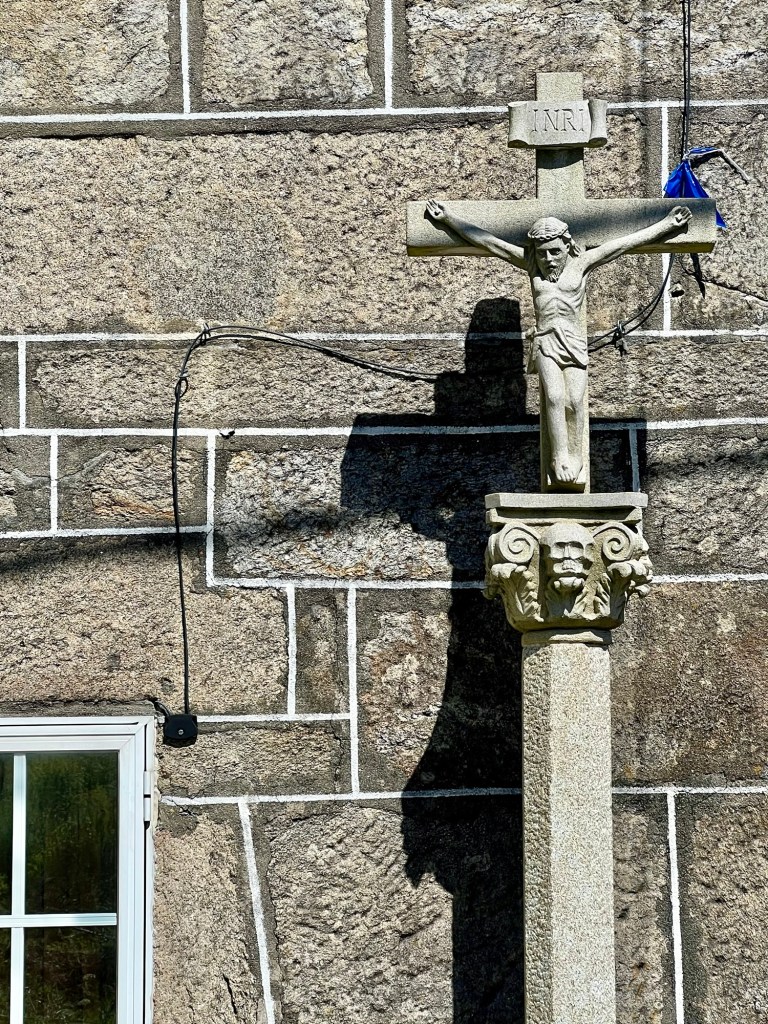
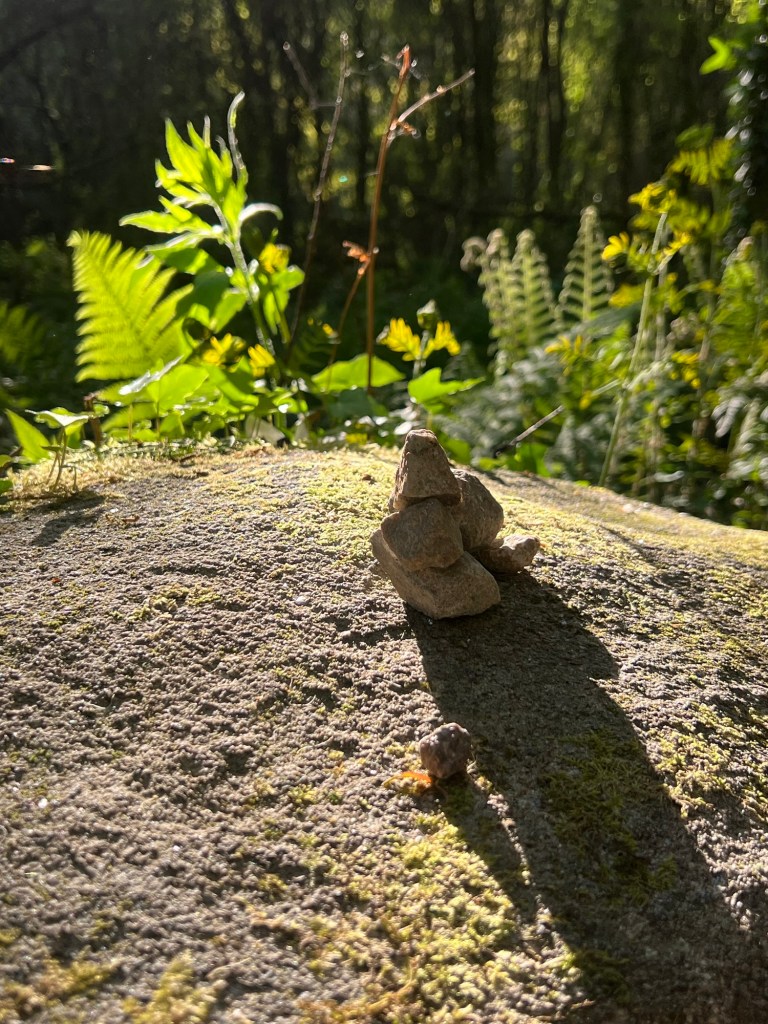
There is a chronic human urge to put into words what cannot be put into words. So, we turn to story, metaphor, and symbolism as a way to open ourselves to something that is essentially beyond the grasp of our rational minds. Aside from the little girl in art class, most of us don’t really know what God looks like. So, we depict Him in ways that we can better understand and relate to.
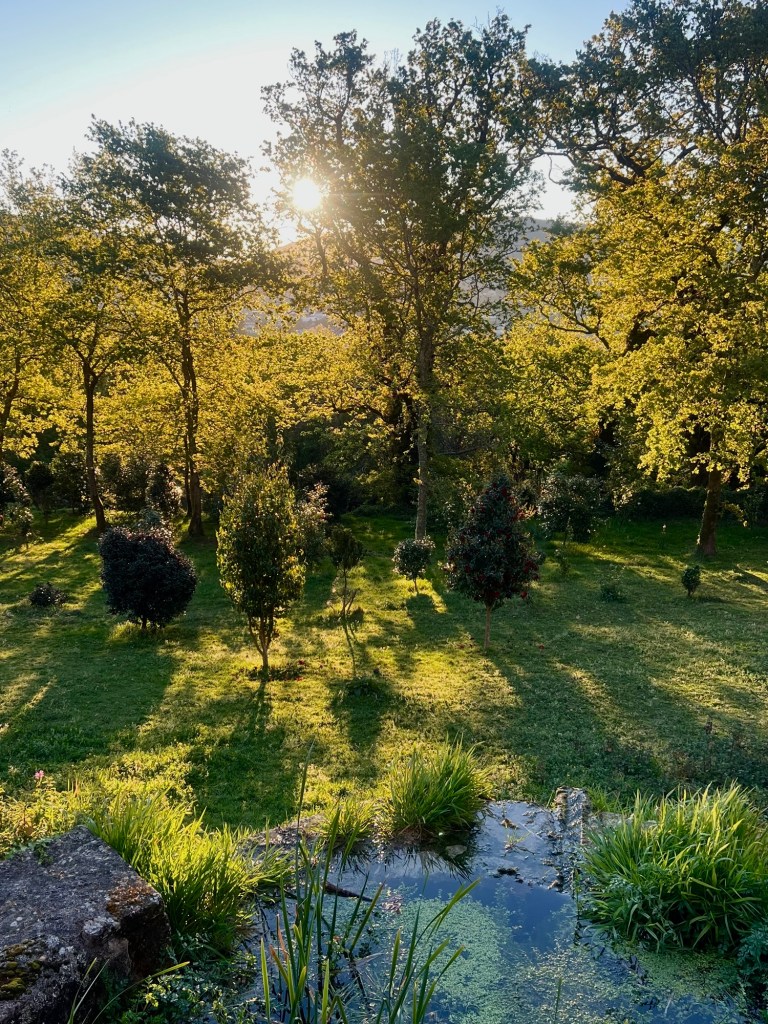
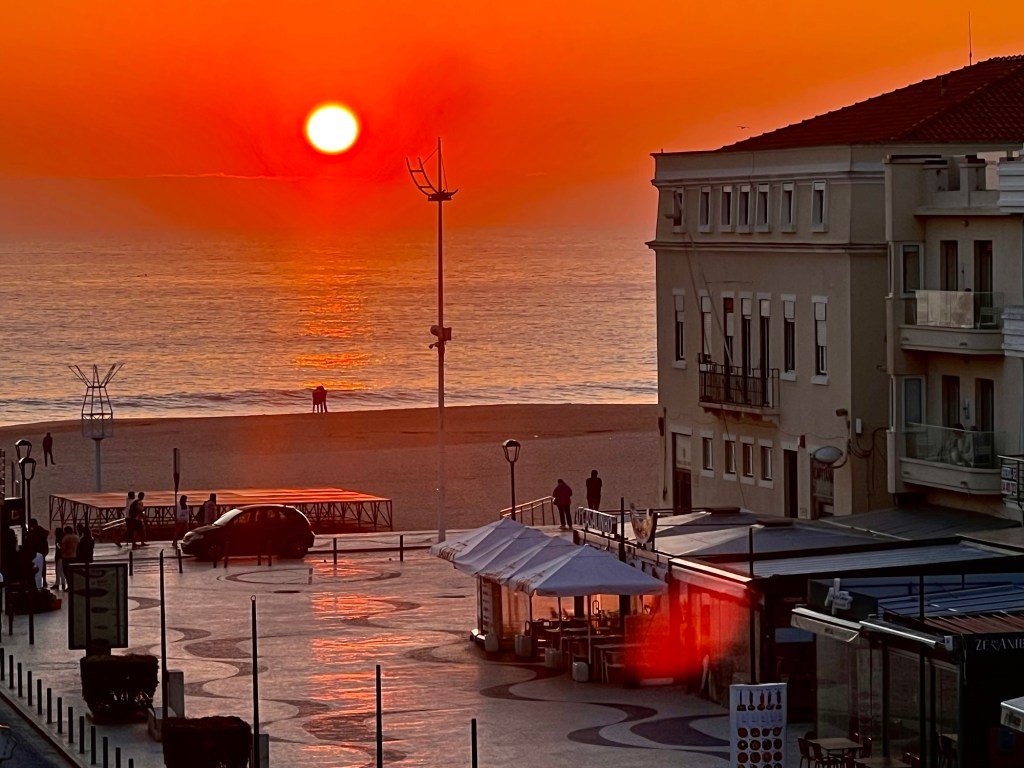
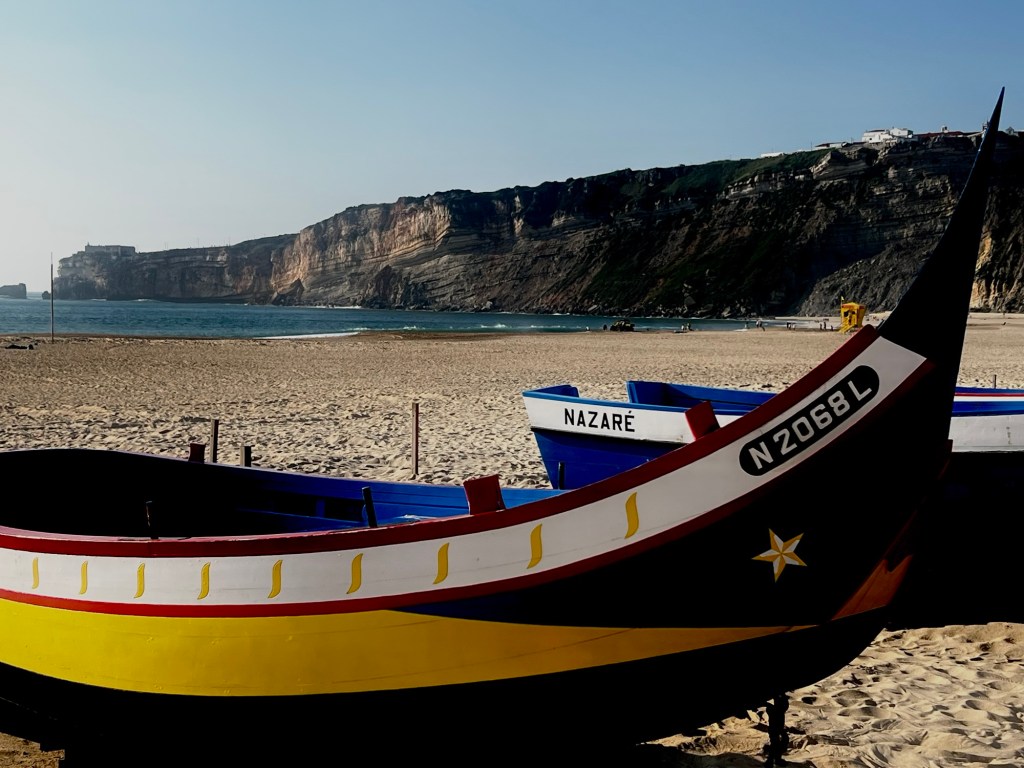
“A sailor cannot see the north, but knows the compass can.”
Emily Dickinson
Personal, non verbal interaction with a tangible object can sometimes move us in ways that words alone cannot.
For Caroline, it happened like this:
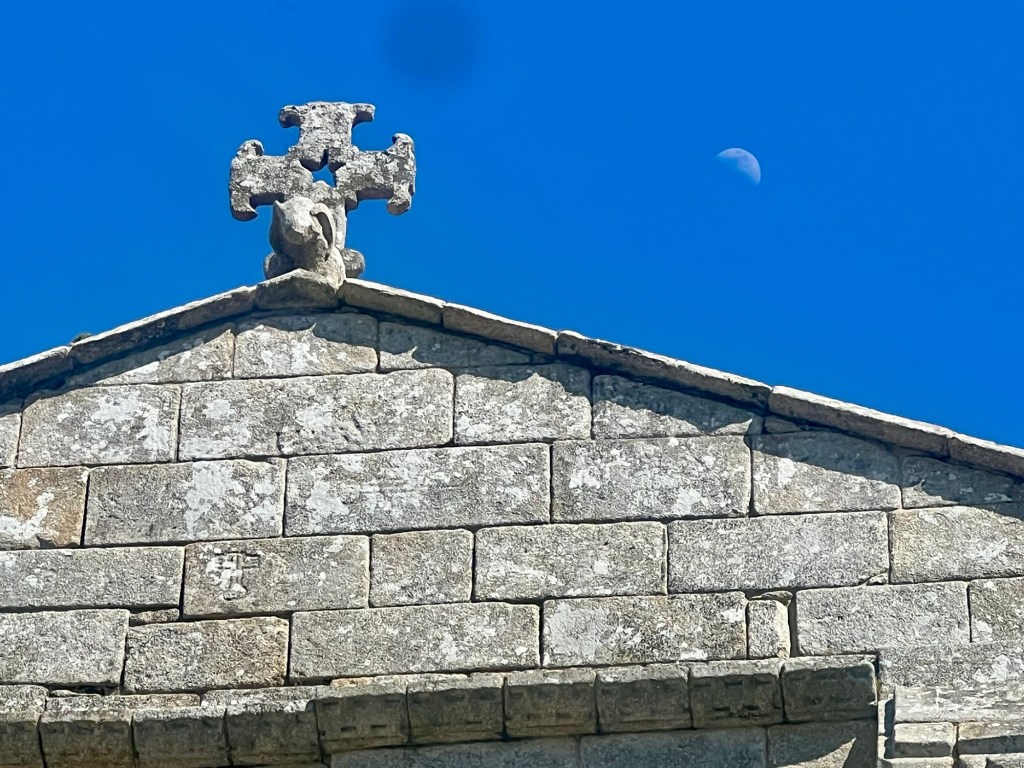
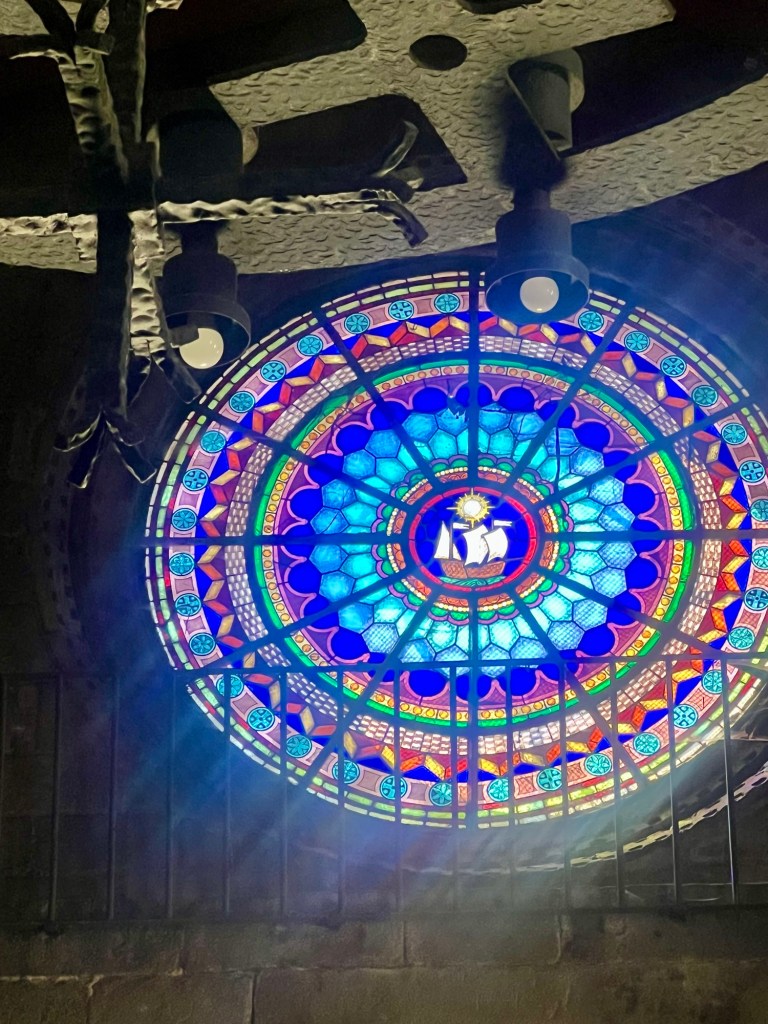
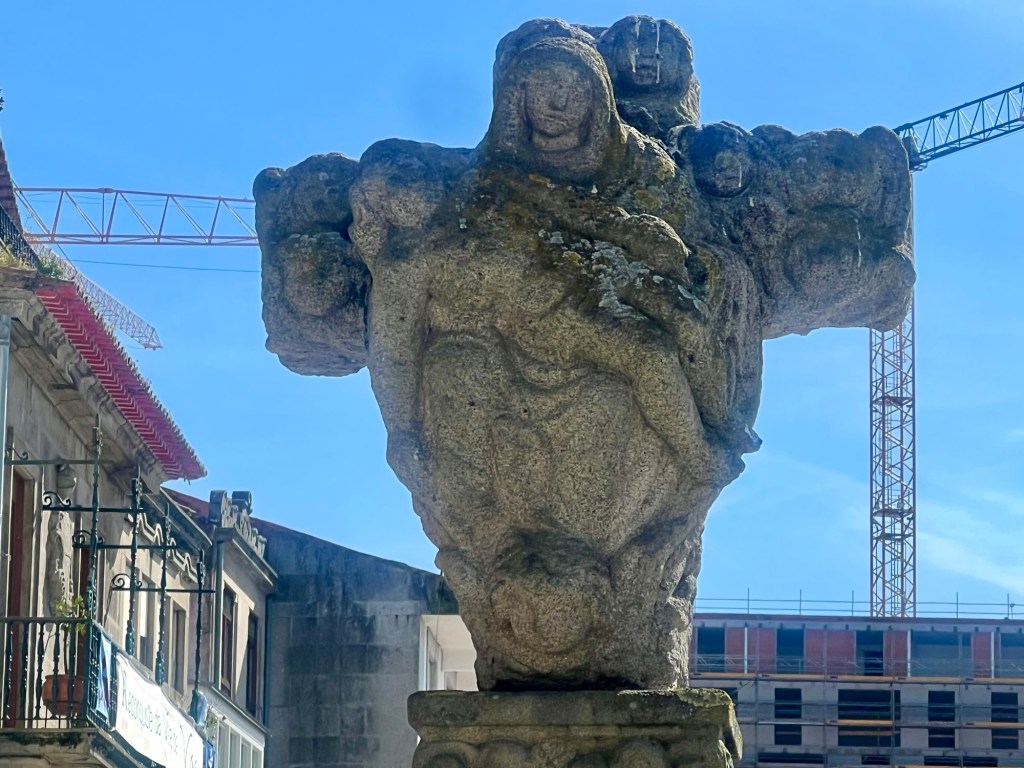
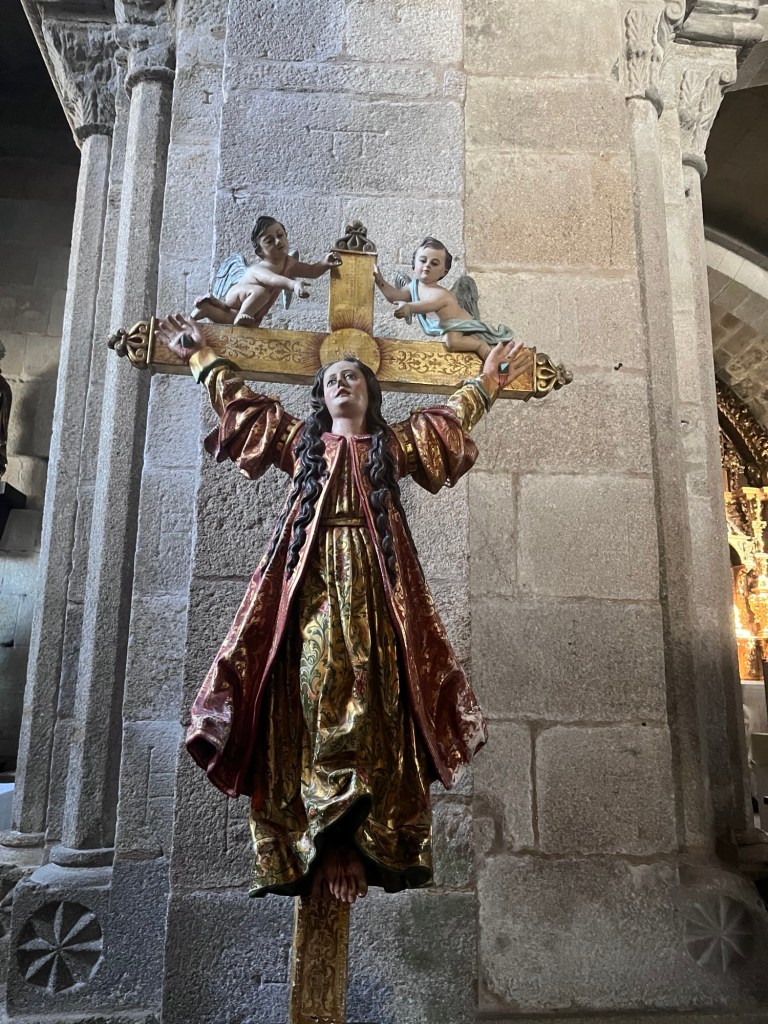
Igleja de Santa Maria de Baiona (Church of Saint Mary) is a small 13th century temple in the town’s historic center. Within its tranquil interior is a chapel and a cross with someone on it who is not Jesus. It is a woman and we assumed it was Mary.
Caroline said this about how she felt as she stood there, “Mary on the Cross–to me it is saying, ‘you do this to my son – you do this to me.'”
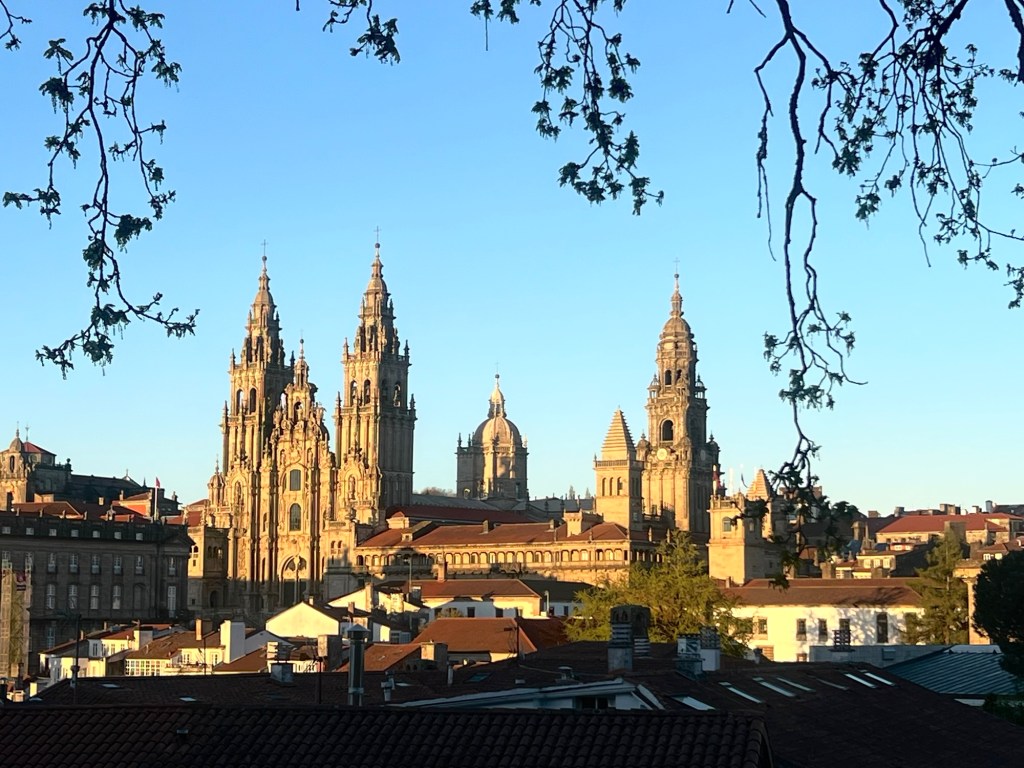
The final destination of a pilgrimage is itself a material object, where pilgrims seek a different perspective on existence. This is where the veil becomes thin and the distinction between the visible and the invisible fades.
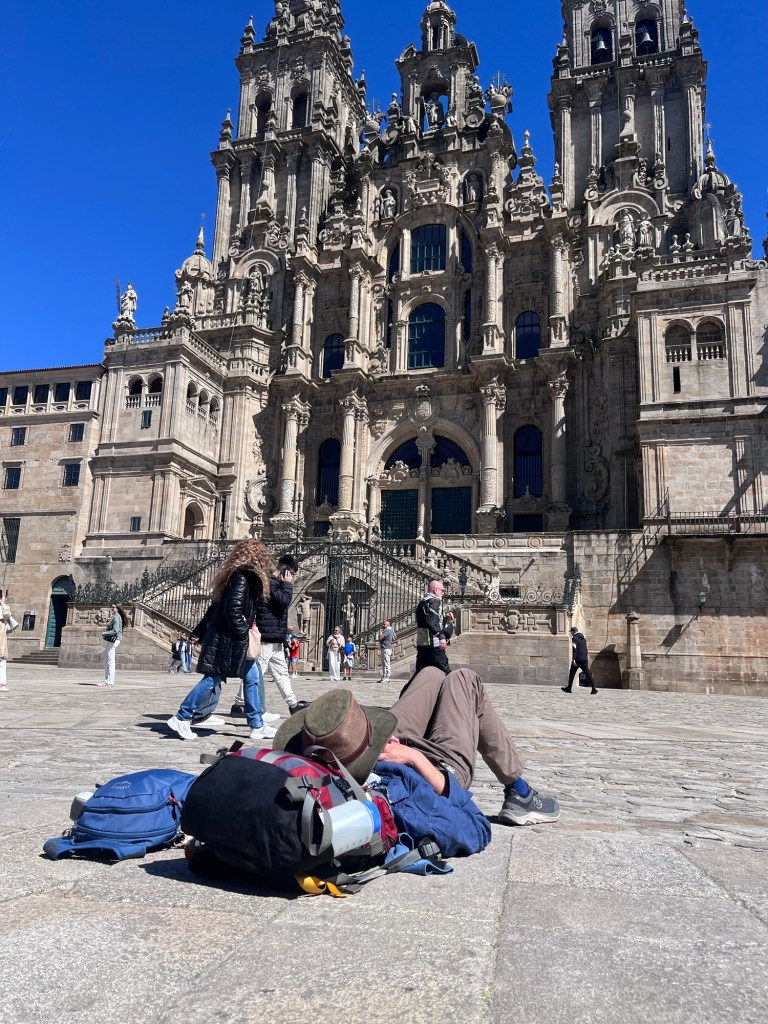
Santiago de Compostela is the time-honored final destination of this pilgrimage. A magnificent cathedral is there, with two gingerbread spires that look down on a plaza brimming with people. From all over the world, they have made their way over diverse landscapes, following paths that have been trod for centuries to this revered place.
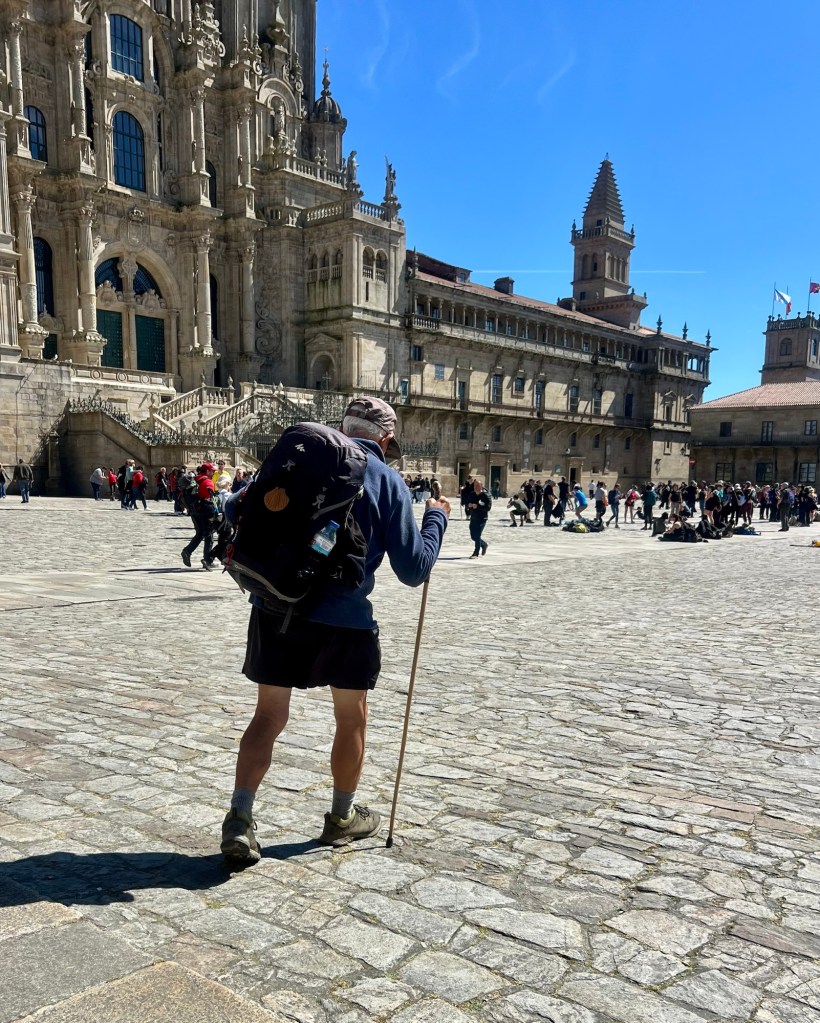
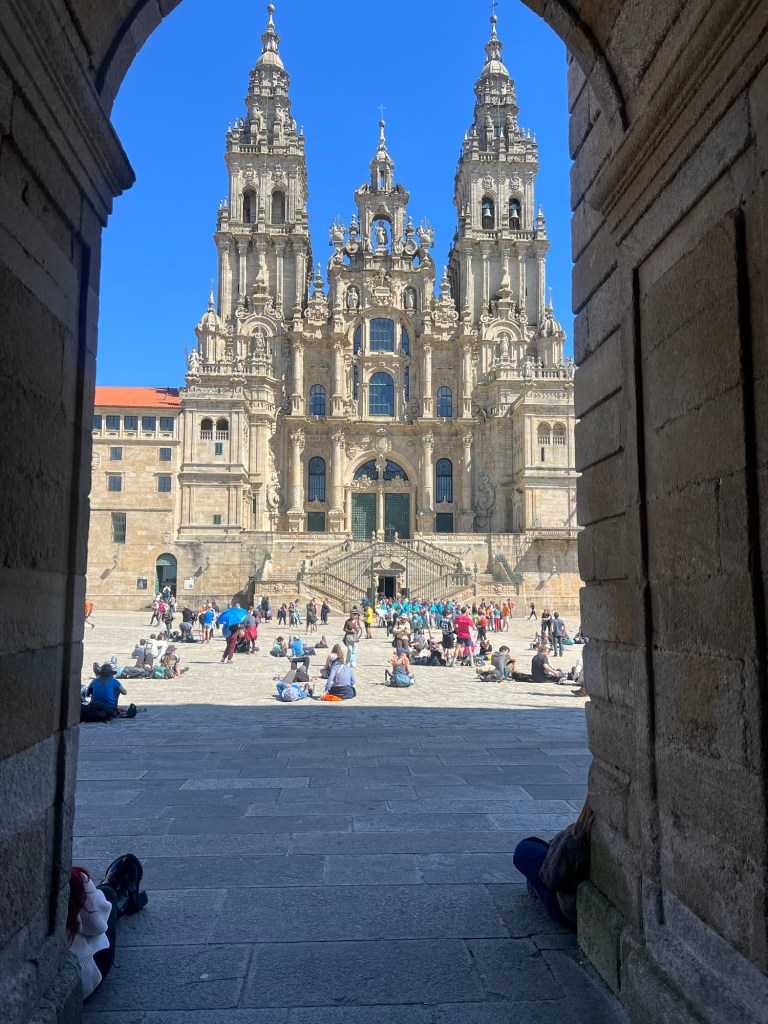
Pilgrims enter the plaza from the labyrinth of narrow side streets. Those coming from France follow a route that leads them beneath an archway with perfect acoustics. From dawn to dusk, someone stands under the arch playing bagpipes.
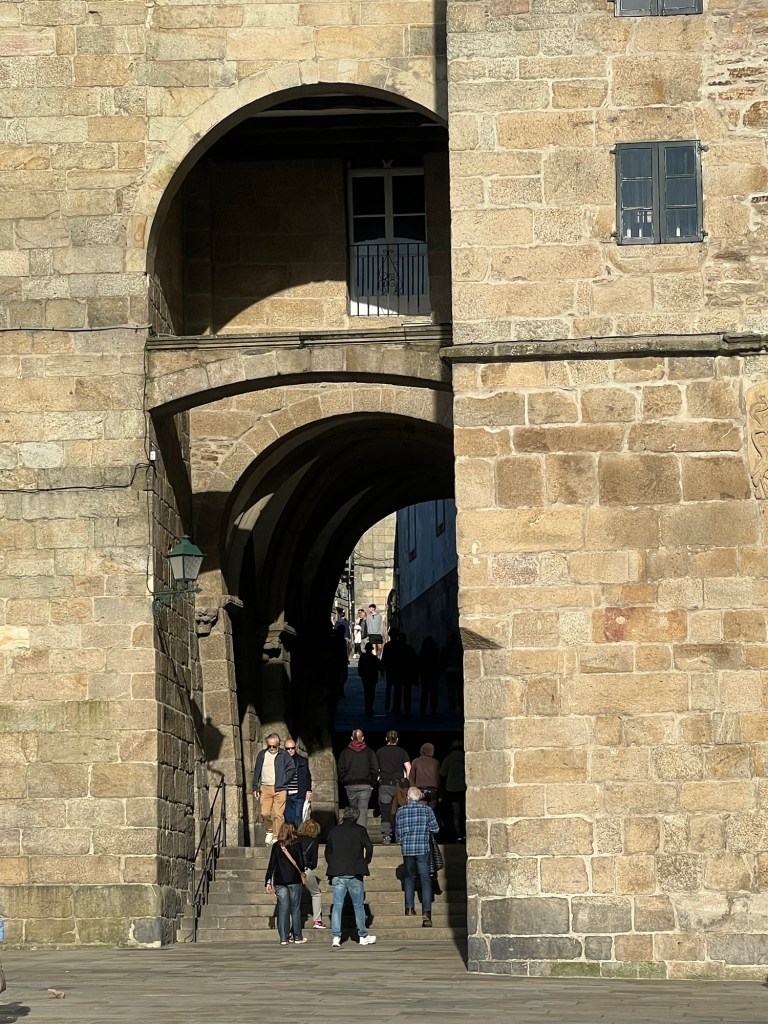
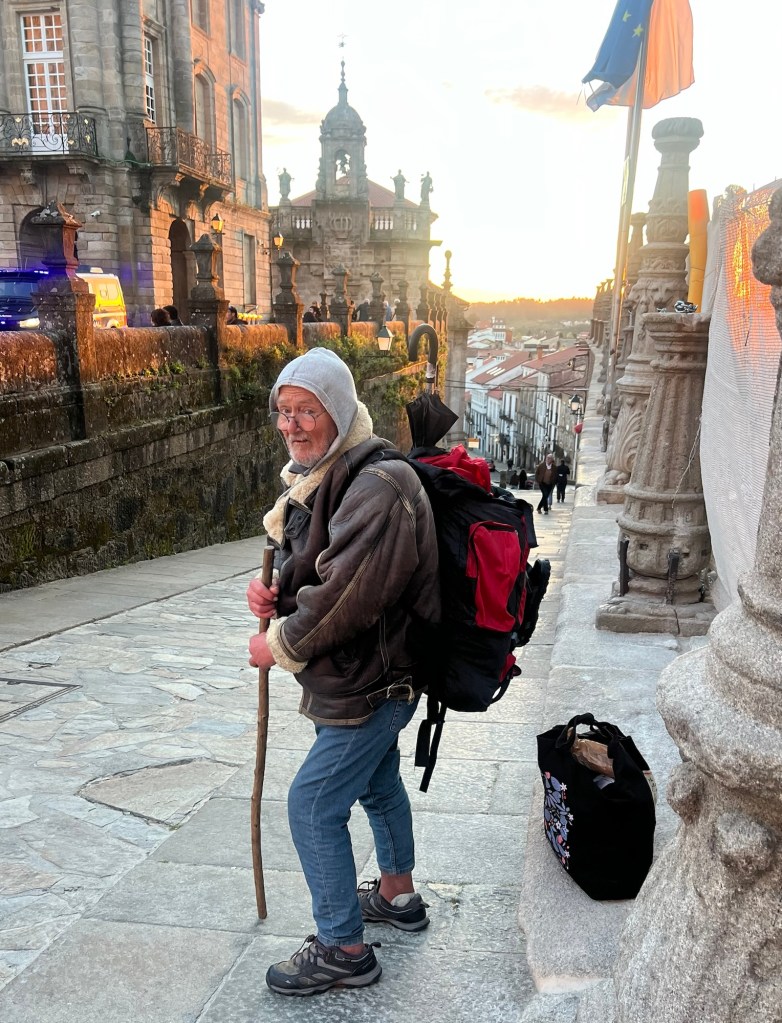
The pilgrims are weary, but that doesn’t keep them from cheering and singing and hugging each other. Soon the celebration subsides as they fall silent, put down their walking sicks, and remove their rucksacks. They lie down on the cobblestones and look up at the western façade of the baroque basilica, candescent in the afternoon sun. Scallop shells are strewn across the edifice like a field of stars. Every niche and pedestal harbors a statue of Saint James as Santiago, a Pilgrim himself, with his floppy hat and drinking gord tied to the top of his wooden staff.
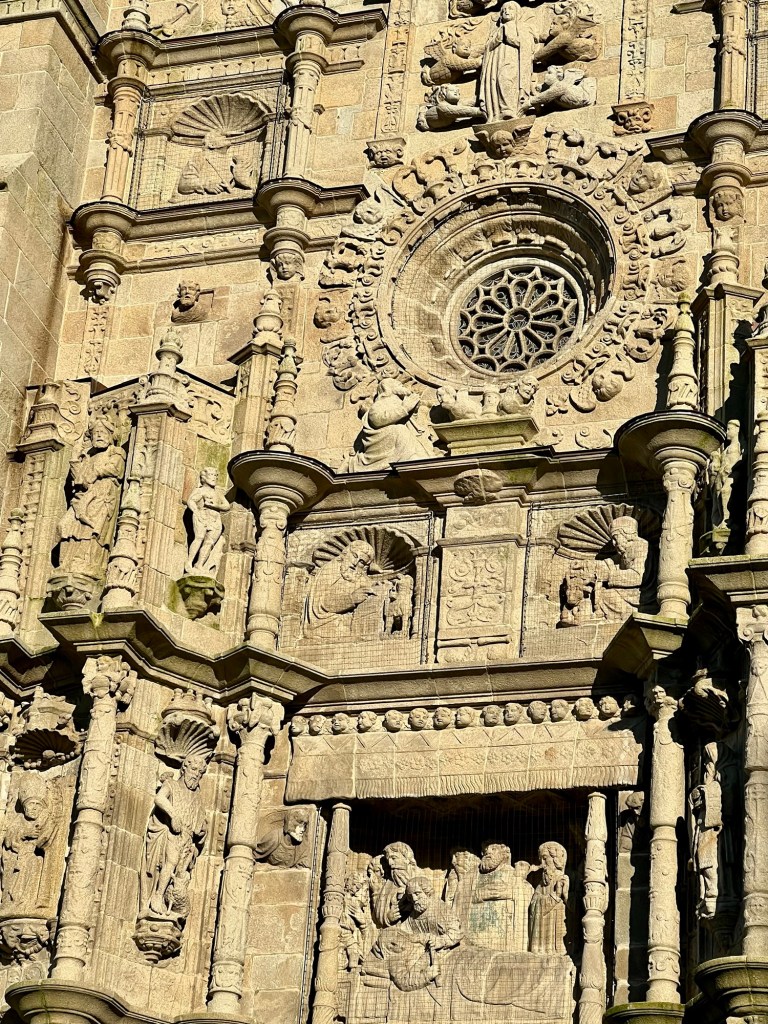
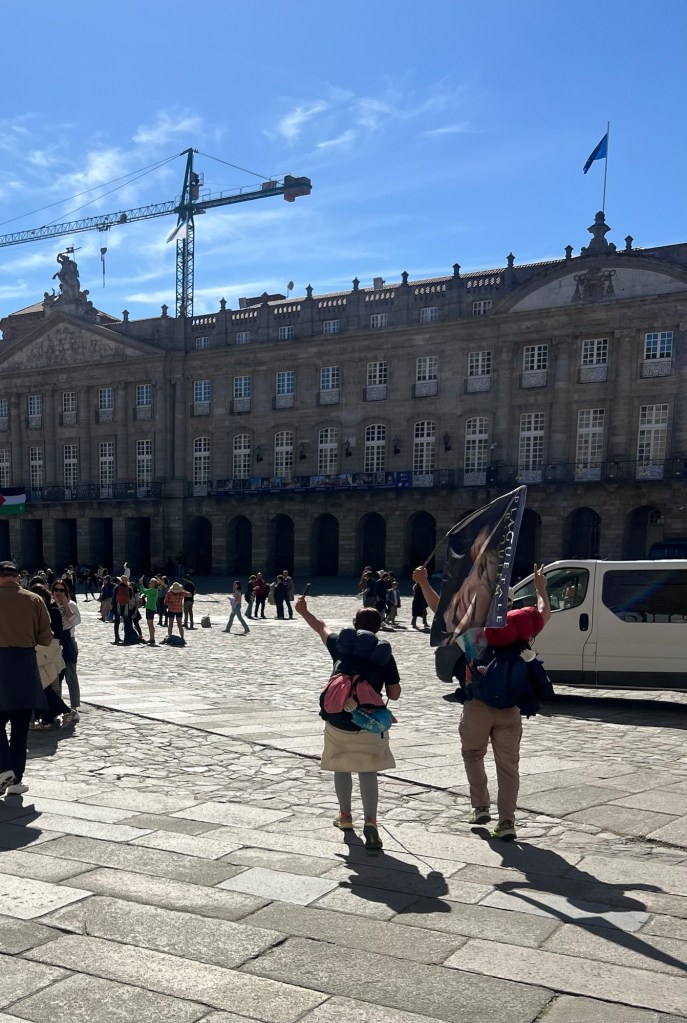
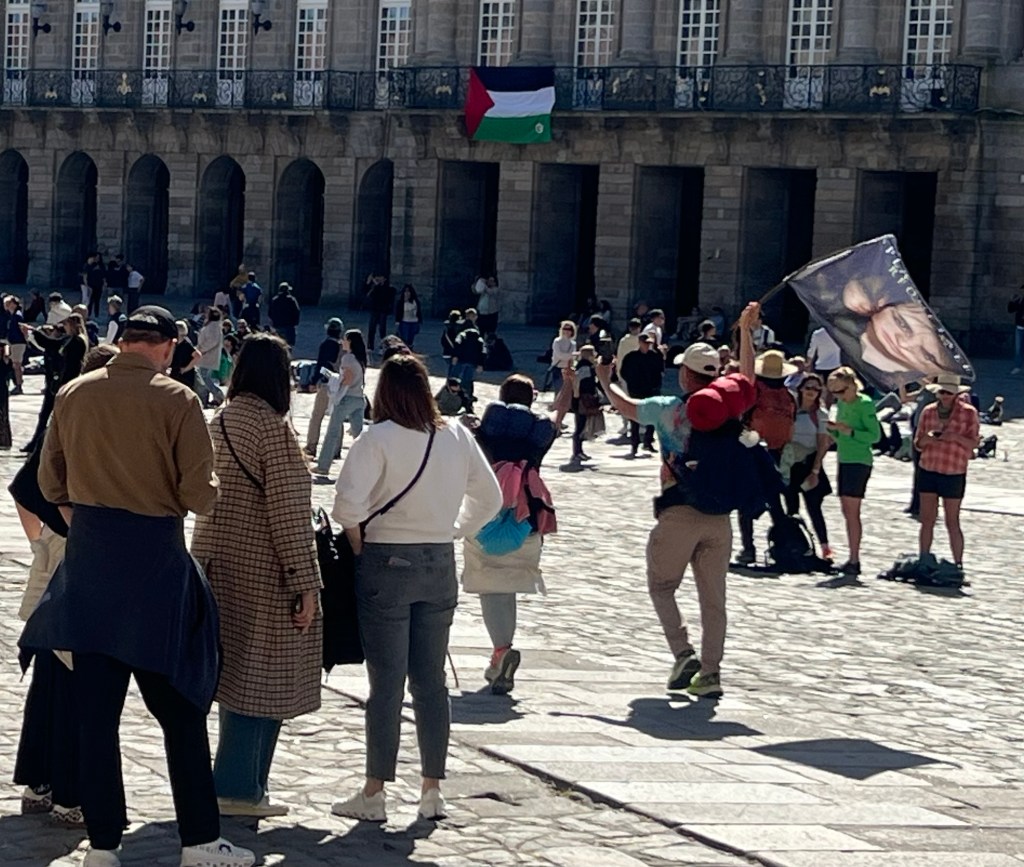
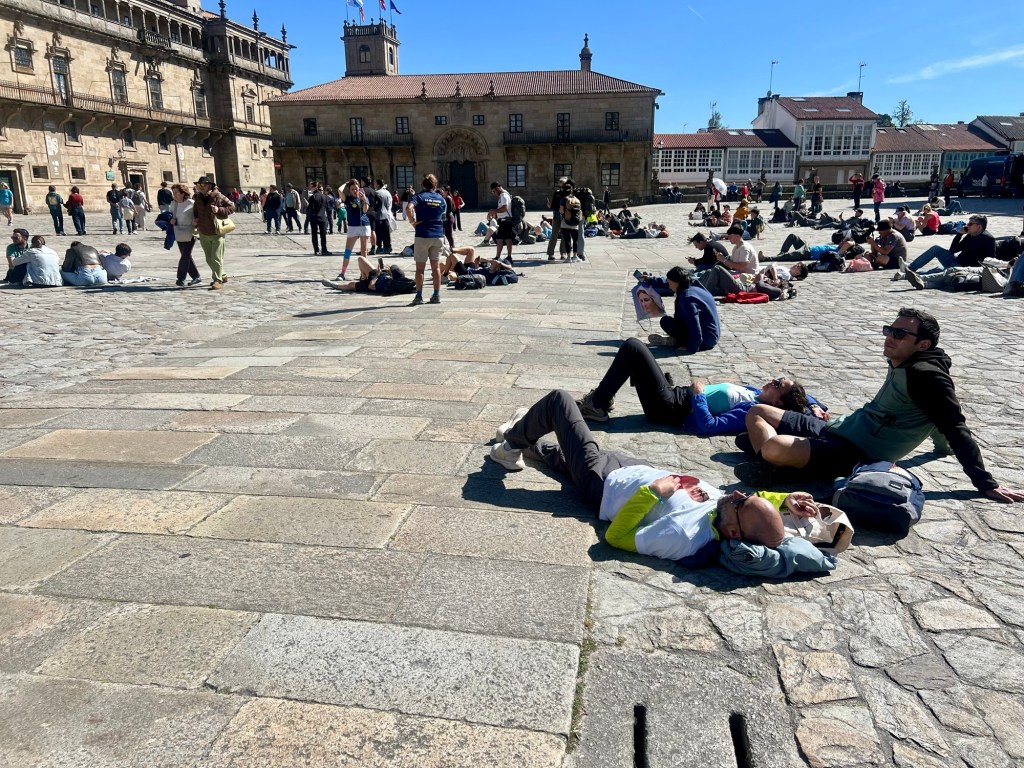
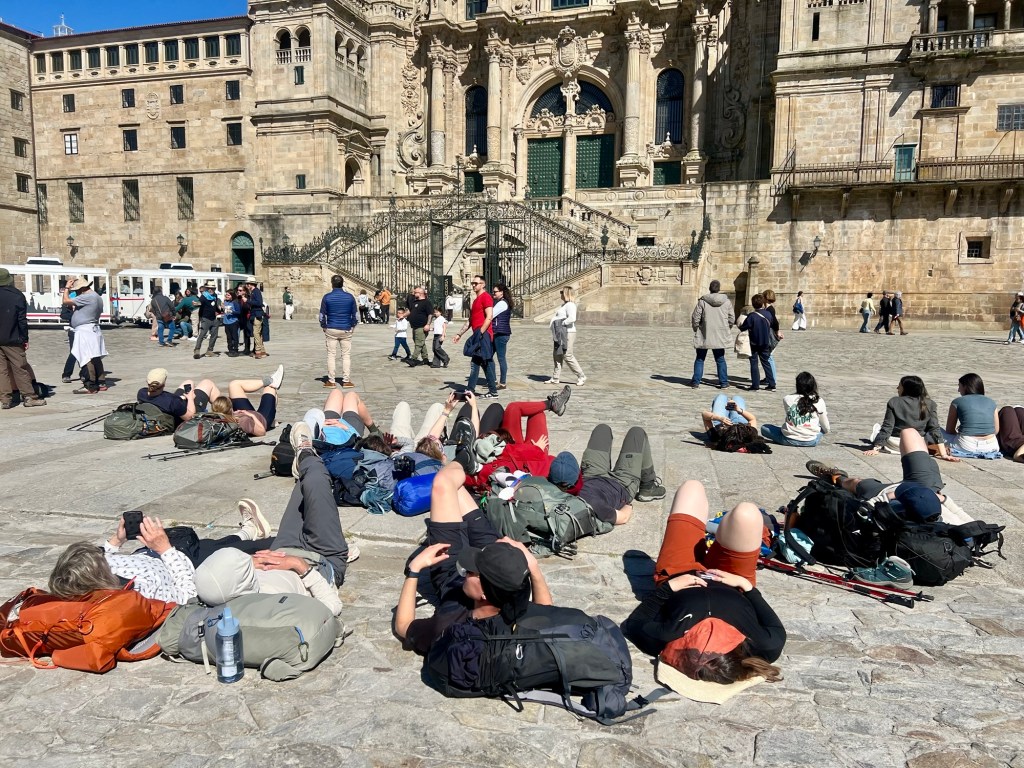
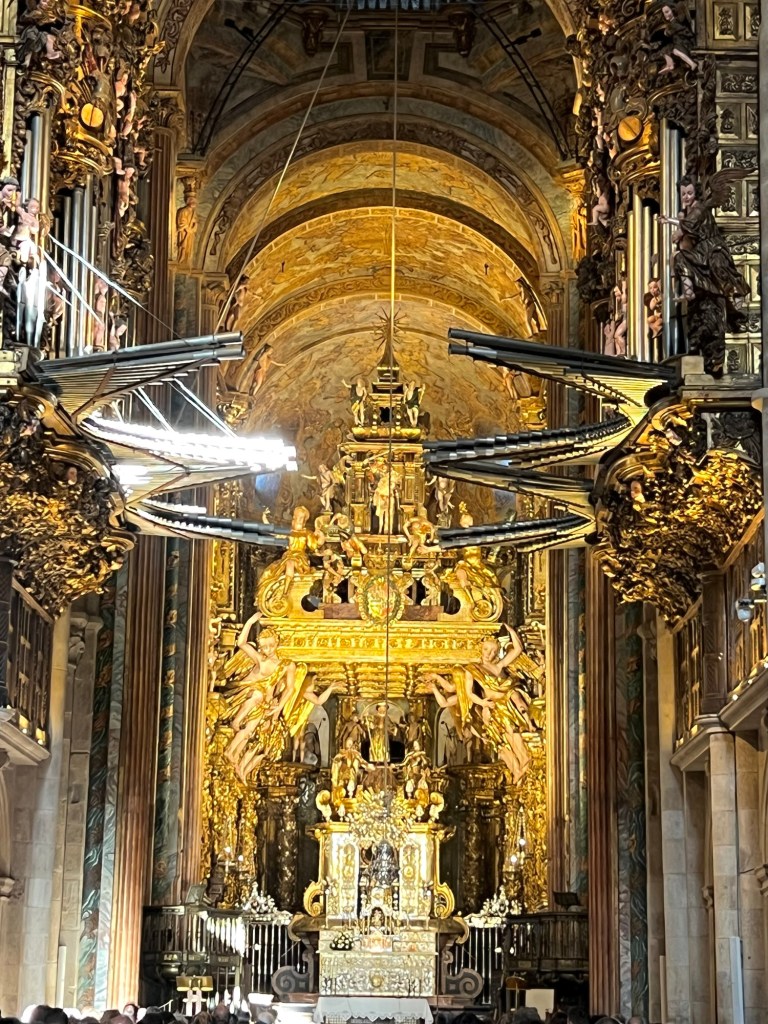
The cathedral’s interior is even more breathtaking. You can walk in anytime from early morning until after sunset, so that’s what Caroline and I did. I went inside five times in the short time we were there. I was drawn back to the unearthly space that could be at once both vast and intimate. The soaring arches ascend past stained glass windows. Filtered, jewel-colored light bathes the stone floor.
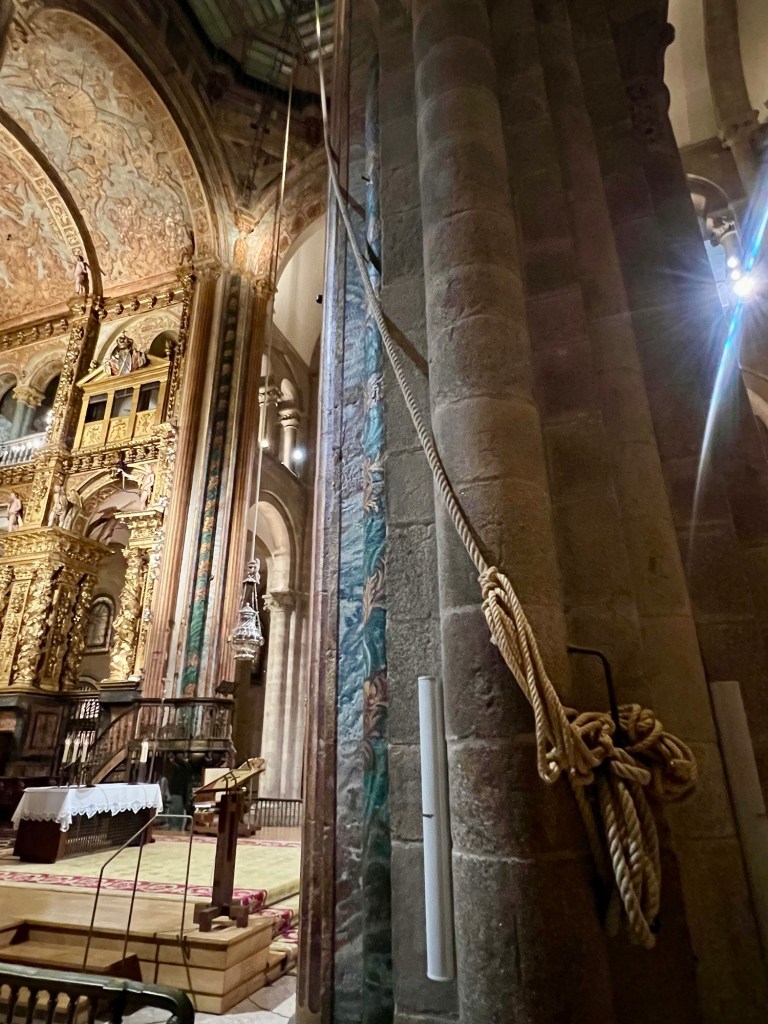
In medieval times, the front doors to the cathedral were kept open day and night so that pilgrims could come in whenever they arrived. The first thing they saw was the “Portico of Glory”–iconography taken to the next level. There are effigies of over two hundred figures from the Bible, the entire sweep played out in stone. They are all there: the prophets, the evangelists and other apostles, angels, even the Tree of Jesse. Mary and Jesus are in prominent positions, but center stage is Saint James. His place on the center pillar is where countless pilgrims over the centuries have touched his tunic as they walked by.
The “Portico of Glory” is a Romanesque masterpiece considered to be the high point of medieval sculpture (no pictures here, photography is not allowed). What I liked most was the earliest known carving of a Biblical figure who is smiling. It is the prophet Daniel, standing between Isiah and Jeremiah. There is no word on what he is smiling about.
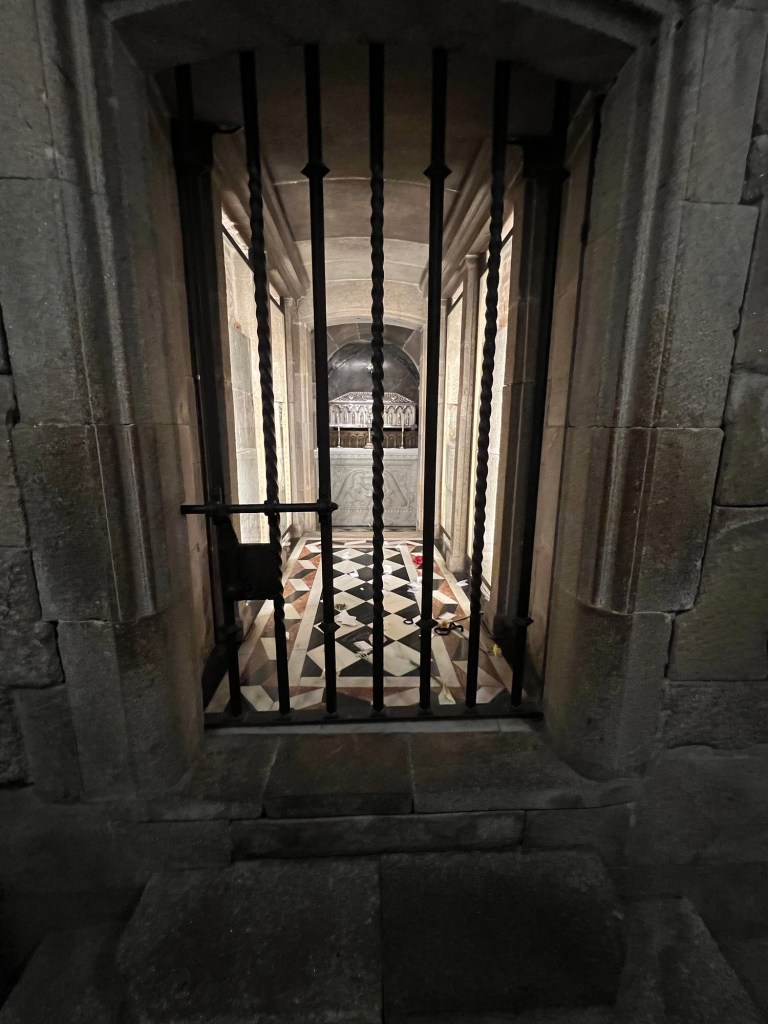
On the far end of the nave is the high altar. Below it is the crypt where a pilgrim can descend a narrow stairwell and creep past the relics that have been the whole point of the walk from its beginning.
When asked about the difficulties of sculpture, Michelangelo said, “It is easy. You just chip away all the stone that isn’t David.”
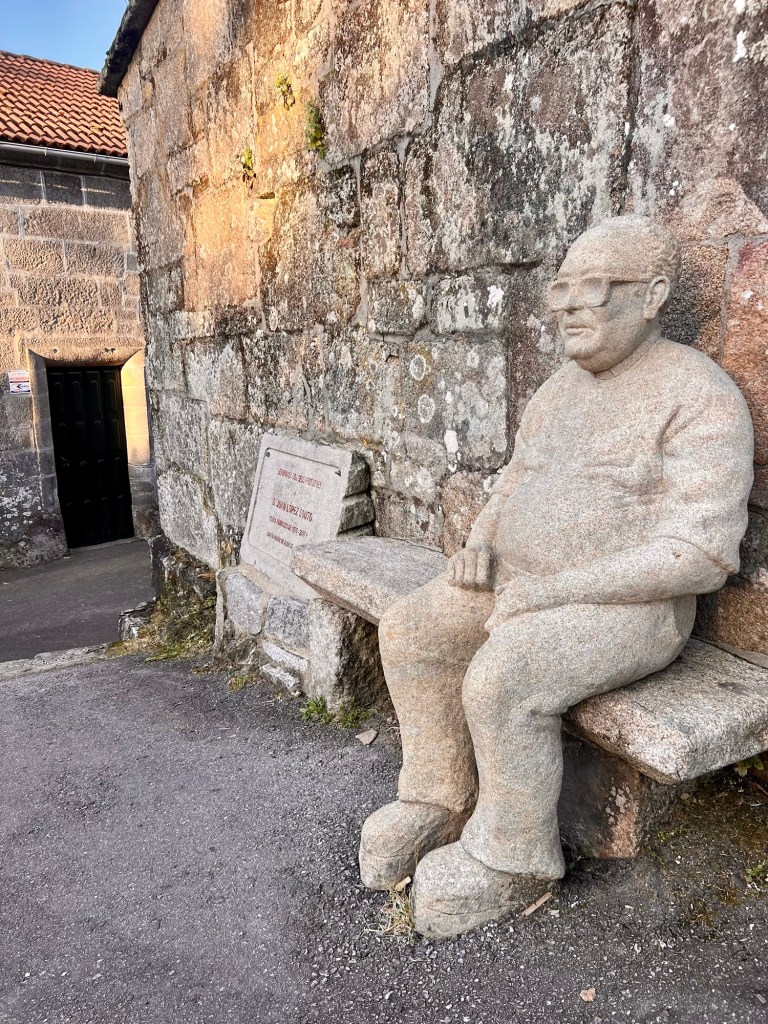
As if something of the essence of David was in the stone and that something sacred may embody a material object that was created in its image. Whether or not that is true, I have seen that if one allows a part of themselves to believe it is so, or to act like it is, they can draw closer. When reverence and devotion come into focus on an object, it can be immersive and allow for a more emotional and personal experience of the sacred.
For us, that happened far above the crypt, on the alter itself, where Saint James appeared again, this time with a gilt pilgrim hat and draped in an opulent cape of pure silver. He had come a long way from the humble, bedraggled fellow pilgrim who we followed on trails through the countryside.
When we emerged from the crypt, we followed a passage that ascends within the altarpiece and directly behind Saint James’ iridescent statue. By tradition that extends back for centuries, the pilgrim is told to stop, grasp both of his shoulders, and give him a hug.
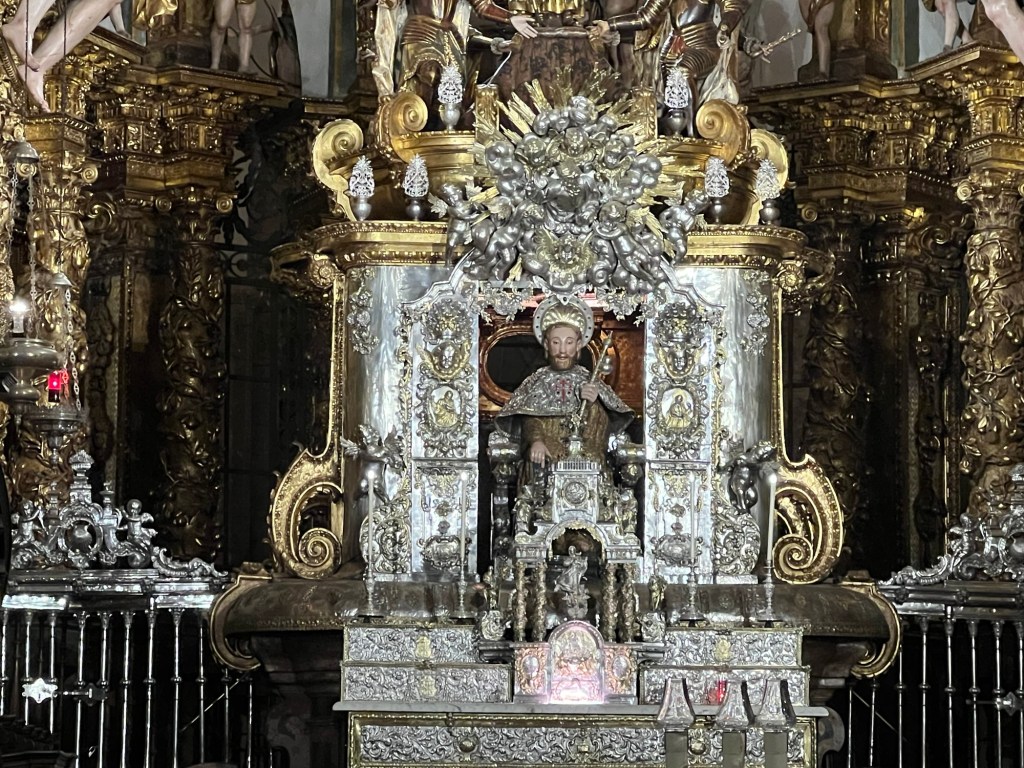
Caroline and I went back and hugged Saint James more than once.
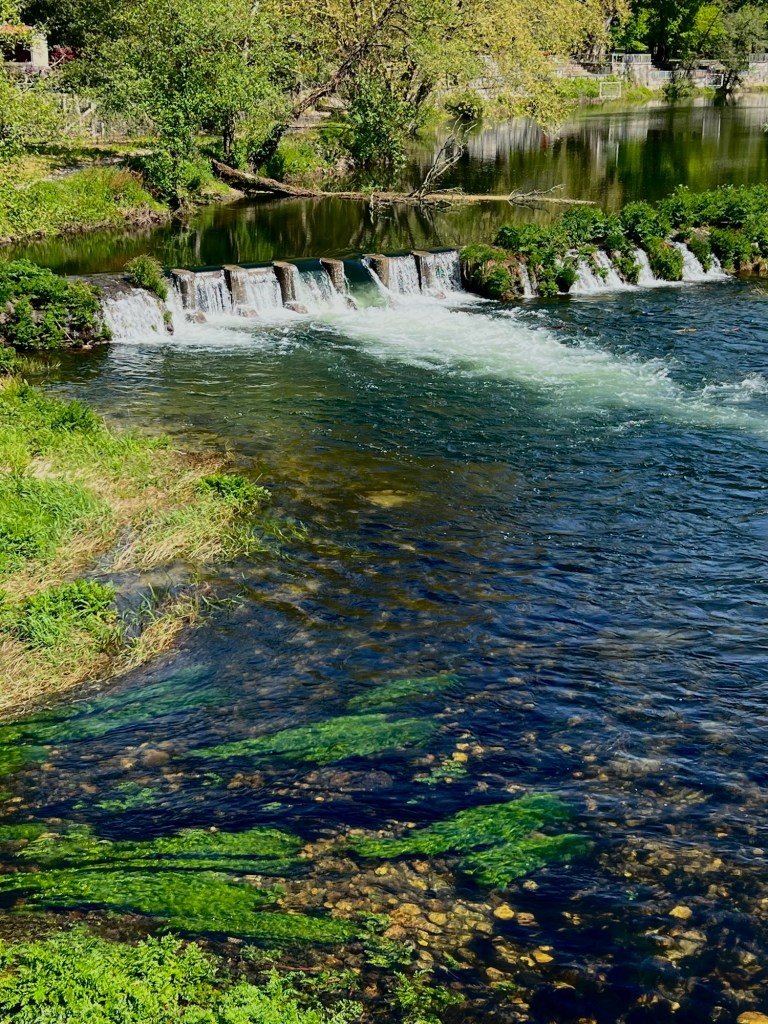
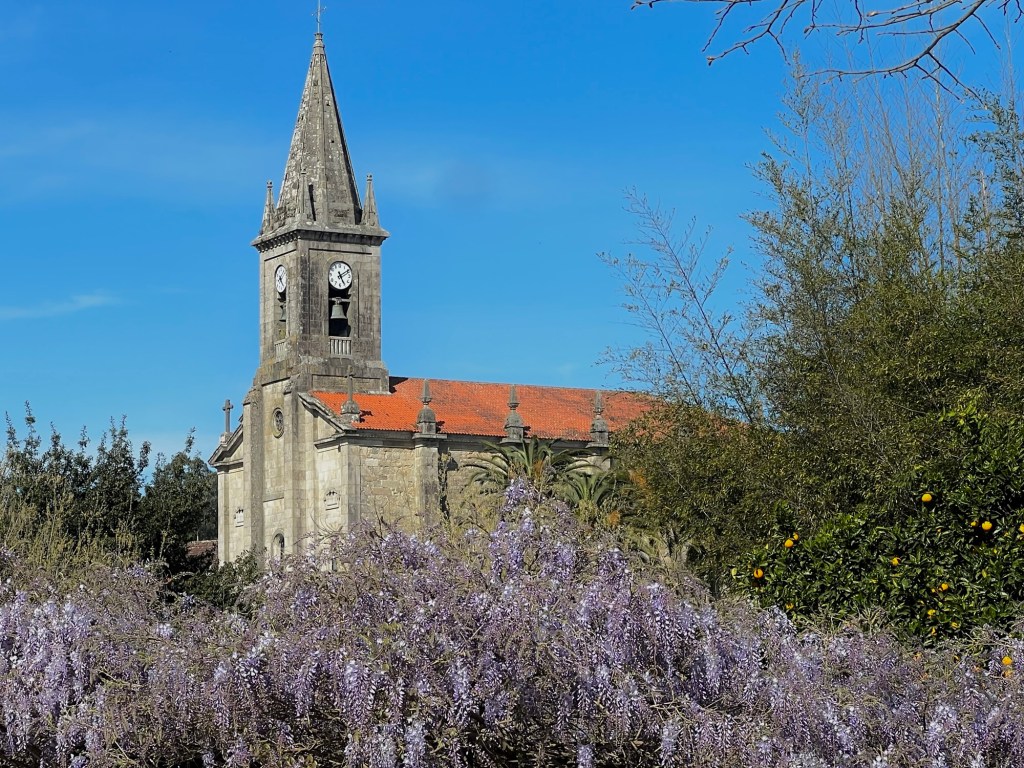
In the Spanish city of Caldas de Reis stands Igleja de San Tomás Becket, the Church of Thomas Becket. Thomas Becket was not Spanish, he was English. He was the Archbishop of Canterbury who got into trouble with King Henry II and was murdered right there in his own cathedral. Richard Burton portrayed him in the movie.
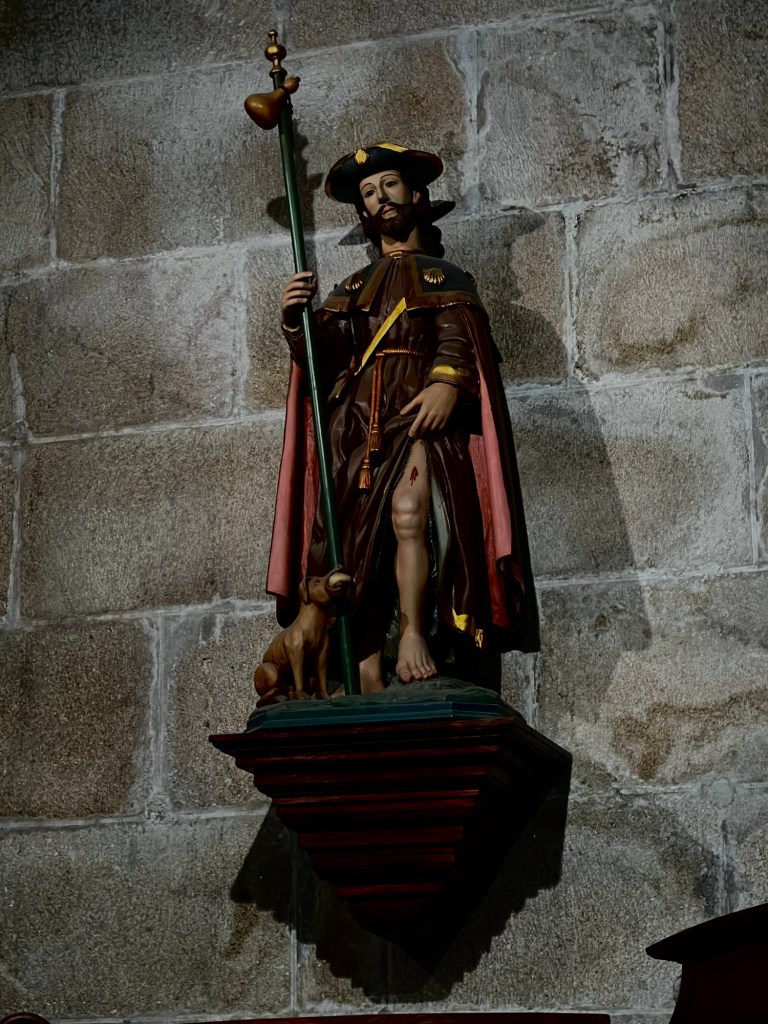
The church is dedicated to Thomas Becket because he, too, was a pilgrim and passed through on the way to Santiago de Compostela. Caldas de Reis is a charming village that straddles the Umia River and is known for its medicinal waters. The patron saint of Caldas de Reis is San Roque, who was born a nobleman’s son but gave his inheritance to the poor and wandered around Europe, helping and healing people. He contracted the plague and was himself healed by the miraculous intervention of a dog, so the story goes. Thereafter, he became the patron of pilgrims everywhere and, better yet, of dogs.
I sat in the back of the church watching other pilgrims trickle in. They wandered around the sanctuary and looked in the side chapels. A table near the front was where they could stamp their Camino Credentiale and document that they had been there. The church was populated by scenes from the life of Mary (Madonna, Pieta, the Assumption) and even more of Jesus (the Passion mostly, but others, as well). There were statues of saints and effigies of other characters unfamiliar to me. A statue of a balding, severe looking monk with the expression of a professional pallbearer –like a grumpy Friar Tuck–was mounted to the side of the pew where I sat. He seemed to be staring right through me, as if he knew what I did last night.
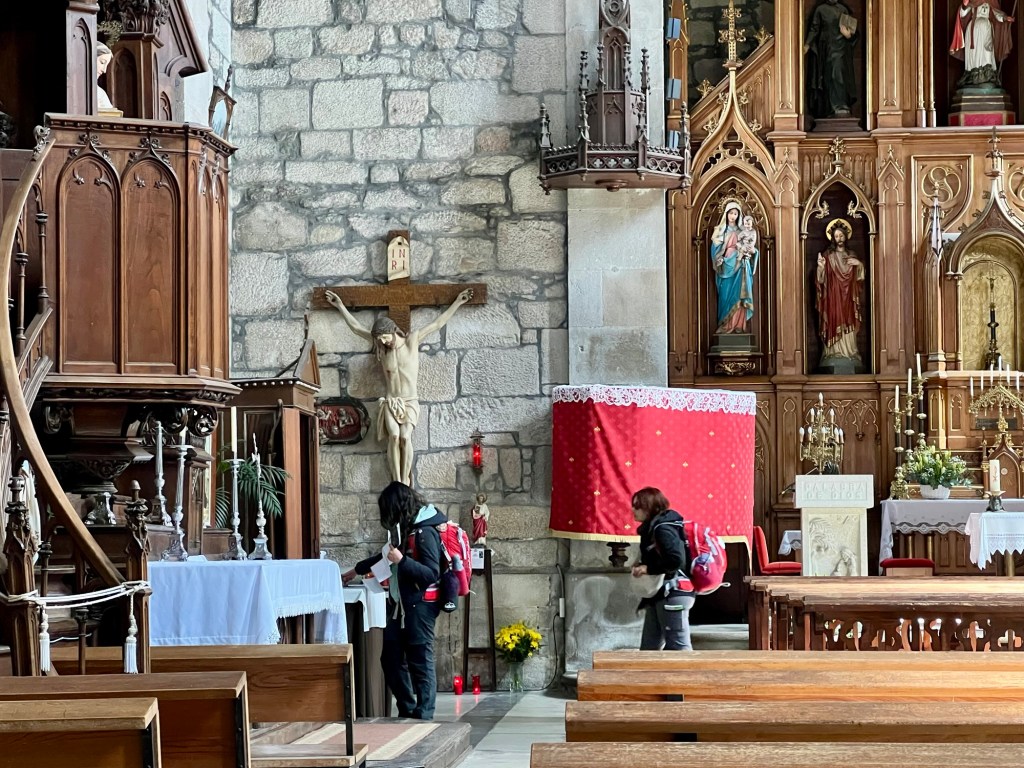
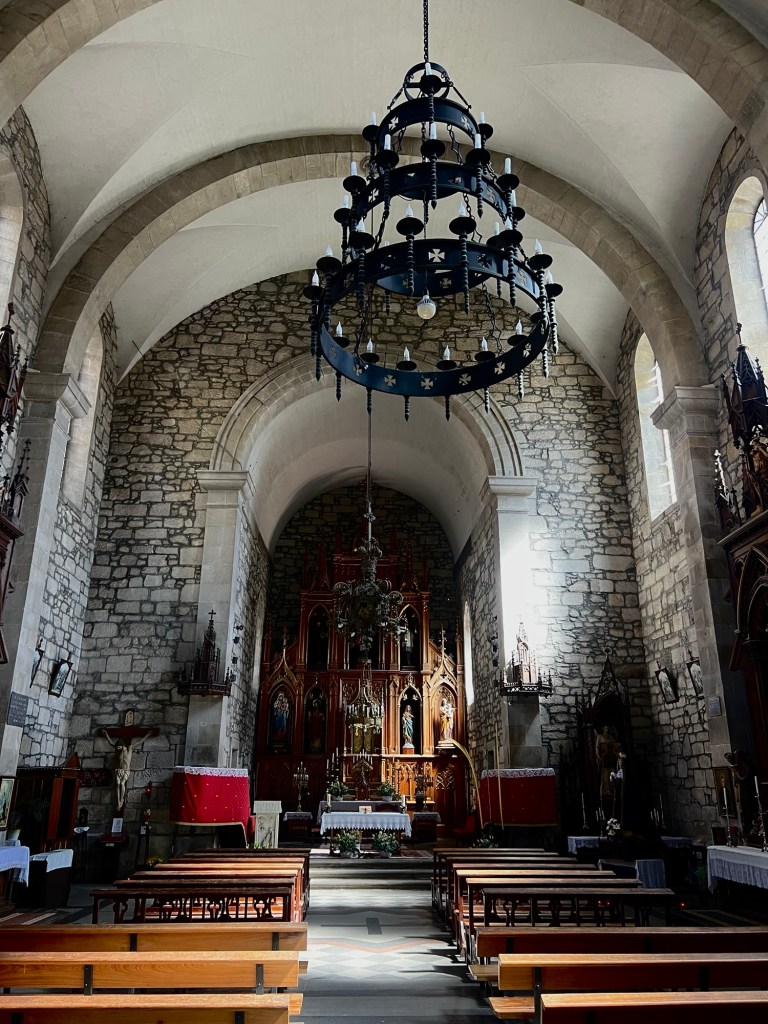
The outer portico blazed in the afternoon sun, but the interior of the church was draped in a cool and muted light. All was tranquil and the silence was like a shroud to put on when you came inside. It was the kind of place where you instinctively become quiet.
A shadow darkened the floor tiles as a young woman appeared from behind me and walked down the center aisle of the nave. She stopped near the front, went down on one knee, and then sat down on the pew. She gazed up at the altar for a moment before pulling the hoodie off her head to reveal light brown hair. When she leaned over to pray I closed my eyes, too, and let the stillness wash over by me.
When I looked up again she was still bent over in prayer. A moment later, when she sat up straight, her hair had changed color. It was light brown before she prayed. Now it was black.
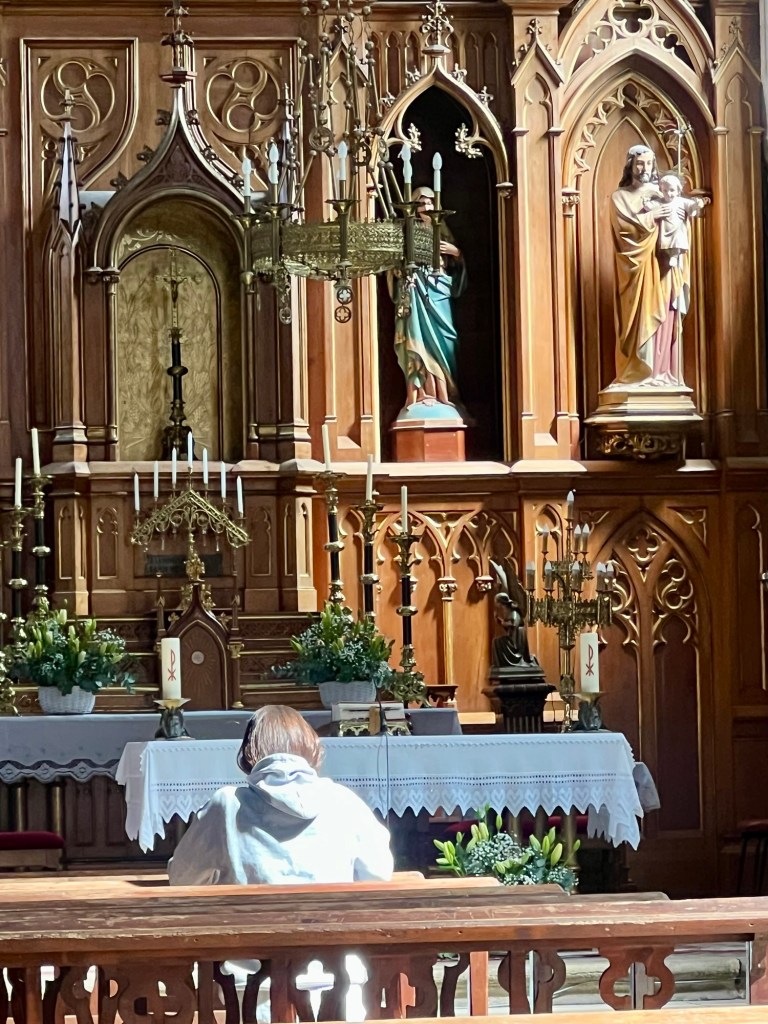
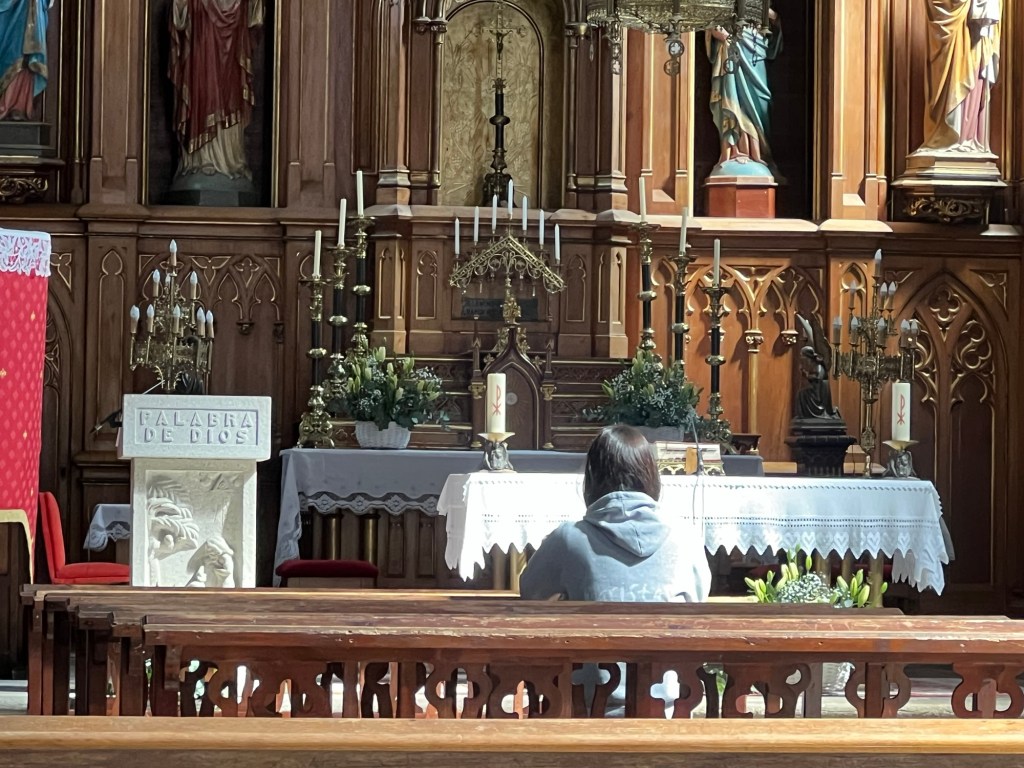
What I think now is that there was a change in the lighting (look closely at the photos). Yet, there were a few moments, before logic caught up with God, that I saw magic and miracle.
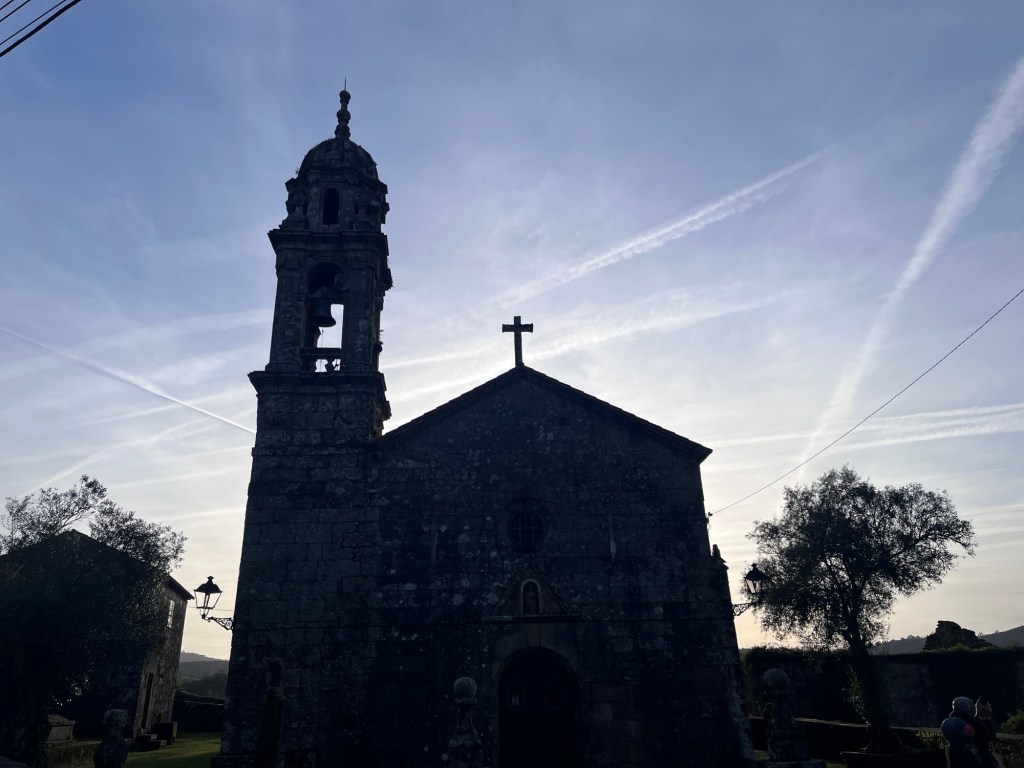
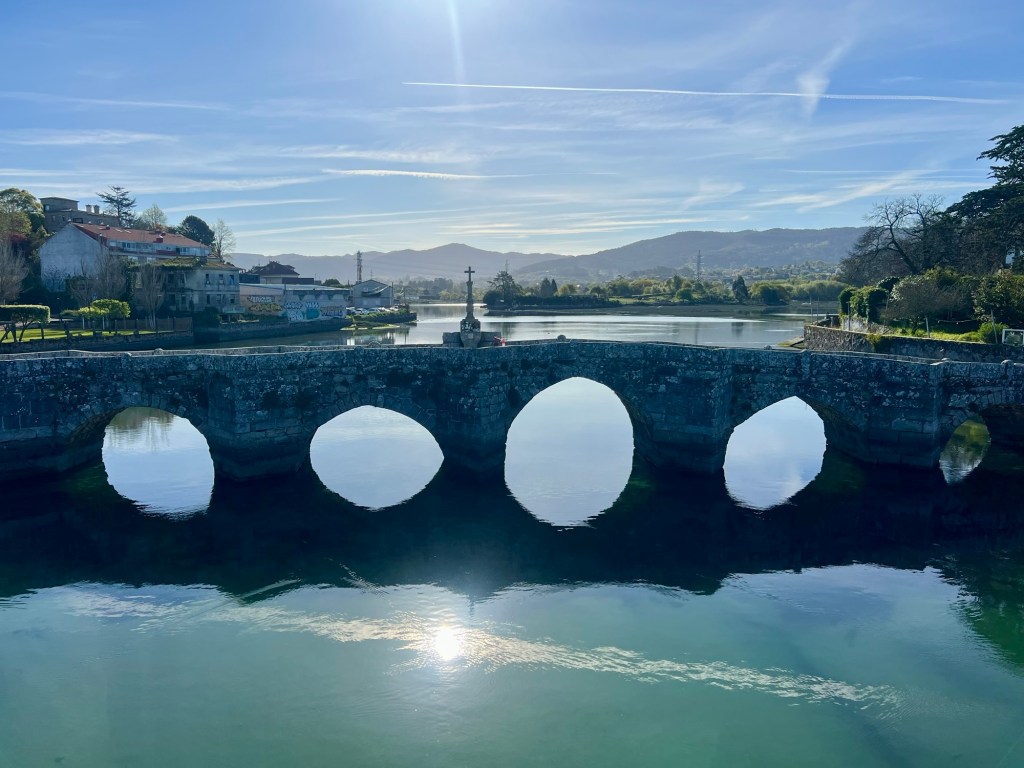
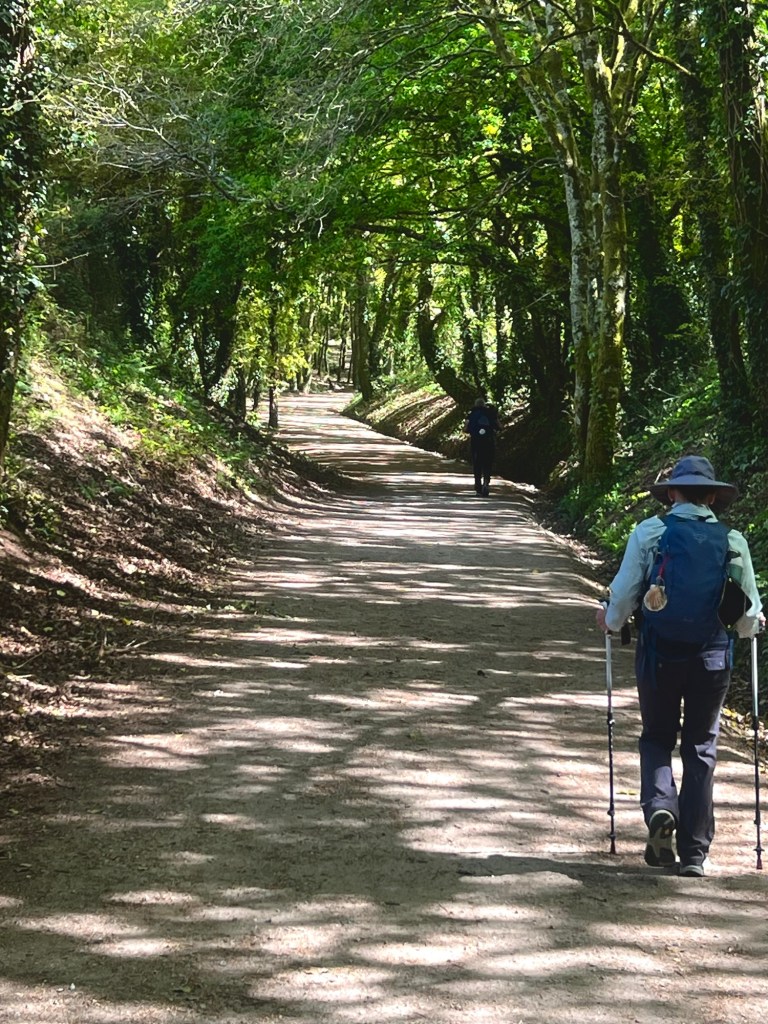
To get the most out of the Camino, you must me willing to suspend disbelief. If you’re reading this, then I hope my telling it made it the same for you, if only for a moment. I hope you had the same magical thinking that I did and felt what I felt. It was a good feeling and I will choose to keep that ember glowing.
It happened one more time. On the last day.
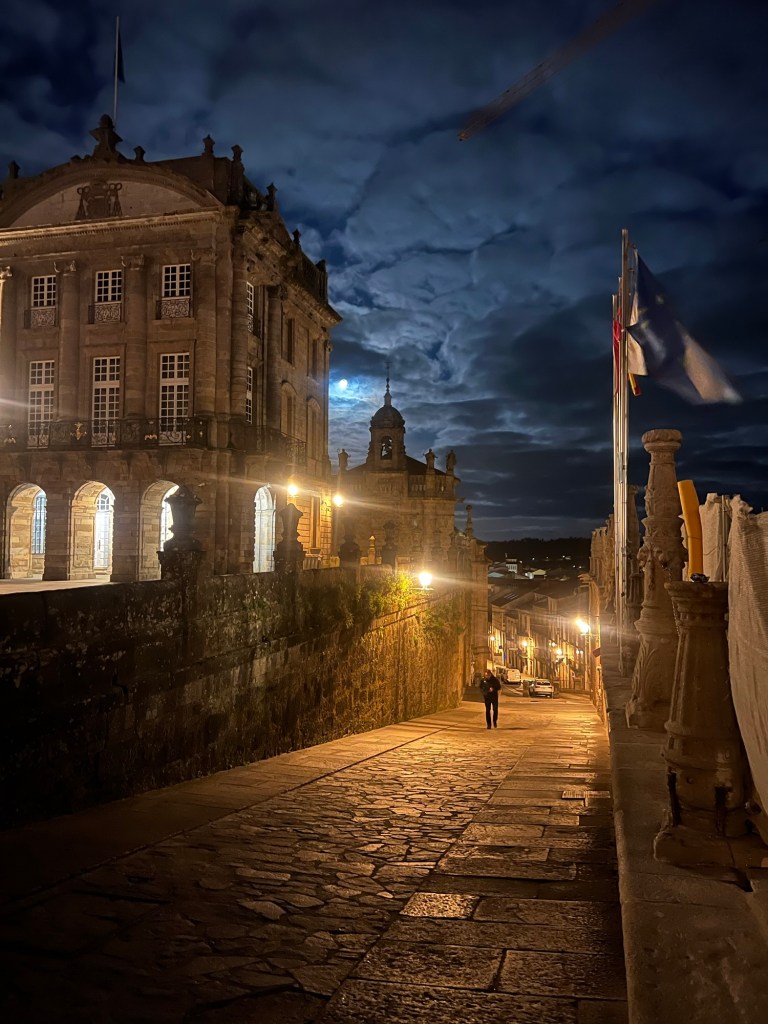
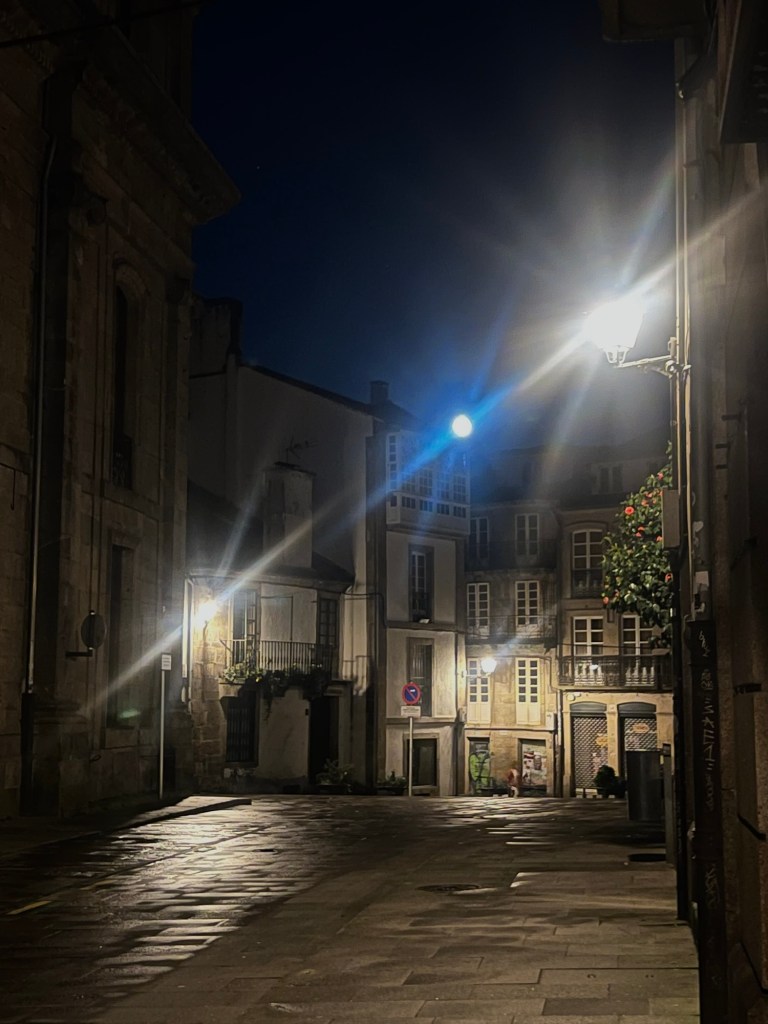
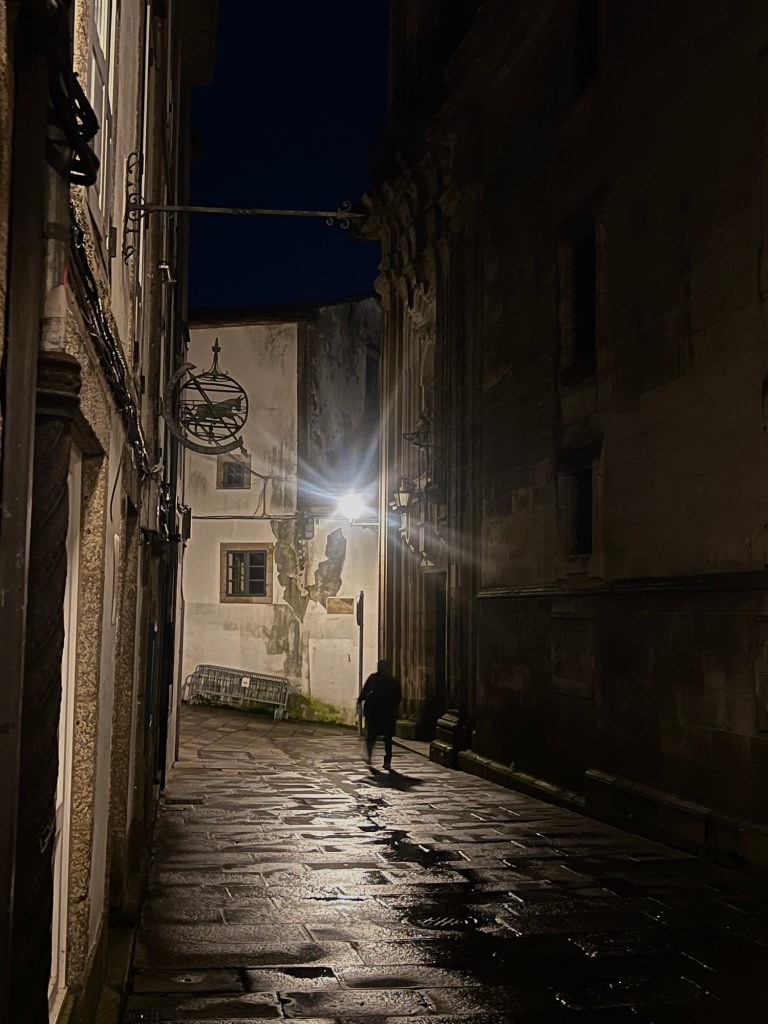
At midnight the streets of Santiago are still full of revelers, but get up early the next morning and you will have them all to yourself. Alone in the Plaza de Quintana, I counted the deep pulse from the Berenguela Clock Tower, whose clock face has no hour hand. When it was built as a later addition to the cathedral, it was the tallest structure in Europe. The tower looms over the square and the adjacent Puerta Santa (Holy Door), which only opens for pilgrims during Holy Years.
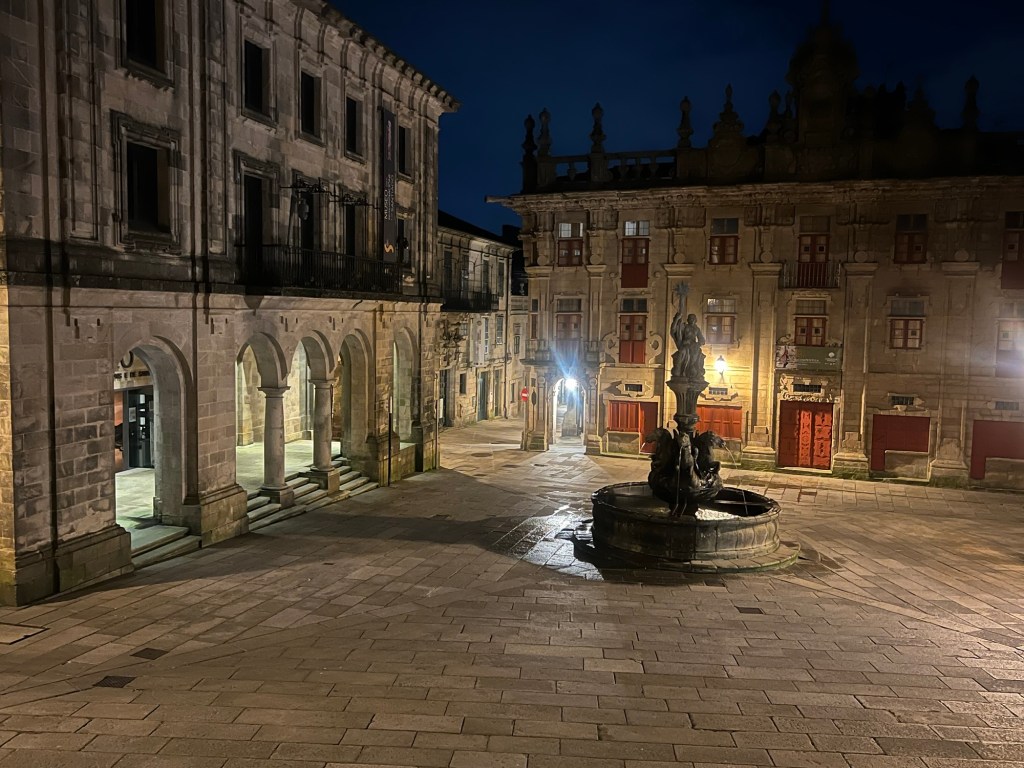
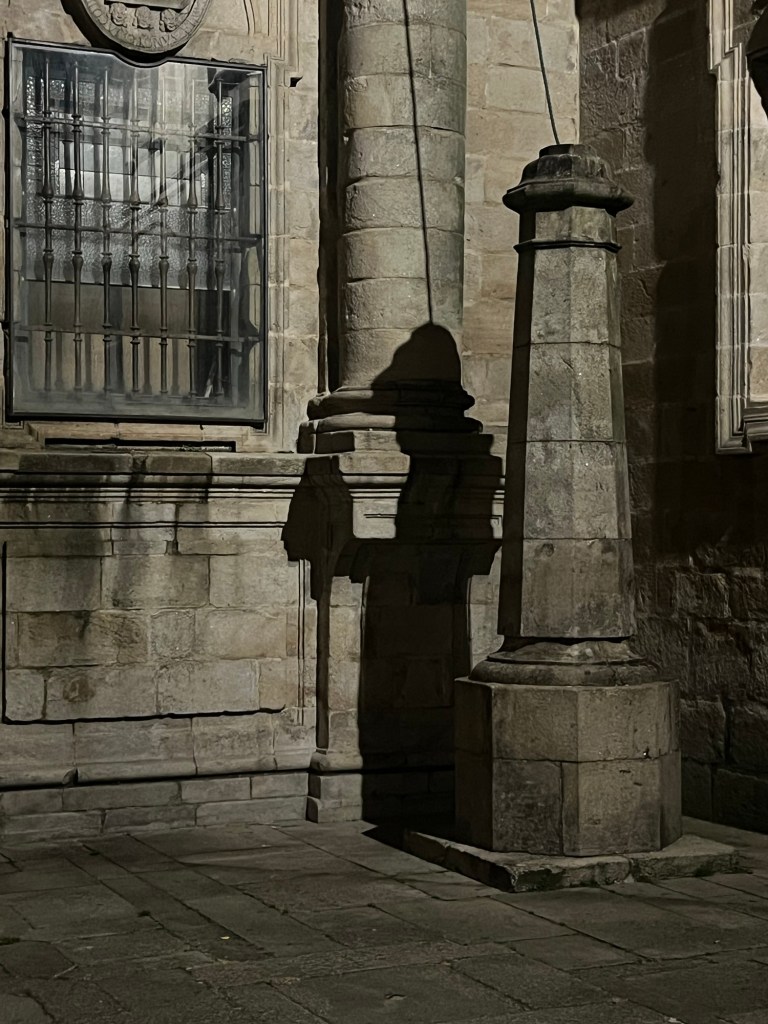
I stood by the fountain in the center of the square. The last knell from the bell tower drifted into the night sky. I looked to the corner of the square, next to the Puerta Santa, and saw the outline of a pilgrim emerge like a phantom from behind a stone column.
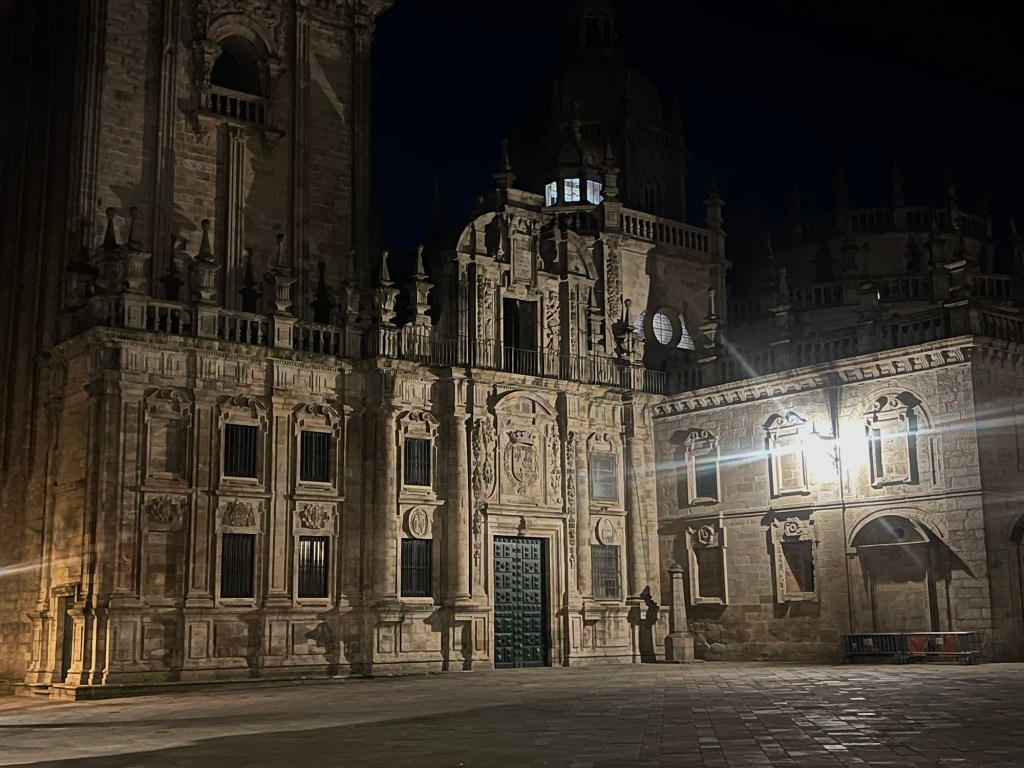
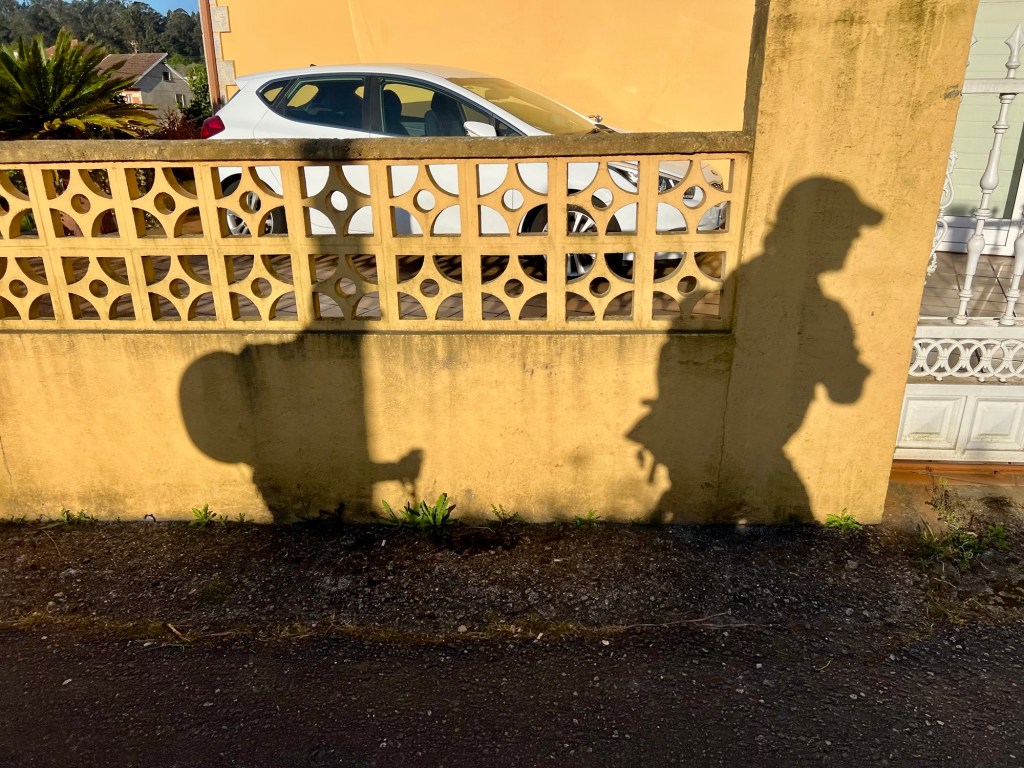
I know it was just a shadow and that I am not the only person have to noticed it. And yet, I will hold onto my moment with that pilgrim apparition and see in it more than the play of light on surfaces.
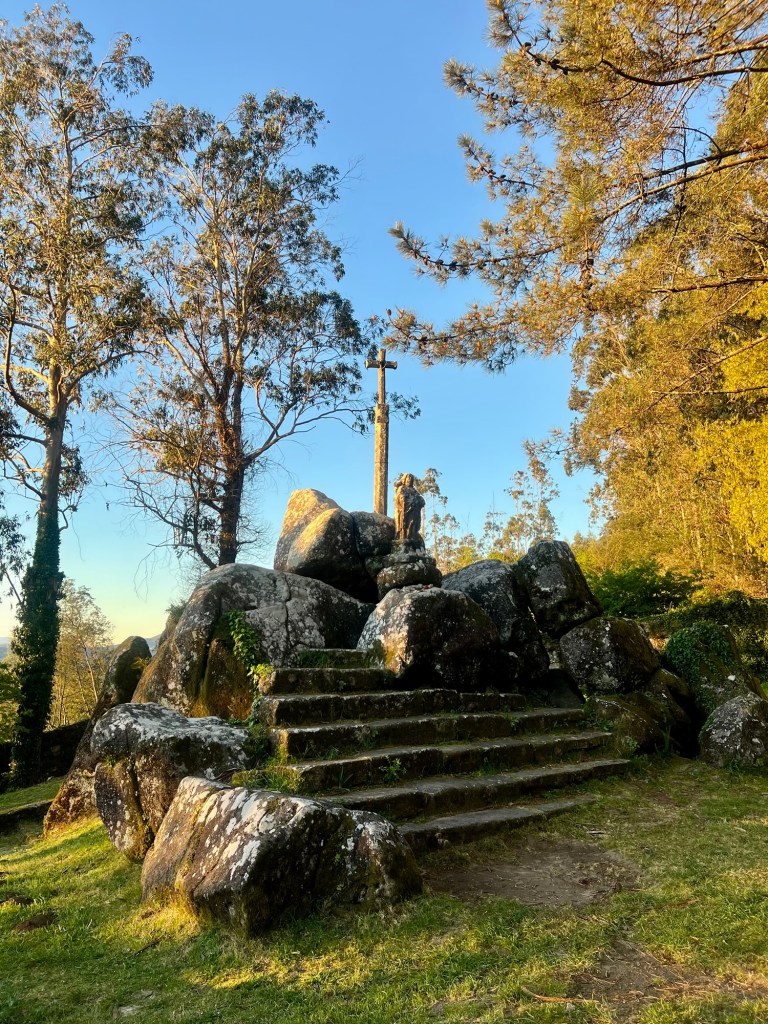
People come to the Camino Santiago for many reasons and it’s always for something more than just to take a walk. They are looking for something, even if they are not sure what. For most people, it is a desire to feel connected. Connected to something. For many, it is to God, yet it’s almost always more than that. They are taking part in a rich tradition and joining a history that goes back a thousand years. There is the spectacular scenery and the companionship with strangers. And every pilgrim considers the Camino another chapter in their inner journey, their personal camino.
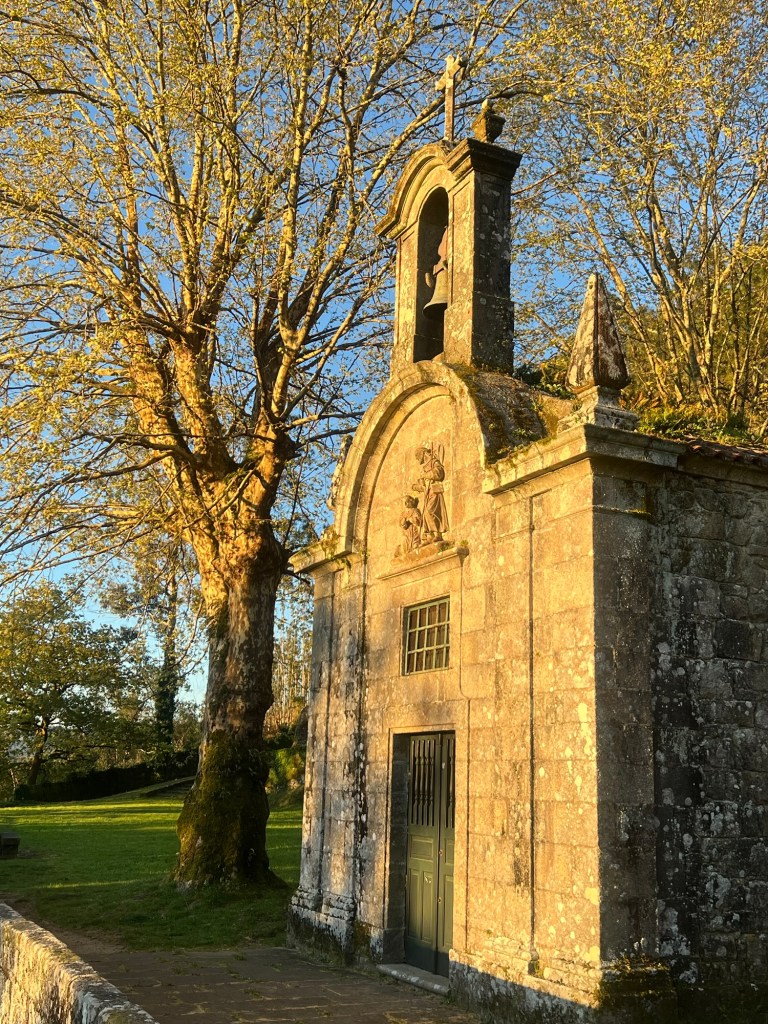
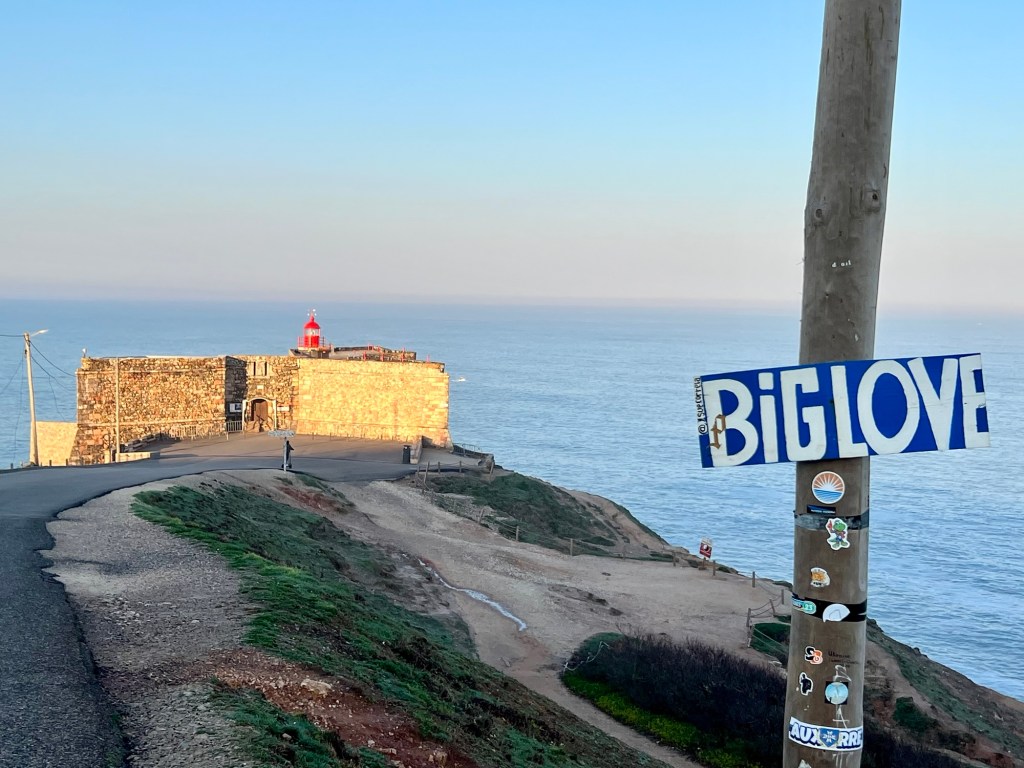
Some of the best things that happened on my Camino were unplanned, unexpected, and suffused with a sense of wonder.
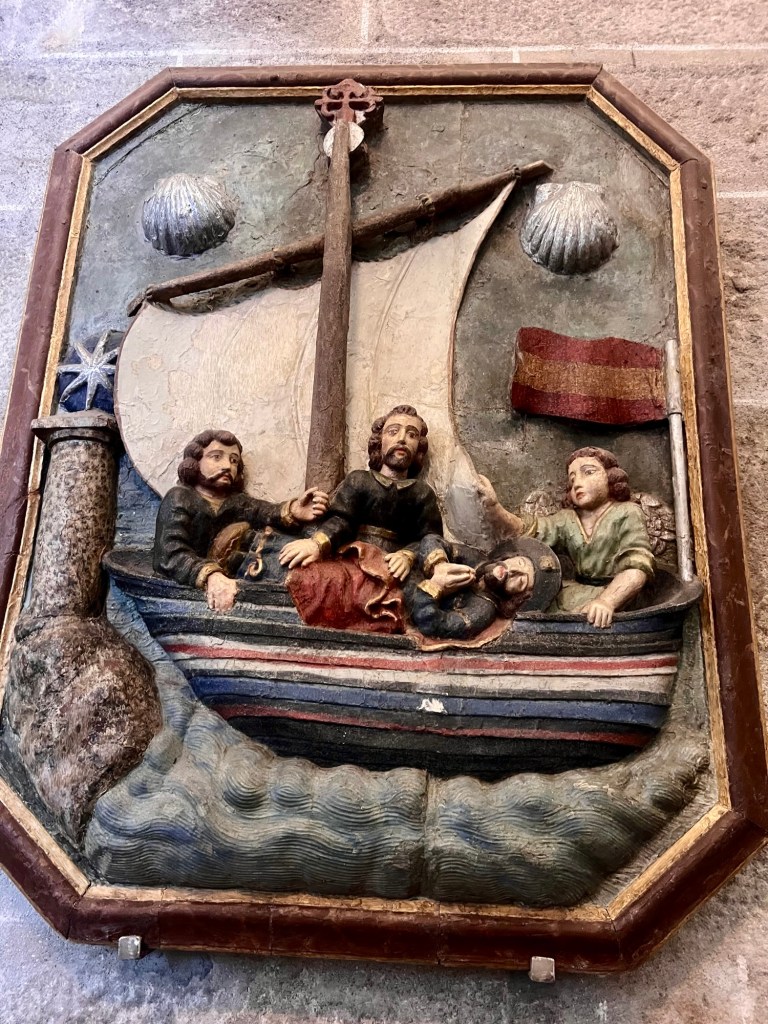
The legend holds that Saint James was brought from the Holy Land to Galicia in a boat made of stone and no sails to propel it.
On the steps of Lisbon Cathedral lay pink rose petals in the shape of scallop shells.
We pondered the image of Mary nailed to a cross and hugged a gilded statue of Saint James.
A woman’s hair changed color when she prayed.
I stood with a spooky apparition of a pilgrim.
I learned that I don’t have to have a plan for everything; that I needn’t cling to certitude or opinion as tightly as I would a rope ladder; that I should leave room for serendipity and my capacity to be enchanted; and that I can keep the scientist in me at bay and linger on the rim of understanding, where mind and mystery meet.
On the Camino, it was not so easy to disentangle the spiritual from the material, the legendary from the historical, what is real from what is magical.
And I didn’t want to.
“Sell your cleverness,
And buy bewilderment.”
Rumi
 Journeys and Journals